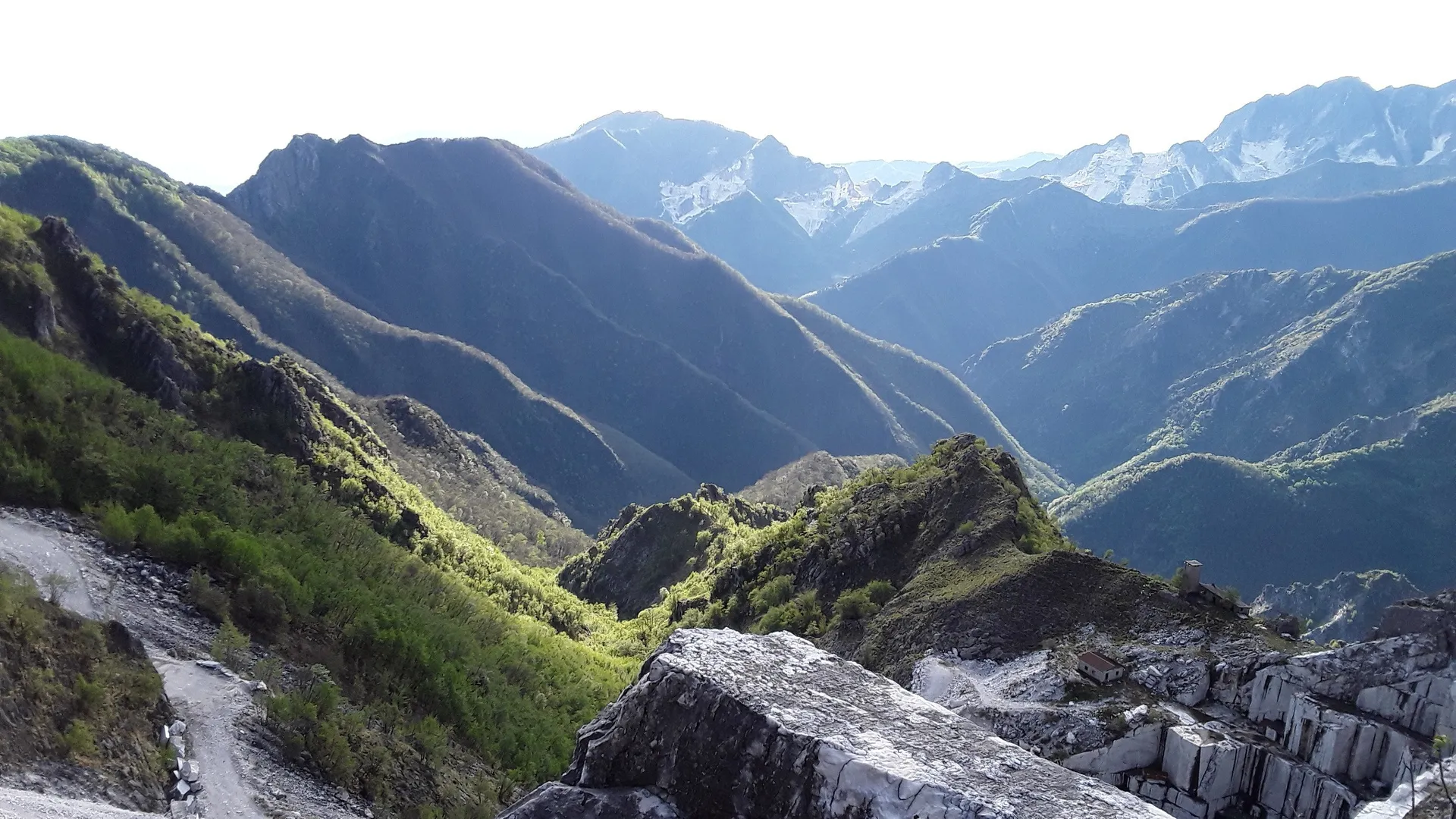
The marble quarries of Carrara have supplied the raw material of Western civilisation's greatest sculptures. Michelangelo spent months in these mountains selecting the blocks from which he would carve the David, the Pieta, and the Medici tombs; the Pantheon in Rome, the Marble Arch in London, and the Peace Monument in Washington all owe their luminous white facades to stone extracted from the Apuan Alps above this small Tuscan city. For over two thousand years — the Romans began quarrying here in the 2nd century BCE — the mountains above Carrara have been systematically dismantled and reassembled as art, architecture, and funerary monuments across the globe, and the quarries remain active today, their terraced white walls visible from the coast like enormous stairways carved into the mountainside by giants.
Marina di Carrara, the coastal district and port of the city, sits on the Tyrrhenian Sea at the northwestern edge of Tuscany, where the Apuan Alps plunge toward the sea with a dramatic abruptness that places snowcapped peaks within sight of Mediterranean beaches. The port was built specifically to export marble — the heavy blocks are loaded directly onto ships at the quayside — and the industrial character of the waterfront coexists with a surprisingly pleasant beach promenade and the Liberty-style villas that line the Viale XX Settembre. The inland city of Carrara, a few kilometres uphill, is centred on the Piazza Alberica, a graceful square of marble-fronted palazzi and the 11th-century Duomo di Sant'Andrea, whose Romanesque facade uses, naturally, local Carrara marble.
A visit to the quarries — the cave di marmo — is the essential Carrara experience. The Fantiscritti quarry, reached by a road that climbs through tunnels originally carved for the marble railway, is the most accessible and dramatic, its working face a vertical wall of white marble that glows in the sunlight with an almost supernatural luminosity. The quarry museum displays Roman tools, historical photographs, and examples of the different marble varieties extracted from the Apuan Alps — Statuario, the pure white stone favoured by sculptors; Calacatta, with its distinctive grey and gold veining; and Bardiglio, a blue-grey stone used for flooring and cladding. Artisan workshops in the city continue the tradition of marble carving, and visitors can commission custom pieces or simply watch sculptors at work with hammer and chisel, shaping the stone with techniques that Michelangelo would recognise.
The cuisine of the Carrara area blends Tuscan and Ligurian traditions, the province of Massa-Carrara sitting on the border between the two regions. Lardo di Colonnata — paper-thin slices of pork fatback cured for months in marble basins with rosemary, garlic, and spices in the quarry village of Colonnata — is the region's most celebrated delicacy, its silky, herbal richness a revelation to anyone who has dismissed lard as peasant food. Testaroli, large crepe-like pasta discs cooked on a terra-cotta griddle and dressed with pesto, are the area's signature primo, while the Tuscan coast provides fresh anchovies, mussels, and the cacciucco fish stew that this stretch of the Tyrrhenian shares with Livorno.
Marina di Carrara is visited by Emerald Yacht Cruises on Mediterranean itineraries, with vessels docking at the marble port. The most pleasant visiting season runs from April through October, with spring and autumn offering comfortable temperatures for quarry excursions and the clear mountain air that reveals the Apuan Alps in their full dramatic grandeur.

