Rising from the Tyrrhenian Sea roughly thirty nautical miles south of the Gulf of Gaeta, the island of Ponza possesses a beauty so concentrated and a character so distinctly its own that visitors often describe arriving here as entering a parallel Mediterranean — one untouched by the mass tourism that has transformed so much of the Italian coast. This is the largest of the Pontine Islands, a volcanic archipelago that the ancient Romans knew as a place of exile and pleasure in equal measure, where emperors banished inconvenient relatives to villas whose foundations still emerge from the sea-sculpted tufa cliffs. Today, Ponza maintains a fierce independence from the mainland, its two thousand permanent residents living according to rhythms that owe more to the sea than to Rome.
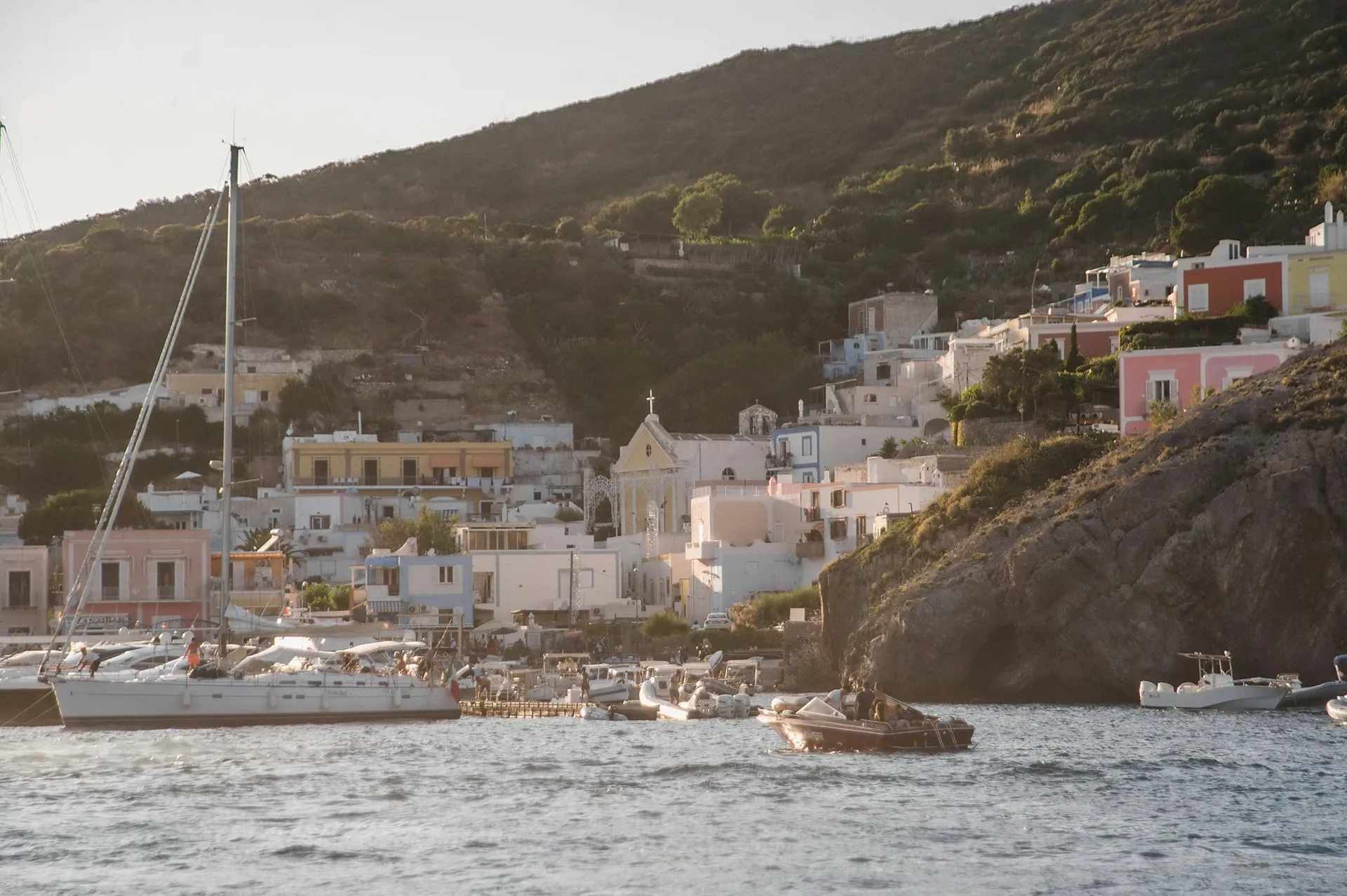
The harbour of Ponza town curls around a crescent bay in a pastel amphitheatre of pink, yellow, and terracotta houses stacked against the cliff in defiant disregard for gravity. The effect is cinematic — indeed, numerous Italian films have used this waterfront as a backdrop — but the atmosphere remains stubbornly authentic. Fishing boats share dock space with private yachts, restaurants serve whatever was caught that morning, and the passeggiata along the harbour wall constitutes the island's primary social institution. Above the town, the Bourbon tunnels — an eighteenth-century engineering project that connected the harbour to the beach at Chiaia di Luna through the volcanic rock — speak to the island's strategic importance across centuries.
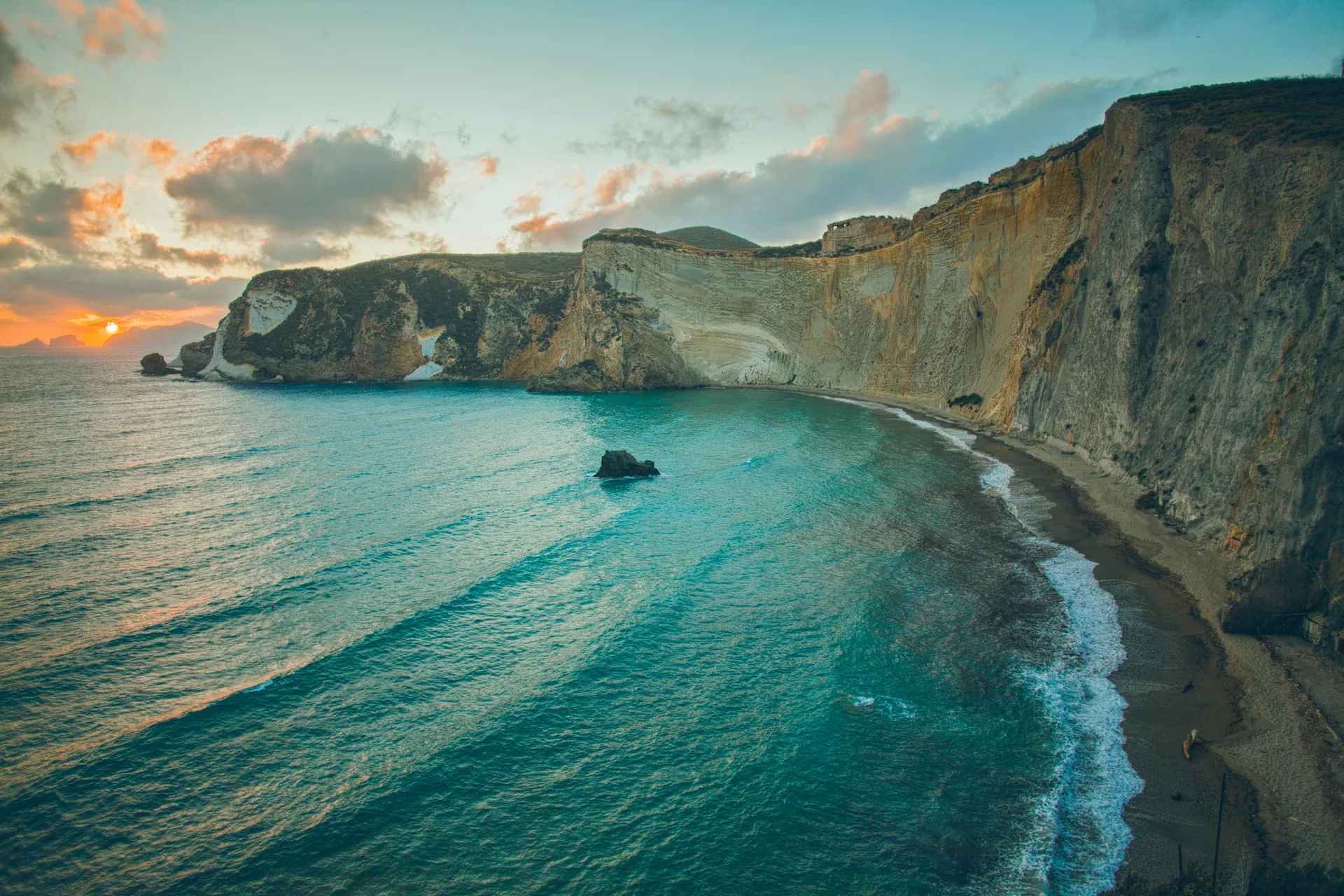
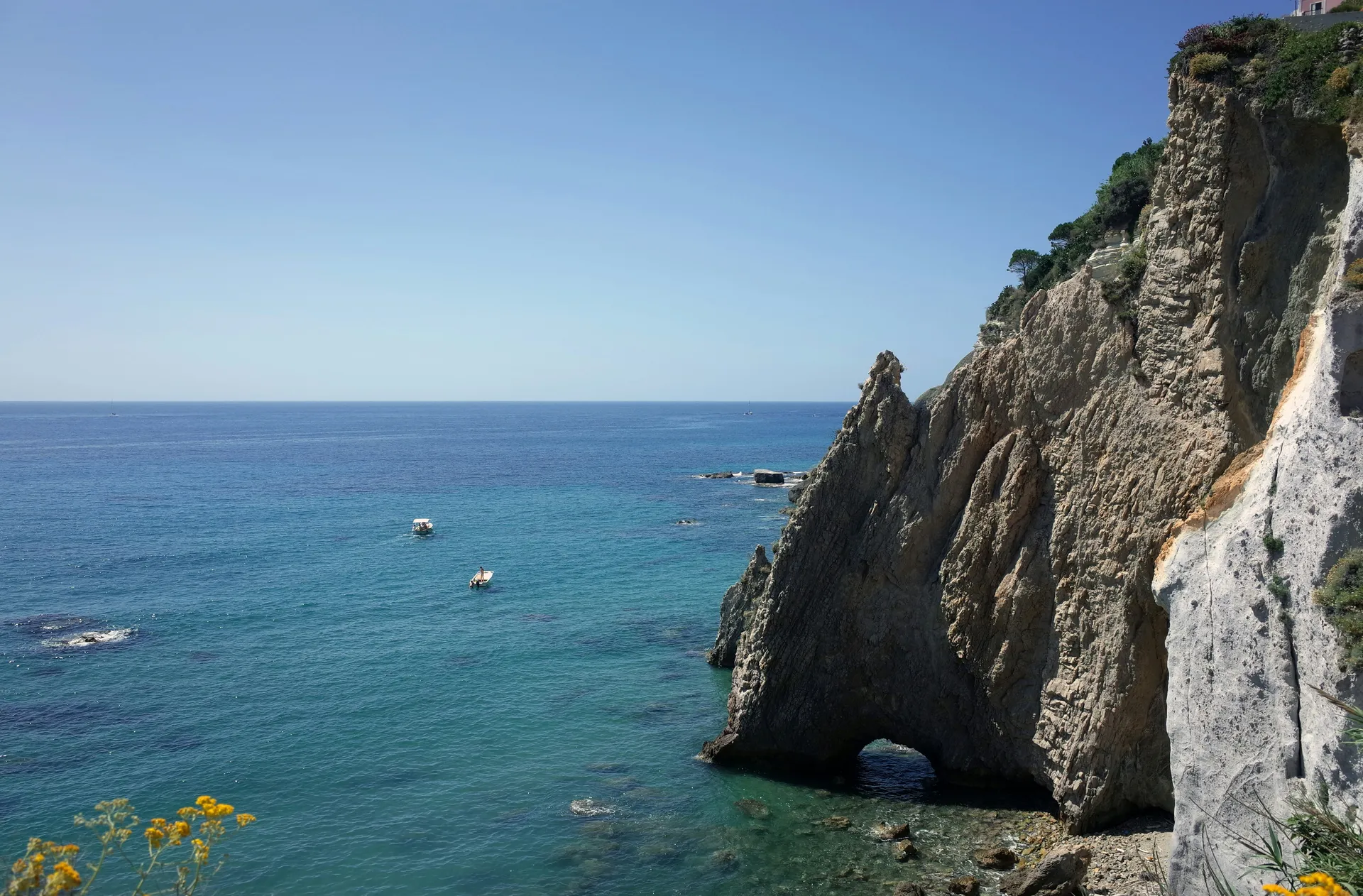
Chiaia di Luna, reached by sea since the tunnel's closure for safety, presents one of Italy's most dramatic beach landscapes: a thin crescent of sand beneath a sheer two-hundred-meter cliff of white tufa that catches the afternoon light and glows with an almost lunar luminosity. The island's coastline reveals a succession of natural swimming pools, sea caves, and arches carved by millennia of wave action into the soft volcanic rock. The Grotte di Pilato, partially submerged Roman fish pools carved into the cliff face, represent the most accessible reminder of the imperial presence — their geometric chambers still filled with seawater and the descendants of the fish the Romans cultivated.
Ponza's cuisine reflects its island isolation with a simplicity that borders on the profound. Lentil soup, made from the tiny, intensely flavored lentils grown on the neighboring island of Ventotene, is a dish of remarkable depth. Spaghetti with sea urchin, linguine with lobster, and the ubiquitous insalata di polpo showcase the day's catch with minimal intervention — the philosophy being that when ingredients are this fresh, the cook's primary duty is restraint. The island's wine tradition, based on the Biancolella grape, produces a crisp white that tastes of sea air and volcanic minerality, the perfect accompaniment to an afternoon spent on the rocks above water so clear that swimming feels like flying.
Scenic Ocean Cruises, Silversea, and Star Clippers include Ponza in their Tyrrhenian Sea and Italian coastal itineraries, with vessels anchoring in the bay and tendering to the harbour — an arrival that presents the island at its most spectacular. The season runs from May through October, with June and September offering the best combination of warm swimming waters, manageable visitor numbers, and the golden light that makes the tufa cliffs glow. Ponza remains refreshingly uncommercial by Italian island standards — there are no designer boutiques, no nightclubs, no theme restaurants, only the essential pleasures of sea, sun, and food served with an authenticity that the more famous islands traded away long ago.