On Sicily’s southern coast, where the Mediterranean stretches unbroken toward the African continent just 250 kilometers distant, Porto Empedocle serves as the maritime gateway to one of antiquity’s most magnificent sites. Named after the pre-Socratic philosopher Empedocles—who was born in nearby Akragas (modern Agrigento) around 490 BCE and proposed that all matter consists of four elements—this working fishing port channels visitors toward the Valley of the Temples, a ridge of Doric temples that constitutes the finest collection of ancient Greek architecture outside Greece itself.
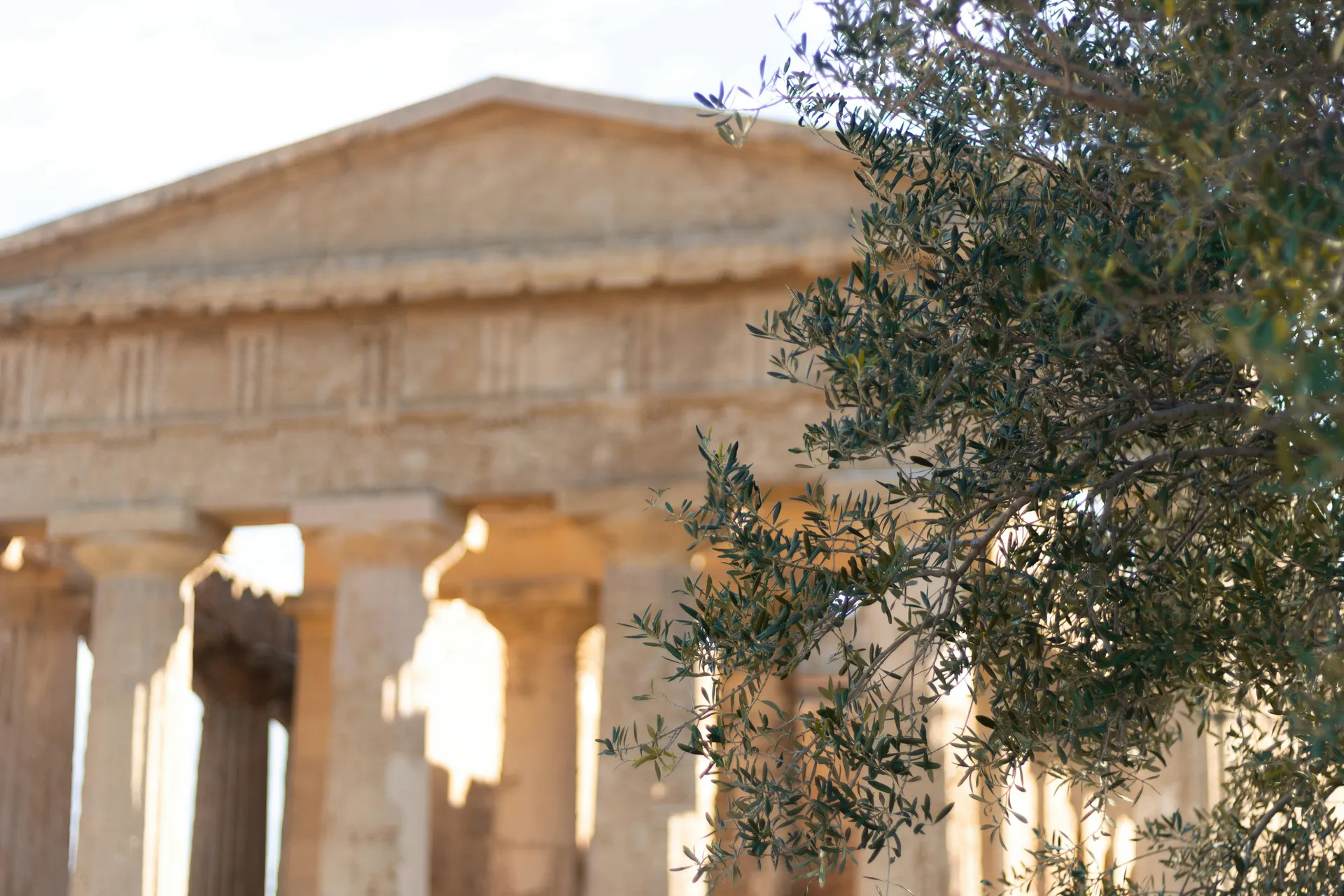
The Valle dei Templi, a UNESCO World Heritage Site sprawling across a ridge overlooking the Mediterranean, preserves seven major temples built between 510 and 430 BCE, when Akragas was one of the wealthiest cities in the Greek world. The Temple of Concordia, its honey-colored columns still supporting a complete entablature and pediment, is one of the best-preserved Greek temples in existence—its survival owed to its conversion into a Christian church in the 6th century. The Temple of Hera, the Temple of Heracles, and the colossal (if ruined) Temple of Olympian Zeus—which would have been the largest Doric temple ever built, supported by 38-foot-tall Atlas figures—create an archaeological landscape of staggering ambition and beauty.
Porto Empedocle itself carries the literary associations of Andrea Camilleri, Sicily’s beloved crime novelist who set his Inspector Montalbano series in the fictionalized version of this town (Vigàta). Camilleri, born here in 1925, drew on the town’s character—its sun-baked piazzas, its fishing culture, its Mediterranean cadences—to create one of European crime fiction’s most atmospheric settings. The town’s waterfront, where fishing boats unload the morning’s catch of swordfish, sardines, and red prawns, offers a slice of working Sicilian life far from the tourist circuits of Taormina and Palermo.
Sicilian cuisine reaches a particular intensity on the southern coast. Couscous, reflecting centuries of Arab influence, appears alongside pasta con le sarde (sardines, wild fennel, pine nuts, and raisins)—a dish that encapsulates Sicily’s layered cultural identity. Agrigento’s pastry shops produce sublime versions of cannoli and cassata, while the local almond granita—served with brioche for breakfast—is a ritual as essential as morning espresso. The wines of the southern coast, particularly Nero d’Avola reds and the increasingly acclaimed white wines from the Menfi area, offer excellent value and genuine character.
Emerald Yacht Cruises and Windstar Cruises call at Porto Empedocle, using the port as an embarkation point for the Valley of the Temples—a shuttle or taxi ride of approximately 15 minutes. The temples are best visited in the early morning or late afternoon, when the golden Sicilian light transforms the ancient stone and the Mediterranean backdrop shimmers in the heat. March through June and September through November offer the most comfortable temperatures, while the summer months—blisteringly hot on the exposed ridge—reward evening visits when the temples are illuminated against the darkening sky.

