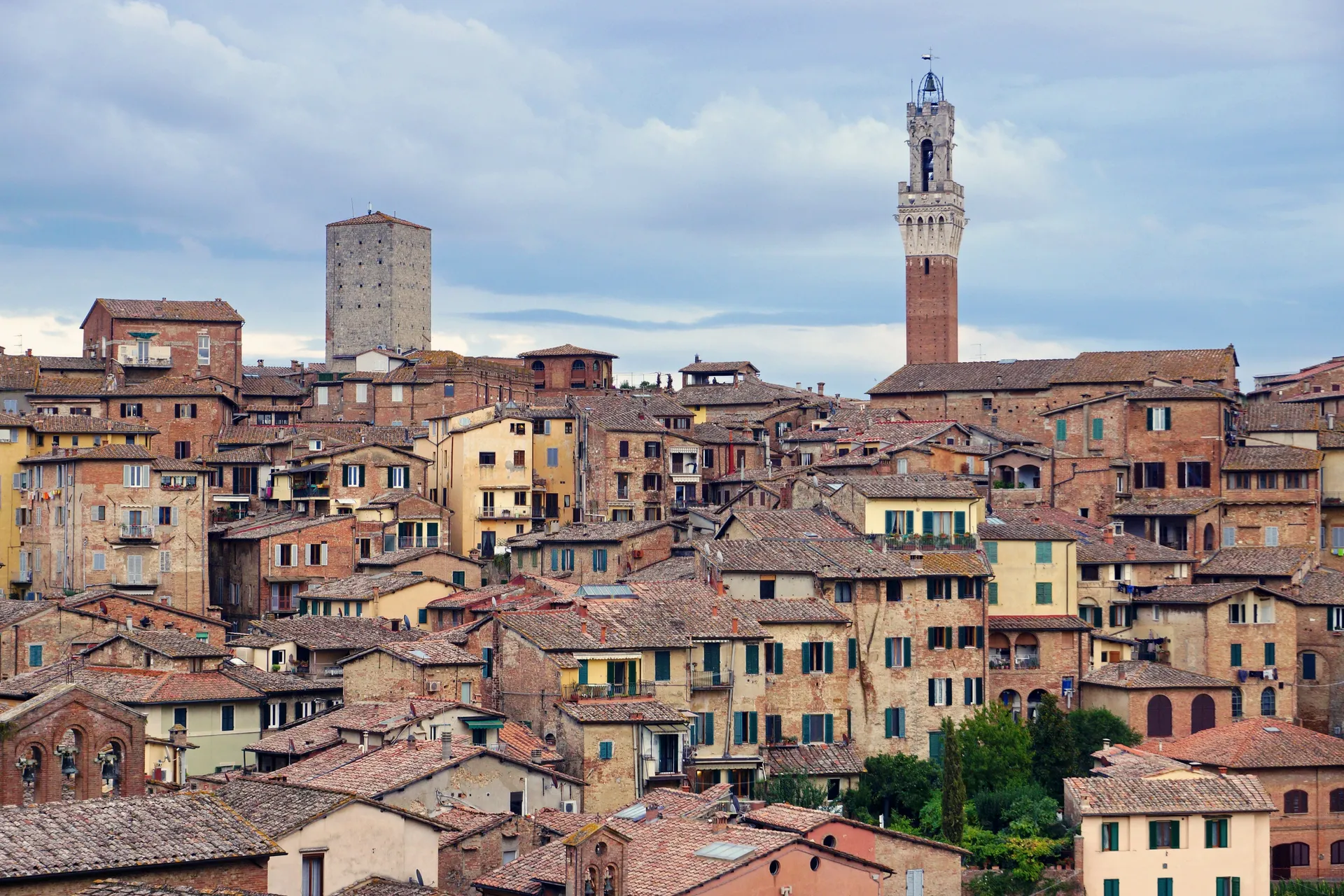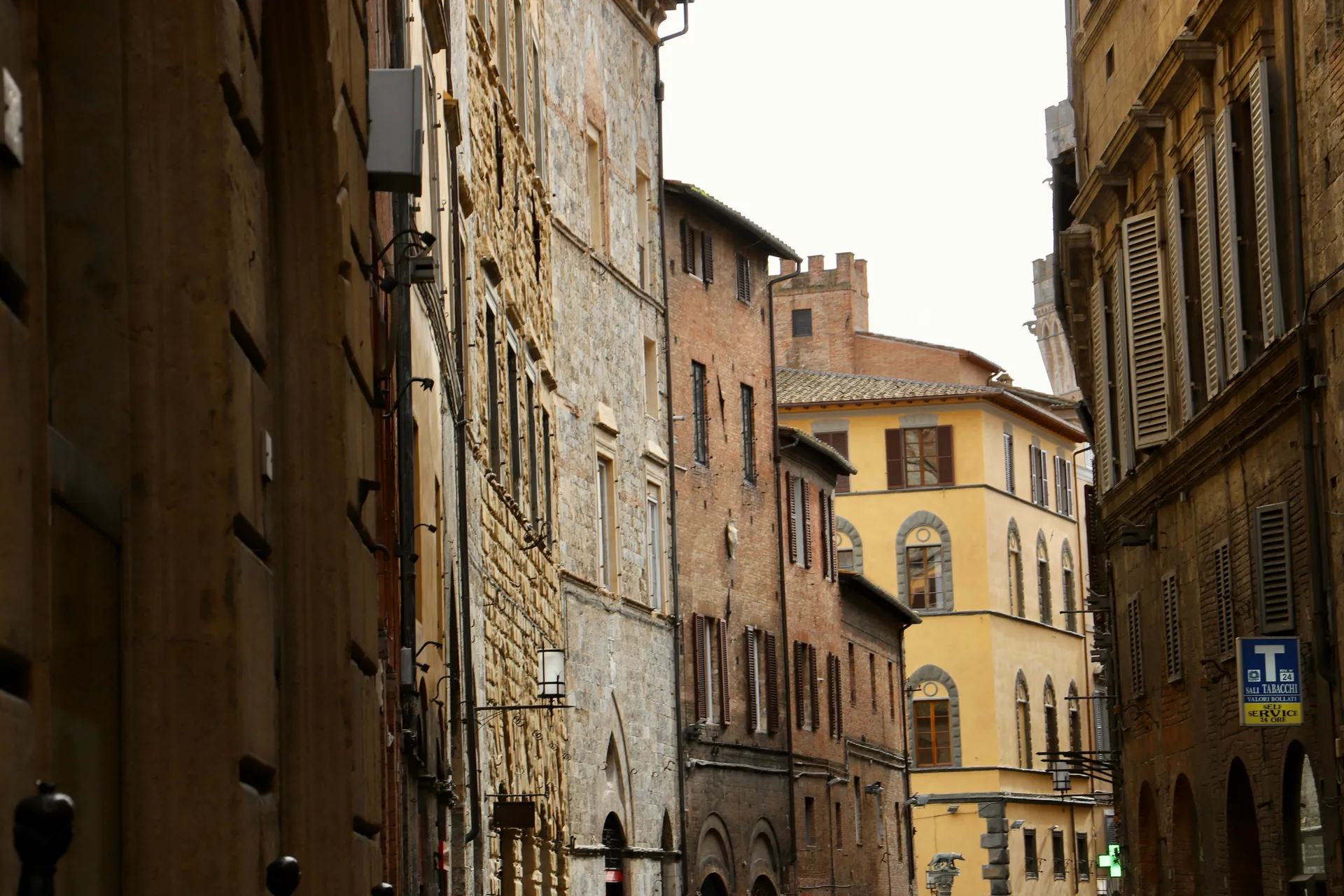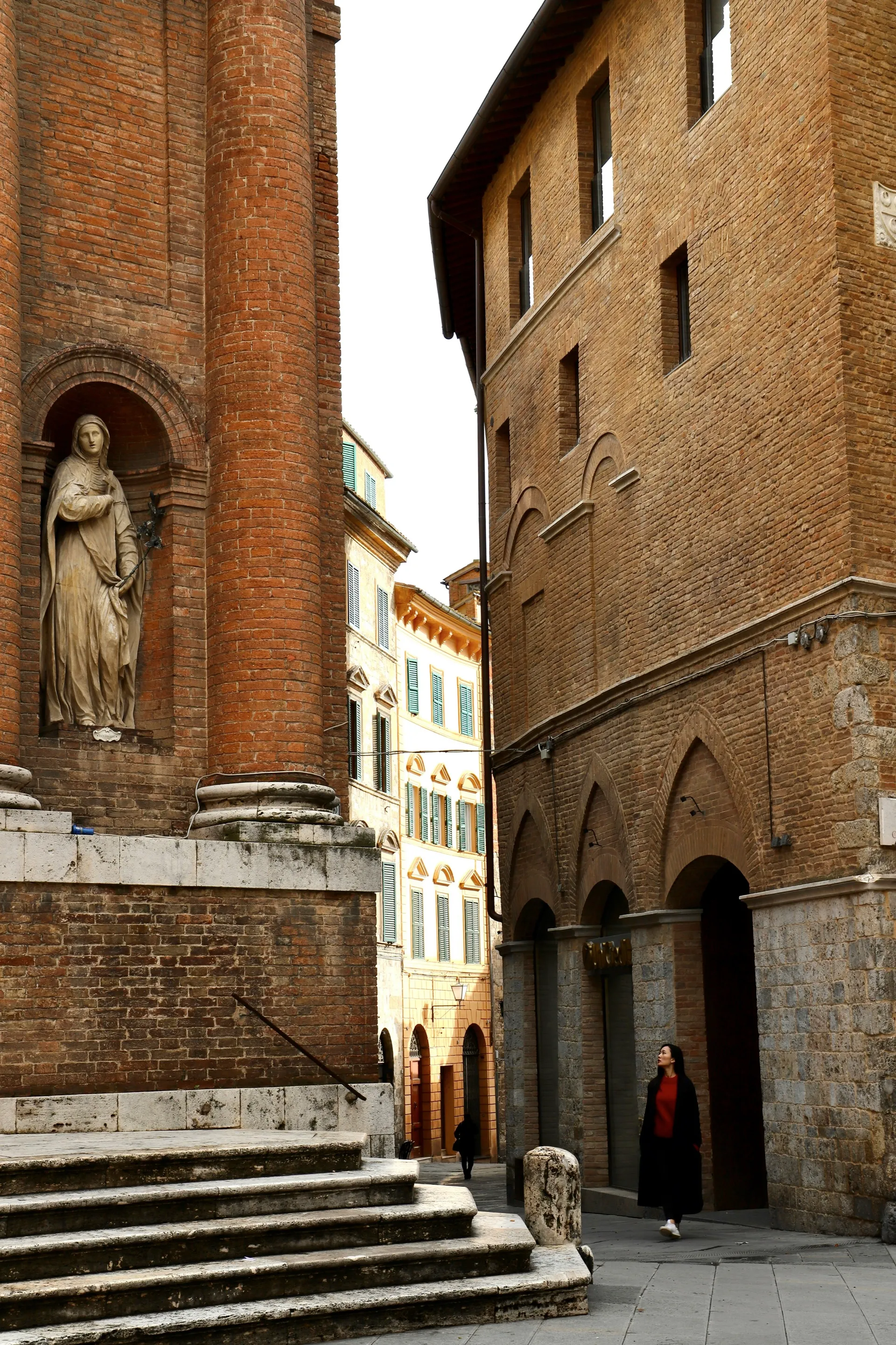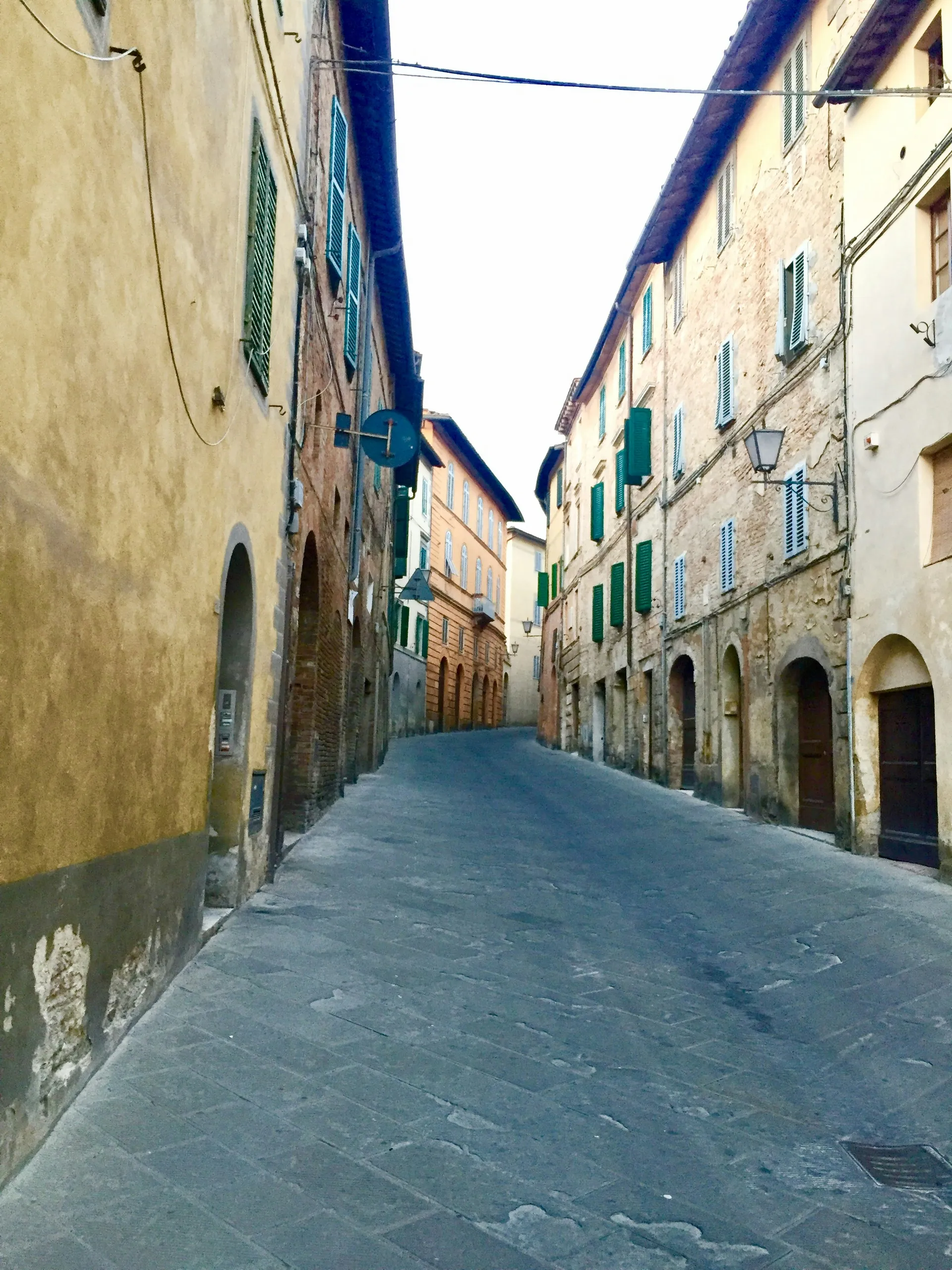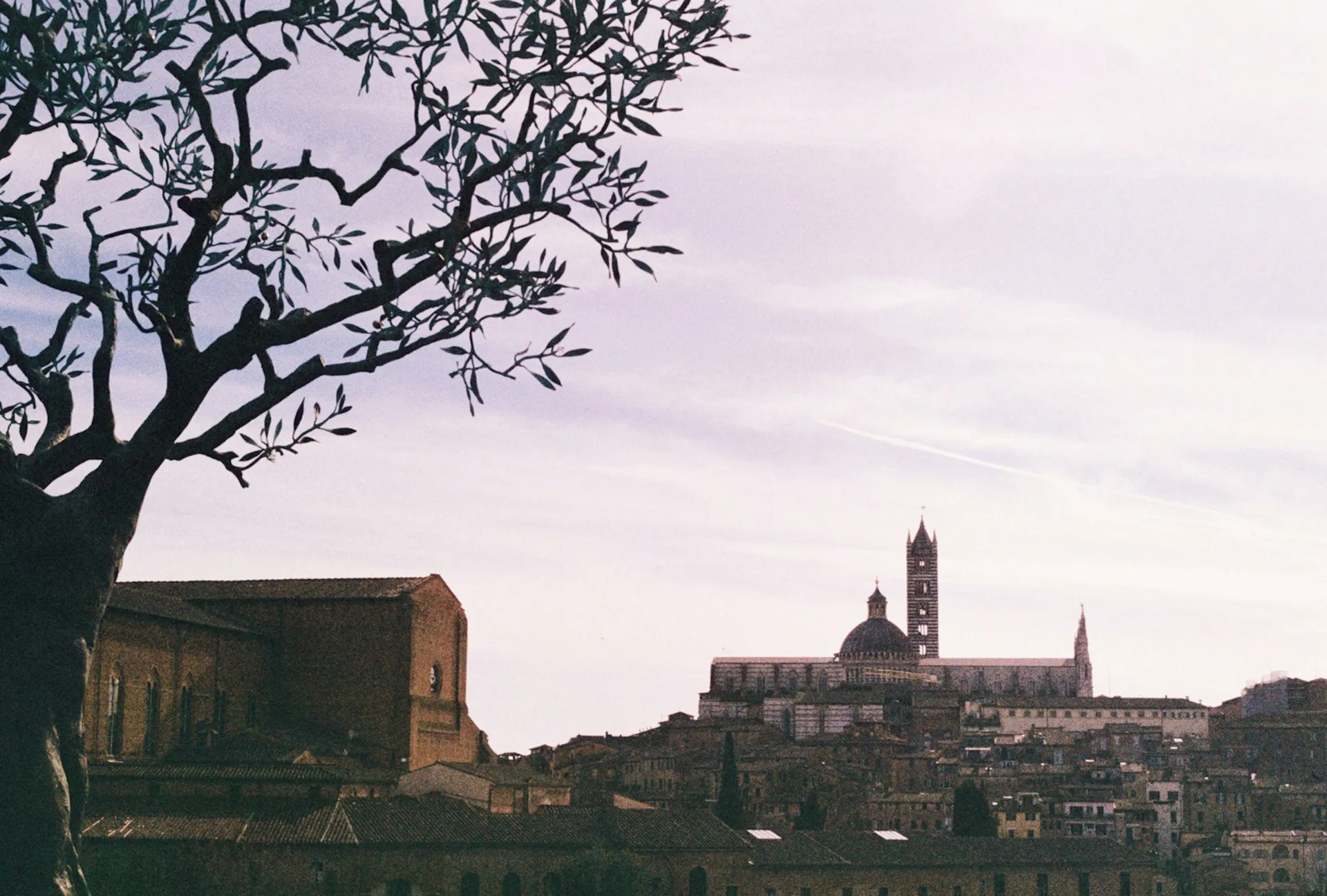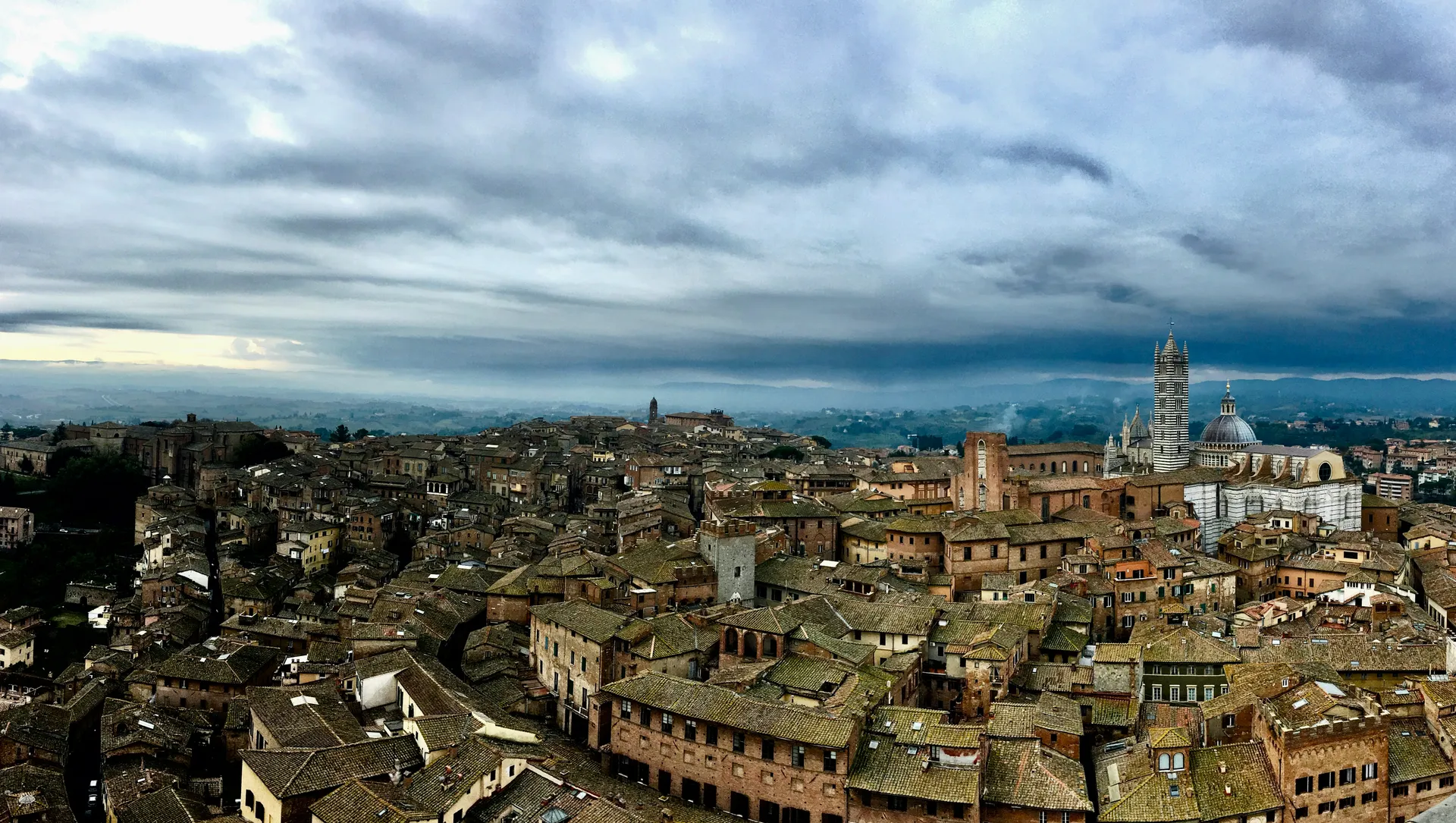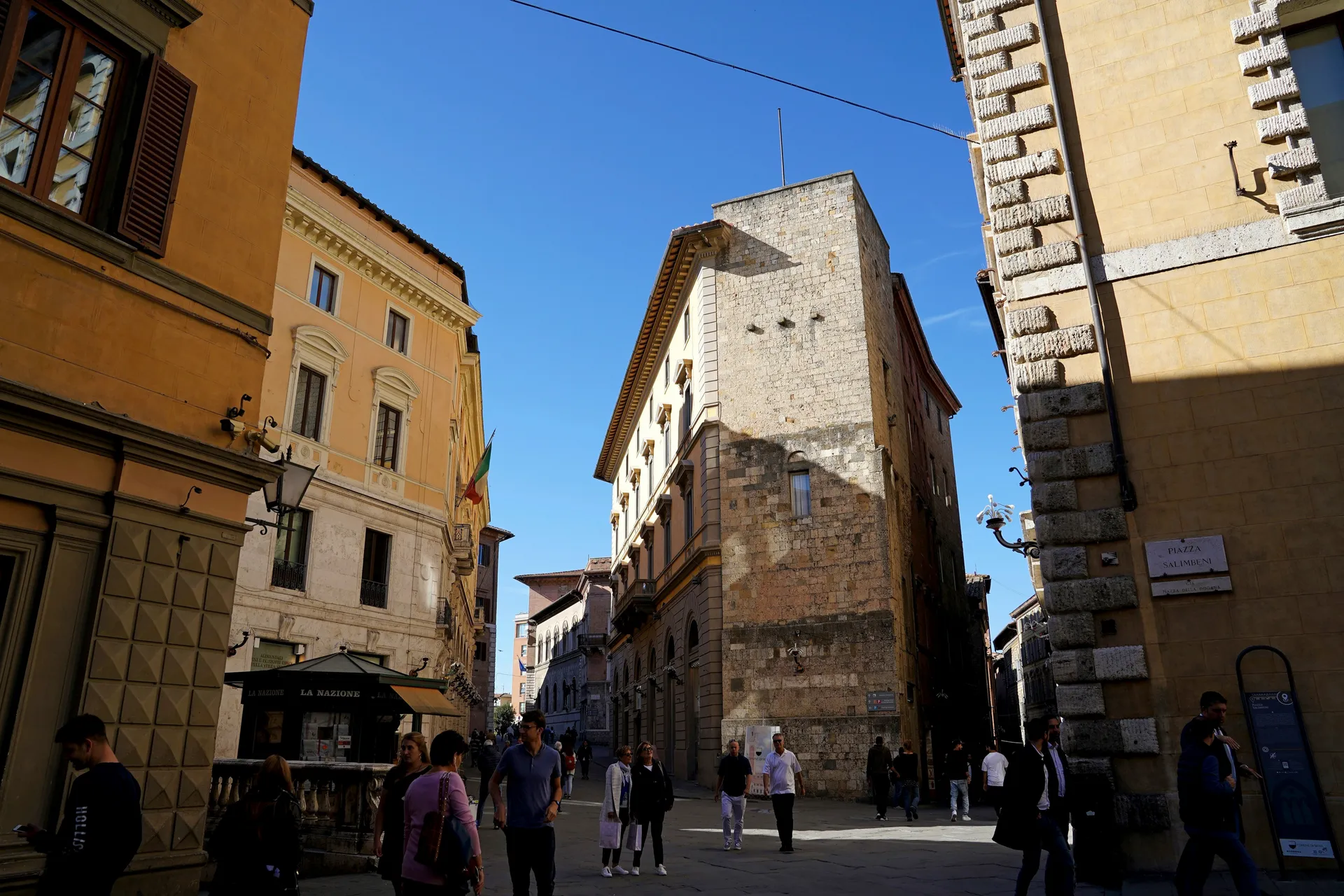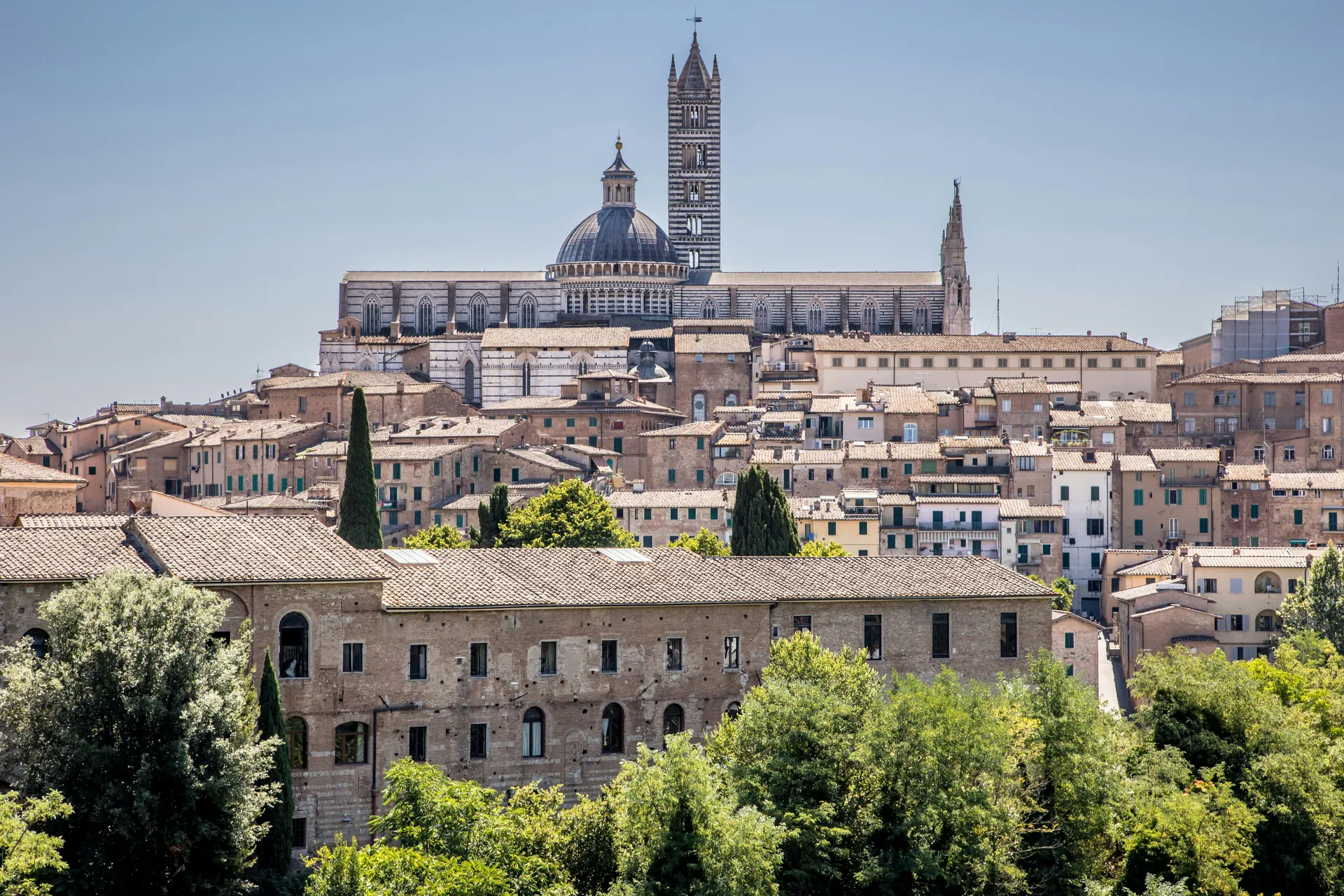
There are cities that reveal themselves through monuments, and then there is Siena — a city that reveals itself through the quality of its light. Set upon three converging hills in the heart of Tuscany, this medieval masterpiece has remained essentially unchanged since the fourteenth century, when the Republic of Siena rivaled Florence in artistic ambition and commercial power. The Black Death of 1348 froze the city in amber, an unintended gift to future centuries. Today, walking through the Porta Camollia, you enter not merely a historic center but a living organism that still breathes to the rhythm of its seventeen contrade — the ancient neighborhood wards whose rivalries animate every piazza and parish church.
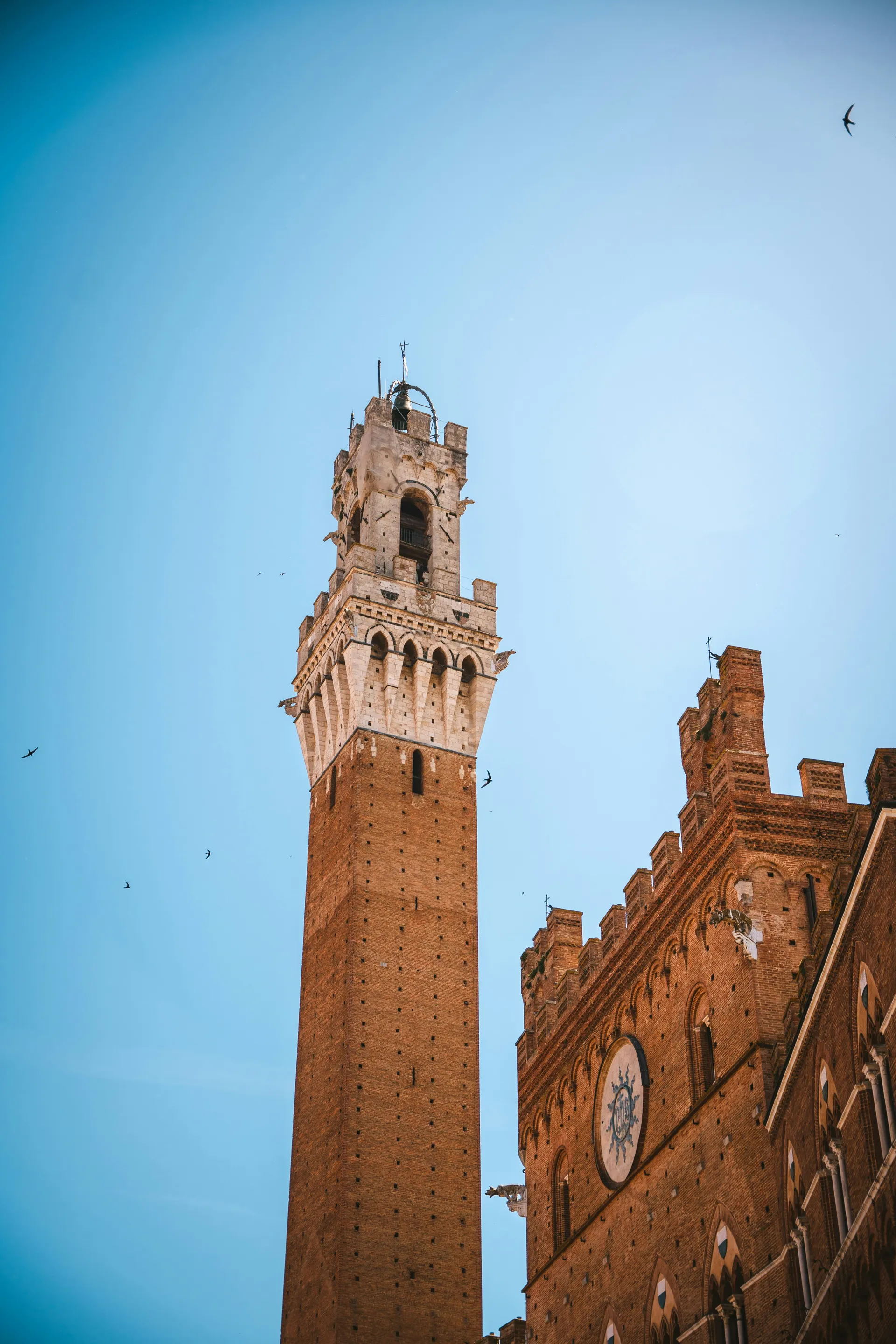
The Piazza del Campo is, without exaggeration, one of the most extraordinary public spaces ever conceived. Its shell-shaped expanse tilts gently toward the Palazzo Pubblico, drawing your eye to Ambrogio Lorenzetti's frescoes of Good and Bad Government within — arguably the most important secular paintings of the Middle Ages. Twice each summer, the Campo transforms into a racetrack for the Palio, a bareback horse race so ferociously contested that grown men weep openly at its conclusion. But even on an ordinary Tuesday morning in November, the Campo possesses a gravitational pull. Students sprawl across the herringbone brick, elderly couples share gelato on stone benches, and the Torre del Mangia casts its shadow like a sundial marking the unhurried hours.
Sienese cuisine is Tuscan cooking at its most elemental and satisfying. Pici, the thick hand-rolled pasta that predates industrial production by centuries, arrives dressed in nothing more than garlic, oil, and breadcrumbs — or, if you are fortunate, with a ragù of wild boar hunted in the surrounding hills. Ricciarelli, the soft almond cookies dusted with powdered sugar, have been baked here since the Crusades. The city's relationship with food extends to its extraordinary enotecas, where Brunello di Montalcino and Vino Nobile di Montepulciano can be tasted within walking distance of the vineyards that produced them. For the finest expression of this tradition, seek out the small family-run trattorias in the contrada of Oca or Drago, where the menu changes with whatever arrived at the market that morning.
Beyond the city walls, the Tuscan landscape unfolds with the painterly perfection that has inspired artists since Giotto. The Abbey of Monte Oliveto Maggiore, a thirty-minute drive south, harbors a cloister frescoed by Luca Signorelli and Il Sodoma depicting the life of Saint Benedict — a masterwork largely unknown to the crowds that flock to Florence. The clay hills of the Crete Senesi present a lunar landscape of extraordinary beauty, particularly at dawn when mist gathers in the valleys. San Gimignano, the "Medieval Manhattan" with its thirteen surviving tower-houses, lies barely an hour northwest. And for those drawn to thermal waters, the ancient baths at Bagno Vignoni offer a Renaissance piazza built around a steaming pool that has soothed travelers since Etruscan times.
Siena is best reached as part of a Tuscan itinerary, whether by road from Florence (seventy-five minutes) or as an excursion from cruise ports along the Tyrrhenian coast, including Livorno and Civitavecchia. The compact historic center is entirely pedestrian, and its steep medieval streets reward comfortable footwear and an unhurried pace. The Palio races in July and August draw enormous crowds and require advance planning, but the shoulder seasons of April through June and September through October offer the finest combination of mild weather, manageable visitor numbers, and the golden Tuscan light that makes every photograph look like a Renaissance painting.