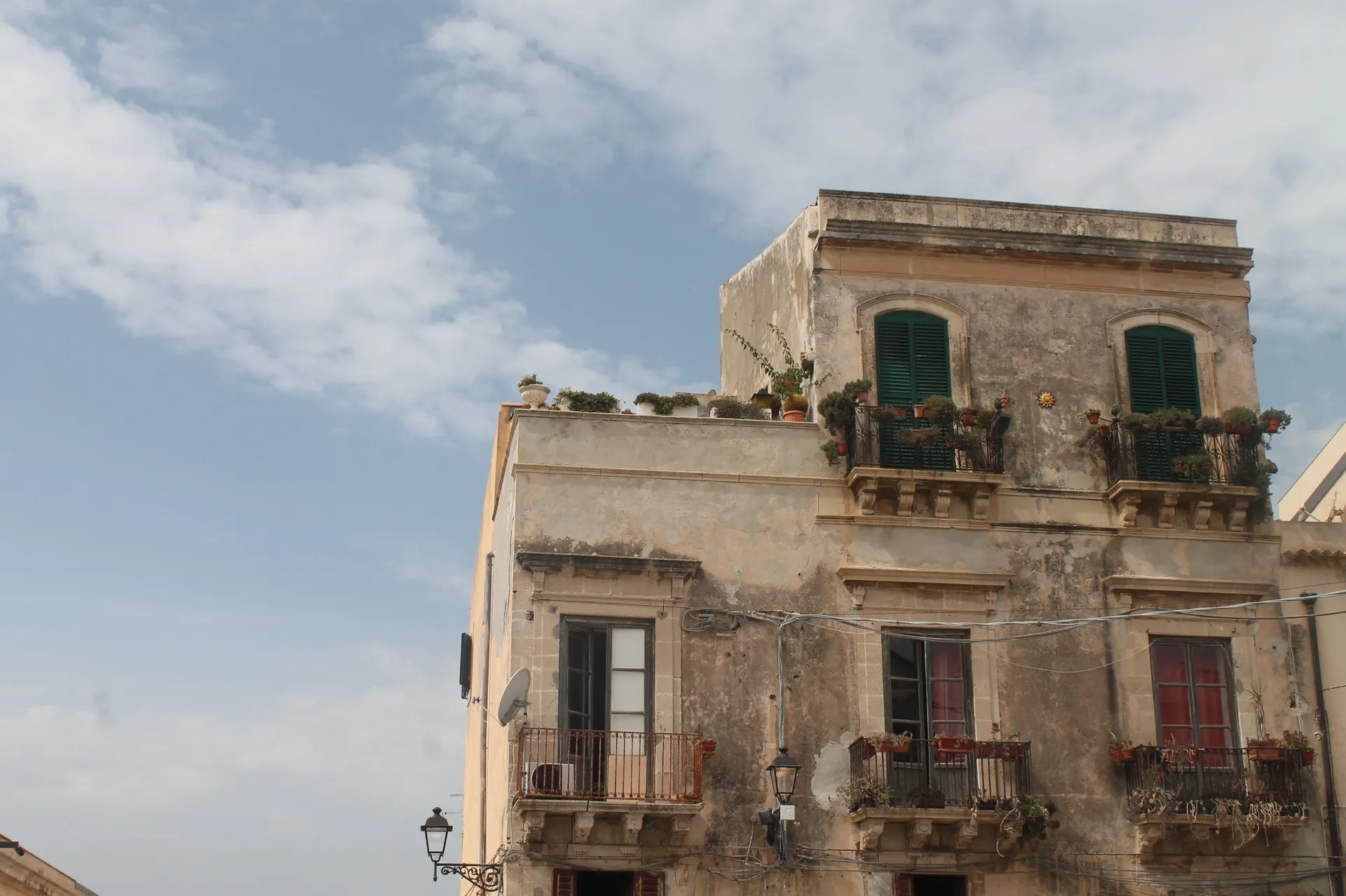
Syracuse—Siracusa in Italian—was once the most powerful city in the Western world, a Greek metropolis that rivaled Athens in wealth, military might, and intellectual achievement. Founded in 734 BC by Corinthian colonists, the city produced Archimedes, hosted Plato (who visited three times and was, by some accounts, briefly enslaved here), and defeated the mighty Athenian expedition of 415 BC in a naval engagement that altered the course of ancient history. Cicero called it "the greatest and most beautiful of all Greek cities." Today Syracuse occupies two interconnected worlds: the archaeological park on the mainland, where the remains of the Greek and Roman city spread across a limestone plateau, and the island of Ortigia, the ancient city center that may be the most beautiful small island in the Mediterranean.
Ortigia is Syracuse's beating heart—a one-kilometer island connected to the mainland by two short bridges, its labyrinth of honey-colored streets opening without warning onto sunlit piazzas, baroque churches, and waterfront terraces overlooking the Ionian Sea. The Piazza del Duomo is one of Italy's most extraordinary public spaces: the cathedral's facade is a baroque masterwork, but its side walls incorporate the massive Doric columns of the fifth-century BC Temple of Athena—visible from inside, they constitute one of the most dramatic fusions of pagan and Christian architecture anywhere. The Fonte Aretusa, a freshwater spring on the island's western shore where papyrus grows wild (one of only two sites in Europe), has been celebrated since Greek mythology connected it to the nymph Arethusa, who was transformed into this spring by the goddess Artemis.
Syracusan cuisine draws from the extraordinary bounty of southeastern Sicily's land and sea. The city claims to be the birthplace of Italian cooking, and while the assertion is debatable, the quality is not. Pasta with sea urchin—ricci di mare, scooped fresh from the rocks and tossed with spaghetti, garlic, and olive oil—is the quintessential Siracusa primo. The bustling Ortigia market, held each morning along the island's western edge, displays a cornucopia of blood oranges, pistachios from Bronte, wild fennel, and just-landed swordfish that fishmongers butcher with theatrical precision. Panelle (chickpea fritters), arancini, and the extraordinarily sweet pomodorino di Pachino (the cherry tomatoes named for a town just south of Syracuse) feature in virtually every meal. The wines of the surrounding Noto and Eloro appellations—particularly the voluptuous Nero d'Avola reds and the aromatic Moscato di Noto—provide perfect accompaniment.
The archaeological park of Neapolis, on the mainland, preserves monuments that bring the ancient city to vivid life. The Greek Theatre, carved from the living rock in the fifth century BC and seating 15,000, still hosts performances each summer in the longest-running classical drama festival in the world. The Ear of Dionysius, an enormous artificial cave with extraordinary acoustics, was named by Caravaggio (who visited Syracuse and painted one of his finest works here). The Roman amphitheater, the Altar of Hieron II, and the Latomie (stone quarries turned lush gardens) complete a complex that rivals any archaeological site in Italy. Nearby, the catacombs of San Giovanni are the largest in Italy outside Rome, a subterranean network of early Christian burial chambers that extends beneath the modern city.
Emerald Yacht Cruises, Explora Journeys, and Windstar Cruises include Syracuse on their Mediterranean itineraries, with ships typically anchoring in the Grand Harbour or docking along the Ortigia waterfront. The port's location at Ortigia's edge means passengers step directly into the ancient city center. April through June and September through November offer the most comfortable conditions—warm enough for swimming but without the oppressive heat that grips southeastern Sicily in July and August, when temperatures regularly exceed 38°C. Syracuse at dawn, with the Ionian Sea catching the first light against Ortigia's golden limestone, offers a vision of Mediterranean beauty so perfect it seems curated. In truth, it has been three thousand years in the making.

