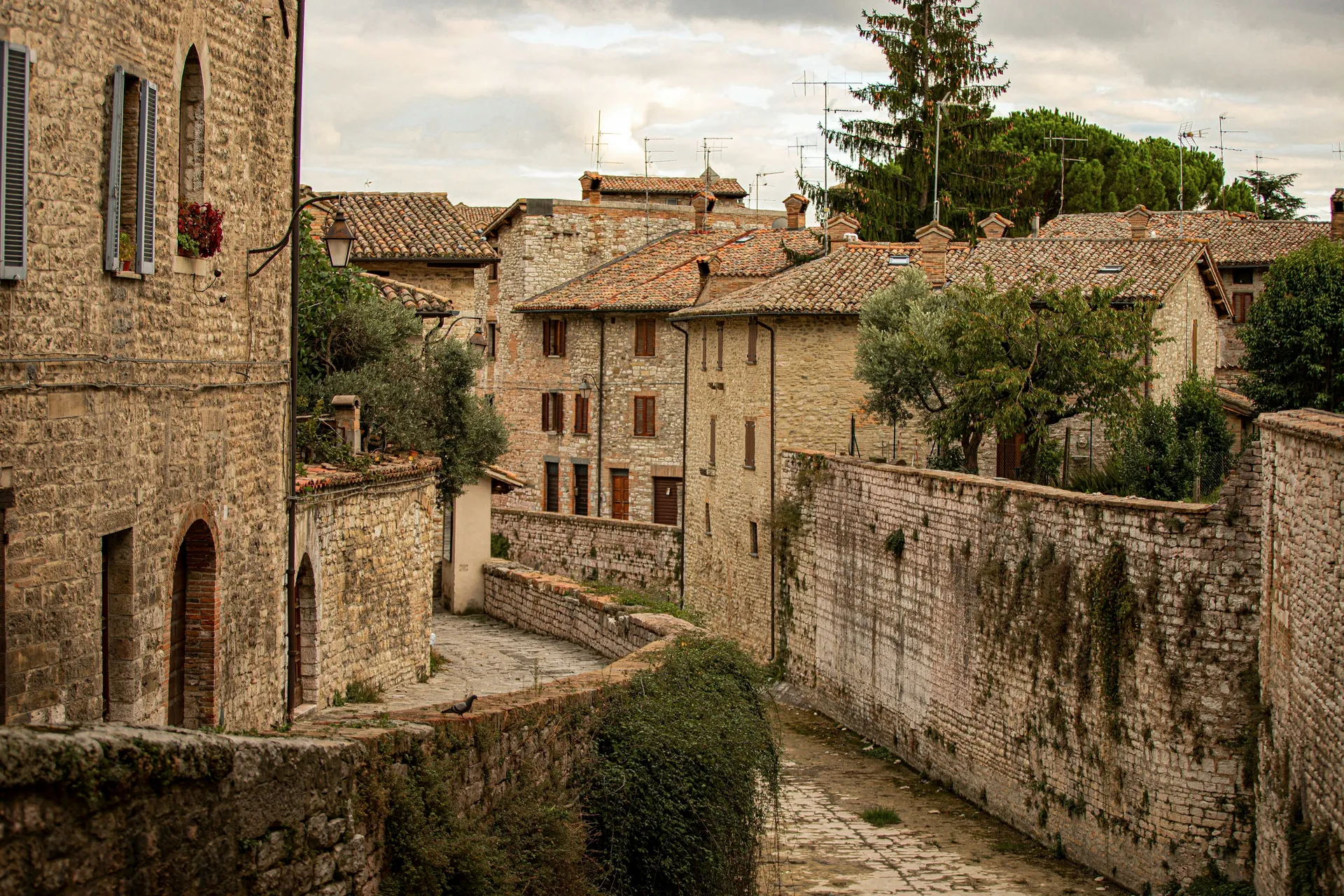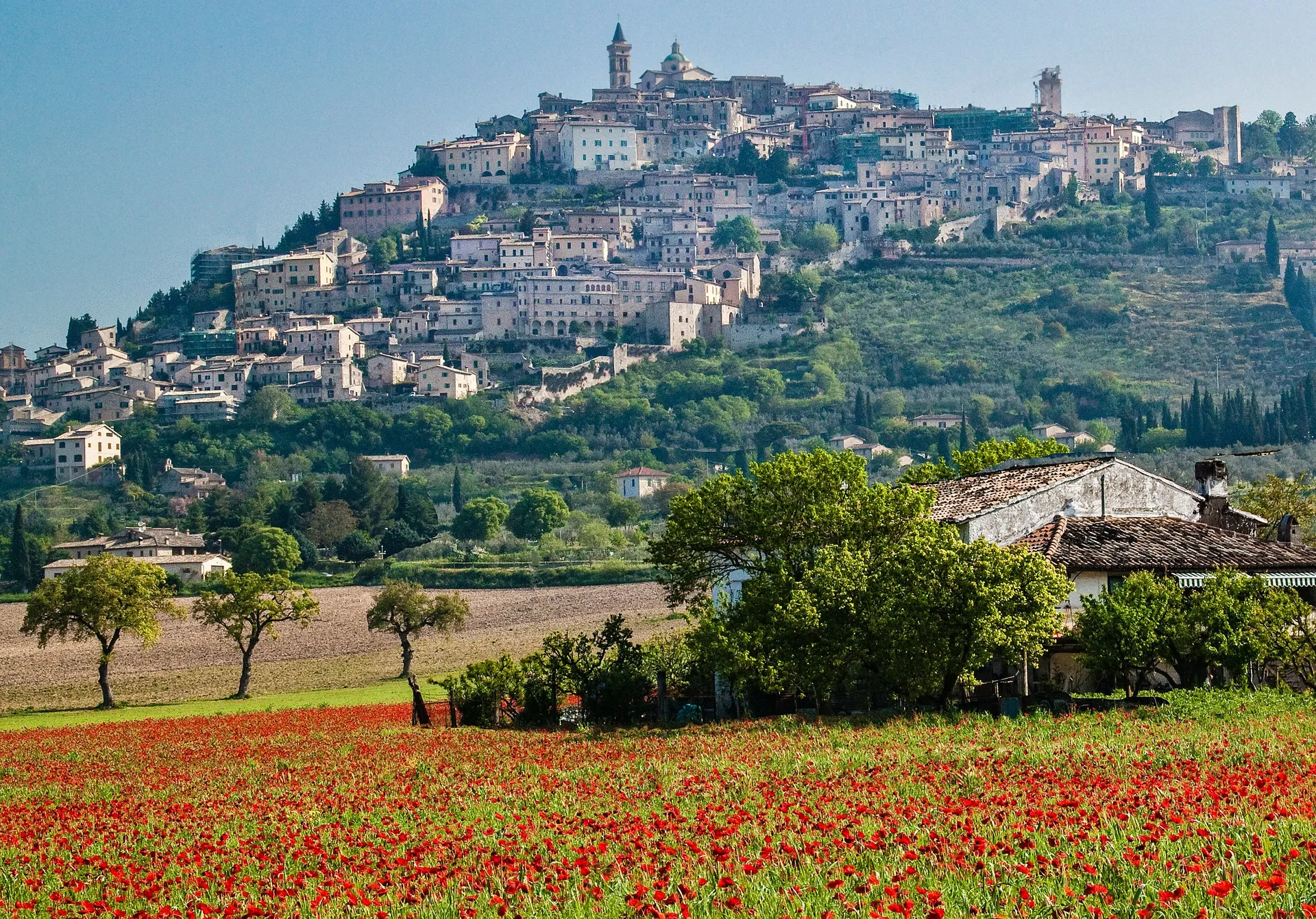
Umbria — Italy's verdant heart, the only landlocked region in central Italy — occupies a rolling landscape of olive groves, hilltop towns, and sacred forests that has been shaped by saints, artists, and farmers for over three millennia. Often called the "Green Heart of Italy," Umbria lacks the tourist saturation of its famous neighbor Tuscany while offering an equally rich tapestry of medieval architecture, Renaissance art, world-class food, and a spiritual depth that stems from its association with Saint Francis of Assisi and Saint Benedict of Norcia.
Perugia, the regional capital, commands a hilltop above the Tiber valley with the authority of a city that has been continuously inhabited since Etruscan times. Its Gothic Palazzo dei Priori houses the Galleria Nazionale dell'Umbria, home to masterworks by Perugino, Pinturicchio, and Piero della Francesca. The annual Umbria Jazz Festival, held each July, transforms the medieval center into one of Europe's most atmospheric music venues, with performances echoing through ancient stone piazzas beneath a canopy of stars.
Umbrian cuisine is a revelation of peasant sophistication. This is truffle country — both the prized white truffle of Norcia and the more common black variety appear shaved over pasta, stirred into risotto, and infused into local olive oils of extraordinary quality. Norcia itself has given Italian the word "norcino" for a pork butcher, and its tradition of artisanal salumi — cured wild boar, prosciutto, sausages scented with fennel seed — is perhaps the finest in Italy. Sagrantino di Montefalco, an intensely structured red wine produced from a grape found nowhere else on earth, has emerged as one of Italy's most exciting oenological discoveries.
The landscape is dotted with destinations that repay careful exploration. Assisi, UNESCO-listed and dominated by the Basilica di San Francesco with its Giotto frescoes, draws pilgrims and art lovers in equal measure. Orvieto rises on a volcanic tufa cliff above the Paglia river, its Gothic cathedral facade a masterpiece of polychrome marble and mosaic. Spoleto stages its renowned Festival dei Due Mondi each summer. And the Piano Grande — a vast high-altitude plateau near Castelluccio — erupts each June into a carpet of wildflowers so vivid it appears digitally enhanced.
Umbria is most commonly visited as part of a river cruise along the Tiber or as a shore excursion from the port of Civitavecchia, roughly two hours by road. The region is also easily accessible from Rome or Florence. Spring (April through June) and autumn (September through October) are the ideal visiting seasons, when the light is golden, the temperatures are comfortable, and the landscape alternates between wildflower meadows and harvest abundance. Umbria asks little of the traveler except an appetite for beauty, a tolerance for winding roads, and the wisdom to slow down.