At the northern tip of Honshu, where Japan’s main island faces Hokkaido across the Tsugaru Strait, Aomori occupies a position between worlds—the temperate south and the subarctic north, the bustling Tokaido corridor and the rural Tohoku heartland. This prefectural capital of 280,000 is best known for two things: apples (Aomori produces 60% of Japan’s apple harvest, and the fruit’s image appears on everything from manhole covers to bank logos) and the Nebuta Matsuri, one of Japan’s most spectacular festivals, which transforms the city each August into a procession of illuminated paper-and-wire giants depicting warriors and mythological figures.
The Nebuta Matsuri (August 2–7) is a feast of light, sound, and kinetic energy. Enormous floats—some reaching five meters high and nine meters wide—are constructed from wire frames covered in washi paper and painted with fierce kabuki-like faces, then illuminated from within to glow with an intensity that turns the night streets into a gallery of floating fire. Dancers (haneto) in traditional costume leap and chant alongside the floats, and spectators are welcomed to join—a democratizing gesture that makes the Nebuta one of Japan’s most participatory festivals. The Nebuta Museum Wa Rasse, on the Aomori waterfront, displays retired floats year-round and explains the craft behind their creation.
Aomori’s cultural depth extends well beyond the festival. The Sannai-Maruyama Archaeological Site, a 5,900-year-old Jomon settlement, is one of Japan’s most important prehistoric sites—its reconstructed pit dwellings, longhouses, and the enigmatic six-post wooden tower speak to a sophisticated hunter-gatherer civilization that flourished for over 1,500 years. The Aomori Museum of Art, designed by Jun Aoki in a building that echoes the archaeological site’s trenches, houses Yoshitomo Nara’s monumental Aomori Dog (an 8.5-meter-tall white dog sculpture) and Marc Chagall’s ballet backdrops—an unexpectedly world-class collection in a regional city.
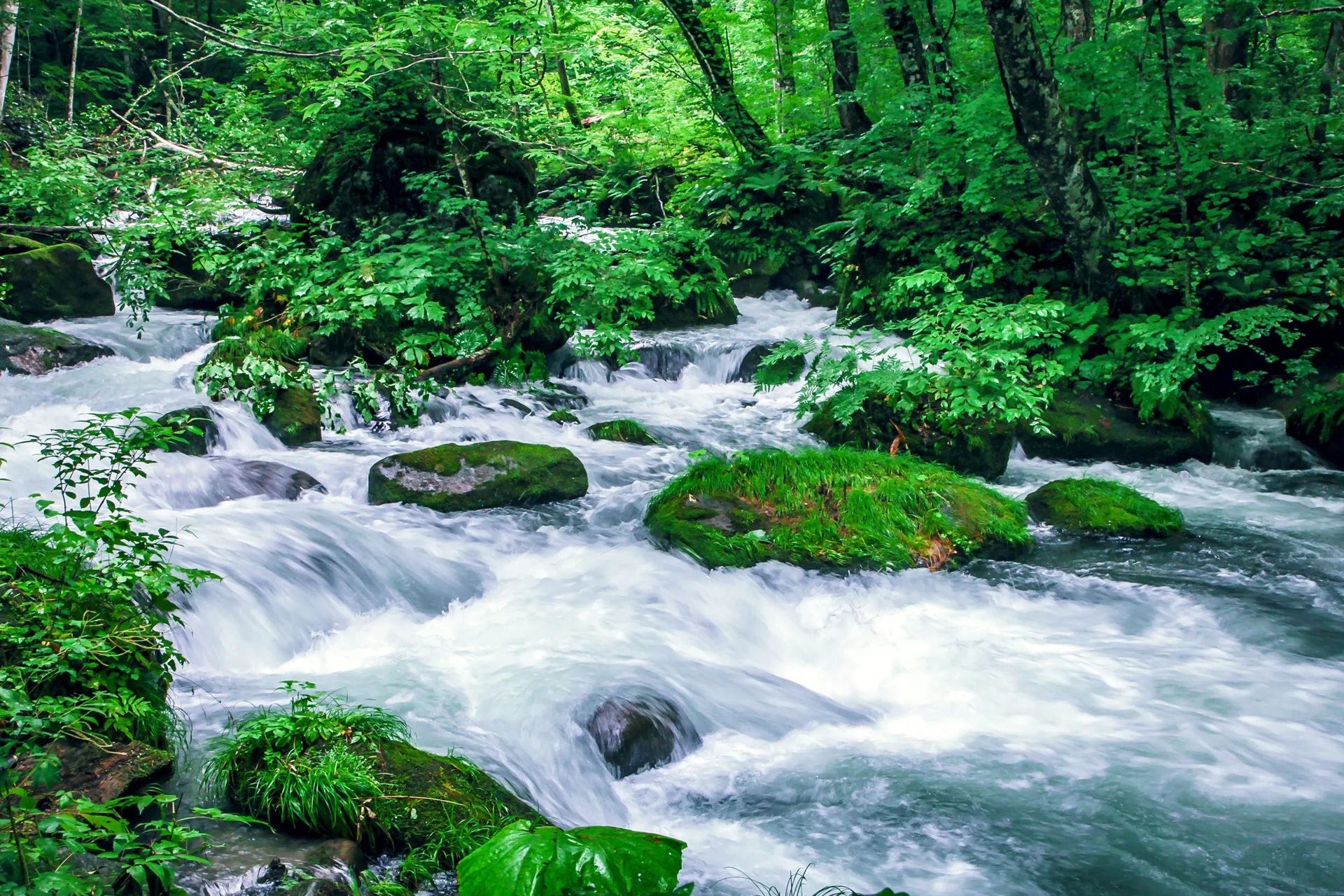
The landscapes surrounding Aomori range from the primeval to the ethereal. Shirakami-Sanchi, a UNESCO World Heritage beech forest straddling the Aomori-Akita border, preserves the last virgin temperate beech woodland in East Asia—a canopy so dense and undisturbed that it shelters the Japanese serow, black woodpecker, and golden eagle. Lake Towada, a volcanic caldera lake in the mountains south of the city, achieves a cerulean perfection in autumn when the surrounding forest ignites in crimson and gold. The Oirase Gorge, a mossy stream valley below Towada, offers one of Japan’s most celebrated autumn walks.
AIDA, Azamara, and Princess Cruises call at Aomori’s port, located on the bay with views across the Tsugaru Strait to Hokkaido’s mountains. The city’s compact center is walkable, with the Nebuta Museum, fish market (Furukawa Market, where the nokkedon custom rice bowl—similar to Kushiro’s katte-don—is a must-try), and waterfront all within easy reach. The apple harvest season (September–November) offers the region’s finest weather and the spectacular autumn foliage that makes Tohoku the country’s premier fall destination, while August visitors can witness the Nebuta’s electrifying processions firsthand.

