For over a thousand years, from 794 until the Meiji Restoration of 1868, Kyoto served as the imperial capital of Japan, accumulating layers of cultural refinement that make it not merely a city of temples and shrines but a living repository of Japanese civilization itself. With seventeen UNESCO World Heritage Sites, over two thousand temples and shrines, and traditions of garden design, tea ceremony, cuisine, and textile arts that have been continuously practiced for centuries, Kyoto presents a depth of cultural experience unmatched by any other city in East Asia. The city sits in a basin surrounded on three sides by forested mountains, a geography that has shaped its microclimate, its aesthetics, and its self-regarding sense of being Japan's true cultural heart.
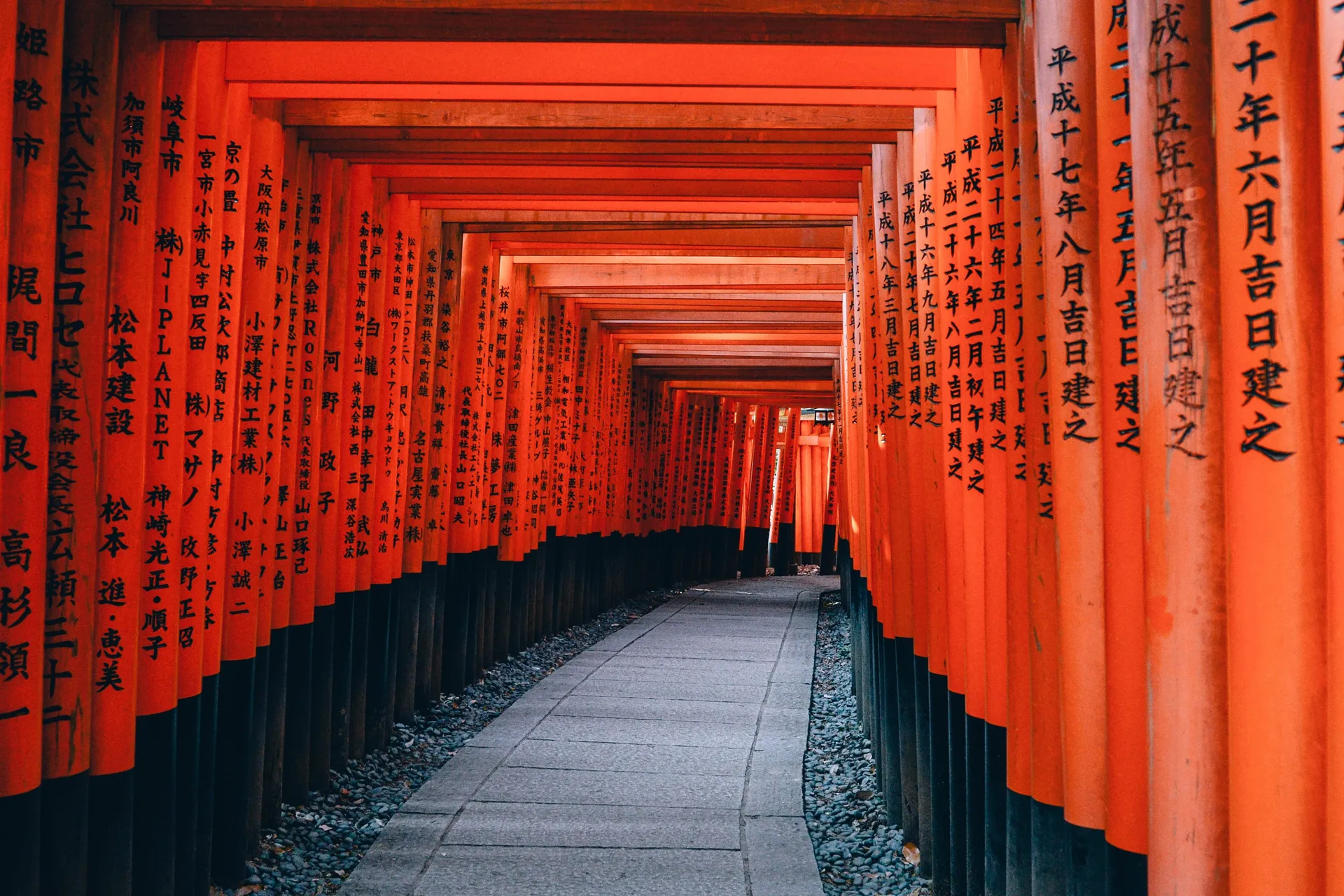
Kinkaku-ji, the Golden Pavilion, floats above its mirror lake with an ethereal beauty that no photograph can fully capture — the real structure seeming somehow more luminous than any image. But Kyoto's temple treasures extend far beyond this iconic landmark. Ryōan-ji's rock garden, fifteen stones arranged on raked white gravel, has provoked contemplation and debate for over five centuries. Fushimi Inari-Taisha's ten thousand vermillion torii gates create a tunnel of colour that climbs through the forest to the summit of Mount Inari. Kiyomizu-dera, its massive wooden stage cantilevered over the eastern hillside without a single nail, offers views across the city that compress ancient and modern Kyoto into a single breathtaking frame.
The district of Gion, Kyoto's traditional geisha quarter, preserves a world of wooden machiya townhouses, willow-lined canals, and the flickering glimpse of a maiko — an apprentice geisha — hurrying through the evening streets in full regalia. The preservation of this district represents a conscious cultural choice: Kyoto has maintained strict building codes and aesthetic standards that ensure the city's historic character survives the pressures of modernity. Nishiki Market, a covered arcade known as "Kyoto's Kitchen," stretches for five blocks through the commercial district, its stalls offering the pickled vegetables, fresh tofu, wagashi sweets, and seasonal ingredients that define Kyoto's distinctive cuisine — kaiseki, the multi-course meal that elevates cooking to a meditative art.
The seasons in Kyoto carry a significance that transcends mere weather. Cherry blossom season in early April transforms the city into a pink and white dreamscape, with the Philosopher's Path and Maruyama Park becoming sites of hanami celebrations that are themselves centuries-old traditions. Autumn brings momiji — the changing of the maples — and the temples of Tōfuku-ji, Eikan-dō, and the northern Arashiyama district blaze with colours that inspired the entire Japanese aesthetic of impermanence and beauty. Even winter has its particular magic: a light snowfall on the Golden Pavilion or the bamboo grove of Arashiyama creates images of such severe beauty that they seem composed rather than natural.
Tauck includes Kyoto in its Japan itineraries, recognizing the former imperial capital as the essential counterpart to Tokyo's electric modernity. While Kyoto is not a cruise port in the traditional sense, it is accessible from several ports in the Kansai region as part of extended land-and-sea programmes. The city rewards extended stays of at least three days, though a lifetime would not exhaust its offerings. Cherry blossom season in early April and autumn foliage in mid-November represent the peak experiences, but every season reveals different aspects of a city that has spent a thousand years perfecting the art of being beautiful.

