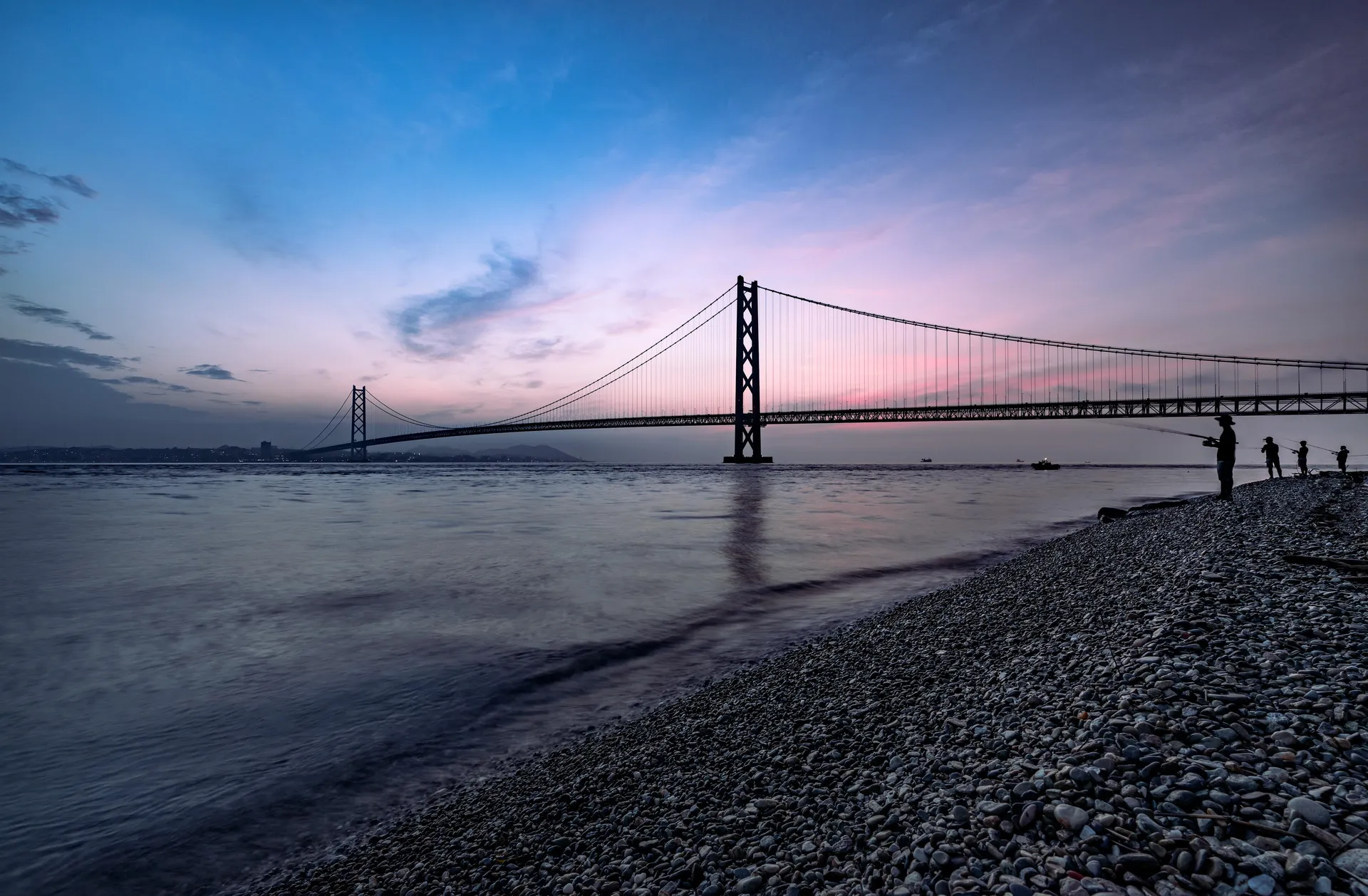
Muroran occupies a natural harbor of exceptional quality on the southwestern coast of Hokkaido, Japan's northernmost main island, where a volcanic peninsula curves into the Pacific like a protective arm, creating a deep-water anchorage that has served as a strategic port since the Meiji era. The city rose to prominence as a steelmaking center in the early twentieth century—the smokestacks of Nippon Steel's Muroran works dominated the skyline for decades—but today the city is reinventing itself around its spectacular natural setting, particularly the dramatic geological features of the Chikyu Cape and the surrounding coastline.
The Chikyu Cape—literally "Earth Cape"—is Muroran's most dramatic natural landmark: a promontory of volcanic rock that plunges a hundred meters to the Pacific in sheer cliffs of columnar basalt, carved by millennia of wave action into a seascape of arches, sea stacks, and surge channels that rivals the most dramatic coastlines in Iceland or Ireland. A walking trail along the clifftop provides vertiginous views down to the churning surf below, and on clear days the vista extends to the mountains of the Oshima Peninsula across Uchiura Bay. The cape's lighthouse, perched at the terminus of the trail, has guided ships into Muroran's harbor since 1920.
Tokkarisho, a coastal terrace south of the city center, offers views of a different geological character. Here, eroded sea cliffs reveal layers of volcanic tuff in warm shades of brown and gold, their surfaces sculpted by wind and rain into formations that suggest the ruins of some ancient civilization. A nature trail winds through coastal meadow and scrubby forest, with interpretive panels explaining the geological processes that created this landscape—a useful counterpoint to the area's more visceral appeal as simply one of the most beautiful stretches of coastline in Hokkaido.
Muroran's food culture reflects Hokkaido's legendary bounty. The city has staked its culinary identity on yakitori—specifically, a local variation that uses pork rather than chicken, threaded on skewers and grilled over charcoal with a sweet-savory tare sauce. Muroran yakitori is taken seriously enough to support its own annual festival and a dedicated walking map of the city's best purveyors. The surrounding waters provide scallops, squid, and the prized hairy crab that is Hokkaido's most celebrated winter delicacy.
Cruise ships dock at Muroran's modern cruise terminal, which offers facilities that reflect the city's growing investment in tourism. The terminal's location on the harbor places passengers within taxi distance of the cape and coastal attractions, while organized excursions often combine Muroran's geological highlights with visits to Lake Toya, a caldera lake of extraordinary beauty located approximately forty minutes inland, surrounded by hot spring resorts and overlooked by the active volcano Mount Usu. The best months for visiting are June through October, with July and August offering the warmest weather—though Hokkaido's summer temperatures rarely exceed 25°C, providing a refreshing contrast to the stifling heat of Honshu. Autumn brings spectacular foliage to the surrounding mountains, and the clear air of Hokkaido's fall creates a crystalline quality of light that makes the cape's cliffs glow.

