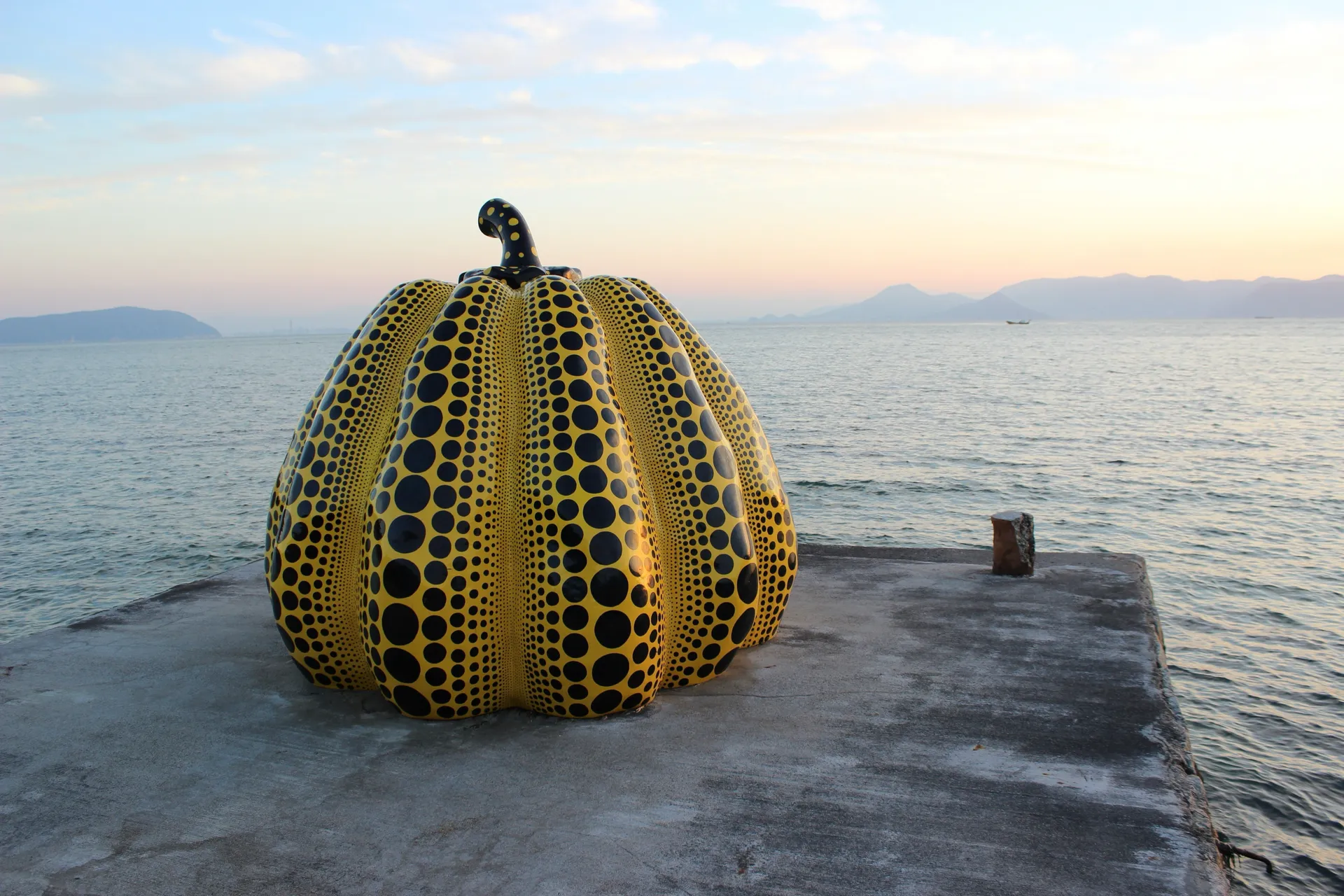
Naoshima is proof that a single visionary idea can transform a place entirely. This small island in Japan's Seto Inland Sea—barely eight square kilometers of pine-covered hills and fishing hamlets—was fading into demographic obscurity in the 1980s when Soichiro Fukutake, an education publisher with an art collector's eye, began acquiring land and commissioning buildings from some of the world's most celebrated architects. What emerged over the following decades is one of the most extraordinary intersections of art, architecture, and landscape anywhere on Earth: a place where Tadao Ando's concrete temples house Claude Monet's Water Lilies, where Yayoi Kusama's polka-dotted pumpkin sculptures perch on seaside piers, and where an entire village has been transformed into a living gallery.
The Chichu Art Museum, buried into a hilltop to preserve the island's natural profile, is Naoshima's masterpiece. Ando's design channels natural light through geometric openings in the earth to illuminate a permanent collection of just three artists—Monet, Walter De Maria, and James Turrell—each given a space so precisely calibrated to their work that the architecture and art become inseparable. The experience of encountering Monet's final Water Lilies paintings in a room flooded with ambient daylight, with no artificial lighting, is one that visitors describe as transcendent. Across the island, the Benesse House Museum extends this philosophy, integrating artworks into the architecture of a hotel where guests sleep surrounded by original pieces by Bruce Nauman, Richard Long, and Hiroshi Sugimoto.
The Art House Project in the village of Honmura takes the concept further still, converting abandoned homes, a shrine, and a dental office into permanent installations by artists including Tatsuo Miyajima, Rei Naito, and James Turrell. Walking through the village's narrow lanes, past rice paddies and persimmon trees, and then stepping into a darkened house to encounter a glowing digital river of LED numbers or a meditation space of breathtaking purity creates a friction between the quotidian and the sublime that is uniquely Naoshima. The locals, initially skeptical, have embraced the transformation—many operate the installations as volunteer guides, sharing their island's story with gentle pride.
Beyond the art, Naoshima retains the simple charm of an Inland Sea fishing island. The morning catch still arrives at the small harbor, and the island's cafés serve fresh sashimi, udon noodles, and the local specialty of octopus from the surrounding waters. Cycling is the preferred mode of transport, and the island's gentle terrain makes it possible to visit most sites in a day. The I Love Yu bathhouse, designed by Shinro Ohtake as a functioning public bath with a wildly collaged interior and exterior, offers the chance to soak in a work of art—literally.
Small expedition cruise ships anchor offshore, with tenders bringing passengers to the Miyanoura port, where Kusama's red pumpkin sculpture provides an immediately iconic welcome. The island can also be reached by regular ferry from Takamatsu or Uno. Given the intimate scale of the museums and the Art House Project, early arrival is advantageous—the Chichu Art Museum limits daily visitors. March through June and September through November offer the most comfortable temperatures and clearest skies, while the Setouchi Triennale art festival (held every three years) transforms the entire island group into a celebration of site-specific art that draws visitors from around the globe.

