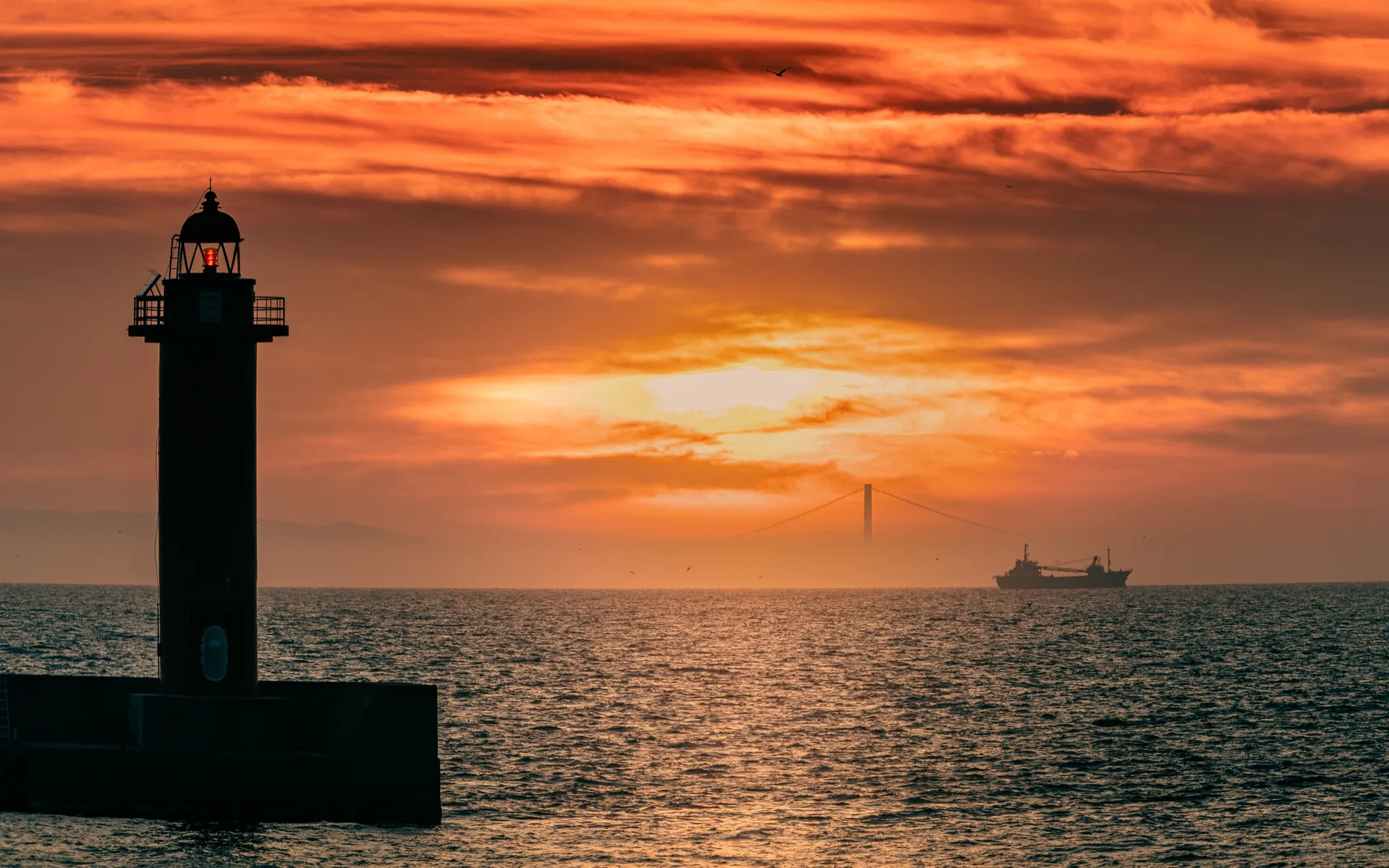
Omaezaki occupies the southernmost point of Shizuoka Prefecture's coast, a windswept cape jutting into the Pacific Ocean where the warm Kuroshio Current sweeps past in a river of deep blue water that has sustained both the region's fishing industry and its unusual microclimate for centuries. This unassuming coastal town, better known to Japanese surfers and fishermen than to international tourists, offers an authentic glimpse of rural Pacific Japan that stands in refreshing contrast to the country's more polished tourism destinations.
The Omaezaki Lighthouse, perched on the cape's highest point, has guided ships past this headland since 1874—one of the oldest Western-style lighthouses in Japan, built during the Meiji era when Japan was rapidly modernizing its maritime infrastructure. The lighthouse, still operational, stands on a cliff that drops directly to the ocean in a wall of stratified rock, its lantern room offering panoramic views that extend to Mount Fuji on clear winter days. The surrounding cape park, crisscrossed with walking paths through wind-sculpted coastal vegetation, provides one of the most dramatic ocean viewpoints on the Shizuoka coast.
Omaezaki's primary claim to fame is its fishing, particularly for katsuo (skipjack tuna), which is caught in the deep waters offshore and processed into katsuobushi—the dried, fermented, and smoked bonito flakes that form the backbone of Japanese cuisine's foundational dashi stock. The town's fish market and processing facilities demonstrate the extraordinary labor that transforms a fresh fish into the wood-hard blocks of katsuobushi that Japanese cooks shave into gossamer-thin flakes before each use. Watching this centuries-old process, from initial filleting through months of curing and smoking, reveals the depth of craft that underpins even the most humble Japanese dish.
The coastline around Omaezaki is shaped by the powerful Pacific waves that make this region one of Japan's premier surfing destinations. The beach breaks at Omaezaki attract surfers from across Shizuoka and beyond, and the annual Omaezaki Pro is one of the most prestigious surfing competitions in Japan. For non-surfers, the beaches provide excellent walking and beachcombing opportunities, with the wave-polished stones and driftwood that accumulate on the shore reflecting the ocean's ceaseless energy.
Cruise ships visiting Omaezaki anchor offshore, with tender service to the fishing port. The town's compact scale makes it manageable on foot, though excursions to the lighthouse and cape park benefit from vehicle transport. Omaezaki also serves as a gateway to the green tea plantations of the Makinohara Plateau—one of the largest tea-growing areas in Japan, where fields of vivid green extend to the horizon in meticulous rows. May through October offers the most pleasant weather, with summer bringing the warmest water temperatures and the most active surfing season. Clear winter days provide the best Fuji visibility, and the katsuo fishing season peaks in spring and autumn.

