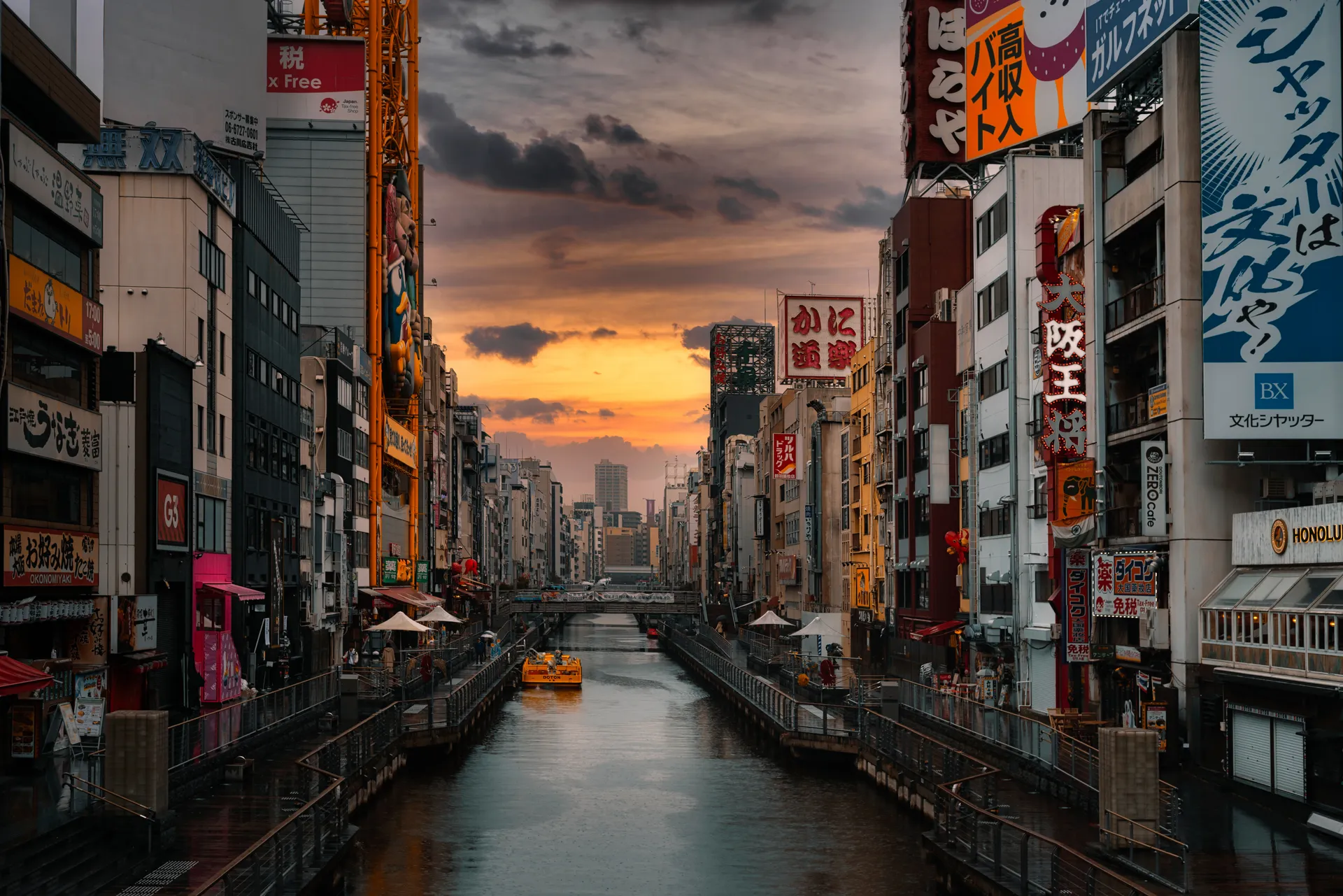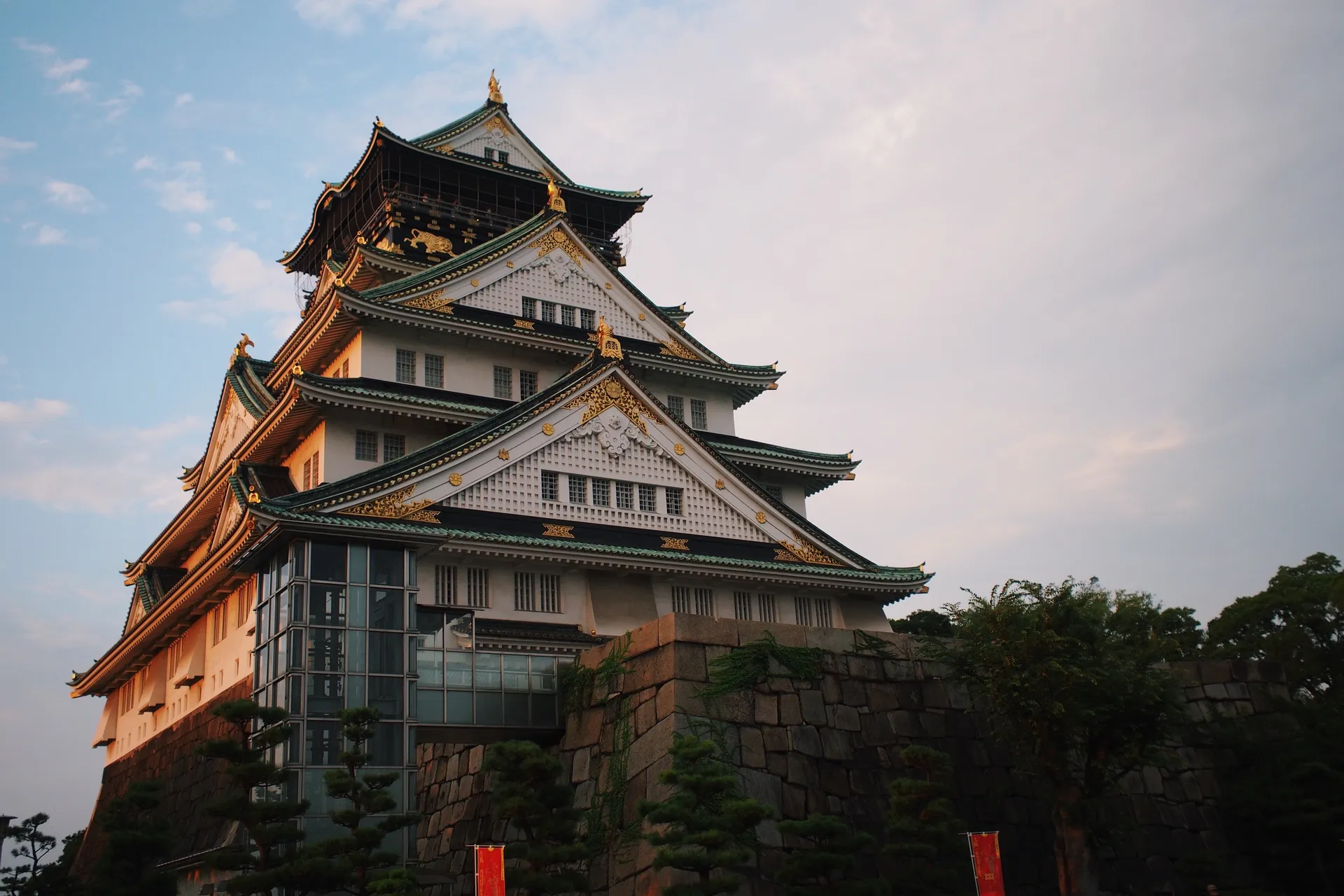
Once the merchant capital of feudal Japan, Osaka earned the moniker *tenka no daidokoro* — the nation's kitchen — during the Edo period, when its vast network of canals channelled rice, silk, and ambition from every corner of the archipelago into a single, electrifying metropolis. The city's merchant class, unburdened by samurai austerity, cultivated a culture of unabashed pleasure that still pulses through every lantern-lit alleyway today. Where Kyoto whispers of temples and tradition, Osaka roars with appetite.
And what an appetite it is. Japan's third-largest city has thrown off whatever restraint it once possessed and stepped boldly into the spotlight, its skyline ablaze with neon calligraphy and its streets alive with a theatrical energy found nowhere else in Asia. Giant mechanical crabs flex their claws above Dōtonbori Canal, where the iconic Glico Running Man has presided over the crowds since 1935. The Shinsekai district, built in the early twentieth century as a utopian entertainment quarter modelled after Coney Island and Paris, still hums with retro charm — its Tsūtenkaku Tower piercing the sky like an exclamation mark over a neighbourhood that refuses to grow old gracefully. There is a rawness here, a magnificent lack of pretension, that makes Osaka feel less like a curated destination and more like a city that simply cannot help being extraordinary.
To visit Osaka without surrendering entirely to its cuisine is to miss the point of the place. Begin at dawn in the Kuromon Market, where vendors have been trading the freshest *fugu* (pufferfish), *maguro* (bluefin tuna), and Hokkaido uni since 1902. For lunch, seek out *kushikatsu* — skewers of meat, seafood, and vegetables dipped in a feather-light panko batter and fried to golden perfection — at one of the narrow standing-only counters in Shinsekai, where the cardinal rule (never double-dip in the communal sauce) is enforced with deadpan seriousness. The city's soul food, however, remains *takoyaki*, those impossibly crisp-yet-molten octopus spheres sold from street carts across the city, and *okonomiyaki*, the savoury cabbage pancake layered with pork belly, dancing bonito flakes, and a sweet-tangy glaze that captures everything glorious about Osaka in a single bite. For a more refined evening, the kaiseki restaurants of Kitashinchi — Osaka's answer to Ginza — offer multi-course poetry on porcelain, each dish a meditation on season and place.
Beyond the city limits, a constellation of remarkable destinations awaits the curious traveller. The Fuji Hakone Izu National Park, accessible by bullet train, offers hot-spring *ryokan* retreats with views of Japan's sacred peak wreathed in morning mist — an experience that belongs on every discerning itinerary. Further north, the Tōhoku region unfolds like a hidden Japan: Hirosaki's castle grounds, blanketed by over two thousand cherry trees each spring, create what many consider the country's most breathtaking *hanami* spectacle. The volcanic caldera of Lake Towada and the forested hot springs of Hanamaki — where the beloved poet Kenji Miyazawa once sought inspiration — offer a quieter, deeply restorative counterpoint to Osaka's kinetic energy. The port city of Aomori, gateway to this northern wilderness, rewards visitors with its spectacular Nebuta Festival lantern floats and some of Japan's finest apple orchards.
Osaka's cruise port has become an increasingly coveted call for the world's most distinguished ocean lines, and for good reason. Celebrity Cruises and Holland America Line both feature Osaka prominently on their Asia-Pacific itineraries, offering elegant passages through the Inland Sea, while Regent Seven Seas Cruises and Seabourn deliver the kind of intimate, all-inclusive refinement that transforms a port call into a private revelation. Silversea's expedition-minded voyages and Viking's culturally immersive sailings treat Osaka as a jewel in their extended Asian arcs, and Tauck's curated small-group journeys ensure that every shore excursion feels less like tourism and more like privileged access. Even Windstar Cruises, celebrated for its wind-powered grace, threads Osaka into itineraries that marry the romance of sail with the sophistication of modern luxury. Arriving by sea — gliding past the futuristic sweep of Osaka Bay as the city's skyline sharpens on the horizon — remains one of the most dramatic introductions any port in Asia can offer.