Takamatsu opens onto the Seto Inland Sea like a balcony — a city of 420,000 on the northern coast of Shikoku that has reinvented itself as one of Japan's most compelling cultural destinations without sacrificing the maritime character that has defined it for centuries. The city's origin story centers on Takamatsu Castle, built in 1590 by Ikoma Chikamasa directly on the waterfront, its moats filled with seawater and stocked with sea bream — one of only three saltwater-moat castles in Japan. Though much of the castle was demolished in the Meiji era, the remaining turrets and gardens, with fishing boats and ferries gliding past the outer walls, still evoke the ingenuity of a castle designed to be defended and supplied from the sea.
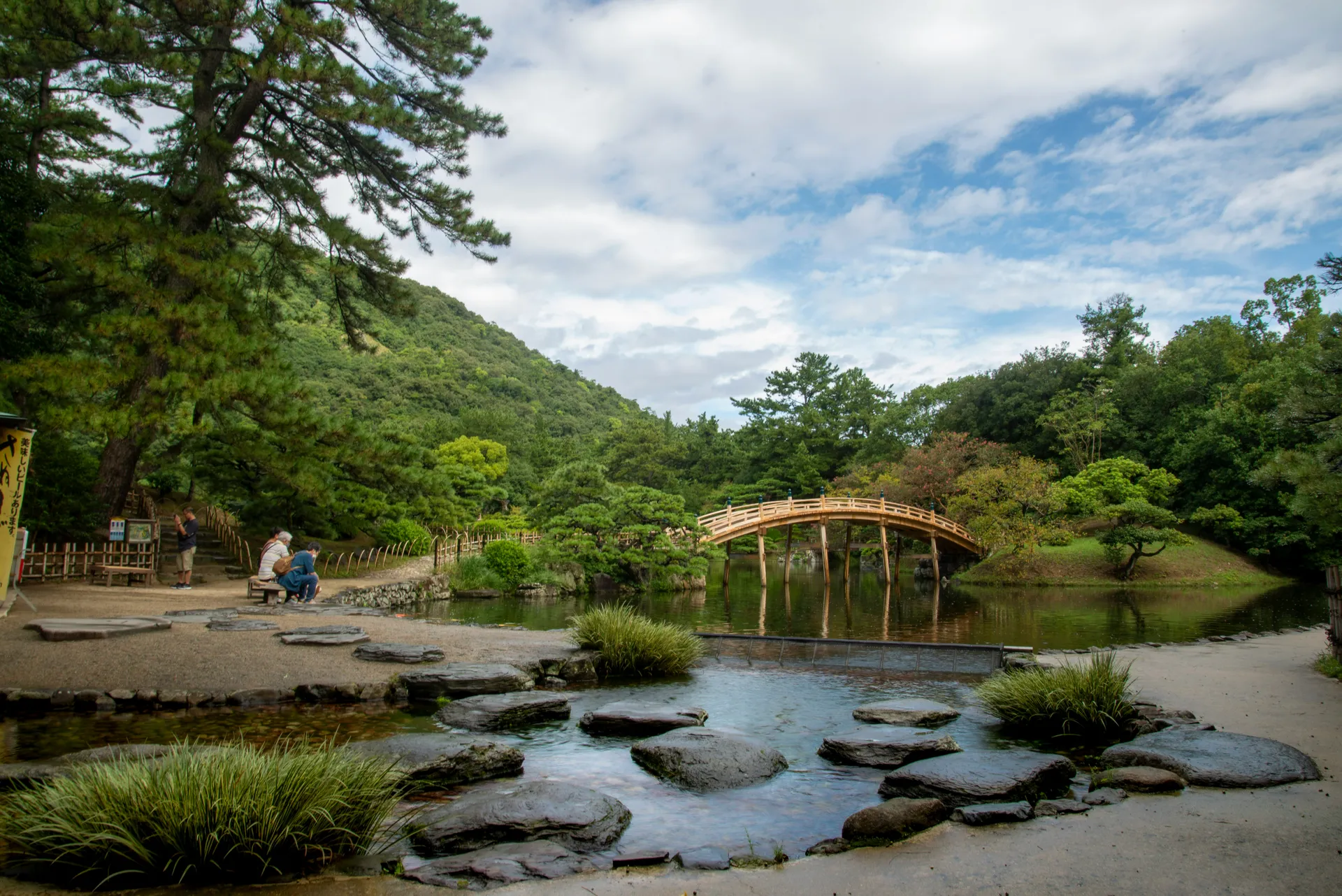
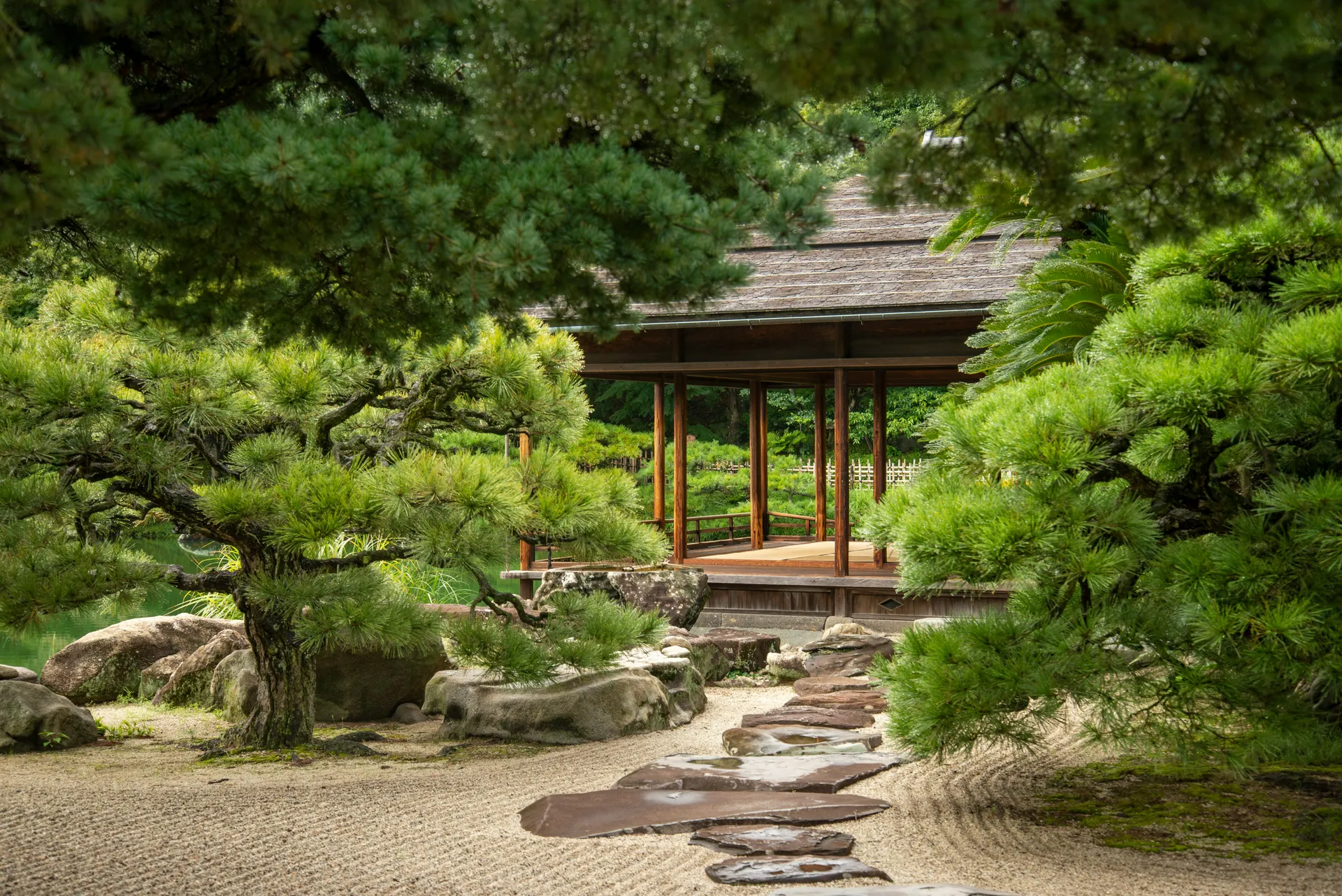
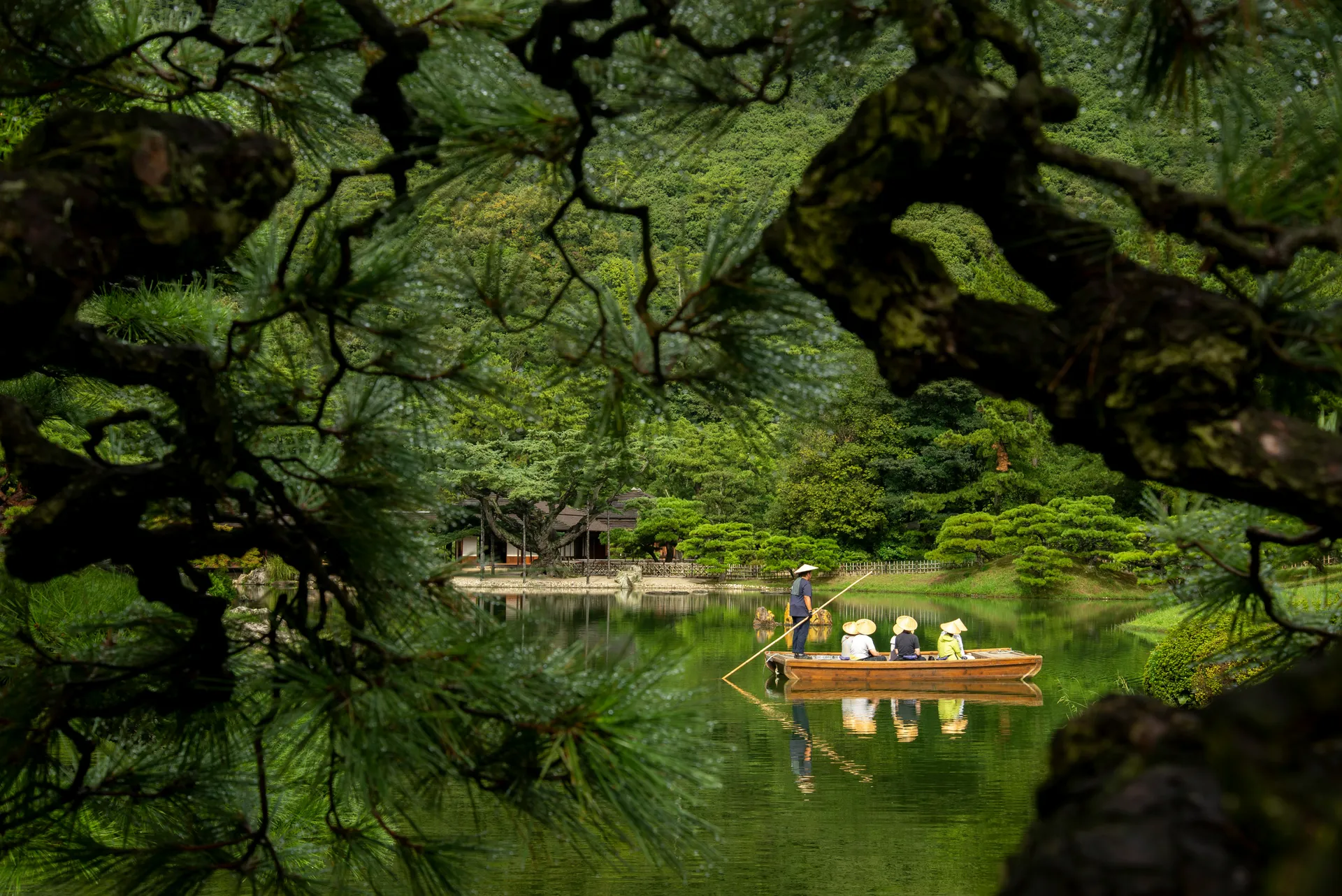
The crown jewel of Takamatsu is Ritsurin Garden, widely regarded as one of the finest landscape gardens in Japan — and a strong candidate for the finest anywhere. Begun by the local feudal lord in 1625 and developed over a century, Ritsurin spreads across 750,000 square meters of sculpted ponds, pine-clad hills, bridges, teahouses, and meticulously pruned trees — each of the garden's 1,400 pine trees shaped by hand, some requiring three days of annual trimming by specialist gardeners. The garden's genius lies in its "borrowed scenery," incorporating the wooded slopes of Mount Shiun as a backdrop that merges artifice with nature so seamlessly that the boundary dissolves. An early-morning boat ride across the South Pond, when mist rises from the water and the only sound is the wooden oar, is one of Japan's most transcendent aesthetic experiences.
Takamatsu's culinary identity rests on a single, magnificent obsession: udon. Sanuki udon — named for the old province that is now Kagawa Prefecture — is thick, chewy, and served with an almost religious devotion across hundreds of small shops. The best are tiny, family-run establishments where you order at a counter, watch the noodles being cut, and carry your bowl to a communal table. Toppings are minimalist — a raw egg, grated ginger, green onions, a splash of soy sauce — because the noodle itself is the point. Beyond udon, the Seto Inland Sea provides exceptional seafood: olive-fed Wagyu from Shodoshima Island, olive hamachi (yellowtail raised on olive feed), and the small, intensely sweet shrimp from the Inland Sea floor. The Marugame-machi shopping arcade and the Kitahama area near the port offer the densest concentration of restaurants.
The Seto Inland Sea, visible from virtually every vantage point in the city, is itself the great attraction. The Setouchi Triennale, held every three years on the islands scattered across this gentle sea, has transformed abandoned fishing villages into open-air galleries of contemporary art. Naoshima Island, reachable by ferry in an hour, is the crown jewel — Tadao Ando's concrete museums for the Benesse Art Site, Yayoi Kusama's yellow pumpkin sculpture on the pier, and James Turrell's light installations within a converted Shinto shrine. Teshima, Shodoshima, and Megijima each offer their own artistic and natural rewards. Back in Takamatsu, the Isamu Noguchi Garden Museum — the sculptor's studio preserved exactly as he left it — requires advance reservation but delivers an unforgettable encounter with creative genius.
Takamatsu is connected to Okayama on Honshu by the Seto Ohashi Bridge (one hour by train) and serves as the ferry hub for Inland Sea islands. The city's compact center is easily navigated by bicycle — rental stations are abundant — and the Kotoden railway connects the station, port, and Ritsurin Garden. Spring and autumn offer the most comfortable weather for garden visits and island-hopping, while the Setouchi Triennale years (next edition 2028) draw international art pilgrims. Even outside festival years, the permanent installations on Naoshima alone justify the journey.