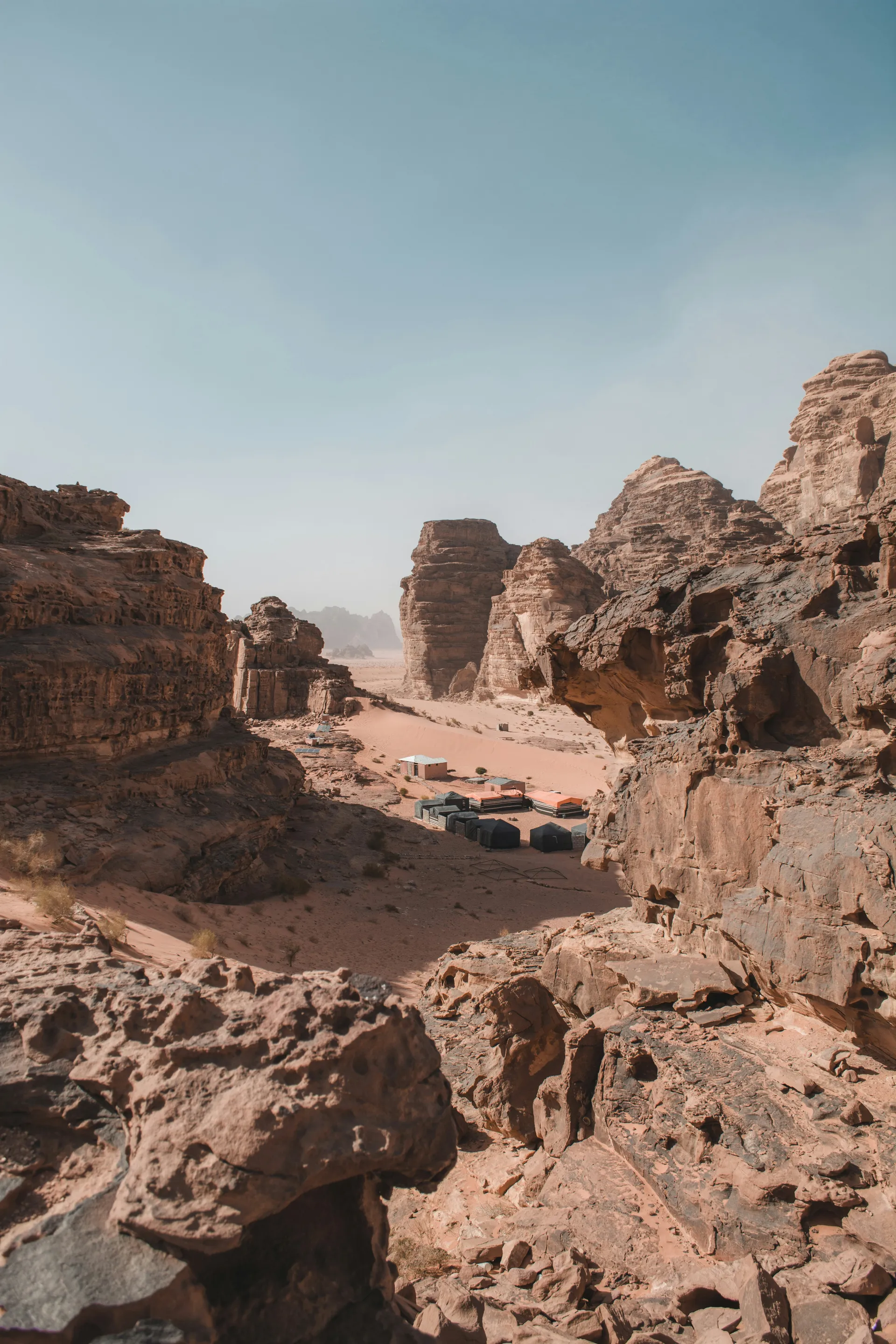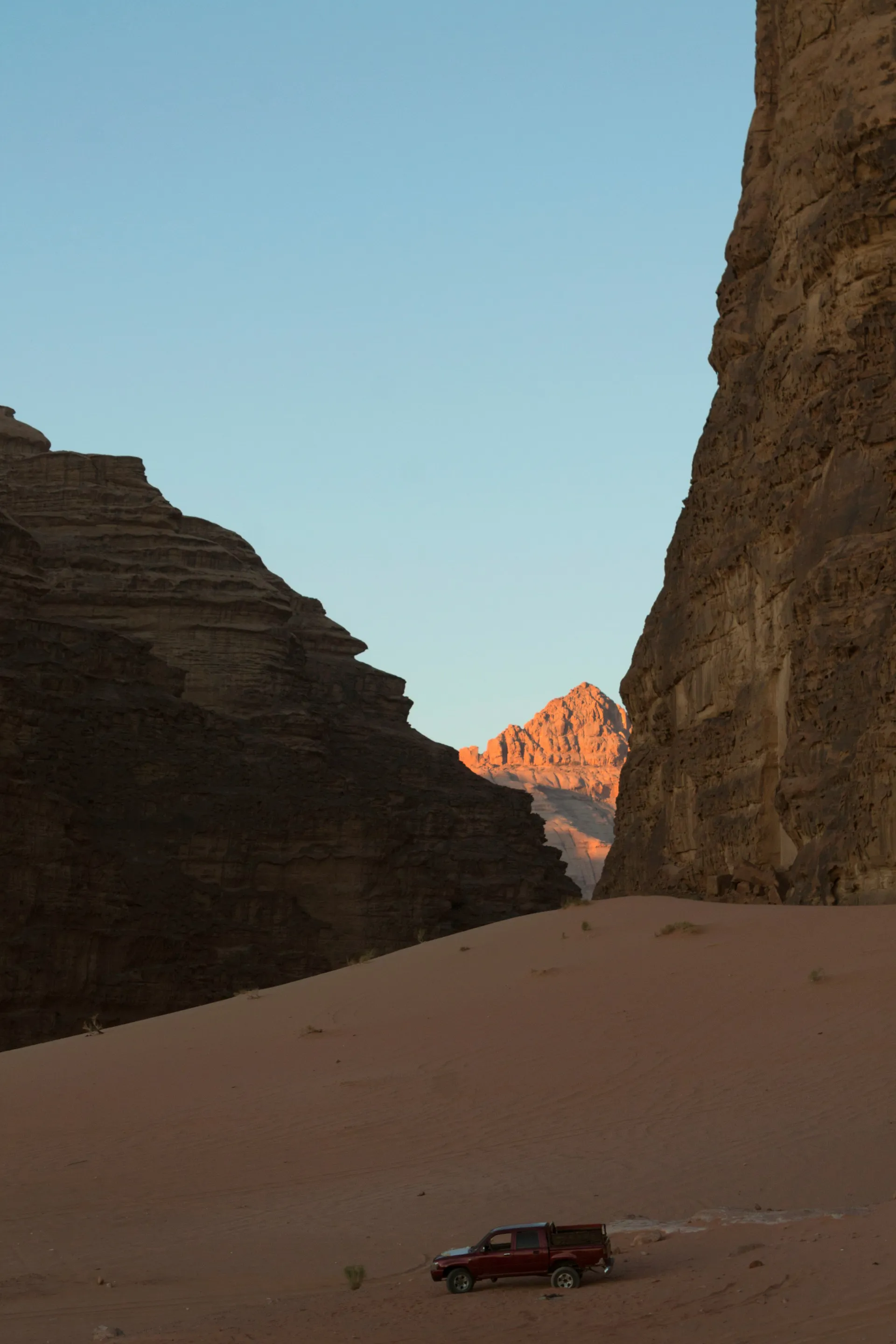
In the desert south of Jordan, where sandstone mountains rise from a floor of red sand like the ruins of a geological cathedral, Wadi Rum has inspired awe in every civilization that has passed through its vast, silent spaces. T.E. Lawrence, who used the valley as a base during the Arab Revolt of 1917, described it as "vast, echoing and God-like" — a phrase that remains perhaps the most accurate summation of a landscape that reduces human presence to an almost irrelevant scale. The Nabataeans carved their inscriptions into the rock faces here two millennia ago, and Bedouin communities have navigated these valleys for far longer, their intimate knowledge of water sources, grazing routes, and seasonal patterns constituting a body of knowledge as refined as any formal cartography.
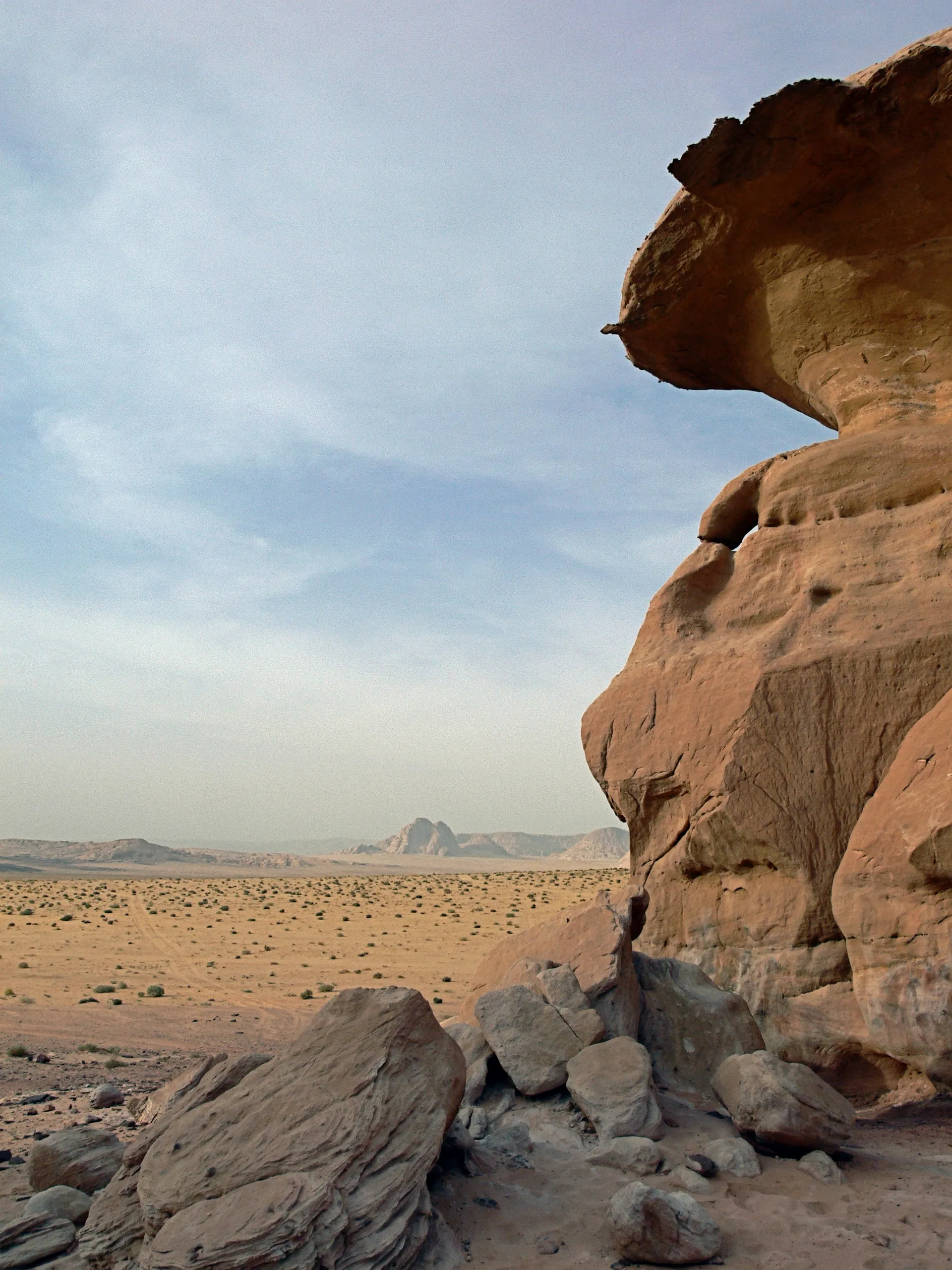
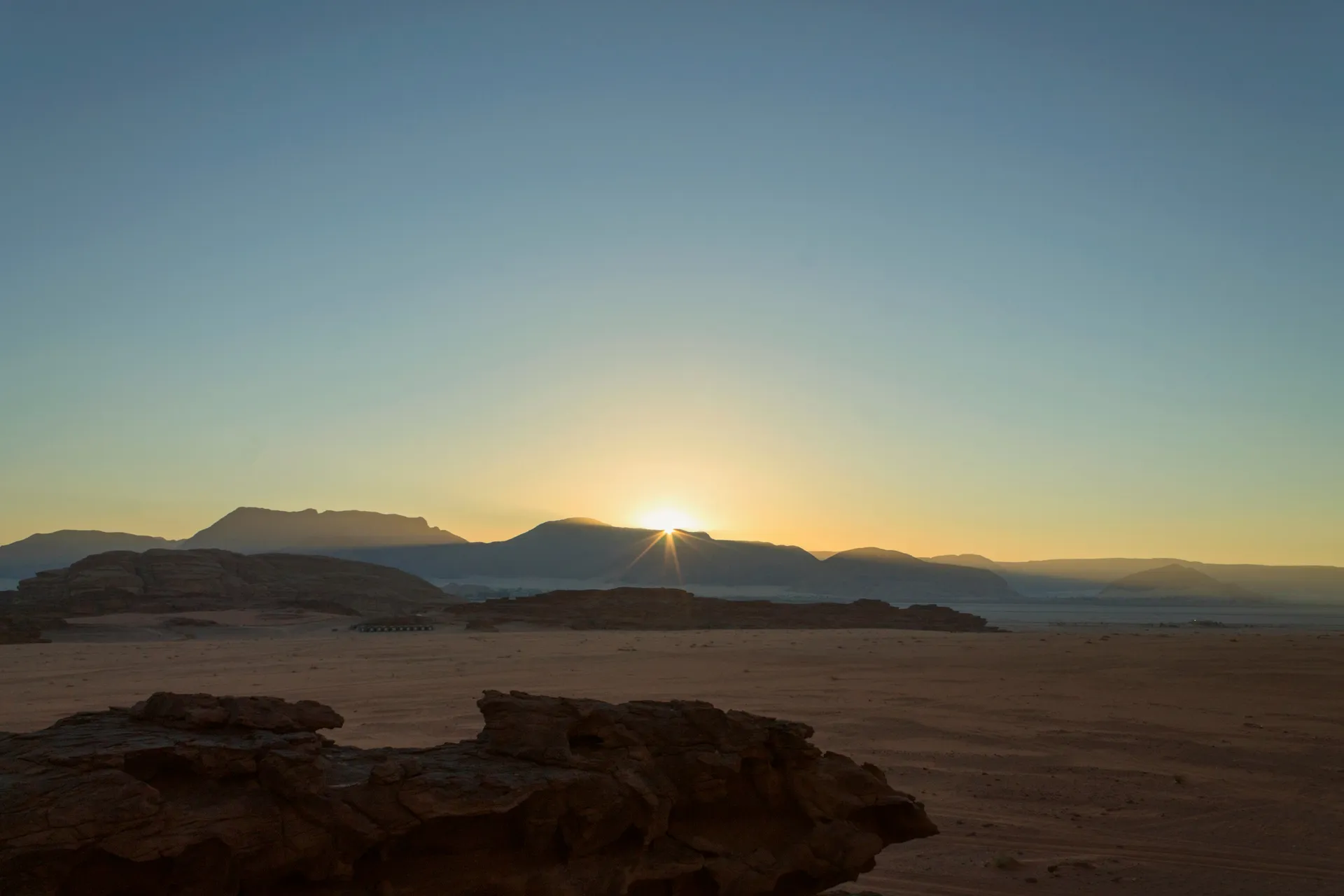
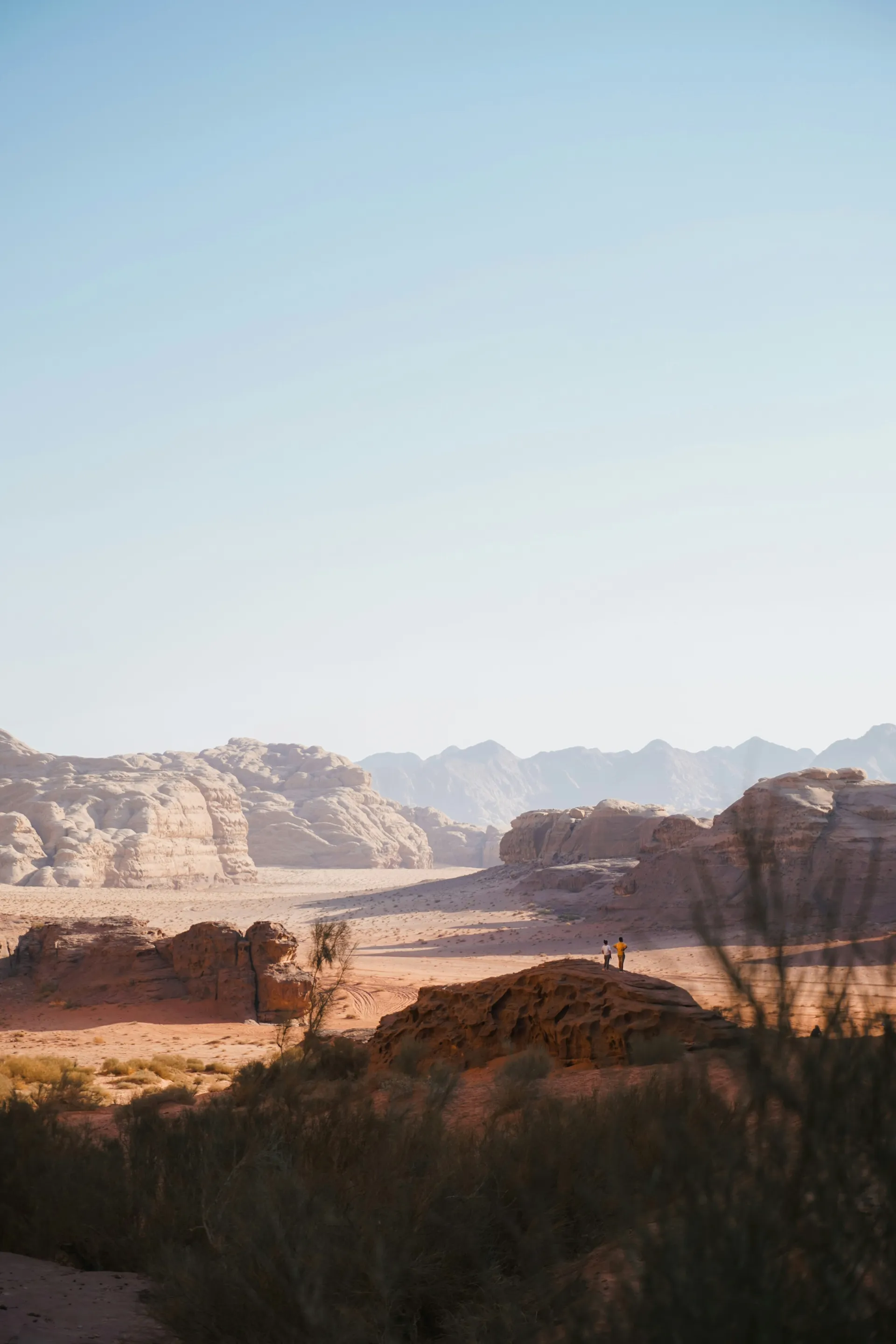
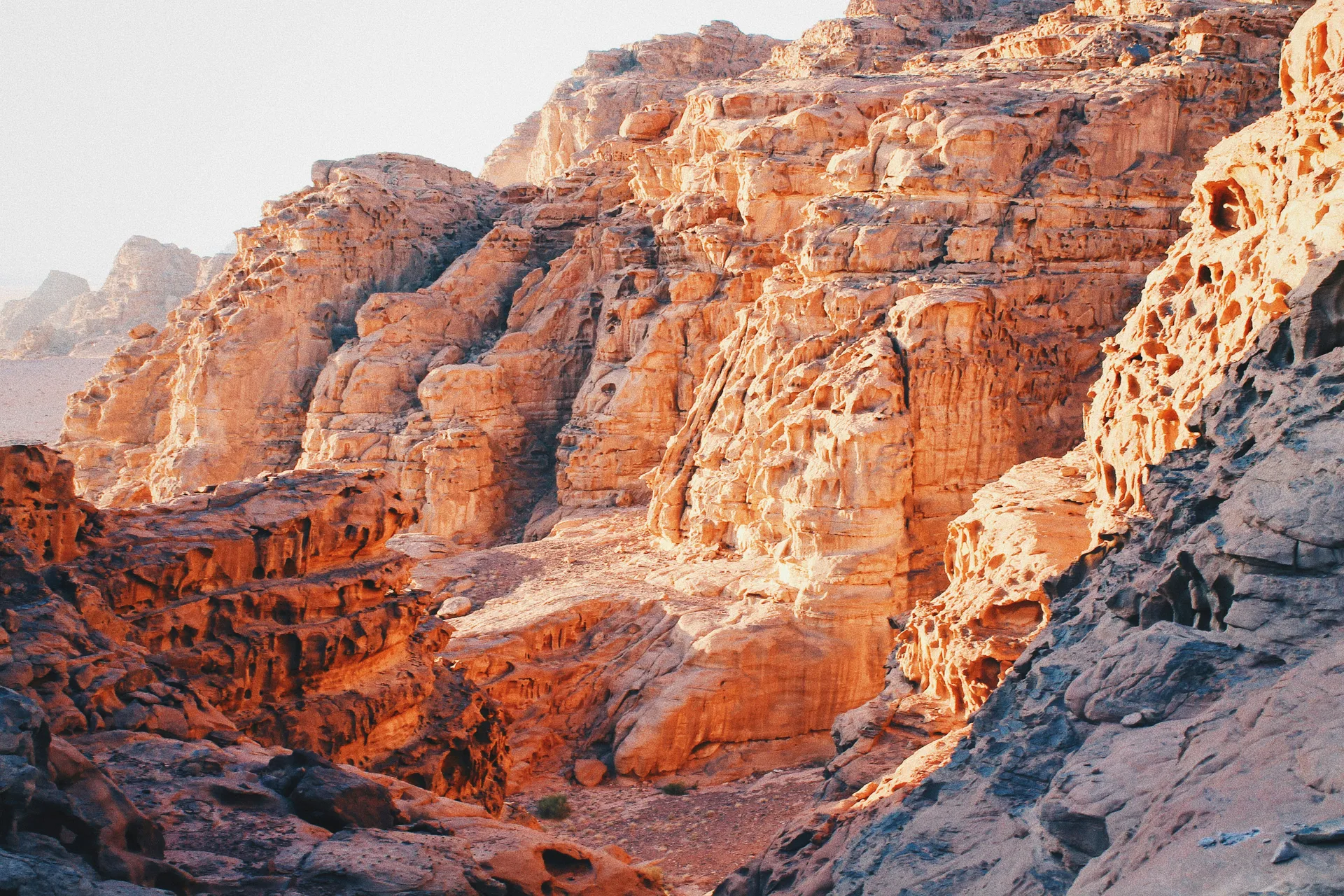
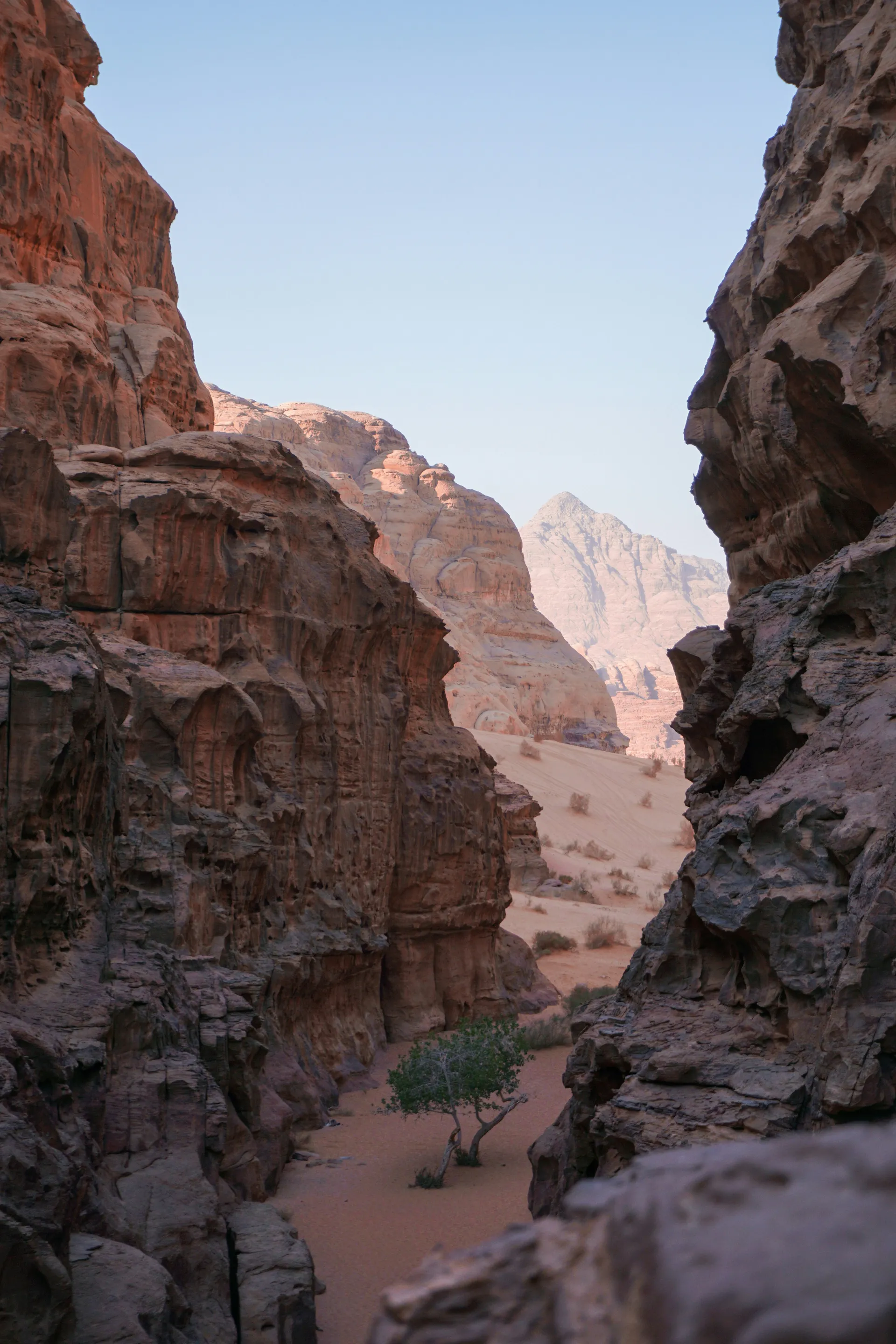
The landscape of Wadi Rum operates on proportions that challenge perception. Sandstone jebels (mountains) rise 750 meters from the desert floor in sheer walls of red, orange, and purple rock, their surfaces sculpted by wind erosion into arches, bridges, and mushroom-shaped formations that seem designed by a surrealist architect. The sand itself shifts through a spectrum of colors depending on mineral content and time of day — deep crimson at dawn, burnt orange at noon, and almost violet in the long shadows of late afternoon. The silence is not empty but textured — wind through rock corridors, the distant clatter of a Bedouin camp, the creak of cooling sandstone as the desert surrenders the day's heat.
The culinary traditions of Wadi Rum are those of the Bedouin — spare, practical, and deeply satisfying. Zarb, the signature desert feast, is prepared by burying marinated meats (lamb, chicken, and sometimes goat) with vegetables in an underground pit lined with hot coals and sealed with sand, slow-cooking for several hours until everything achieves a smoky tenderness. Mansaf, Jordan's national dish of lamb cooked in dried yogurt sauce and served over rice, appears at more formal gatherings with a ceremonial presentation that reflects its importance in Bedouin hospitality culture. Mint tea, poured from height into small glasses with practiced elegance, accompanies every encounter — to decline is to refuse friendship.
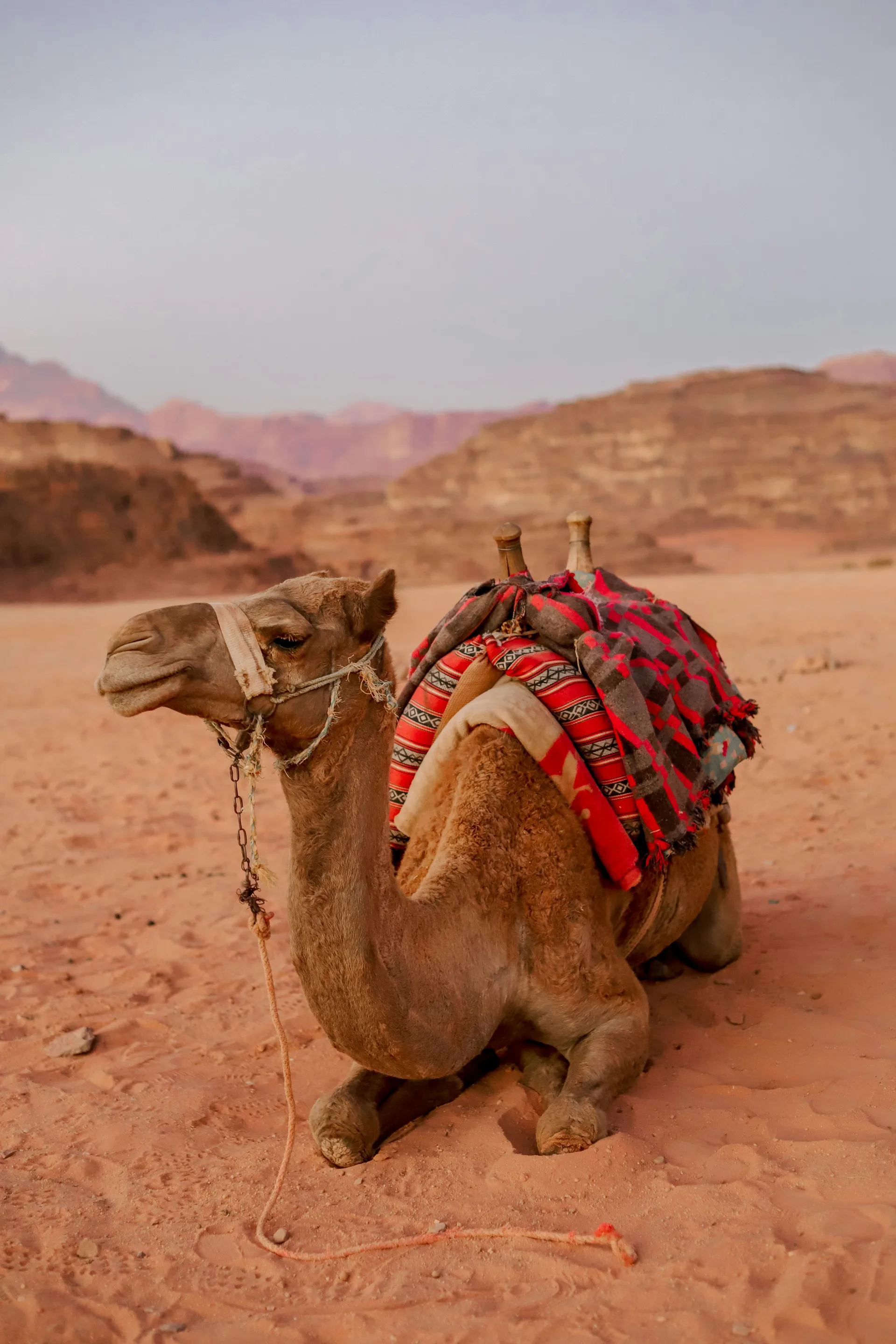
Adventure experiences in Wadi Rum range from the contemplative to the adrenaline-charged. Camel treks through the valleys follow routes that Bedouin guides have known for generations, their unhurried pace perfectly suited to absorbing the desert's immensity. 4x4 excursions reach remote sites including the Burdah Rock Bridge, one of the highest natural arches in the world, and ancient Thamudic and Nabataean inscriptions carved into cliff faces. Hot air balloon flights at dawn provide bird's-eye perspectives of the valley system. After dark, the desert's complete absence of light pollution reveals one of the world's most spectacular night skies — the Milky Way spanning the heavens with an intensity that provokes involuntary gasps.
Wadi Rum is reached from the cruise port of Aqaba (approximately sixty kilometers, one hour by road). Organized excursions from Aqaba are the most common access method for cruise passengers, with half-day and full-day options available. The most comfortable visiting months are March to May and September to November, when daytime temperatures range from 20°C to 30°C. Summer heat can exceed 40°C, making midday exploration inadvisable. Winter nights can approach freezing, and overnight visitors to Bedouin camps should bring warm clothing. Wadi Rum has been a UNESCO World Heritage Site since 2011, recognized for both its natural and cultural significance.