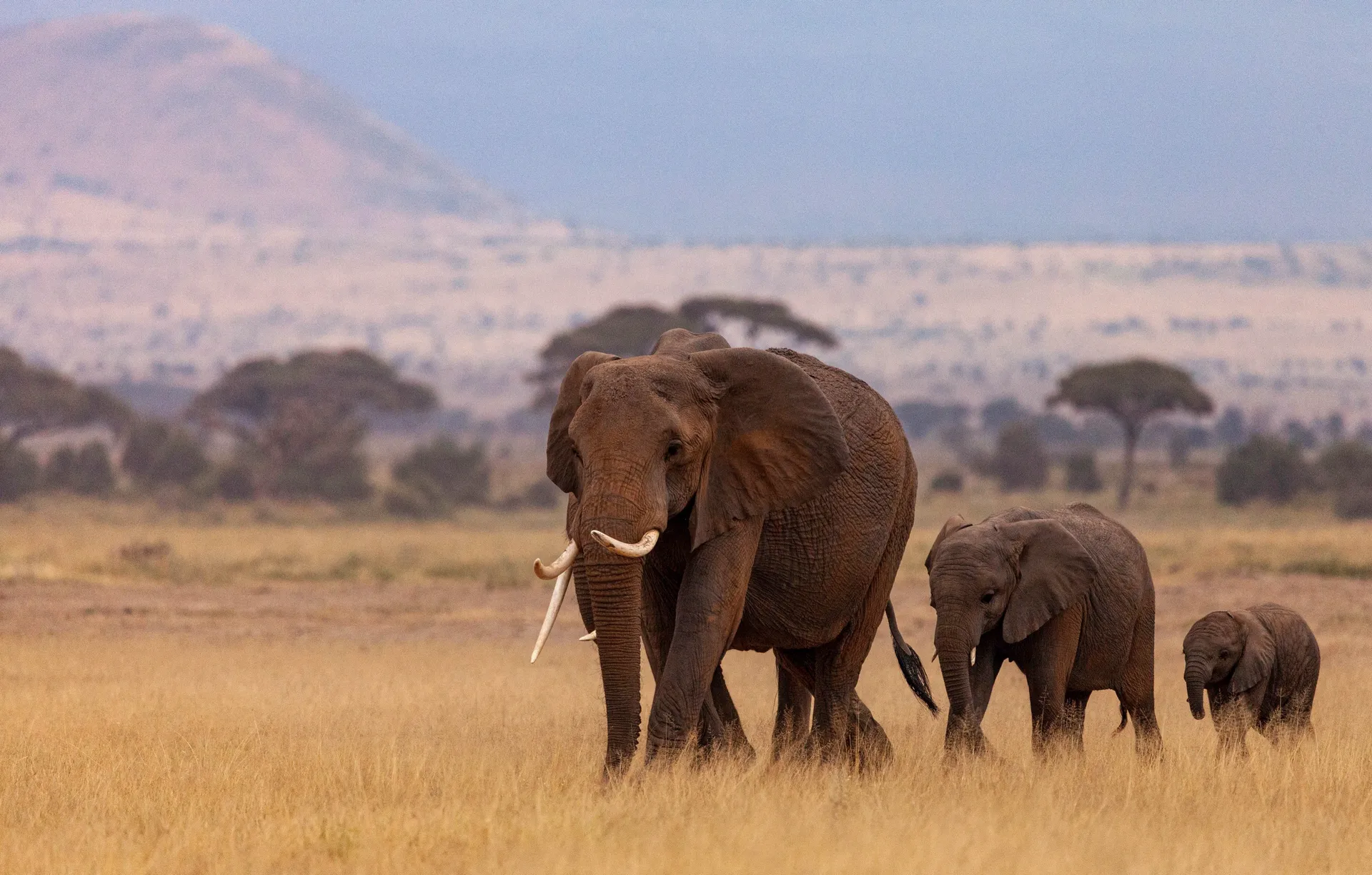
Amboseli National Park sits at the foot of Mount Kilimanjaro, Africa's highest peak, in southern Kenya—a protected landscape of 392 square kilometers where the snow-capped summit of Kilimanjaro provides the backdrop for one of the continent's most iconic wildlife spectacles. The park's name derives from the Maasai word "Empusel," meaning "salty, dusty place"—an apt description of the dry lake bed (Lake Amboseli) that occupies much of the park's center. But the springs that seep down from Kilimanjaro's glaciers create swamps and marshes that sustain lush vegetation and attract wildlife in concentrations that make Amboseli one of the best places in Africa to observe elephants at close range.
Amboseli's elephants are the park's defining feature and the subject of the longest-running study of wild elephants in the world—Cynthia Moss's Amboseli Elephant Research Project, begun in 1972, has followed individual elephants and their families for over five decades. The elephants here are remarkably tolerant of vehicles, allowing photographic encounters at distances that would be impossible in most other parks. A matriarch leading her family group across the dusty plain with Kilimanjaro rising behind—the mountain's glacier cap reflecting the morning sun while the elephants' ears flap and their trunks swing—is one of the most reproduced images in African wildlife photography, and seeing it in person is an experience that no reproduction can prepare you for.
The cuisine at Amboseli's lodges and tented camps draws on the Kenyan safari tradition of bush dining. Meals are served in open-air dining areas overlooking the plains, with the camp chefs preparing a mixture of Kenyan, Indian, and international dishes. Nyama choma (grilled meat) and chapati (Indian-influenced flatbread) are camp staples. Fresh vegetables and fruits are supplied from farms in the Kenya highlands. Sundowner drinks on the plain—a gin and tonic or a cold Tusker beer as the sun drops behind Kilimanjaro and the sky explodes in equatorial color—is the safari ritual at its most perfect.
Beyond the elephants, Amboseli supports a diverse wildlife population. Lions, cheetahs, and hyenas patrol the grasslands. Cape buffalo, wildebeest, and zebra graze the seasonal swamps. Over 400 bird species have been recorded, including African fish eagles, martial eagles, and dense concentrations of flamingos when the lake holds water. The observation hill (aptly named) provides a panoramic view across the park that, on clear mornings, encompasses Kilimanjaro in its entirety—from the savanna floor to the glacier summit, a vertical span of 4,800 meters that is one of the most dramatic landscape perspectives in Africa.
Amboseli is accessible from Nairobi by road (four hours) or by scheduled and charter flights to the park's airstrip. The park is included in most Kenya safari itineraries, often combined with the Maasai Mara, Tsavo, and the coast. The best time to visit for clear Kilimanjaro views is the dry season, June through October, when the skies are clearest and wildlife concentrates around the permanent swamps. January and February are also dry and excellent for game viewing. The long rains (March–May) and short rains (November) bring lush vegetation and migratory birds but can make some roads challenging and obscure the mountain in cloud.

