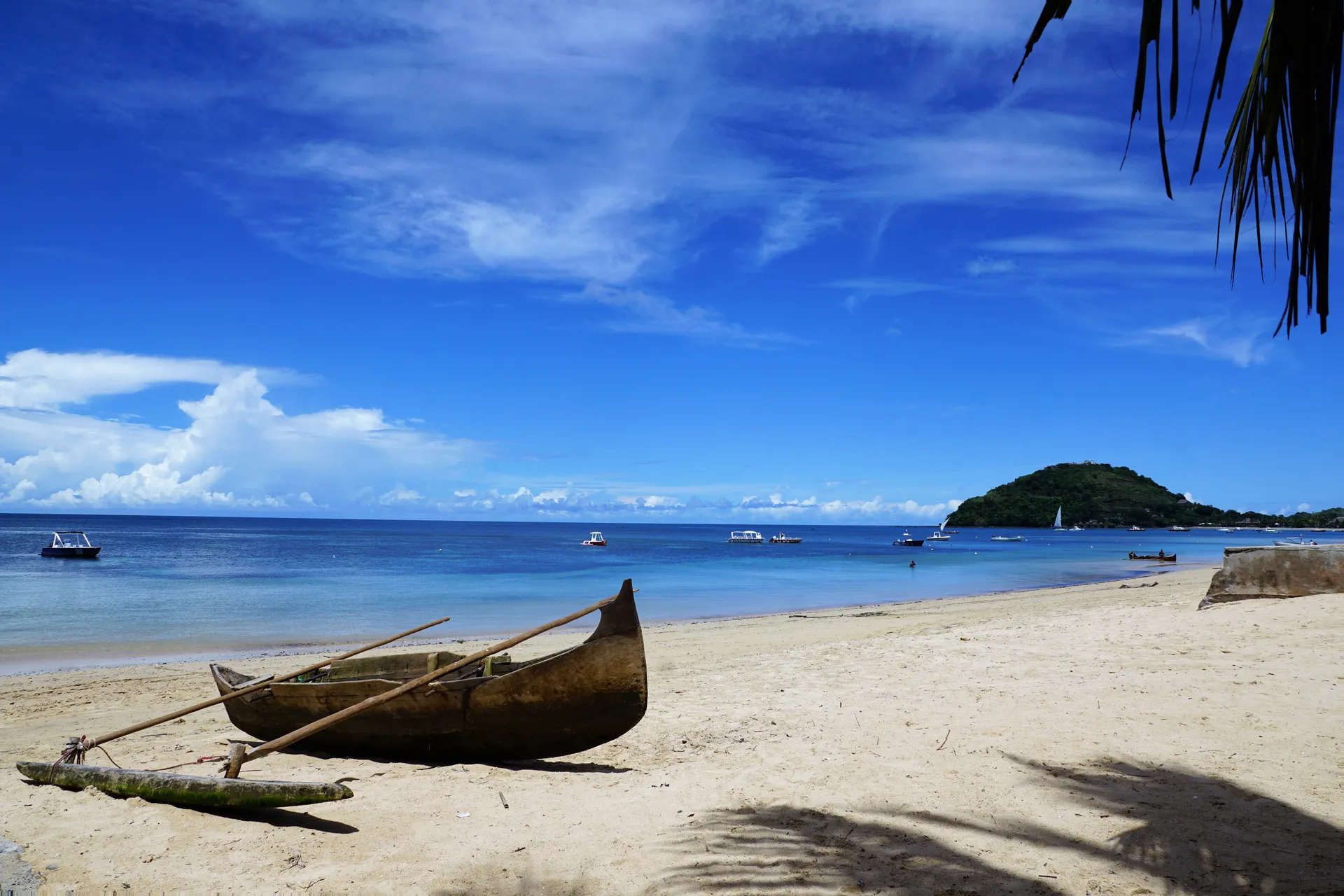
Nosy Be — "Big Island" in Malagasy — is Madagascar's premier beach destination, a volcanic island off the northwest coast whose combination of tropical beaches, ylang-ylang plantations, and proximity to some of the most biodiverse marine environments in the Indian Ocean has made it the country's most visited island. Yet Nosy Be remains refreshingly undeveloped by international resort standards: the beaches, while beautiful, are backed by fishing villages rather than high-rise hotels, and the interior of the island retains the aromatic plantations — ylang-ylang, vanilla, coffee, and pepper — that have sustained the local economy since the colonial era and give Nosy Be its nickname, "the perfumed island."
The marine environment surrounding Nosy Be is the island's greatest natural asset. The Nosy Tanikely Marine Reserve, a small island just south of Nosy Be, provides some of the finest snorkelling in Madagascar — its protected waters harbour sea turtles, reef sharks, and coral gardens of extraordinary colour and diversity. Between September and November, humpback whales migrate through the Mozambique Channel past Nosy Be, their breaching and tail-slapping visible from the island's western beaches. Whale sharks — the world's largest fish, filter-feeding on the plankton blooms that the current concentrations create — appear seasonally in the waters around the island, and guided snorkelling tours that bring swimmers alongside these gentle, spotted giants are among the most thrilling wildlife encounters in the Indian Ocean.
The culture of Nosy Be reflects the extraordinary ethnic diversity of Madagascar — a country whose population descends from both Southeast Asian and East African ancestors, creating a unique Malagasy identity that blends Austronesian and Bantu elements in language, custom, and cuisine. The Sakalava people, the predominant ethnic group on Nosy Be, maintain the tradition of the tromba — spirit possession ceremonies accompanied by music, dance, and the sacrifice of zebu cattle that connect the living with ancestral spirits. The weekly market at Hell-Ville (the island's capital, named after Admiral de Hell and not for its temperature) offers a sensory immersion in Malagasy life: vanilla pods, dried fish, tropical fruits, and the handwoven baskets and embroidered tablecloths that are among Madagascar's most beautiful craft exports.
The cuisine of Nosy Be combines the Malagasy staple of rice (vary) with the seafood abundance of the surrounding waters and the spice production of the island's plantations. Romazava, a meat and greens stew considered Madagascar's national dish, is served alongside grilled zebu and the vanilla-perfumed seafood preparations that reflect the island's unique position as both an agricultural and maritime community. Fresh vanilla — purchased directly from the plantations at a fraction of international retail prices — perfumes everything from drinks to desserts, and the locally produced rum, infused with vanilla, lemon, or wild ginger, is the aperitif of choice at the island's beachfront bars.
Nosy Be is served by AIDA, Azamara, and Hapag-Lloyd Cruises on Indian Ocean itineraries, with ships anchoring off Hell-Ville. The dry season from April through November offers the most pleasant conditions, with September through November providing the bonus of humpback whale migration. The wet season from December through March brings heavy rainfall and occasional cyclone risk but also the lushest vegetation and the mango season that Malagasy consider the culinary highlight of the year.

