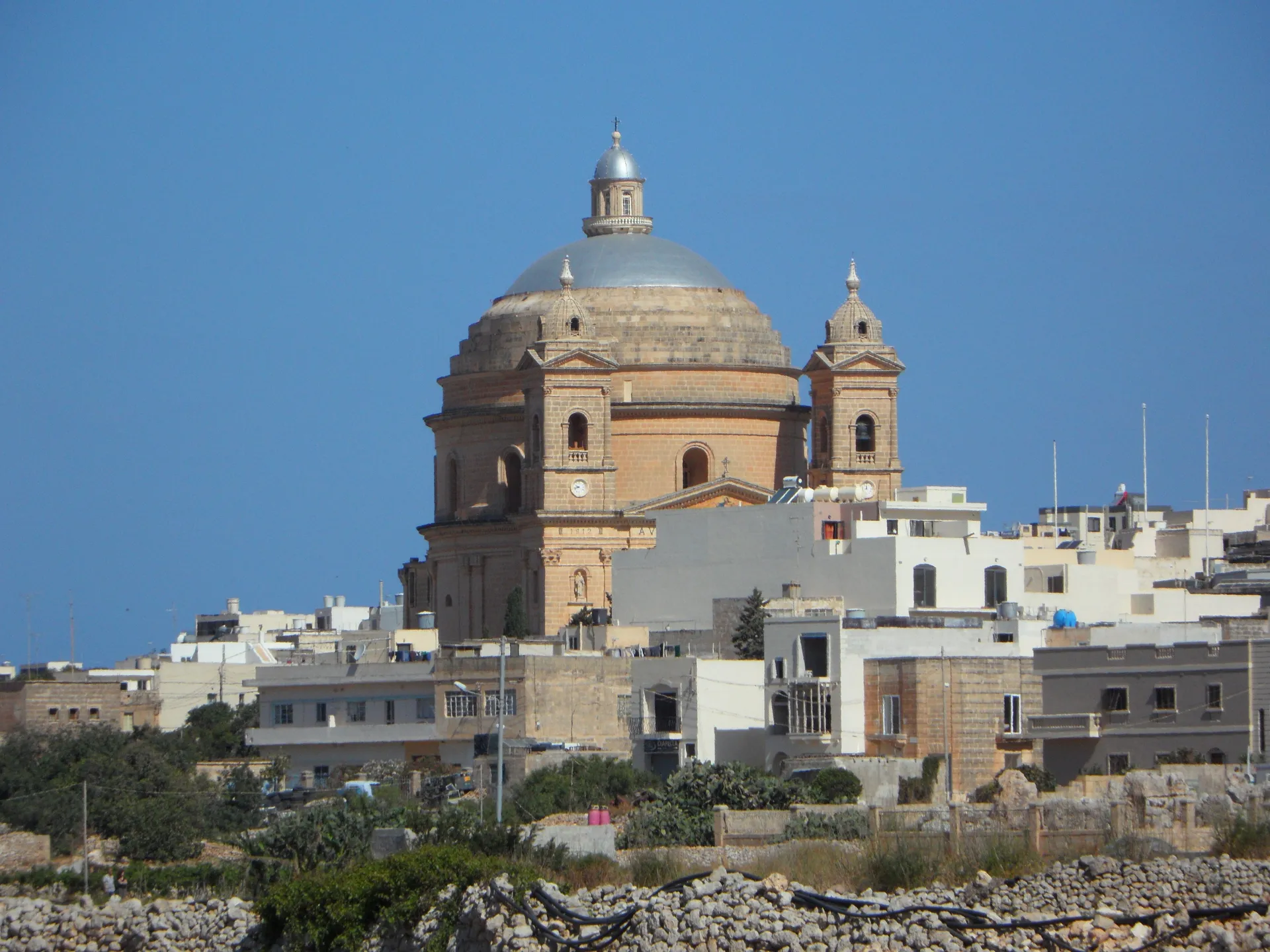
Mġarr is the port village of Gozo, Malta's smaller, greener, and more tranquil sister island, where the ferry from the main island deposits visitors into a harbor watched over by the imposing neo-Gothic Church of Our Lady of Lourdes perched high on the ridge above. This small harbor settlement serves as the gateway to an island that Maltese and visitors alike consider the more authentic, more beautiful, and more characterful half of the Maltese archipelago.
Gozo's identity is shaped by its pastoral character—an island of terraced hillsides, fertile valleys, and honey-colored limestone villages that contrasts markedly with Malta's urbanized landscape. The island is small enough—just fourteen kilometers long—to explore thoroughly in a single day, yet rich enough in historical and natural attractions to reward weeks of return visits. At its center, the Citadella of Victoria (Rabat) crowns a flat-topped hill with the fortified walls, cathedral, and narrow streets of a medieval fortress town whose strategic importance stretches back to the Bronze Age.
The Ġgantija Temples, located on a plateau above the village of Xagħra, are among the oldest free-standing structures on Earth—predating Stonehenge by over a thousand years and the Egyptian pyramids by several centuries. These megalithic temples, whose massive limestone blocks weigh up to fifty tons each, were constructed around 3600 BC by a Neolithic culture whose sophisticated religious practices are still only partially understood. The temples' UNESCO World Heritage status reflects their extraordinary archaeological importance as some of humanity's earliest known examples of monumental architecture.
Gozo's coastline offers dramatic natural beauty. The inland sea at Dwejra—a circular lagoon connected to the open Mediterranean through a narrow tunnel in the cliff—provides extraordinary swimming and diving in deep blue water enclosed by towering rock walls. The surrounding Dwejra coast, though diminished by the collapse of the famous Azure Window in 2017, remains spectacularly rugged, with sea stacks, caves, and underwater formations that make it one of the Mediterranean's premier diving destinations. The salt pans at Marsalforn, still producing sea salt using methods unchanged since Roman times, create geometric patterns along the rocky shore that photographers find endlessly compelling.
Cruise passengers arriving at Mġarr harbor can explore Gozo independently or by organized excursion, with the island's compact size making all major attractions accessible within a day. Local buses connect the main villages, and taxi or minivan hire offers more flexibility. Gozo's traditional food culture—particularly its fresh ġbejna (sheep's milk cheese), ftira (Gozitan pizza-like bread), and rabbit stew (fenkata)—reflects an island that has maintained its agricultural traditions alongside its tourist economy. The visiting season extends year-round thanks to Malta's mild Mediterranean climate, though April through June and September through November offer the most pleasant temperatures for exploration.

