Fort-de-France, the capital of Martinique, sits beneath the volcanic gaze of Mont Pelée, the same stratovolcano whose catastrophic eruption in 1902 obliterated the nearby city of Saint-Pierre and killed nearly 30,000 people in mere minutes — the deadliest volcanic disaster of the twentieth century. Martinique has been French since 1635, making it one of the oldest French possessions in the Americas, and Fort-de-France has served as its administrative heart since Saint-Pierre's destruction. This is the birthplace of Aimé Césaire, the poet and politician who coined the term "négritude" and whose influence on postcolonial thought reverberates far beyond the Caribbean.
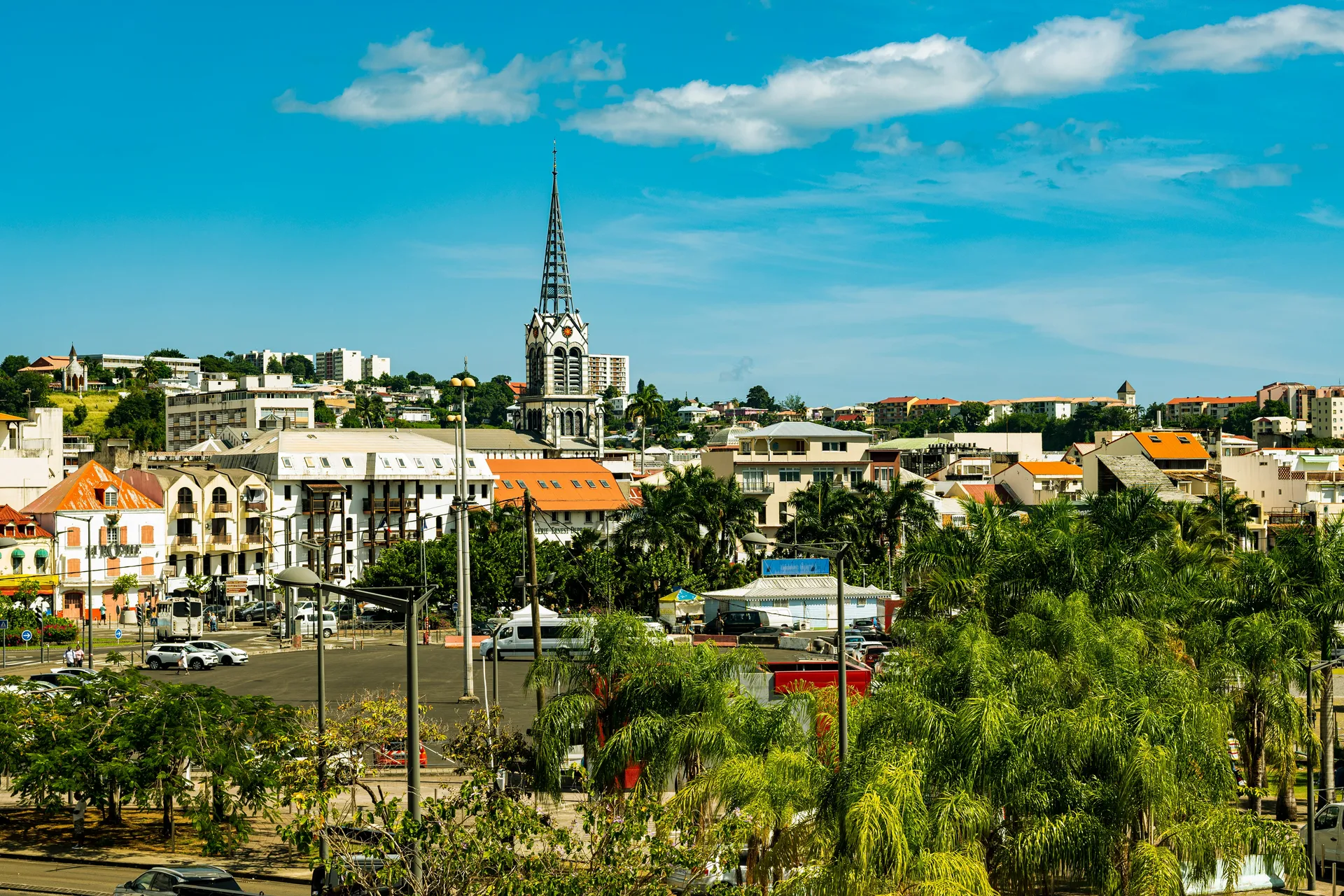
The city radiates an unmistakably French-Caribbean energy. The Bibliothèque Schoelcher, a stunning polychrome ironwork building designed by Henri Pick and originally exhibited at the 1889 Paris World's Fair before being dismantled and shipped to Martinique, is perhaps the most beautiful library in the Caribbean. Fort Saint-Louis, a seventeenth-century fortress still in active military use, commands the harbor entrance. La Savane, the central park facing the waterfront, has been restored with walking paths, fountains, and the controversial headless statue of Empress Joséphine — a Martinique native whose connection to the restoration of slavery in 1802 makes her a deeply divisive figure on the island.
Martinican cuisine is a ravishing blend of French technique and Creole soul. Accras de morue (salt cod fritters) are the quintessential appetizer, served crisp and golden at every rum bar. Colombo de poulet, a curry of Indian origin adapted with Caribbean ingredients — chicken braised with colombo spice paste, christophine, and dasheen — reflects the island's Indo-Caribbean heritage. Boudin créole, a spiced blood sausage, and court-bouillon de poisson, fish in a rich tomato-based Creole sauce, are weekend staples. Ti' punch, the deceptively simple cocktail of rhum agricole, lime, and cane sugar, is the island's liquid signature — poured with the instruction "chacun prépare sa propre mort" (each prepares his own death), meaning each drinker adjusts the proportions.
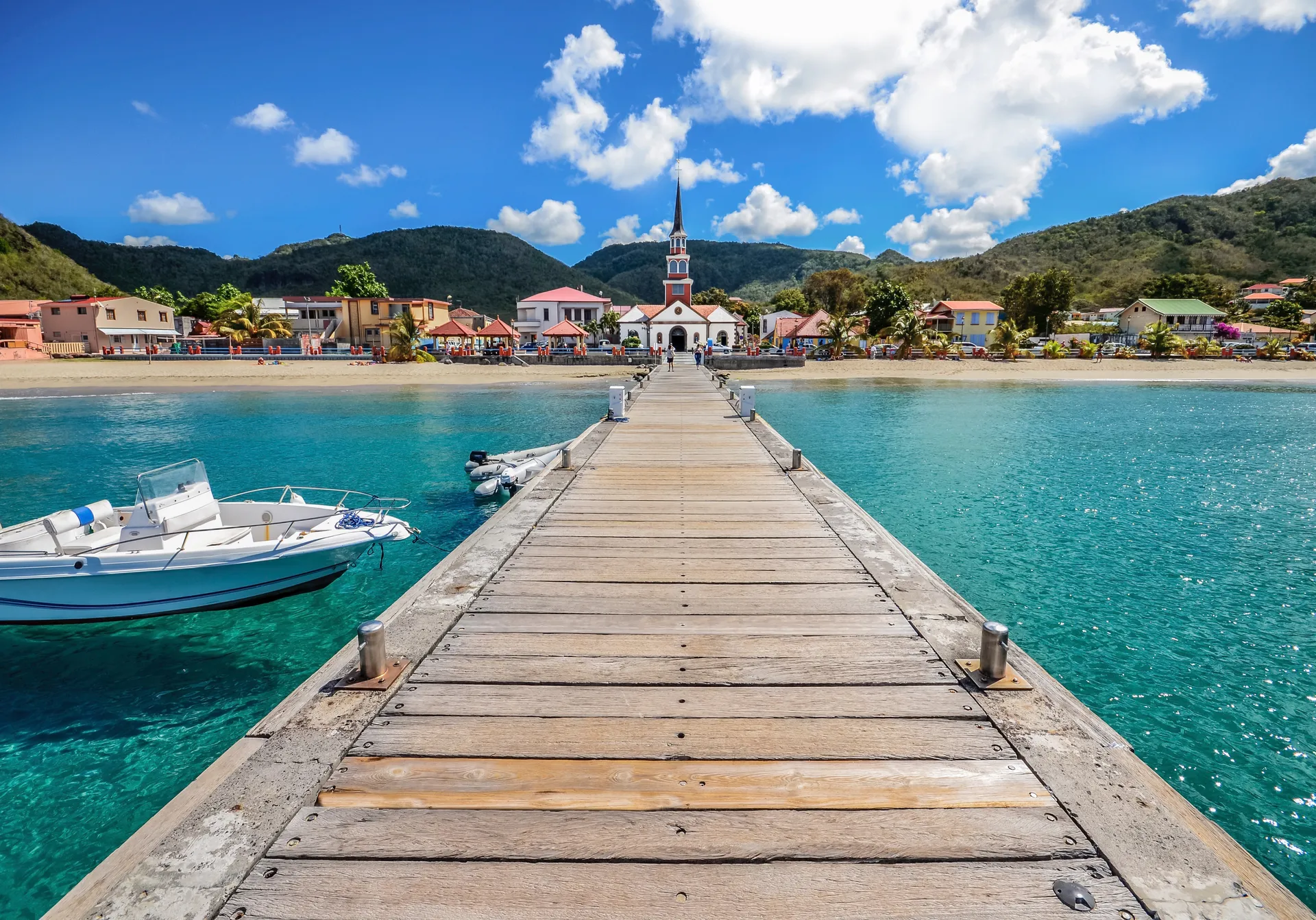
Martinique rewards exploration beyond the capital. The Route de la Trace, a winding mountain road through the tropical rainforest of Parc Naturel Régional, leads north to the ruins of Saint-Pierre — the "Pompeii of the Caribbean" — where the Musée Volcanologique tells the harrowing story of the 1902 eruption, forty minutes from Fort-de-France. The Habitation Clément, a beautifully restored plantation and rhum agricole distillery in Le François, offers tours through fields of sugarcane and aging cellars. The beaches of Les Anses-d'Arlet and Grande Anse, on the southern coast, are among the Caribbean's most photogenic — calm turquoise waters framed by fishing boats and bougainvillea.
Fort-de-France is a major cruise hub in the eastern Caribbean. Ambassador Cruise Line, Celebrity Cruises, Crystal Cruises, Cunard, Explora Journeys, Fred Olsen Cruise Lines, Hapag-Lloyd Cruises, Holland America Line, Marella Cruises, MSC Cruises, Oceania Cruises, P&O Cruises, Ponant, Regent Seven Seas Cruises, Royal Caribbean, Seabourn, Silversea, TUI Cruises Mein Schiff, Virgin Voyages, and Windstar Cruises all call here. Nearby ports include Saint-Pierre and Le Marin on Martinique itself, as well as neighboring islands. The dry season from December through May offers the most comfortable weather, with warm temperatures and lower humidity than the summer months.