Saint-Pierre was once the most glamorous city in the French Caribbean — the "Paris of the West Indies," a cosmopolitan port of 30,000 whose cobblestone streets bustled with rum merchants, theatre-goers, and the mixed-race aristocracy of Martinique's plantation society. All of that ended at 7:52 on the morning of May 8, 1902, when Mont Pelée erupted in a pyroclastic surge that obliterated the entire city in less than two minutes, killing virtually every inhabitant. Only two people survived within the city limits, one of them a prisoner named Louis-Auguste Cyparis, whose underground cell shielded him from the superheated gas cloud. It remains one of the deadliest volcanic disasters in recorded history, and the ruins that Saint-Pierre preserves today are as haunting as Pompeii.
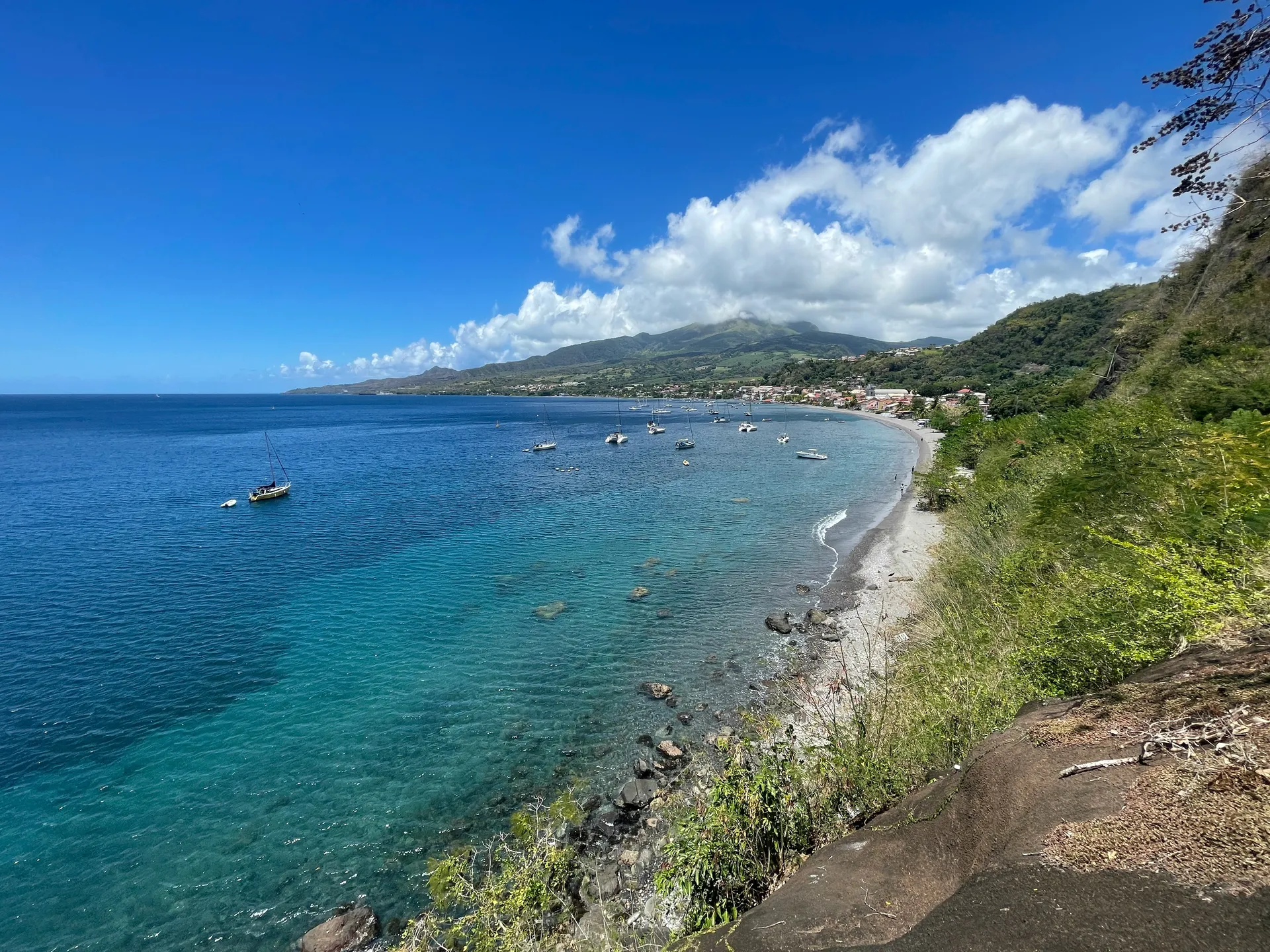
The modern town that has grown among the ruins is a quiet, atmospheric settlement of perhaps 4,000 residents, draped along the same curving bay that made old Saint-Pierre such an enviable harbour. The Musée Volcanologique Frank A. Perret, established just two decades after the eruption, displays melted glassware, twisted iron, and stopped clocks that bear silent witness to the catastrophe's violence. Walking the streets, visitors encounter the ruins of the old theatre, the dungeon where Cyparis survived, and the stone staircase of the Figuier Quarter descending toward a waterfront where the foundations of warehouses and counting houses emerge from tropical vegetation. The juxtaposition of ruin and renewal — bougainvillea cascading over collapsed walls, breadfruit trees growing through shattered floors — gives Saint-Pierre a melancholic beauty found nowhere else in the Caribbean.
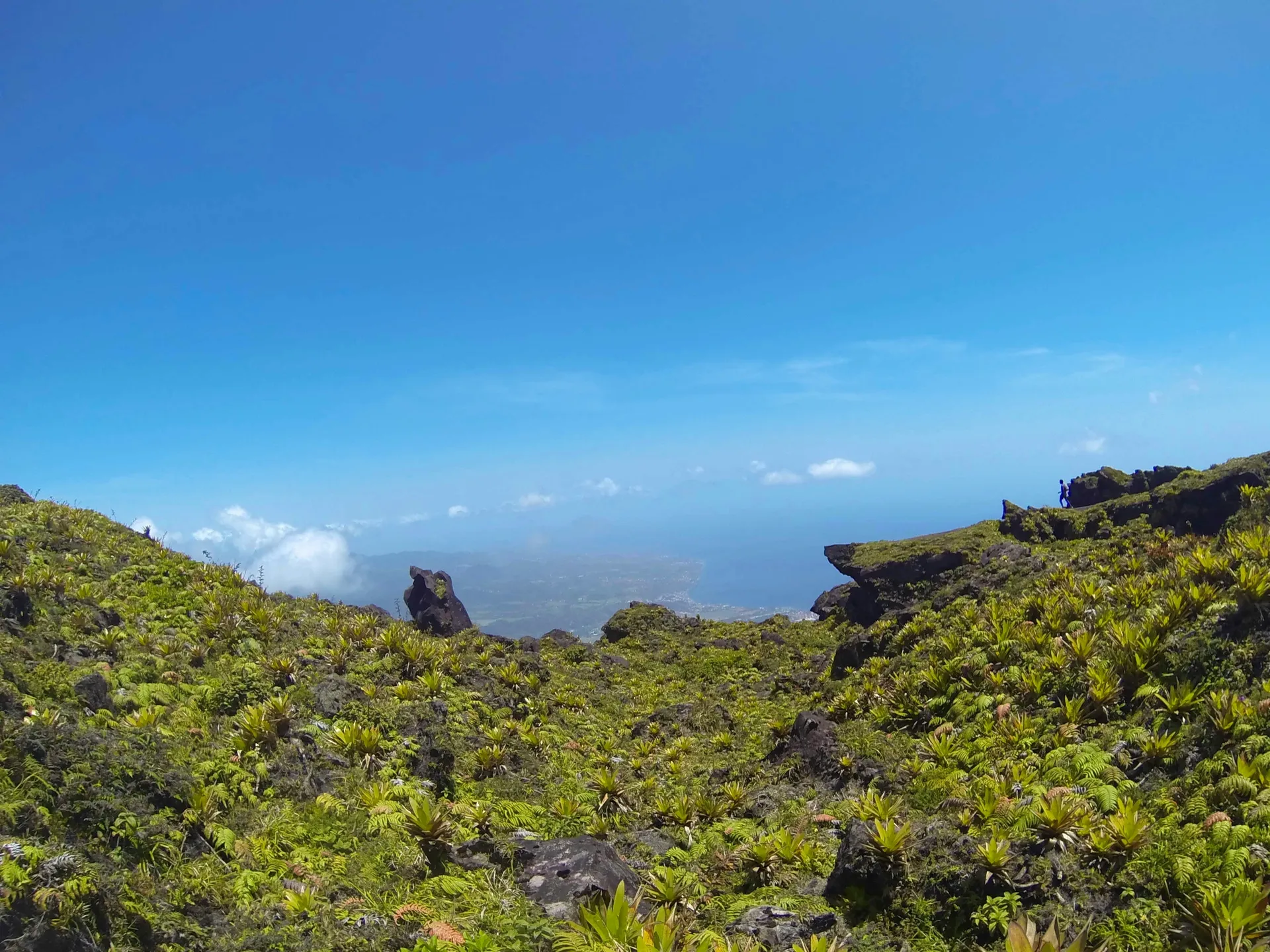
Mont Pelée itself, now dormant and wreathed in cloud forest, looms 1,397 metres above the town and offers one of Martinique's finest hikes. The trail from the village of Le Prêcheur ascends through elfin woodland where tree ferns and giant philodendrons create a prehistoric atmosphere, emerging above the clouds at the summit crater for views that, on clear days, extend to Dominica and Guadeloupe. The volcano's slopes are the source of Martinique's finest cacao, and small chocolate makers in the surrounding villages produce single-origin bars with a distinctive smoky complexity that reflects the volcanic terroir.
Martinican cuisine, a sophisticated fusion of French technique and Creole soul, reaches its most authentic expression in Saint-Pierre's modest restaurants. Accras de morue — salt cod fritters crispy outside and cloud-soft within — arrive at every table as a prelude to court-bouillon de poisson, a fragrant fish stew seasoned with lime, garlic, and bois d'Inde (Caribbean bay leaf). Ti' punch, the island's ritual aperitif of rhum agricole, lime, and cane syrup, is mixed to individual taste at every bar, and the distilleries of the north — Depaz, Neisson, and Saint-James among them — produce some of the finest rhum agricole in the world, distilled from fresh-pressed sugarcane juice rather than molasses.
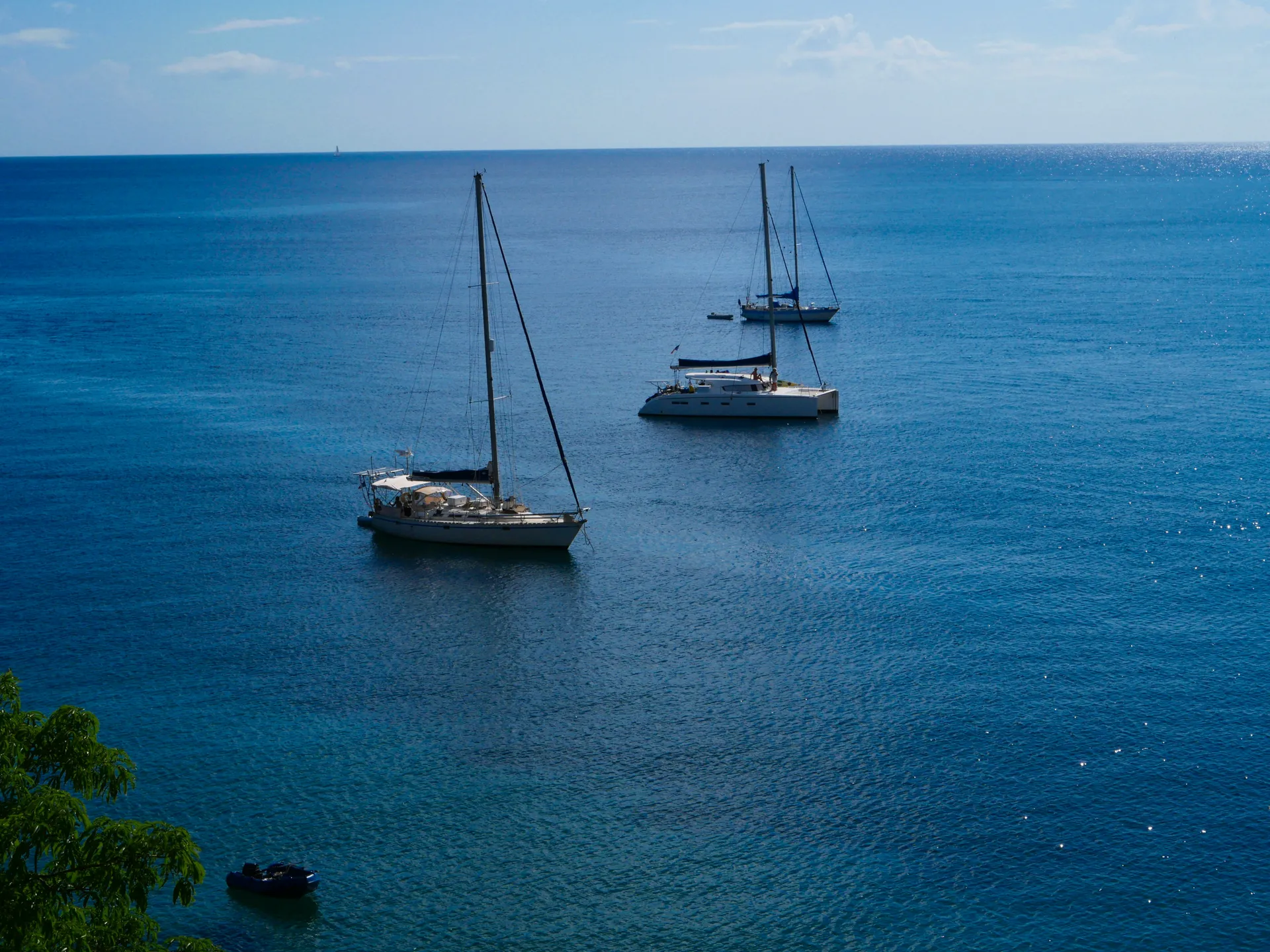
Saint-Pierre is a tender port, with cruise ships anchoring in the deep bay while passengers are ferried to the town jetty. The best time to visit is during the dry season from December through May, known locally as Carême, when rainfall diminishes and the hiking trails up Mont Pelée are at their most accessible. The annual commemoration of the 1902 eruption in May draws visitors from across the French Antilles, transforming the town into a place of reflection, remembrance, and quiet celebration of the resilience that allowed life to return to the shadow of the volcano.