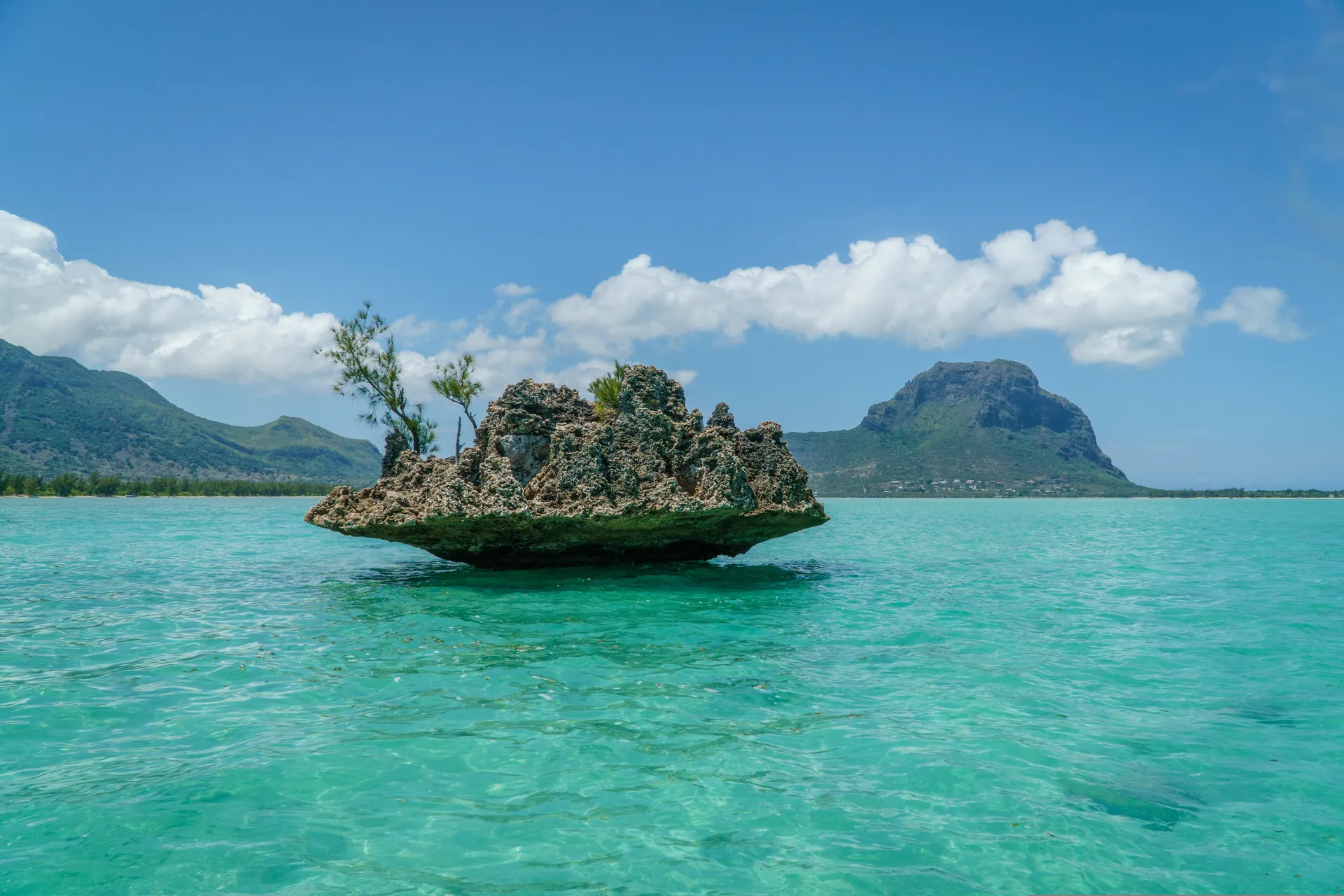
Mauritius floats in the Indian Ocean like an emerald set in sapphire — a volcanic island of 2,040 square kilometers, 900 kilometers east of Madagascar, where the tropical warmth of the southern hemisphere meets a cultural complexity born of successive waves of colonization and immigration. The island was uninhabited when the Portuguese encountered it in the sixteenth century; it was subsequently colonized by the Dutch (who named it), the French (who developed it), and the British (who kept it until independence in 1968). Each wave brought its own people — African slaves, Indian indentured laborers, Chinese merchants, Franco-Mauritian planters — creating a society of remarkable ethnic, linguistic, and culinary diversity on an island small enough to drive across in two hours.
The coastline of Mauritius is a masterwork of tropical beauty, protected by an almost continuous barrier reef that creates lagoons of crystalline tranquility along the western and northern shores. The beaches — Trou aux Biches, Mont Choisy, Belle Mare, Le Morne — achieve the postcard perfection that the word "tropical" promises: white sand, turquoise water, casuarina trees leaning in the trade wind. But the island's interior tells a deeper story. The central plateau, rising to 800 meters, is a landscape of sugarcane fields (the crop that built the colonial economy), remnant native forest (now tragically reduced to less than 2 percent of its original extent), and volcanic features — the Black River Gorges, the Grand Bassin sacred lake, the seven-colored earth of Chamarel — that reveal the geological forces that created the island seven to ten million years ago.
The cuisine of Mauritius is the island's most eloquent expression of its multicultural identity. Indian curries — fish vindaye, chicken briani, dholl puri (flatbread stuffed with yellow split peas) — coexist with Creole rougailles (tomato-based stews), Chinese dim sum and fried noodles, and French-influenced dishes that reflect the island's Gallic culinary inheritance. Street food is Mauritius at its most democratic: gâteaux piments (chili cakes), samosas, and dholl puri are consumed by every ethnic group with equal enthusiasm, typically purchased from roadside vendors who have been serving from the same spot for decades. The rum, distilled from the island's sugarcane, has achieved international recognition — labels like Chamarel and New Grove producing aged spirits that rival Caribbean benchmarks.
The natural heritage of Mauritius extends far beyond its beaches. The Black River Gorges National Park, in the island's southwestern highlands, preserves the largest remaining tract of native forest — home to the Mauritius kestrel (saved from extinction when only four birds remained in 1974), the pink pigeon, and the echo parakeet. The Île aux Aigrettes, a coral island nature reserve in the southeastern lagoon, offers guided walks through restored native habitat where giant Aldabra tortoises — introduced to replace the extinct Mauritian giant tortoise — graze among ebony trees. The underwater world is equally compelling: the Mahébourg region offers wreck diving, the northern lagoons provide snorkeling with tropical fish and sea turtles, and the open ocean beyond the reef supports deep-sea fishing for marlin, tuna, and dorado.
Mauritius is served by Sir Seewoosagur Ramgoolam International Airport, with direct flights from Europe (Paris, London), Africa (Johannesburg, Nairobi), Asia (Dubai, Mumbai, Singapore), and Australia (Perth). Cruise ships call at Port Louis, the capital, whose Caudan Waterfront and Central Market provide an accessible introduction to the island. The climate is warm year-round, with the austral summer (November–April) bringing the warmest temperatures and occasional cyclones, and the winter (May–October) offering cooler, drier weather ideal for outdoor exploration. The shoulder months of April to May and September to October are widely considered optimal, combining pleasant weather with fewer visitors.

