Isla Catalina rises from the Sea of Cortez like the spine of a sleeping dinosaur — a volcanic island of terracotta cliffs, cactus-studded ridgelines, and crystalline waters that Jacques Cousteau famously called "the world's aquarium." Located in the midriff region of the Gulf of California, between Baja California Sur and the Mexican mainland, this uninhabited island is one of the Gulf's most spectacular destinations for wildlife encounters, offering an intensity of marine life that rivals the Galápagos and a desert island solitude that has remained essentially unchanged since the Seri and Cochimí peoples fished these waters centuries ago.
The waters surrounding Isla Catalina are the island's primary attraction, and they deliver on every promise the Sea of Cortez makes. Mobula rays — their triangular wings spanning up to three metres — gather in aggregations of hundreds during the summer months, leaping from the water in acrobatic displays that scientists still cannot fully explain. Sea lions establish raucous colonies on the island's rocky shelves, and young pups, curious and fearless, will swim directly up to snorkellers and divers with a playful exuberance that makes for unforgettable encounters. The deeper waters attract hammerhead sharks, whale sharks, and pods of bottlenose dolphins, while the rocky reefs host a technicolour assembly of king angelfish, Moorish idols, and the brilliant blue-and-gold Cortez angelfish found only in this sea.
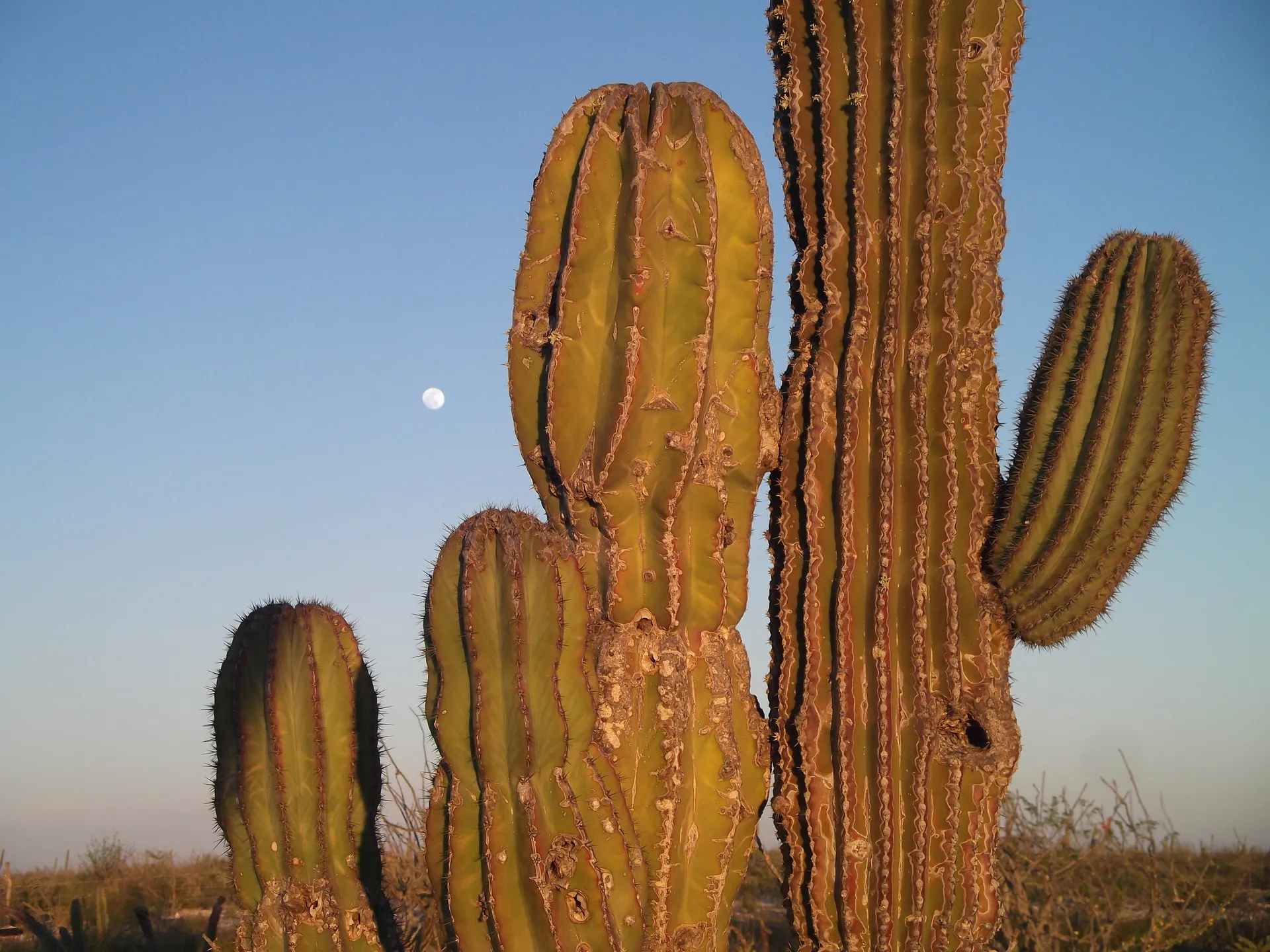
The island itself is a study in Sonoran Desert ecology at its most extreme. Giant cardón cacti — the world's largest cactus species, growing up to 20 metres tall and living for centuries — punctuate the ridgelines like sentinels, while elephant trees cling to the volcanic slopes with gnarled, peeling trunks that seem to have been designed for a Tim Burton film. The island's reptile population includes the Santa Catalina rattleless rattlesnake, a subspecies found nowhere else on Earth that has evolved without the rattle that defines its mainland cousins — one of many examples of the island biogeography that makes the Sea of Cortez islands a UNESCO World Heritage Site.
The Sea of Cortez's bounty extends to the plate, and while Isla Catalina itself has no restaurants, the expedition cruise experience typically includes beach barbecues featuring the region's extraordinary seafood. Chocolate clams — almejas chocolatas, named for their mahogany-coloured shells — are a Gulf specialty, served raw with lime and hot sauce or grilled over mesquite. Fish tacos, the humble masterpiece of Baja cuisine, reach their apotheosis here: fresh-caught yellowtail or dorado, lightly battered and fried, served on a warm corn tortilla with shredded cabbage, crema, and salsa verde. Cerveza and micheladas — beer with lime, salt, and chili — provide the essential liquid accompaniment.
Isla Catalina is accessible only by boat, with expedition cruise ships and private yachts anchoring in the protected coves on the island's western shore. The best time to visit is from October through May, when air temperatures are comfortable, water visibility peaks at 20-30 metres, and whale sharks and mobula rays are present in the surrounding waters. The summer months of June through September bring extreme heat (often exceeding 40°C) but also the most dramatic mobula ray aggregations. This is a destination where nature sets the agenda, and every visit delivers encounters that redefine what it means to swim in the world's aquarium.

