Agadir occupies a curious position in Moroccan memory — a city almost entirely erased by the devastating earthquake of February 29, 1960, which leveled the old town in fifteen seconds and claimed over fifteen thousand lives, then rebuilt from the rubble as a modern resort that bears virtually no resemblance to the ancient port that preceded it. Where other Moroccan cities seduce with medieval medinas and ornate riads, Agadir offers something unexpected: a wide, clean, resolutely contemporary beachfront backed by the Atlas Mountains, soaking up over three hundred days of annual sunshine that have earned it the nickname 'Miami of Morocco.'
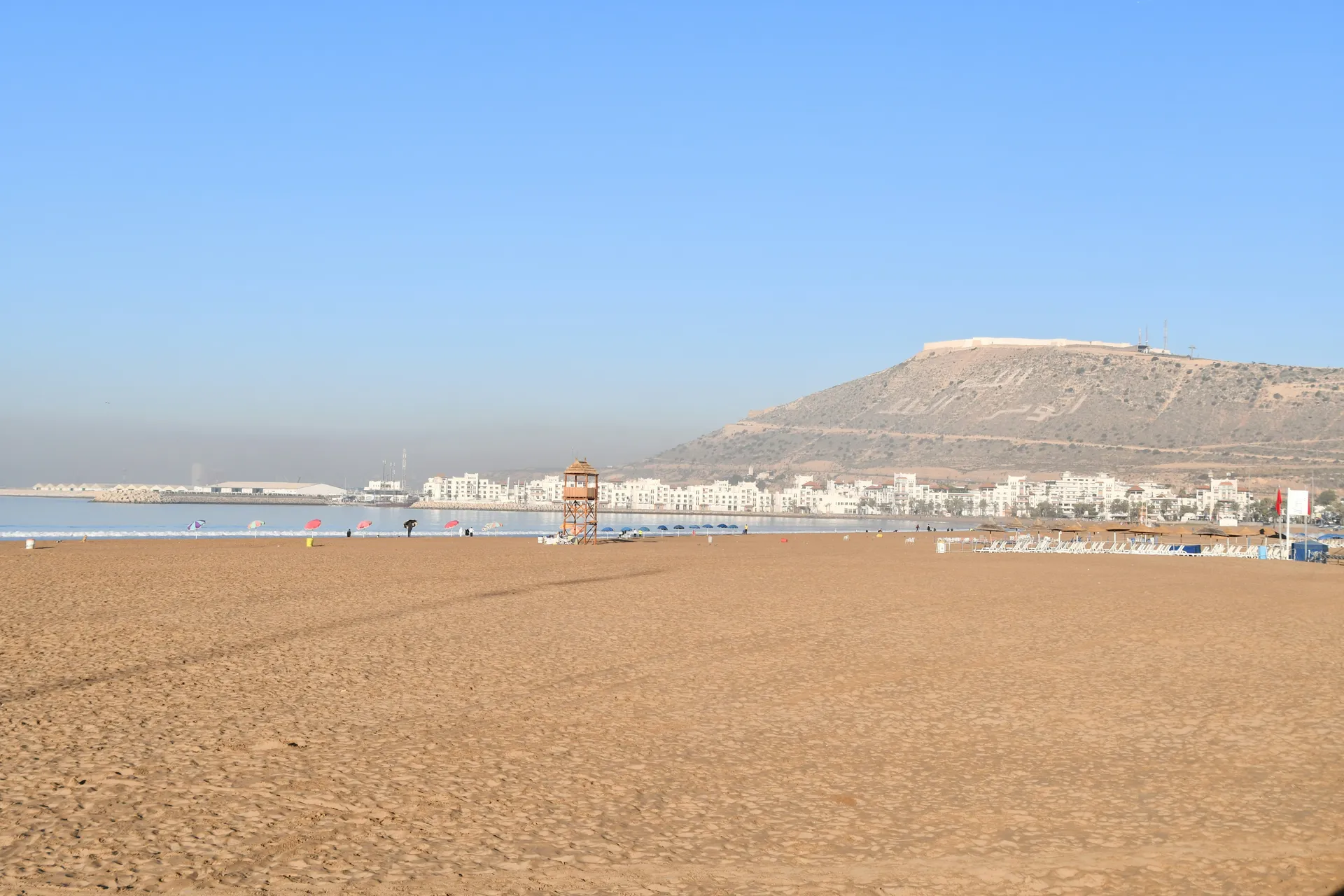
The character of modern Agadir is defined by its magnificent crescent beach — a six-kilometer sweep of golden sand meeting the Atlantic in conditions that combine Moroccan warmth with Atlantic surf energy. The rebuilt city lacks the historical layering of Marrakech or Fez, but this absence creates its own appeal: a relaxed, forward-looking atmosphere where Moroccan hospitality operates without the hard-sell intensity of the imperial cities. The hilltop ruins of the old Kasbah, one of the few structures to partially survive the earthquake, provide panoramic views across the bay and bear the Arabic inscription 'God, Country, King' — visible from across the city and particularly evocative at sunset when the mountains behind glow amber.
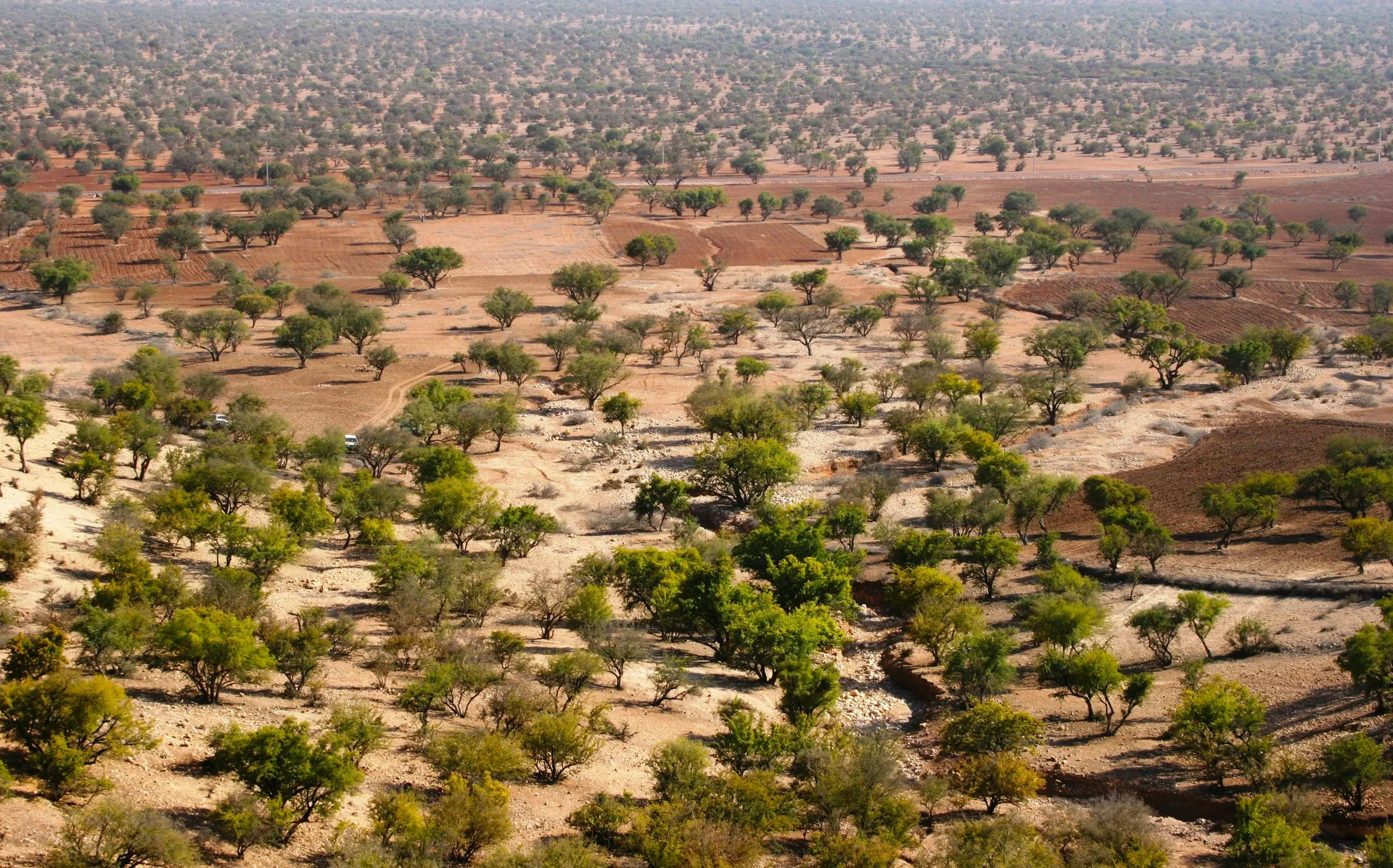
Agadir's culinary scene draws from the extraordinary bounty of southern Morocco's land and sea. The fishing port, one of the world's largest sardine harbors, feeds a collection of grill restaurants along the harbor wall where the day's catch — sardines, sole, shrimp, sea bream — is displayed on ice for selection, then grilled over charcoal and served with bread, olives, and harissa in a ritual that constitutes one of Morocco's great affordable dining experiences. The Souk El Had, a vast covered market in the city center, offers the aromatic abundance of Moroccan commerce — mountains of spices, argan oil pressed from the endemic argan tree that grows only in this region, Souss Valley oranges and dates, and the saffron for which the Anti-Atlas foothills are renowned.
The surroundings of Agadir provide access to some of Morocco's most compelling landscapes. The Paradise Valley, a ninety-minute drive northeast, hides palm-shaded swimming pools in a gorge of red rock and emerald water that seems transported from an oasis fantasy. Taroudant, the 'Grandmother of Marrakech,' presents a walled medina of considerably more architectural charm than Agadir itself, its ramparts intact and its souks genuinely oriented to local trade rather than tourism. The fishing village of Taghazout, twenty minutes north, has evolved from a hippie hangout into Morocco's surf capital, with consistent Atlantic swells attracting wave riders from November through March.
Azamara, Costa Cruises, TUI, and Viking call at Agadir's commercial port, located adjacent to the fishing harbor. The beach, city center, and Souk El Had are all accessible by short taxi ride or the petit taxi service that operates throughout the city. October through April provides the most comfortable temperatures for sightseeing, though Agadir's beach season extends well into the summer months. The combination of reliable sunshine, Atlantic surf, and proximity to the Atlas Mountains and Saharan edge makes Agadir an exceptional base for exploring southern Morocco's diverse landscapes.