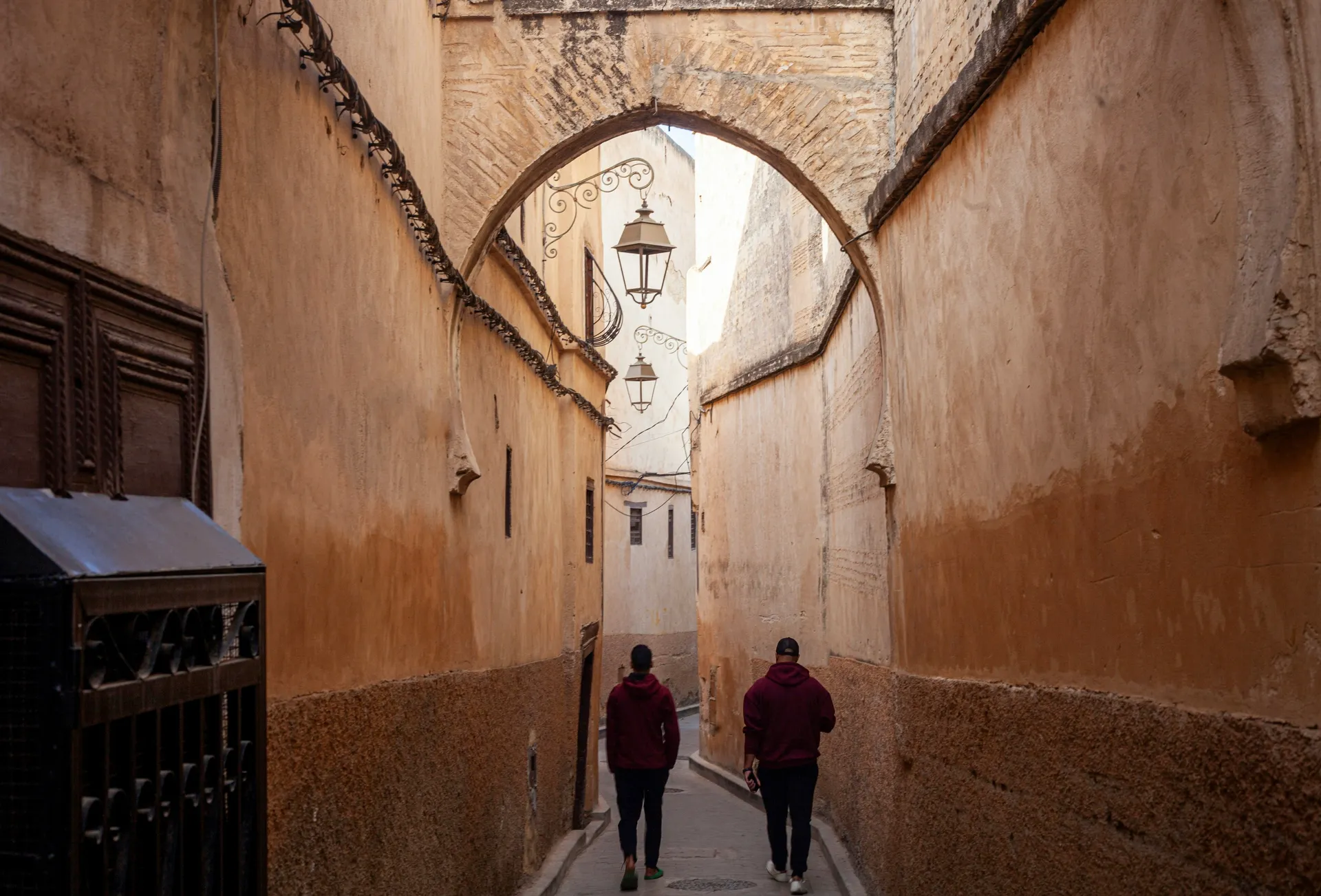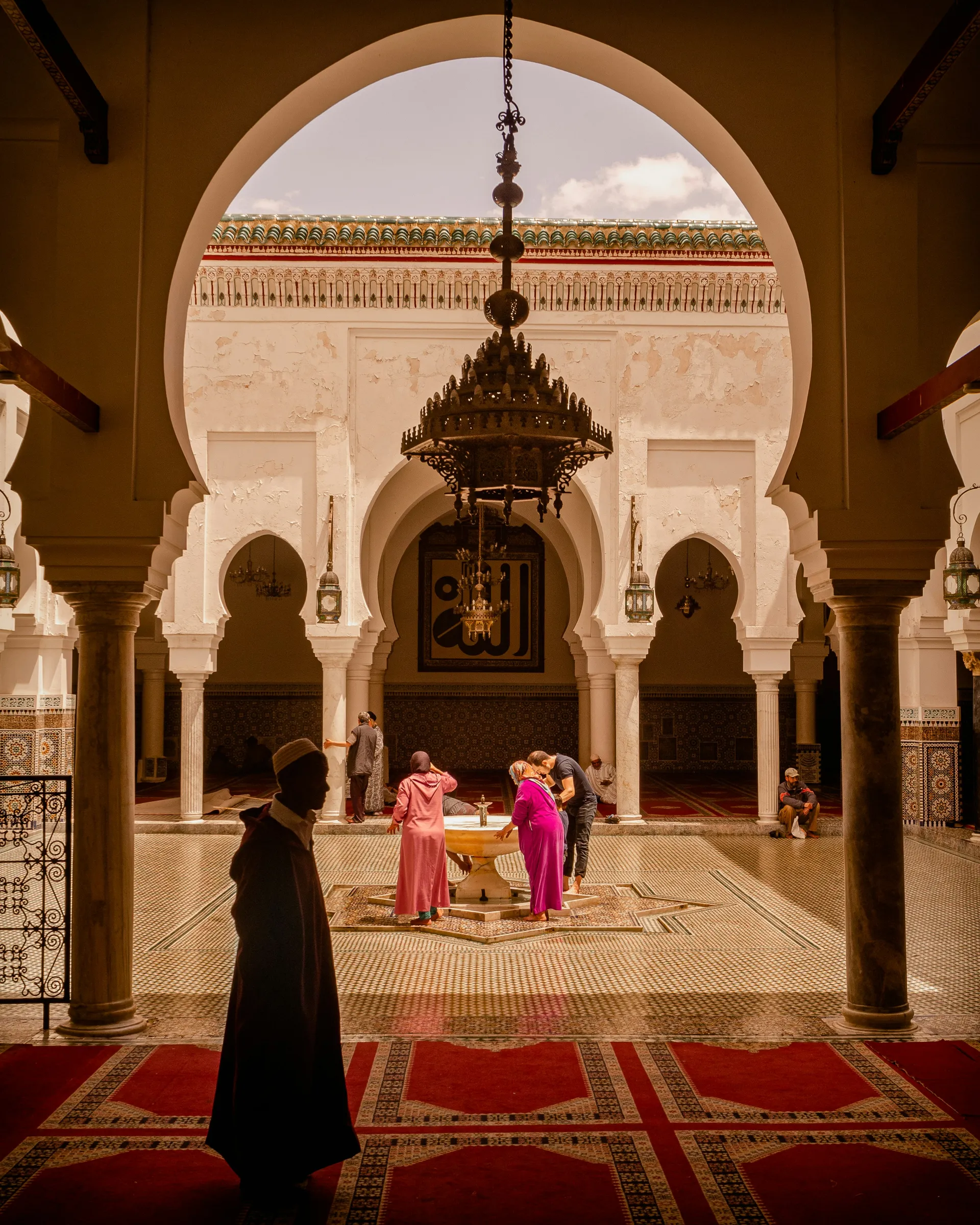
Behind the crenellated walls of one of the last remaining intact medieval cities on earth, the ancient medina of Fez unfolds like a living manuscript of Islamic civilization—its 9,000 lanes, 11,000 historic buildings, and 300 mosques forming a labyrinth so complex that GPS fails within its walls and even longtime residents occasionally lose their way. Founded in the eighth century by Moulay Idriss I, Fez served as Morocco's capital for most of the past millennium and became the intellectual and spiritual heart of the Maghreb, home to the University of al-Qarawiyyin—recognized by UNESCO and the Guinness World Records as the oldest continuously operating degree-granting institution in the world, founded in 859 AD by Fatima al-Fihri, a woman whose legacy challenges every assumption about the medieval Islamic world.
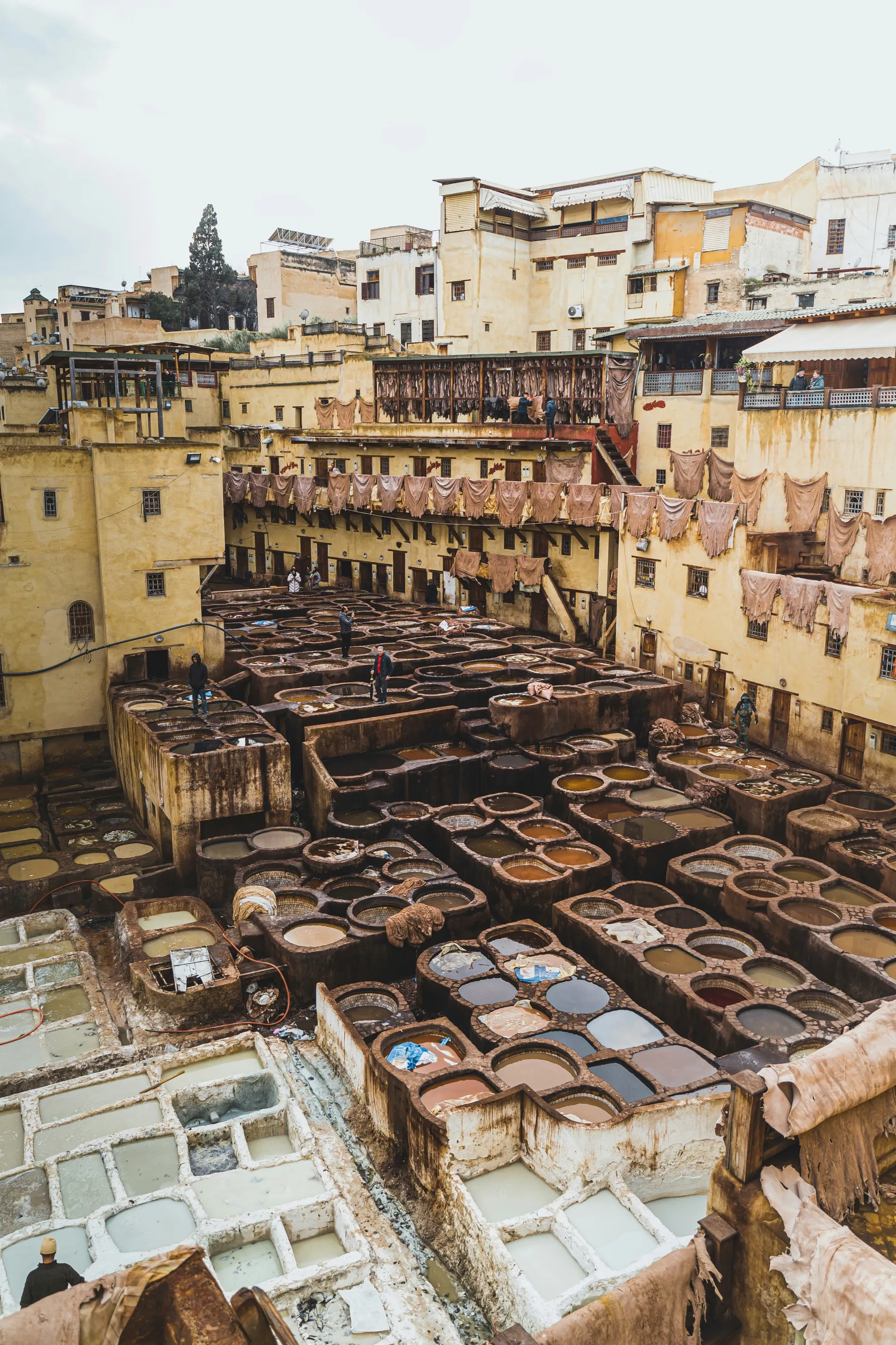
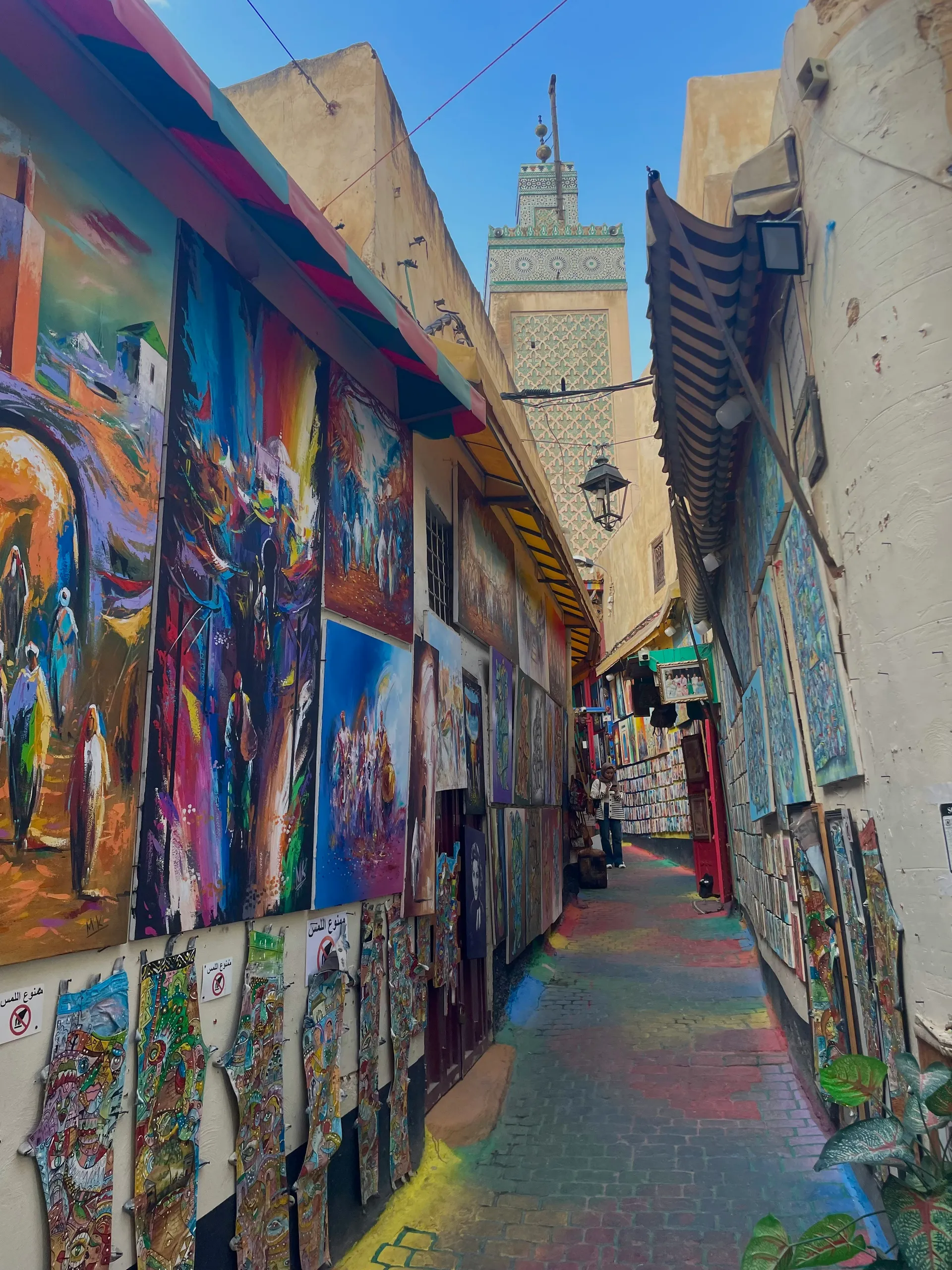
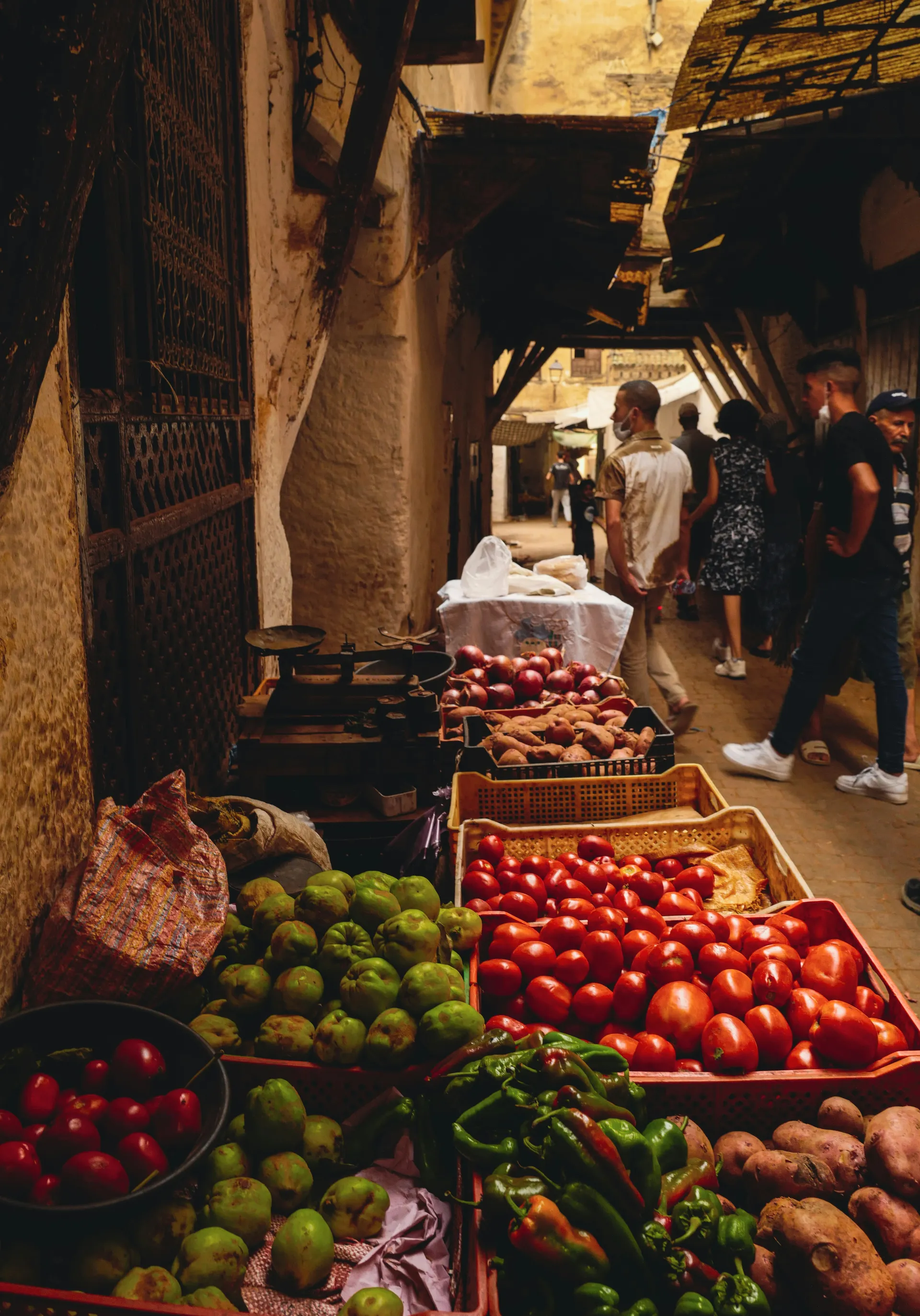
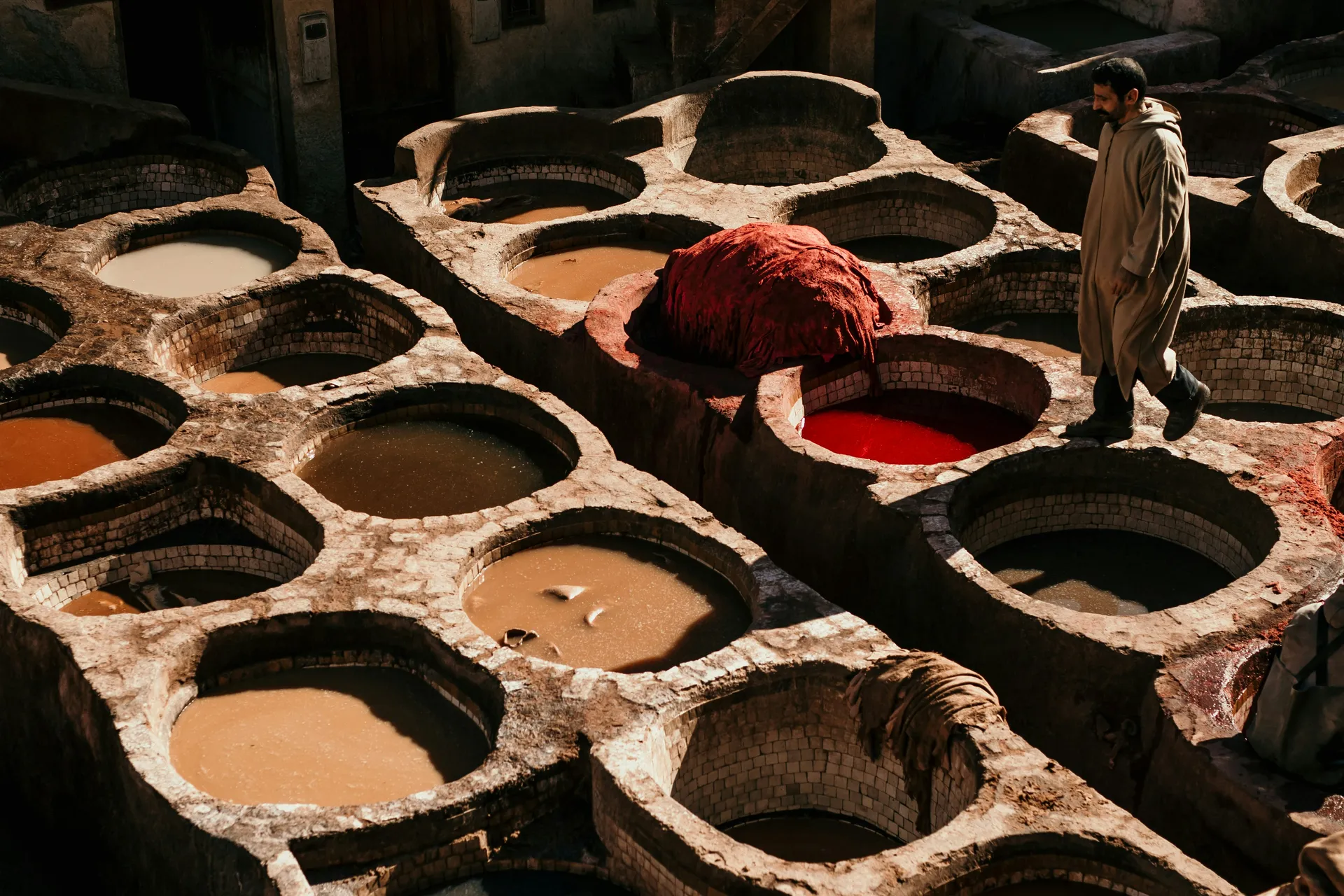
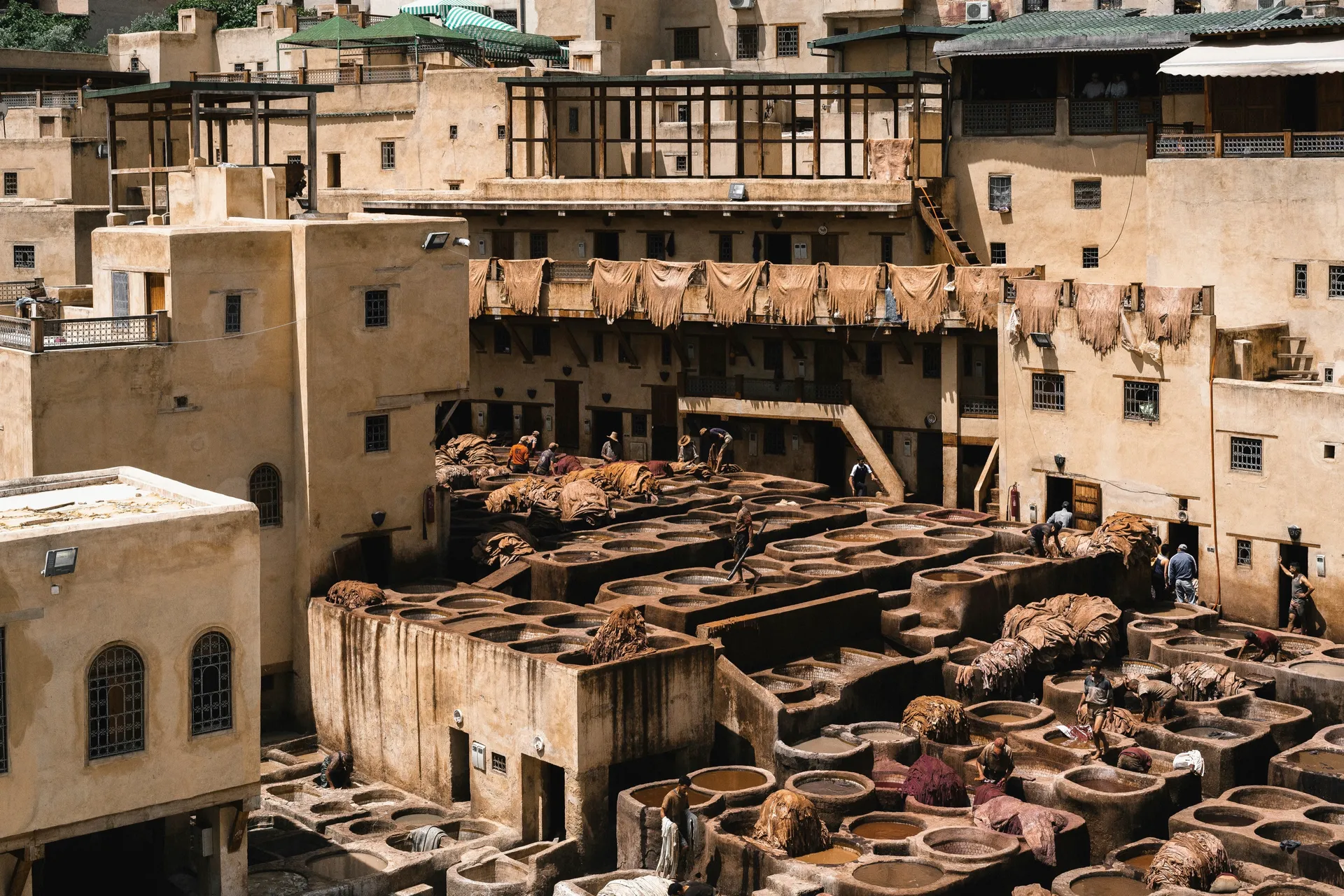
The character of Fez's medina—Fes el-Bali, a UNESCO World Heritage Site—is one of overwhelming sensory immersion. Narrow passages wind between towering walls that block the sky, opening suddenly onto sunlit squares where fountains of zellige tilework play beneath carved cedar canopies. The souks are organized by trade, as they have been for centuries: the dyers' quarter, where vats of crimson, saffron, and indigo line narrow alleys; the brass workers' souk, where the hammering of artisans creates a metallic symphony; the leather tanneries, where the Chouara vats—circular pits of colored dye where hides have been worked by hand since the Middle Ages—present a visual spectacle and an olfactory challenge that defines the Fez experience.
The cuisine of Fez is considered the pinnacle of Moroccan gastronomy, and with justification. The city's cooks have refined their craft over a millennium, producing dishes of extraordinary complexity and subtlety. Pastilla—a layered pie of pigeon meat, almonds, eggs, and cinnamon wrapped in paper-thin warqa pastry and dusted with powdered sugar—is the city's signature dish, a masterwork of sweet-savory balance that takes hours to prepare. The tagines of Fez achieve depths of flavor through the slow combination of preserved lemons, olives, saffron, and ras el hanout—the spice blend whose name means "head of the shop" and whose recipe varies from spice merchant to spice merchant with proprietary secrecy. Street food is equally compelling: steaming bowls of harira soup, fresh-baked msemen flatbread, and the orange juice squeezed at every corner.
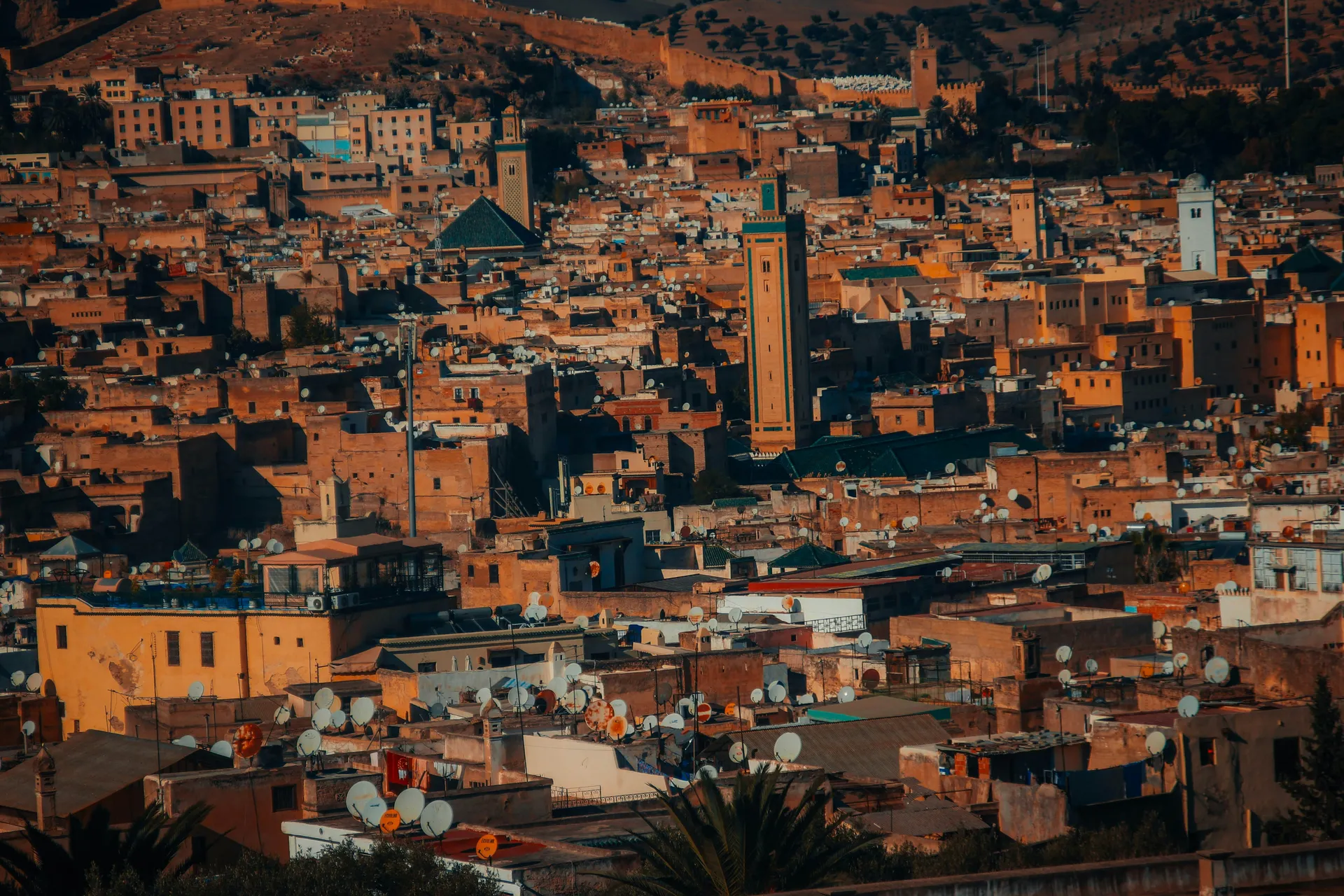
Beyond the medina walls, Fez offers experiences that contextualize its historical significance. The Merenid Tombs, perched on the hill above the city, provide panoramic views across the medina's skyline of minarets, domes, and satellite dishes that capture the city's tension between past and present. The Royal Palace gates—enormous brass doors of intricate geometric design—demonstrate the artistic heights achieved by Moroccan metalworkers. The mellah, the old Jewish quarter, preserves synagogues and a cemetery that document the centuries of Jewish presence in Fez. The surrounding countryside offers day trips to the Roman ruins of Volubilis, the holy city of Moulay Idriss Zerhoun, and the wine-producing region of Meknes.
Fez is reached by direct flights from European capitals to Fez-Saïss Airport, or by train from Casablanca (approximately three and a half hours) and Marrakech (approximately seven hours). The medina is best explored with an authorized guide, at least for the first visit, as the complexity of the layout genuinely defies independent navigation. The most comfortable visiting months are March through May and September through November, when temperatures are mild and the light is ideal for photography. Summer temperatures can exceed 40 degrees Celsius, making morning exploration and afternoon rest essential. Riad accommodation within the medina—traditional courtyard houses converted to guesthouses—provides the most atmospheric and convenient base.