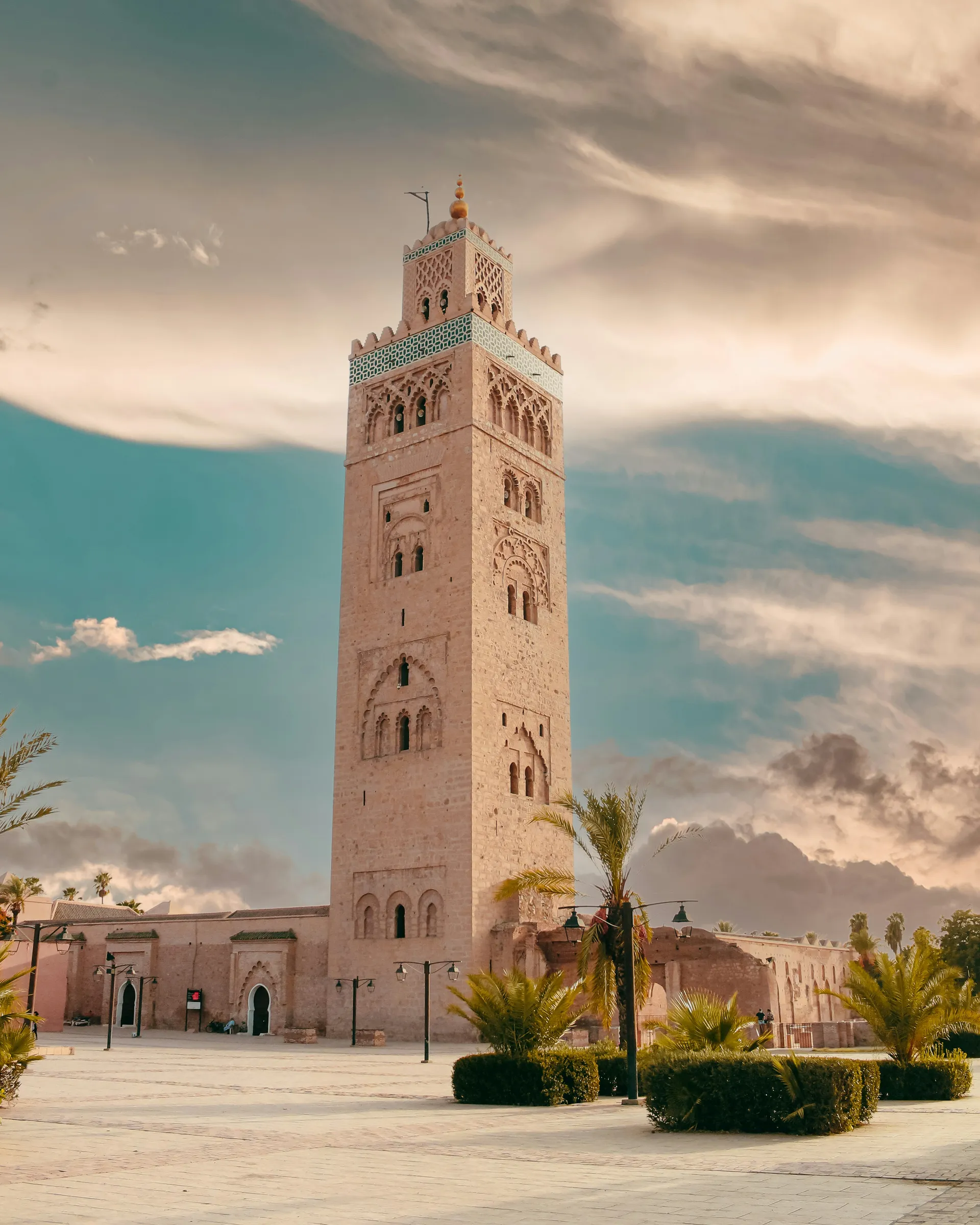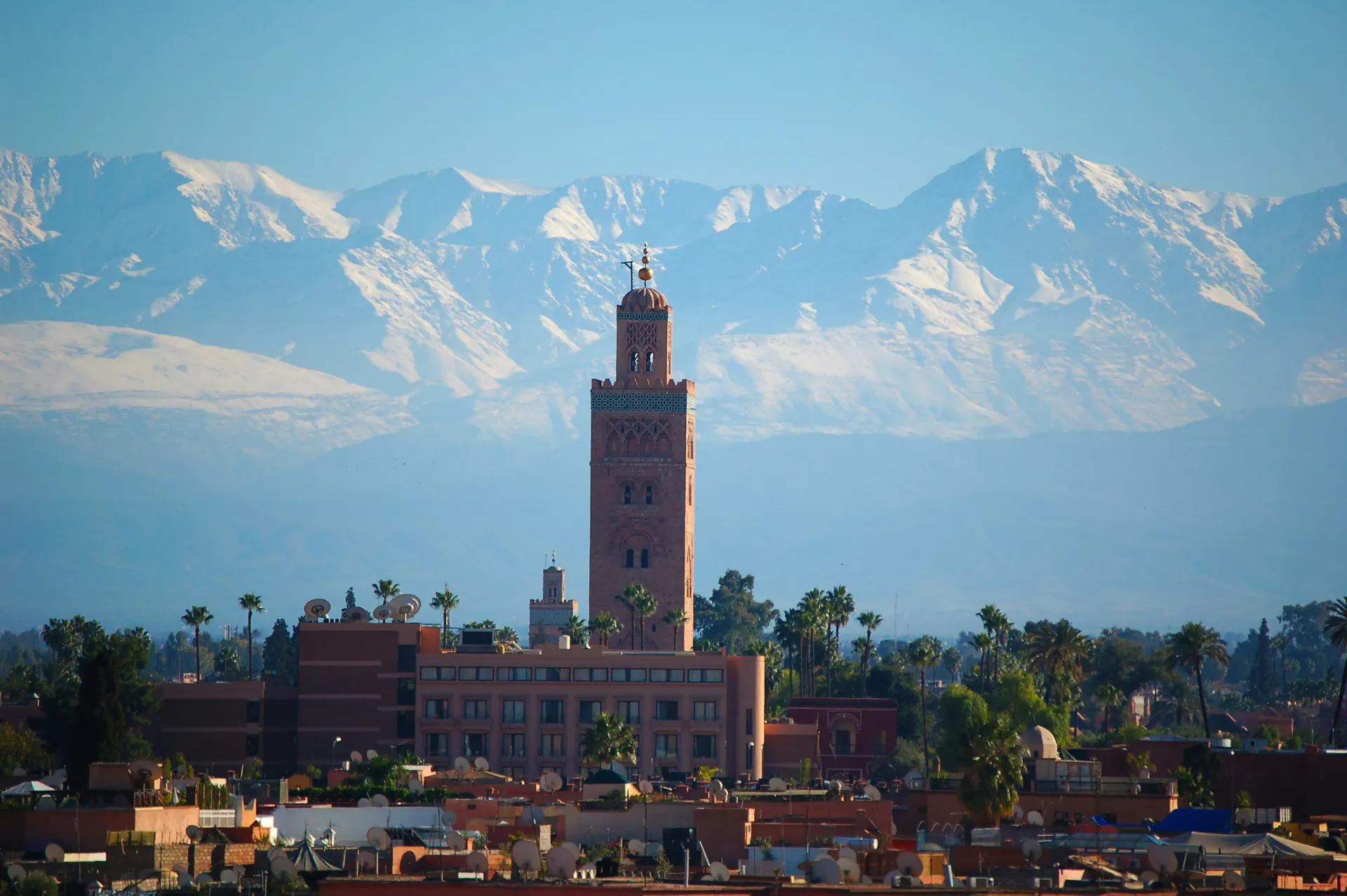
At the foot of the snow-capped High Atlas Mountains, where the ancient caravan routes from sub-Saharan Africa converged with the trade networks of the Mediterranean, Marrakech has been intoxicating visitors for nearly a thousand years. Founded in 1070 by the Almoravid dynasty as their imperial capital, this "Red City" — named for the distinctive rose-tinted ramparts that encircle its medina — grew to become one of the great cities of the Islamic world, a center of scholarship, commerce, and artistic achievement that rivaled Córdoba, Cairo, and Baghdad. Today, Marrakech remains Morocco's most magnetic city, a place where sensory overload is not a risk but a guarantee.
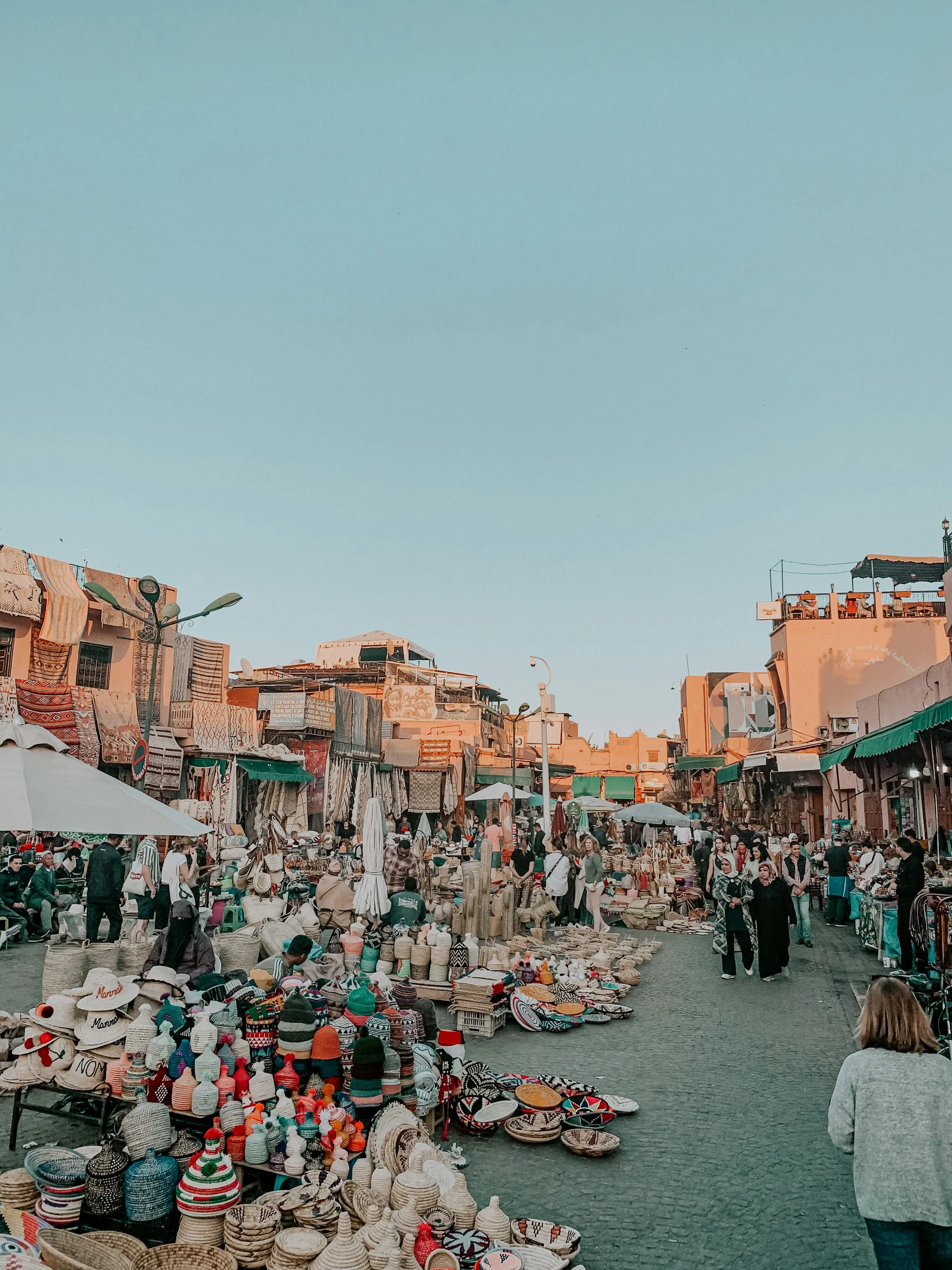
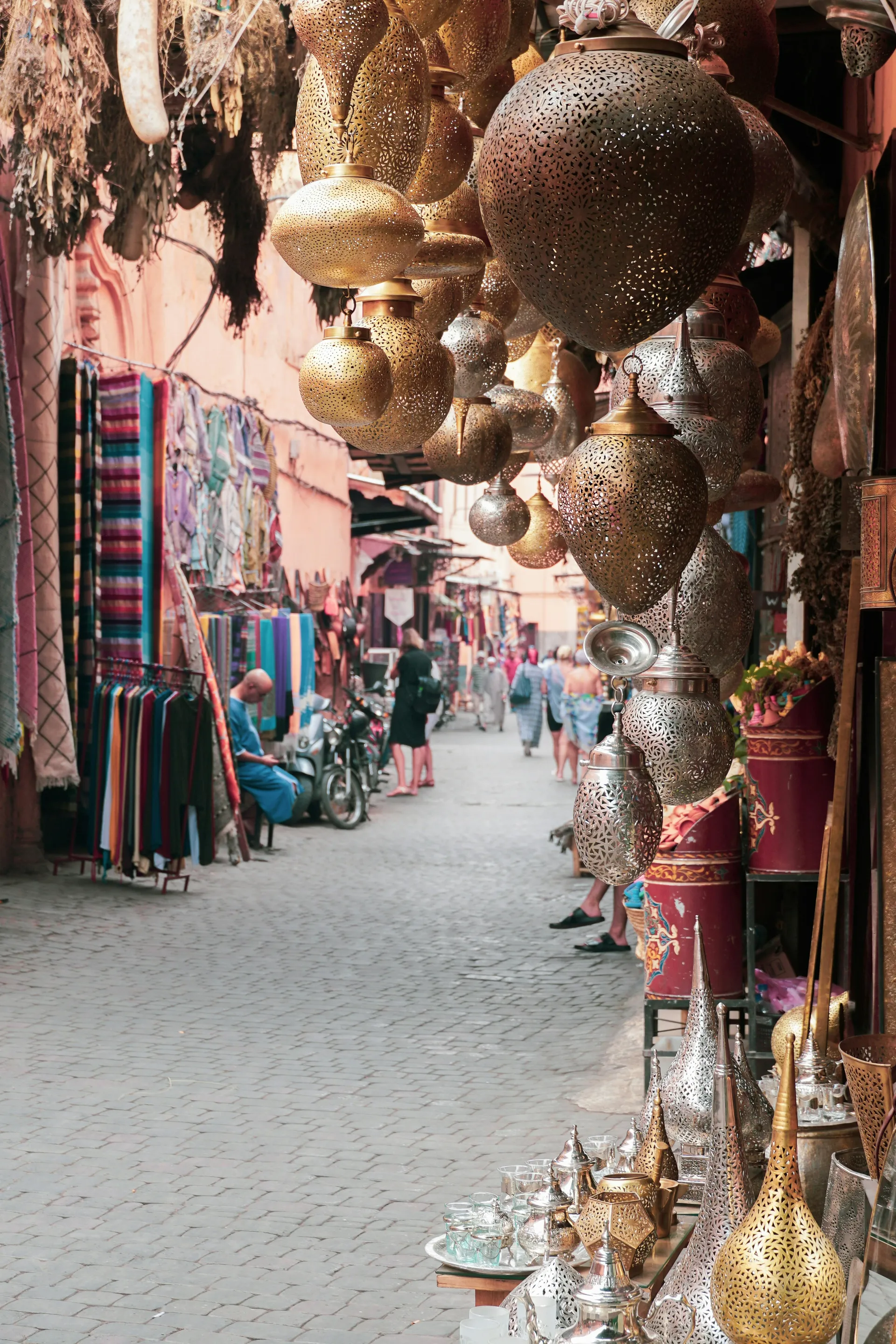
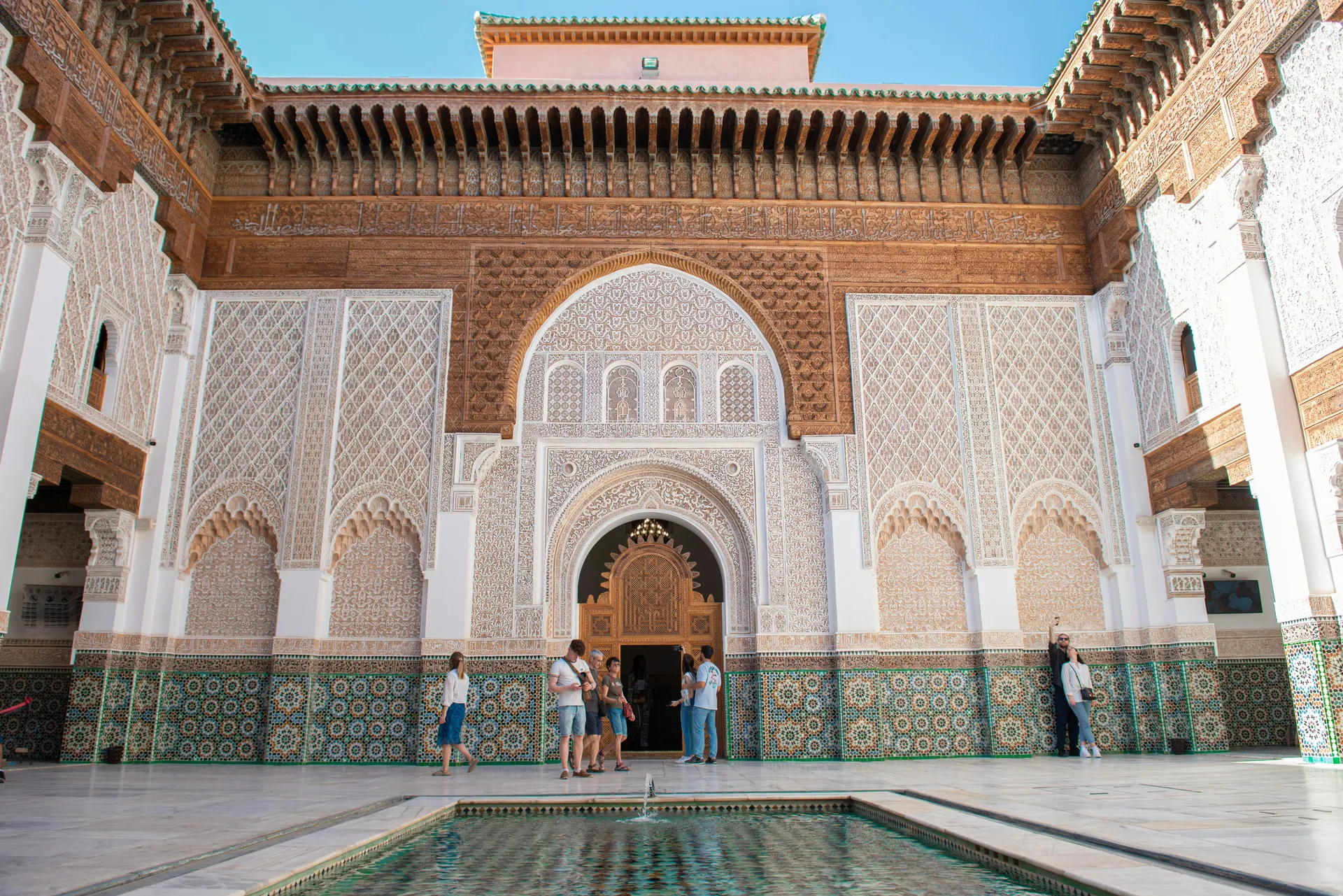
The medina of Marrakech, a UNESCO World Heritage Site, is one of the largest and most complex in the Islamic world — a labyrinth of narrow alleys, covered souks, and hidden courtyards that can disorient even experienced travelers within minutes. This disorientation is part of the magic. The souks are organized by trade: leather workers in one quarter, metalworkers in another, dyers hanging skeins of silk and wool from the rafters in brilliant cascades of color. The Madrasa Ben Youssef, a sixteenth-century Islamic college, stuns with the intricacy of its cedar carving, stucco work, and zellige tilework — a masterclass in the geometric perfection that defines Moroccan decorative arts. The Saadian Tombs, hidden for centuries behind a sealed wall, were rediscovered in 1917, their elaborately decorated mausoleum chambers preserving the grandeur of the sixteenth-century Saadian dynasty.
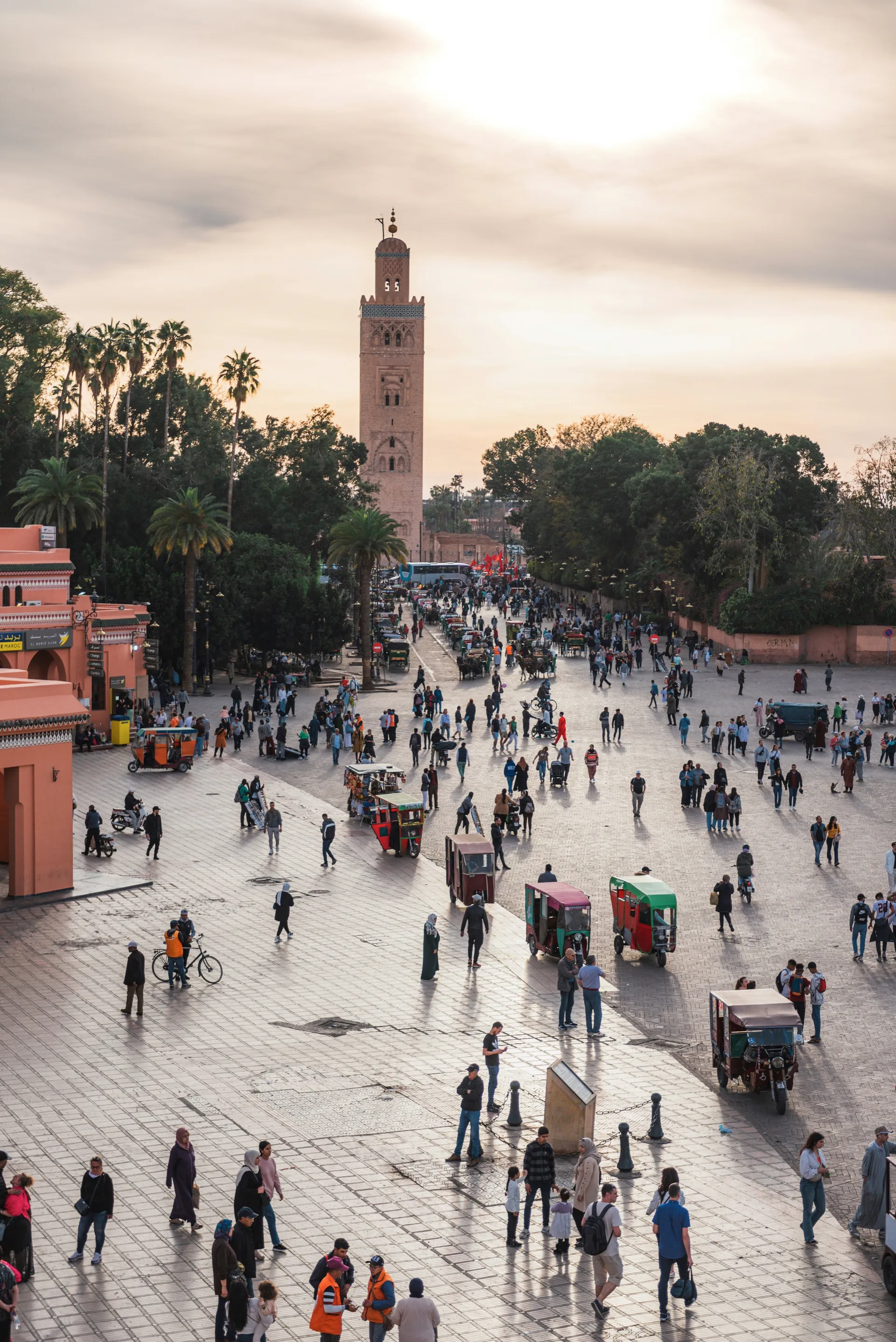
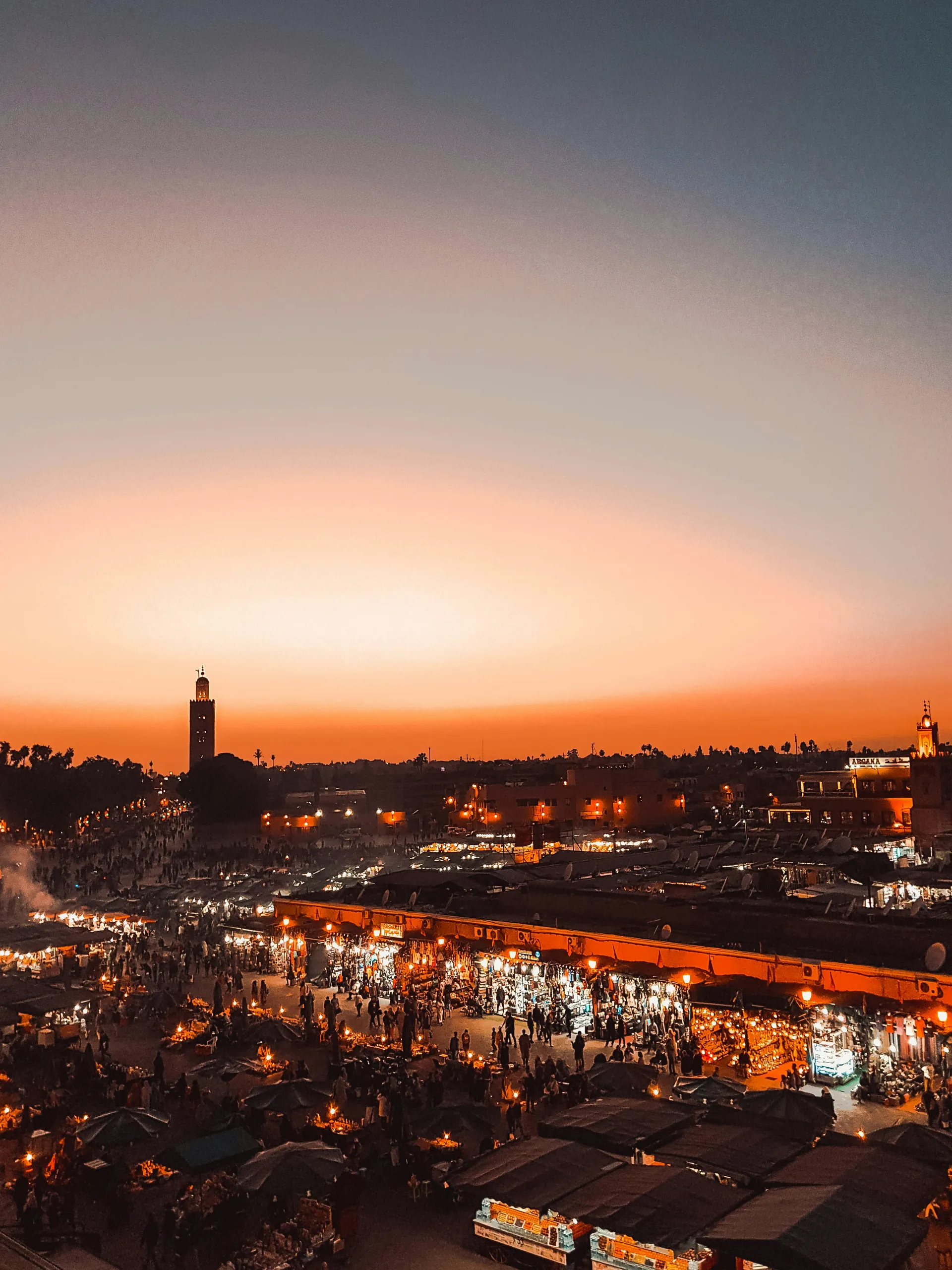
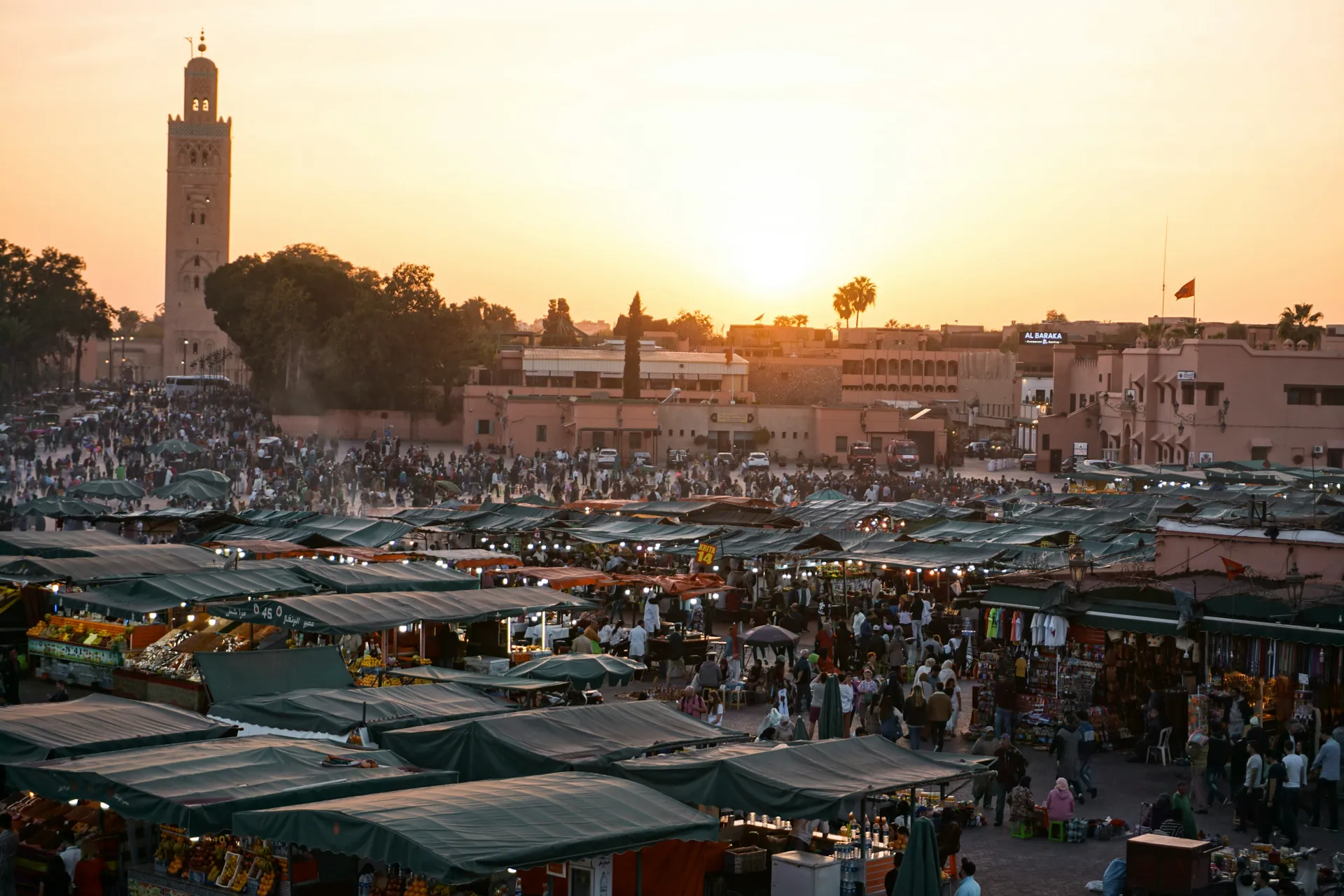
Jemaa el-Fnaa, the great square at the medina's heart, is unlike any public space on Earth. By day, it serves as a market for orange juice vendors, henna artists, and herbalists; by evening, it transforms into an open-air theater of snake charmers, storytellers, acrobats, and musicians performing to shifting crowds. As night falls, hundreds of food stalls materialize, their smoke and light creating an atmosphere of carnival intensity. The square has been recognized by UNESCO as a "Masterpiece of the Oral and Intangible Heritage of Humanity" — an acknowledgment that Jemaa el-Fnaa is not merely a place but a living cultural phenomenon.
Marrakech's culinary tradition is one of the world's most aromatic and refined. Tagines — slow-cooked stews of lamb with preserved lemons, chicken with olives, or vegetables with ras el hanout — arrive at the table in their conical cooking vessels, their fragrance a complex architecture of cumin, saffron, ginger, and cinnamon. Pastilla, a savory-sweet pastry of pigeon or chicken wrapped in layers of warqa dough and dusted with powdered sugar and cinnamon, represents Moroccan cuisine at its most sophisticated. The riads — traditional courtyard houses converted into intimate guest houses — have elevated Moroccan hospitality to an art form, their tiled courtyards and rooftop terraces offering oases of calm within the medina's magnificent chaos.
Marrakech is typically reached as an overland excursion or fly-in extension from cruise ports along Morocco's Atlantic coast, including Casablanca, Safi, or Agadir. The city lies approximately three hours from the coast by road. The climate is hot and dry in summer, with spring (March-May) and autumn (September-November) offering the most comfortable temperatures for exploring the medina on foot. A minimum of one full day is needed, though two days allows time for the medina, the Majorelle Garden (restored by Yves Saint Laurent), and the new museums of contemporary Moroccan art that have made Marrakech an increasingly important cultural capital. Marrakech is a city that assaults the senses, challenges assumptions, and leaves an impression that no amount of time can diminish.