Long before European explorers charted these shores, the Khoikhoi people knew this sheltered Atlantic lagoon as a place of abundance, its calm waters teeming with fish and its mudflats alive with wading birds. Portuguese navigator Bartolomeu Dias became the first European to document the bay in 1487, though it was the Dutch who bestowed its enduring name — *Walvisbaai*, the Bay of Whales — for the southern right whales that once gathered here in extraordinary numbers. The port changed hands between British and German colonial powers throughout the nineteenth century, and even after Namibian independence in 1990, Walvis Bay remained a South African enclave until its peaceful reintegration in 1994, making it one of the last territorial disputes resolved on the African continent.
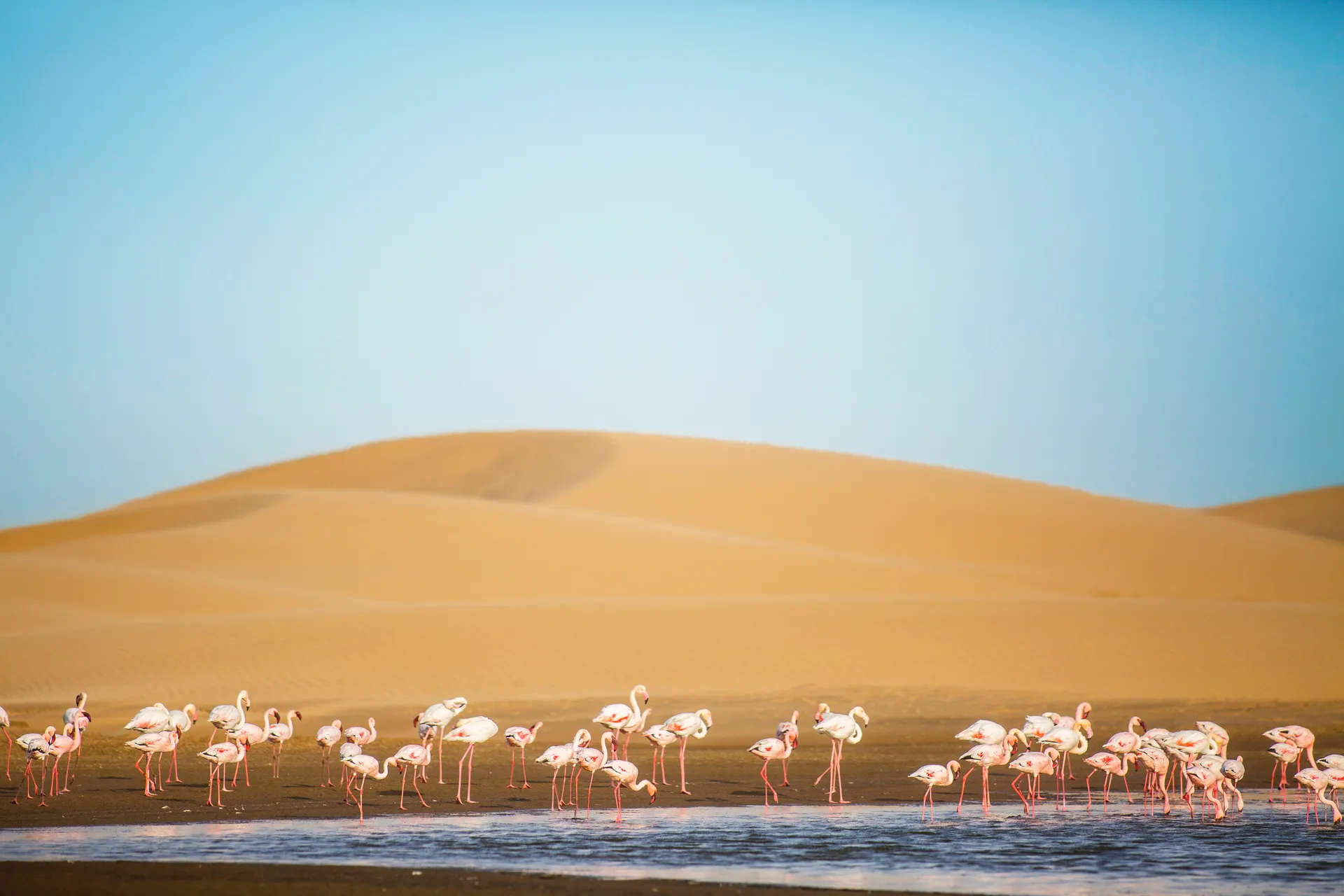
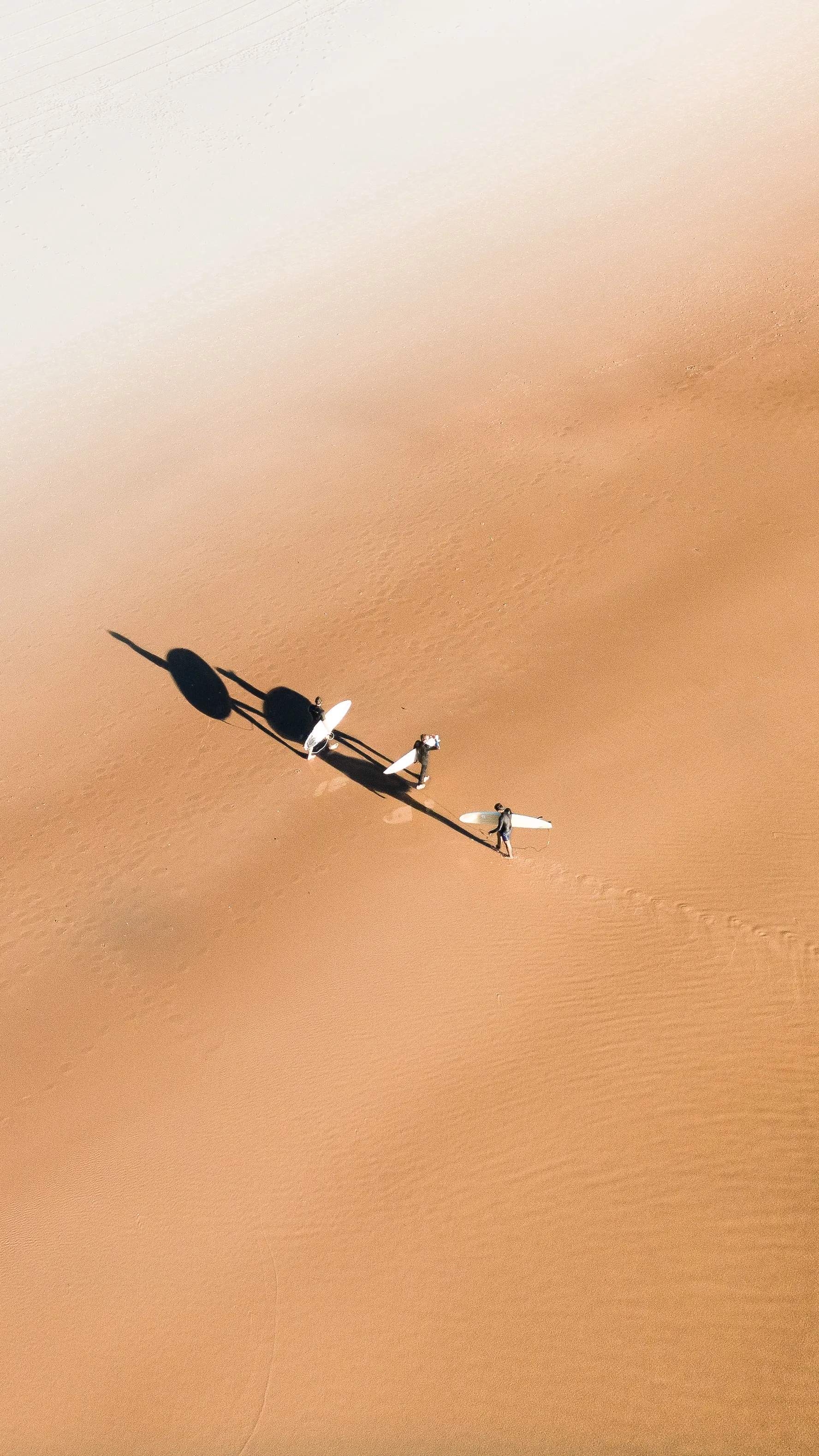
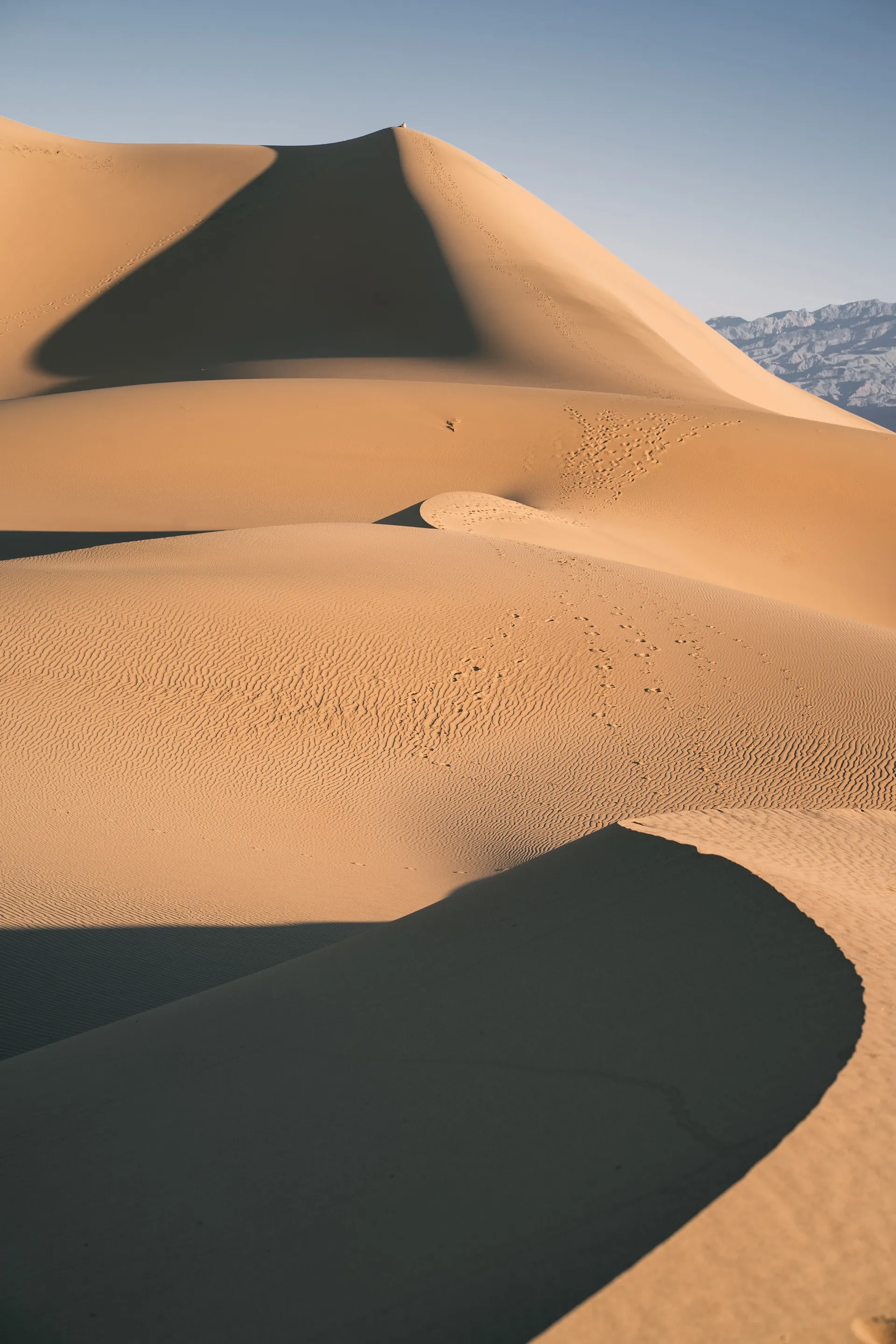
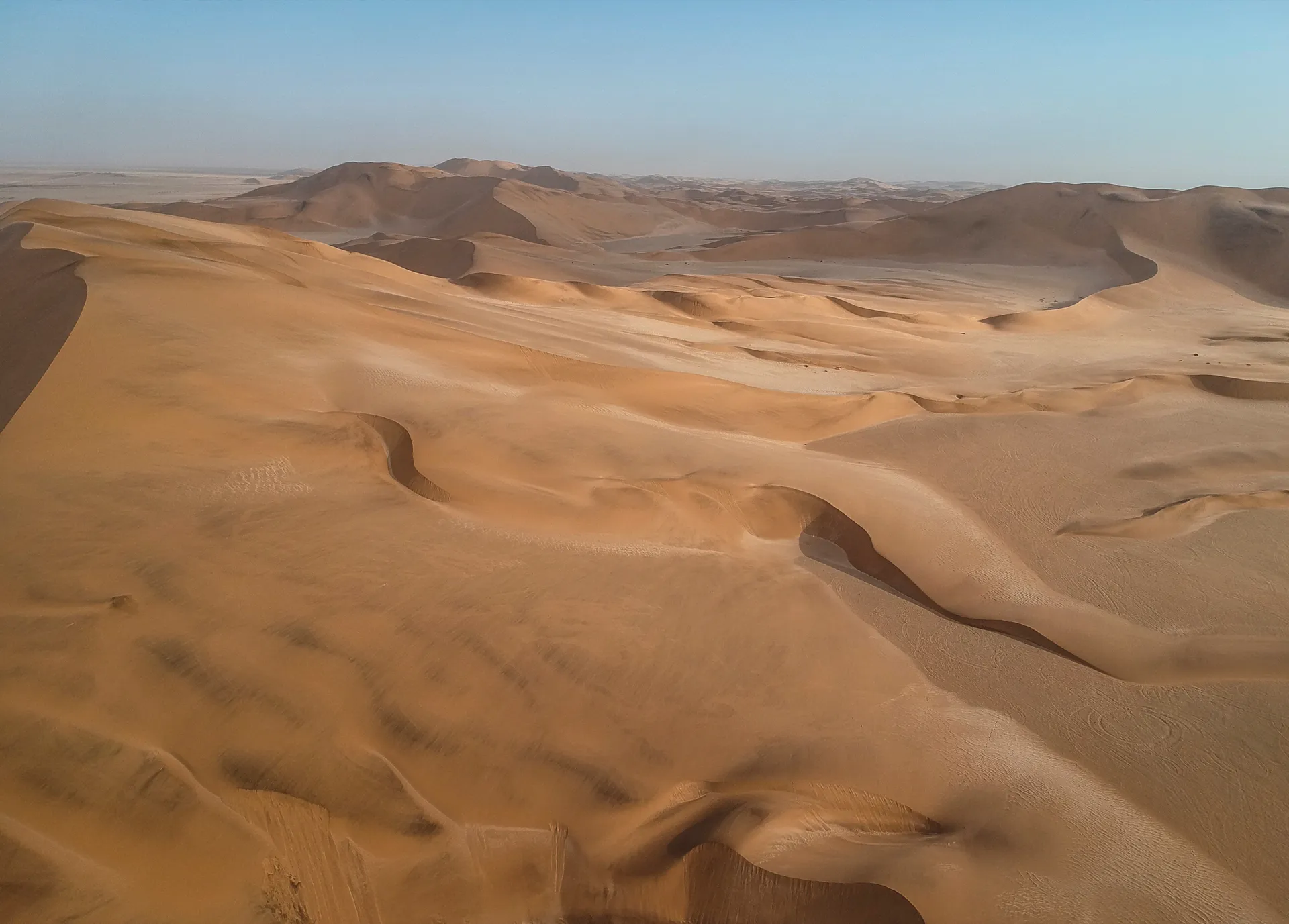
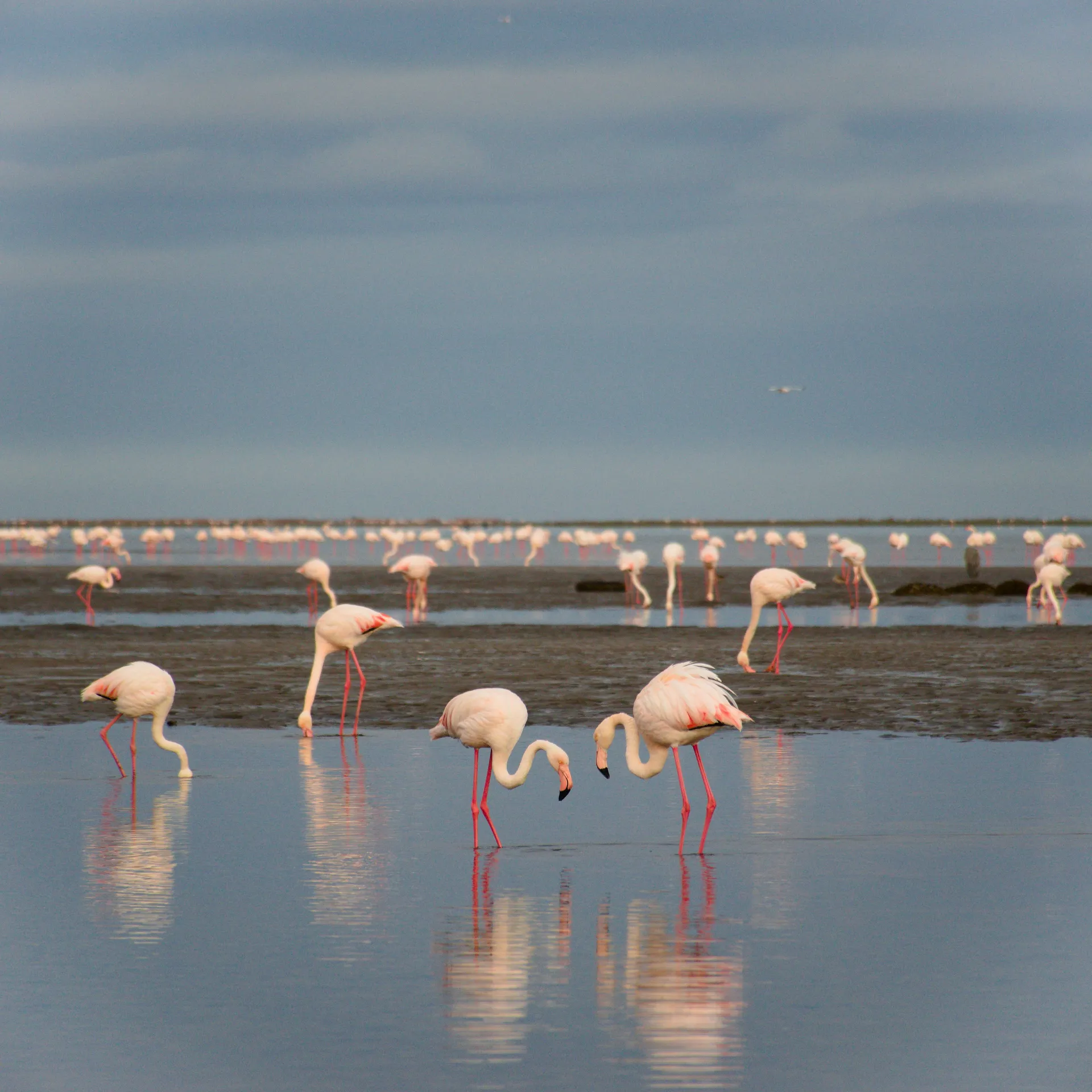
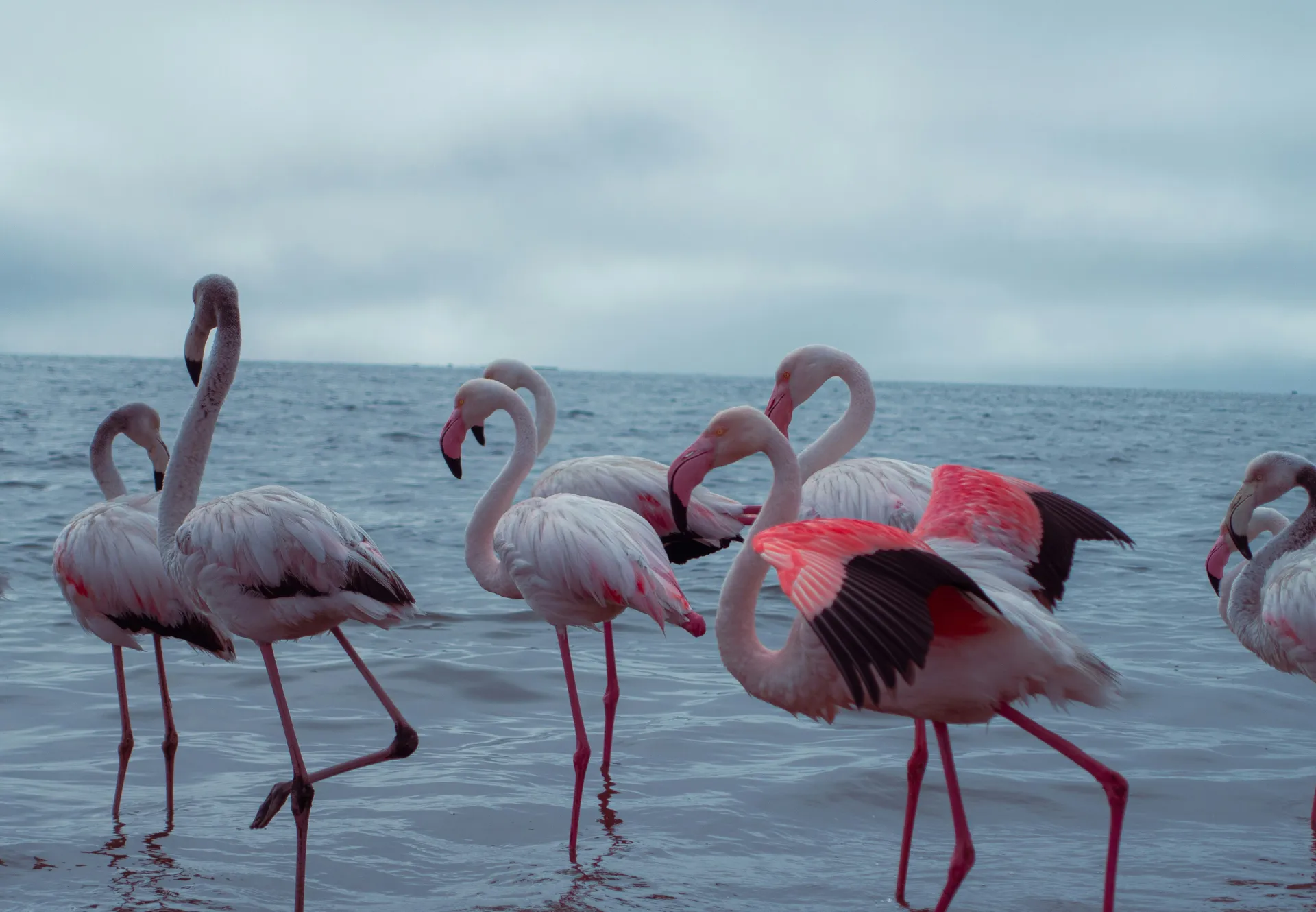
Today, Walvis Bay occupies one of the most cinematically improbable settings of any port city on earth. To the west, the cold Benguela Current sweeps northward along the Skeleton Coast, conjuring morning fogs that dissolve into crystalline afternoon light. To the east, the ancient dunes of the Namib — among the oldest geological formations on the planet — rise in burnt-sienna crescents against an impossibly blue sky. The town itself is unhurried and sun-bleached, its waterfront promenade dotted with cafés where locals linger over coffee as pelicans drift overhead. And then there are the flamingos: tens of thousands of lesser and greater flamingos transforming the lagoon into a shimmering tableau of coral and rose, a sight that alone justifies the voyage.
The culinary landscape here draws from both ocean and desert with quiet confidence. Begin at the waterfront with freshly shucked Lüderitz oysters — cultivated in the frigid, nutrient-dense Atlantic waters and regarded among the finest in the Southern Hemisphere — paired with a chilled Namibian sauvignon blanc from the Kristall Kellerei winery. Seek out *kapana*, Namibia's beloved street-grilled meat served with fiery chili relish and *oshifima*, a dense pearl millet porridge that is the country's culinary heartbeat. For something more refined, the nearby resort town of Swakopmund — with its surreal Wilhelmine-era architecture and Germanic bakeries — offers *Schweinshaxe* and *Schwarzwälder Kirschtorte* alongside pan-African tasting menus, a collision of cultures as unexpected as the landscape itself.
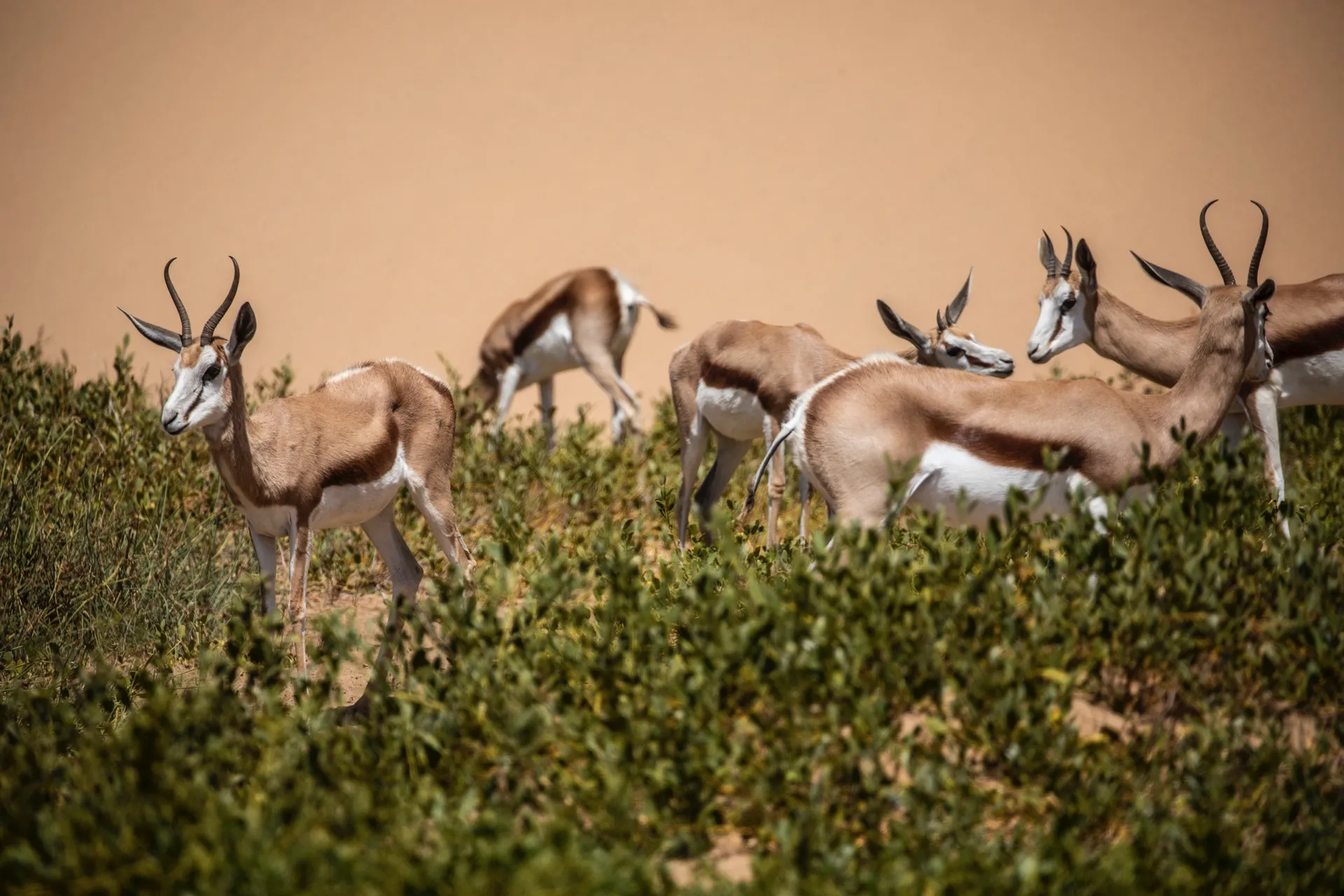
Beyond the harbour, Walvis Bay serves as the gateway to landscapes of primordial grandeur. The Namib-Naukluft National Park, less than an hour's drive southeast, encompasses the towering apricot-hued dunes of Sossusvlei and the eerie, bone-white clay pan of Deadvlei, where ancient camelthorn trees stand fossilised against a cobalt sky. Venture further north and the journey leads to Otjiwarongo, the gateway to the Waterberg Plateau National Park, a rust-red mesa rising dramatically from the bushveld, home to white and black rhinoceros, sable antelope, and over two hundred bird species. For those with time and inclination, the exclusive Ongava Game Reserve on the southern boundary of Etosha offers intimate, guided safari encounters with leopard, lion, and endangered black rhino — a wilderness experience that rivals anything on the continent.
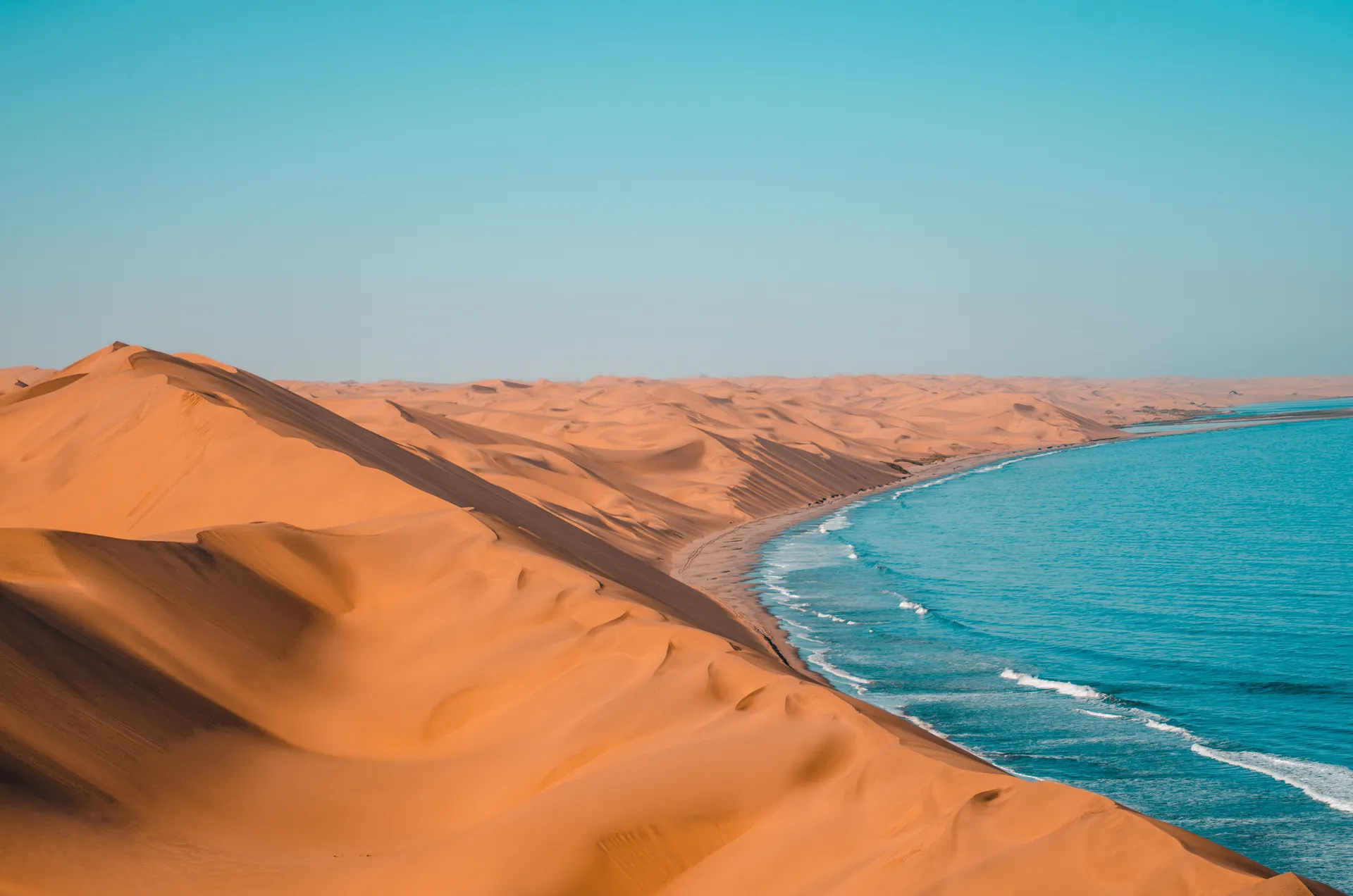
Walvis Bay's deep-water harbour — the only natural deep-water port along Namibia's entire coastline — has made it a prized stop on southern Atlantic and full-circumnavigation itineraries. Azamara and Regent Seven Seas Cruises feature the port on their longer Africa and world-voyage sailings, offering passengers immersive overland excursions into the desert interior. Cunard and Viking include Walvis Bay on grand repositioning voyages between Europe and the Cape, while Hapag-Lloyd Cruises brings its expedition-minded guests for Skeleton Coast explorations. Costa Cruises and TUI Cruises Mein Schiff have expanded their African routing to embrace this port, recognising that few stops anywhere deliver such a dramatic convergence of sea, sand, and wildlife. Shore excursions typically range from scenic catamaran cruises through the lagoon — where dolphins, seals, and flamingos perform in unscripted choreography — to half-day 4x4 adventures across the dune fields of Sandwich Harbour, where desert sands meet the ocean in a collision that feels almost geological in its drama.