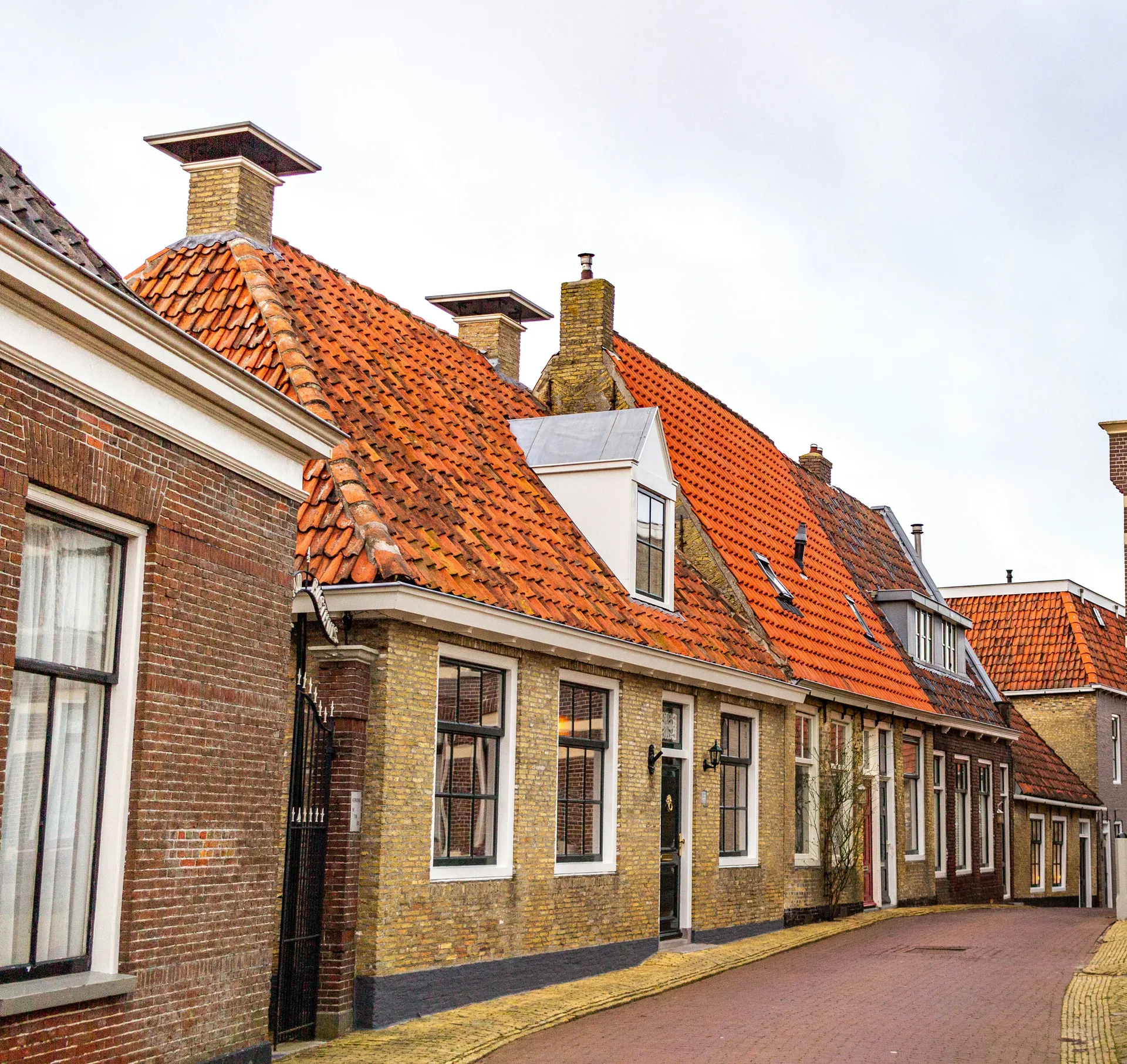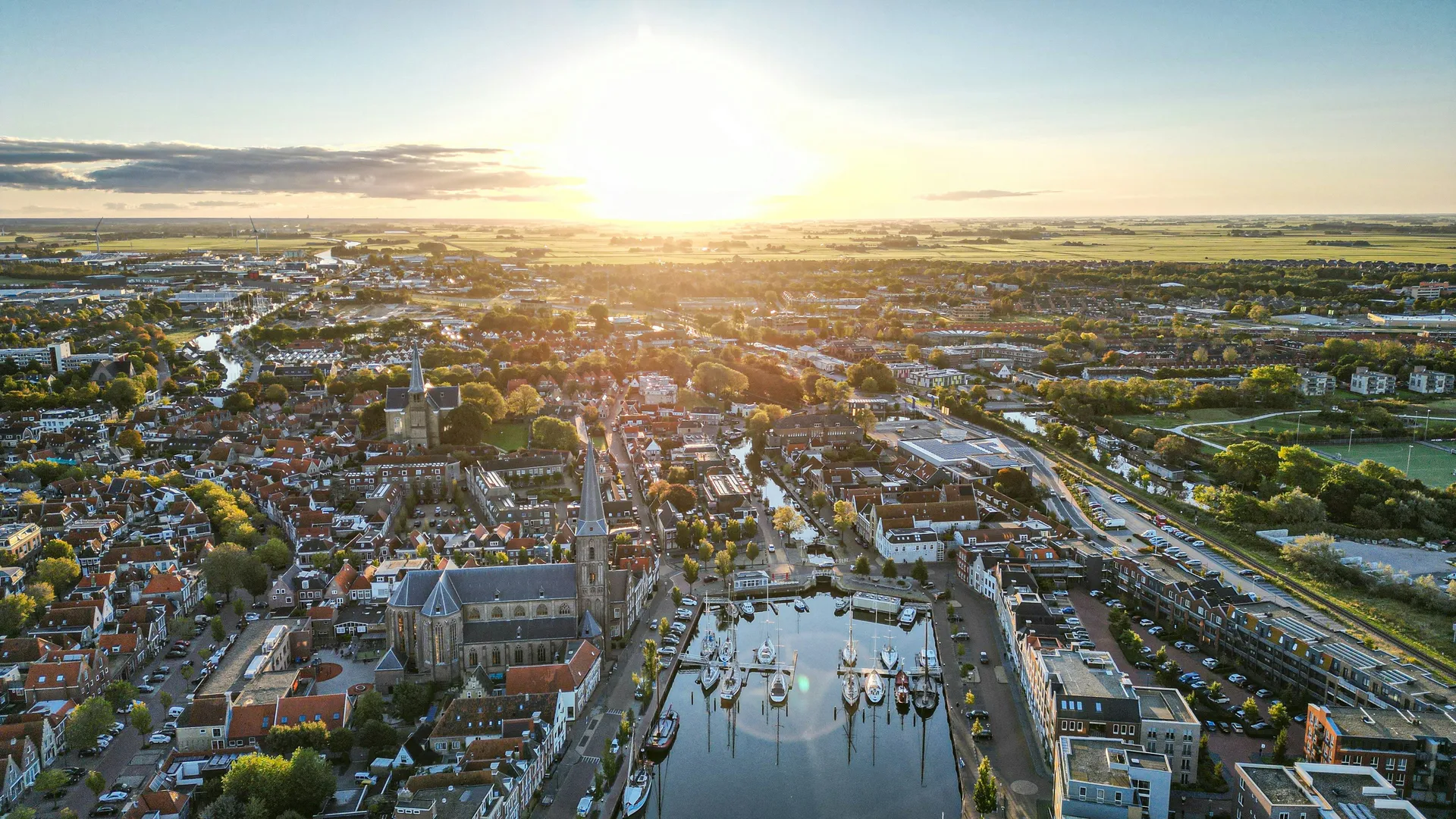
Harlingen is a small but historically significant port town on the Frisian coast of the Netherlands, where the Wadden Sea—a UNESCO World Heritage tidal flat system stretching from the Netherlands to Denmark—meets the North Sea in one of Europe's most important wetland ecosystems. The town of 16,000 has been a maritime center since the Middle Ages, when it served as one of the departure points for Dutch fishing fleets heading to the herring grounds and, later, as a port for the VOC (Dutch East India Company) trade routes. Today, Harlingen preserves its maritime heritage in a remarkably intact harbor of tall-masted ships, brick warehouses, and canal-side buildings that constitute one of the best-preserved historic seaports in the Netherlands.
The old harbor, where traditional flat-bottomed sailing vessels (platbodems and botters) line the quays alongside fishing boats and pleasure craft, is Harlingen's atmospheric heart. The town's 580 registered monuments—a remarkable density for its size—include the Hannemahuis Museum, housed in an eighteenth-century merchant's house, which tells the story of Harlingen's maritime and tile-making industries. Harlingen was historically a center for the production of Frisian tiles—decorative ceramic tiles that adorned homes throughout the Netherlands and northern Europe—and the tradition continues at the Koninklijke Tichelaar pottery, the oldest company in the Netherlands (founded 1572), where master craftsmen produce tiles using techniques unchanged for centuries. The town's canals, bridges, and lock gates create a network of waterways that connect the harbor to the surrounding polder landscape.
Frisian cuisine in Harlingen reflects the coast's bounty and the region's dairy traditions. Harlingen's proximity to the Wadden Sea provides exceptional seafood: gray shrimp (Hollandse garnalen), peeled by hand and served on buttered brown bread, are the coast's most beloved delicacy. Mussels from the Wadden Sea, kibbeling (battered fried fish), and smoked eel from local smokehouses appear on café and restaurant menus. Friesland is one of the Netherlands' premier dairy regions, and Frisian clove cheese (nagelkaas), butter, and yogurt are produced on farms visible from the harbor. Suikerbrood (sugar bread), a sweet, enriched bread studded with large sugar crystals, is the quintessential Frisian treat, served with coffee and offered at every bakery in town.
The Wadden Sea, stretching before Harlingen's harbor, is one of the world's great natural wonders—a vast system of tidal flats, channels, and barrier islands that supports millions of migratory birds, harbor and gray seal colonies, and a marine ecosystem recognized by UNESCO as outstanding universal value. Wadlopen (mudflat walking) is the region's most iconic activity: guided walks across the exposed tidal flats at low tide, wading through knee-deep channels and crossing vast expanses of sand and mud to reach the barrier islands of Vlieland and Terschelling. The experience—part hike, part natural history lesson, part meditative encounter with a landscape that exists for only half the day—is unlike anything available elsewhere in Europe. Ferry services from Harlingen connect to both Vlieland and Terschelling, car-free islands of beaches, dunes, and cycling paths.
HX Expeditions, Ponant, and Uniworld River Cruises include Harlingen on their Dutch and North Sea itineraries. Ships dock at the harbor within the historic center, providing immediate access to the town's monuments, museums, and waterfront restaurants. The best visiting period is May through September, with summer bringing the warmest conditions for Wadden Sea activities and the longest days for island excursions. Bird migration peaks in spring (April–May) and autumn (August–October), when millions of shorebirds use the Wadden Sea as a critical stopover. Low tide, necessary for mudflat walking, follows a schedule determined by the moon—checking tide tables when planning is essential. Harlingen offers the rare combination of authentic Dutch maritime heritage and immediate access to one of the planet's most extraordinary tidal ecosystems.