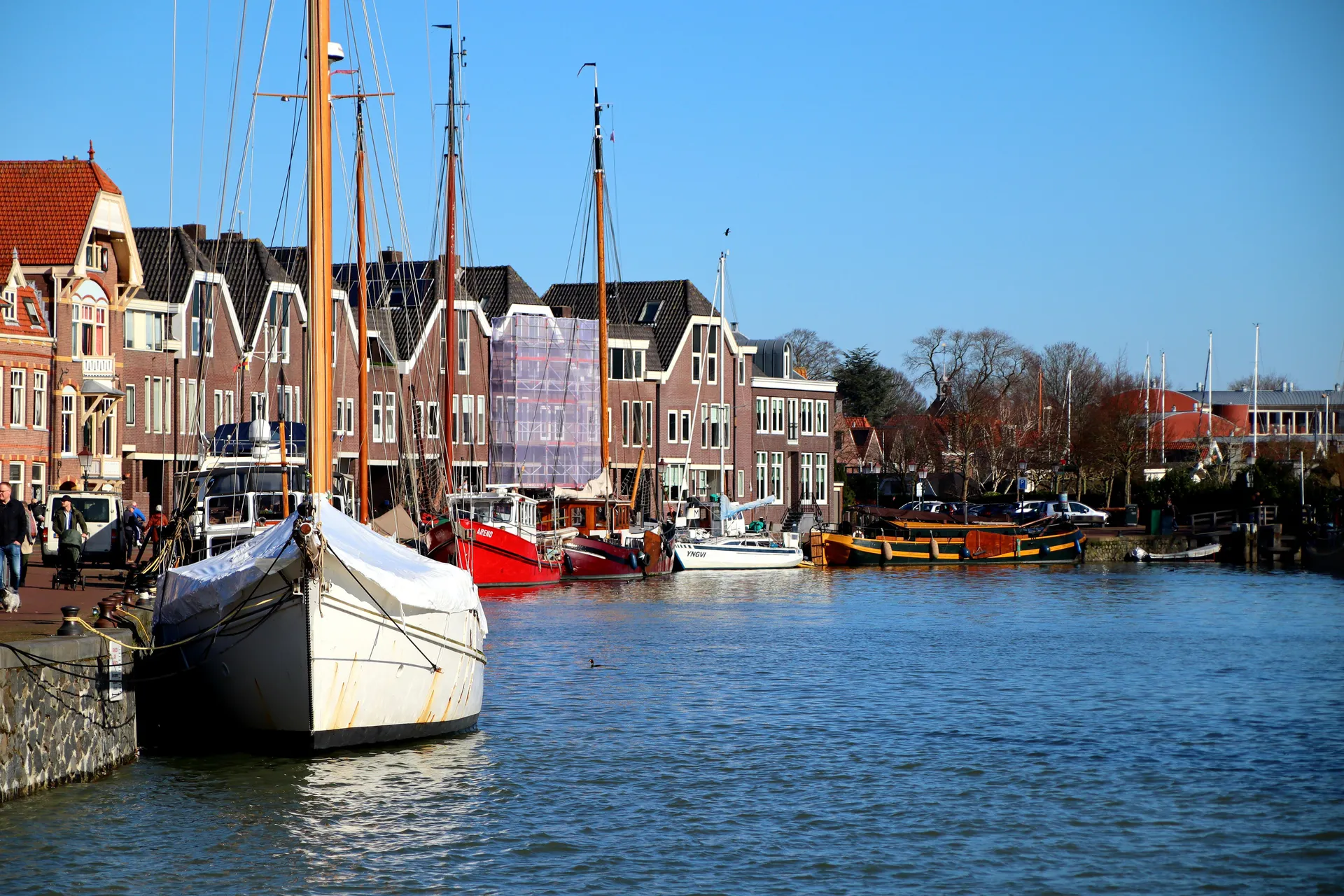
Where the Zuiderzee once carried spice-laden vessels home from the far reaches of Asia, the harbour town of Hoorn still wears its Golden Age grandeur with quiet authority. Founded in the early fourteenth century and rising to prominence as one of the six chambers of the Vereenigde Oostindische Compagnie — the Dutch East India Company — this compact North Holland gem served as the administrative seat from which Jan Pieterszoon Coen launched expeditions that would reshape global trade. Cape Horn itself, at the southern tip of South America, bears the name of this very town, christened by native son Willem Schouten upon rounding it in 1616.
Step beyond the waterfront and Hoorn reveals itself as a living tableau of seventeenth-century mercantile splendour. The Roode Steen, the town's central square, is presided over by the stately Westfries Museum, its ornate 1632 façade adorned with the coats of arms of the seven West Frisian cities — a stone-carved reminder of civic pride that has endured for nearly four centuries. Narrow gabled streets radiate outward like spokes from a gilded wheel, their canal-side reflections doubling the beauty of meticulously preserved merchant houses. At the harbour's edge, the Hoofdtoren — a defence tower dating to 1532 — stands sentinel over bobbing sailboats and the shimmering expanse of the IJsselmeer, the freshwater lake that replaced the once-fearsome Zuiderzee when the Afsluitdijk sealed it from the sea in 1932.
The culinary landscape of Hoorn rewards the curious palate with distinctly North Holland pleasures. Begin at a harbourside terrace with kibbeling — tender morsels of battered cod served with ravigote sauce — while watching light play across the water. The region's famed Edam and Gouda cheeses appear on nearly every menu, often aged to crystalline perfection and paired with mosterd from local producers. For something more substantial, seek out stamppot, the rustic Dutch marriage of mashed potatoes with smoked sausage and winter greens, elevated in Hoorn's better kitchens with heritage vegetables from surrounding polders. Finish with stroopwafels pressed warm from the iron — caramel syrup pooling between crisp waffle layers — or a slice of appeltaart dense with cinnamon and raisins, accompanied by a glass of jenever from a centuries-old distillery tradition.
The surrounding countryside offers excursions that feel plucked from a Dutch master's canvas. A short journey south leads to Delft, where Vermeer's luminous interiors still seem to inhabit the light falling through canal-house windows, and the iconic blue-and-white pottery continues its three-hundred-year tradition at the Royal Delft factory. Giethoorn — often whispered of as the Venice of the North — enchants with its thatched-roof farmhouses connected by arched wooden bridges over whisper-quiet waterways, best explored by punter or electric boat. The storybook town of Gouda beckons with its gothic Stadhuis and the ceremonial cheese market held each Thursday in summer, while the quieter reaches near Gaarkeuken in Groningen province reveal the vast, meditative beauty of the northern Dutch landscape, where sky and farmland merge in an endless horizon.
For the discerning river cruise traveller, Hoorn occupies a privileged position along the waterways of the Netherlands. AmaWaterways and Avalon Waterways both feature the town on their tulip-season itineraries, offering intimate shore excursions that penetrate beyond the obvious into artisan workshops and private cheese cellars. Scenic River Cruises and Uniworld River Cruises bring their signature all-inclusive elegance to these waters, with curated cultural programmes that illuminate Hoorn's VOC heritage through expert-led walks and museum visits. Viking, with its characteristically thoughtful approach to destination immersion, pairs Hoorn with lesser-known waterway villages, creating a mosaic of Dutch life that feels both comprehensive and deeply personal — a fitting tribute to a town that once helped map the world.

