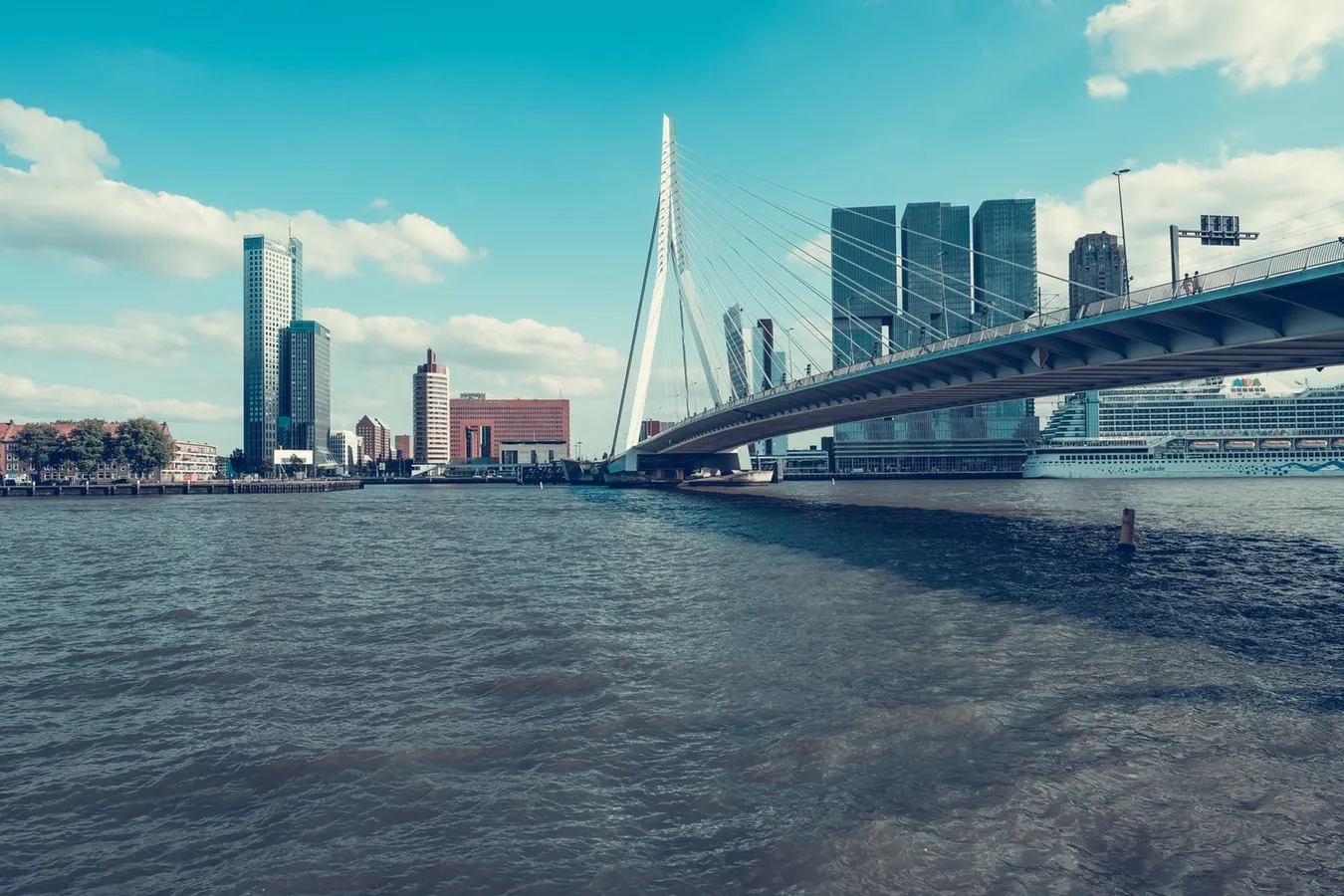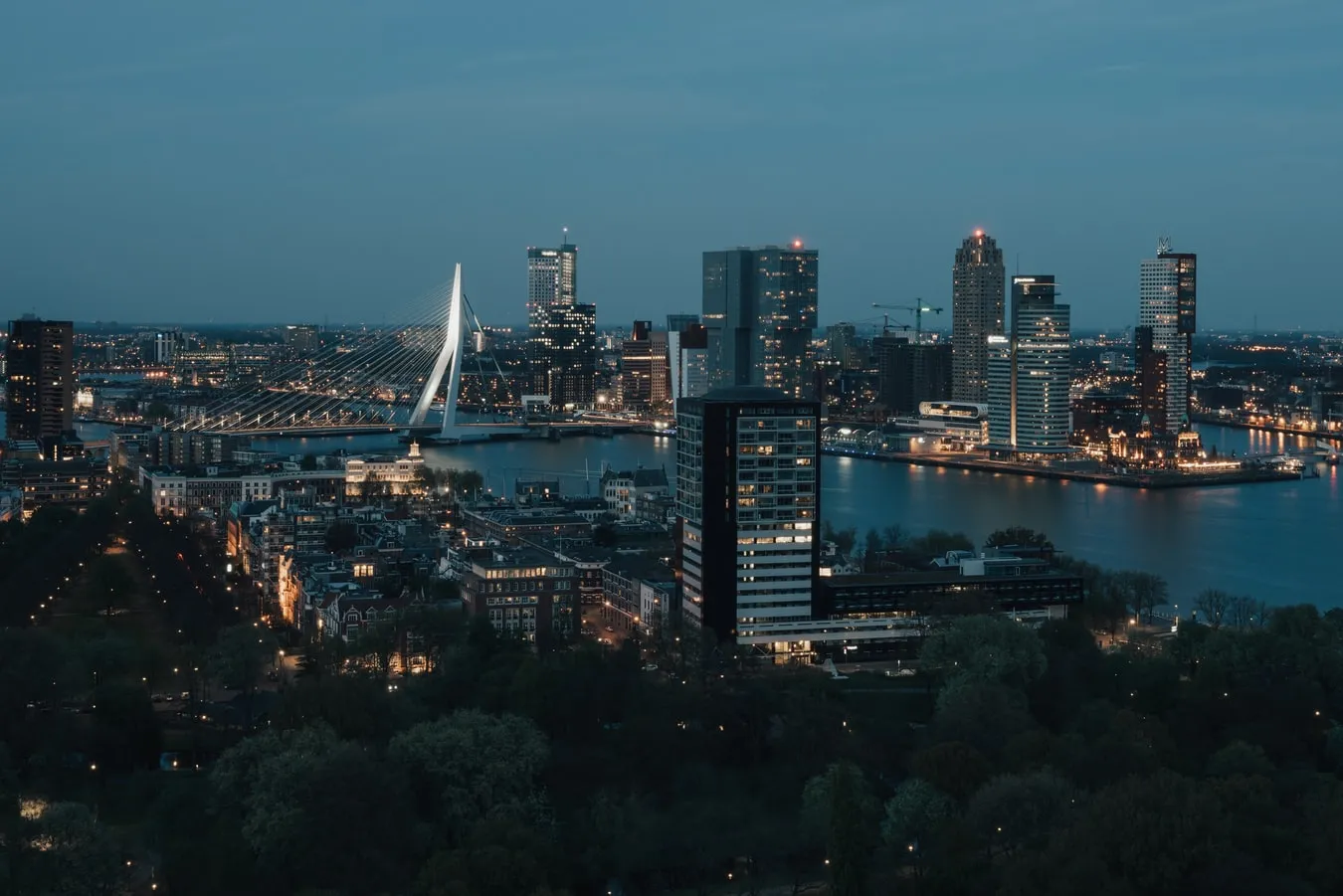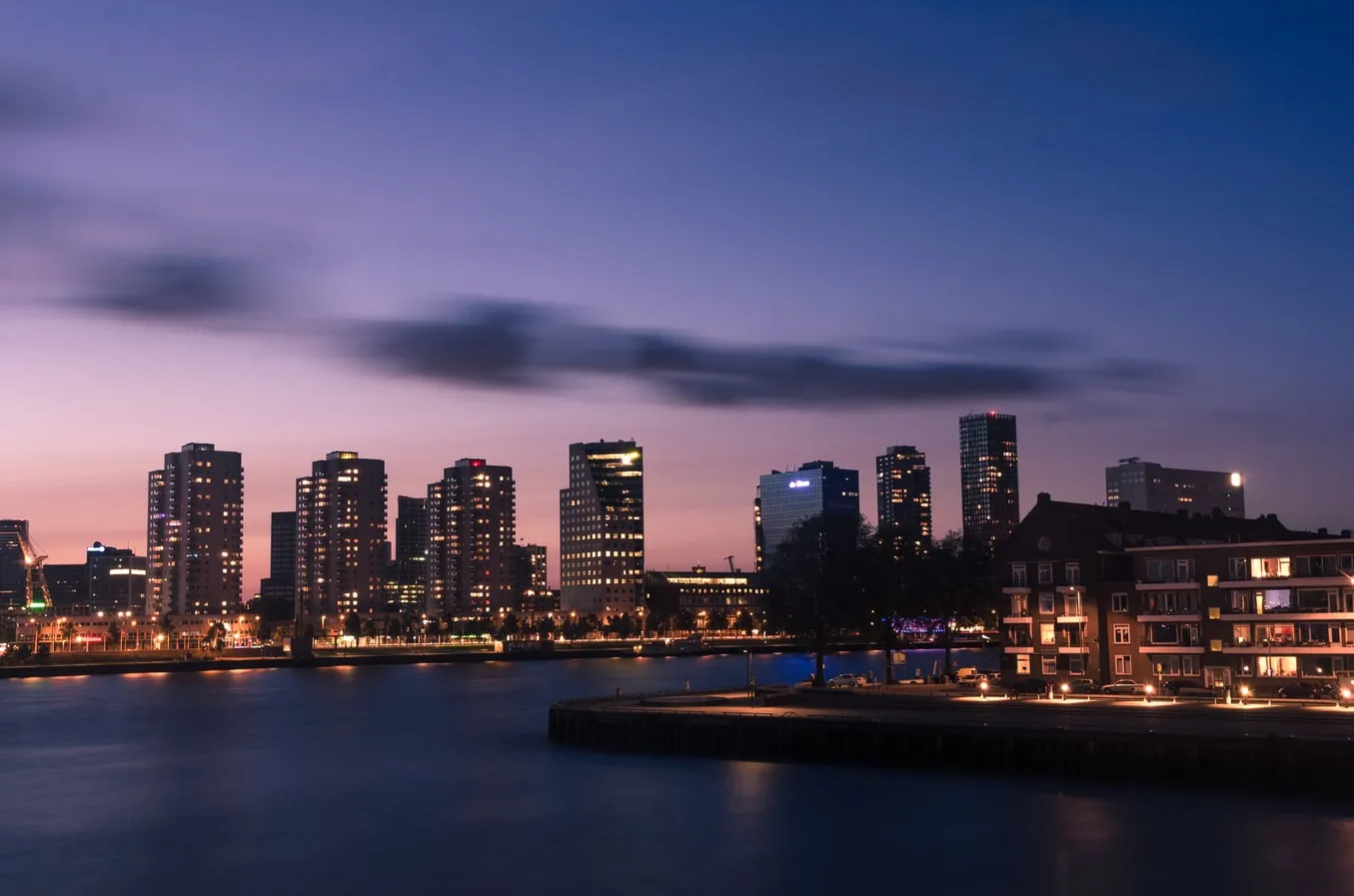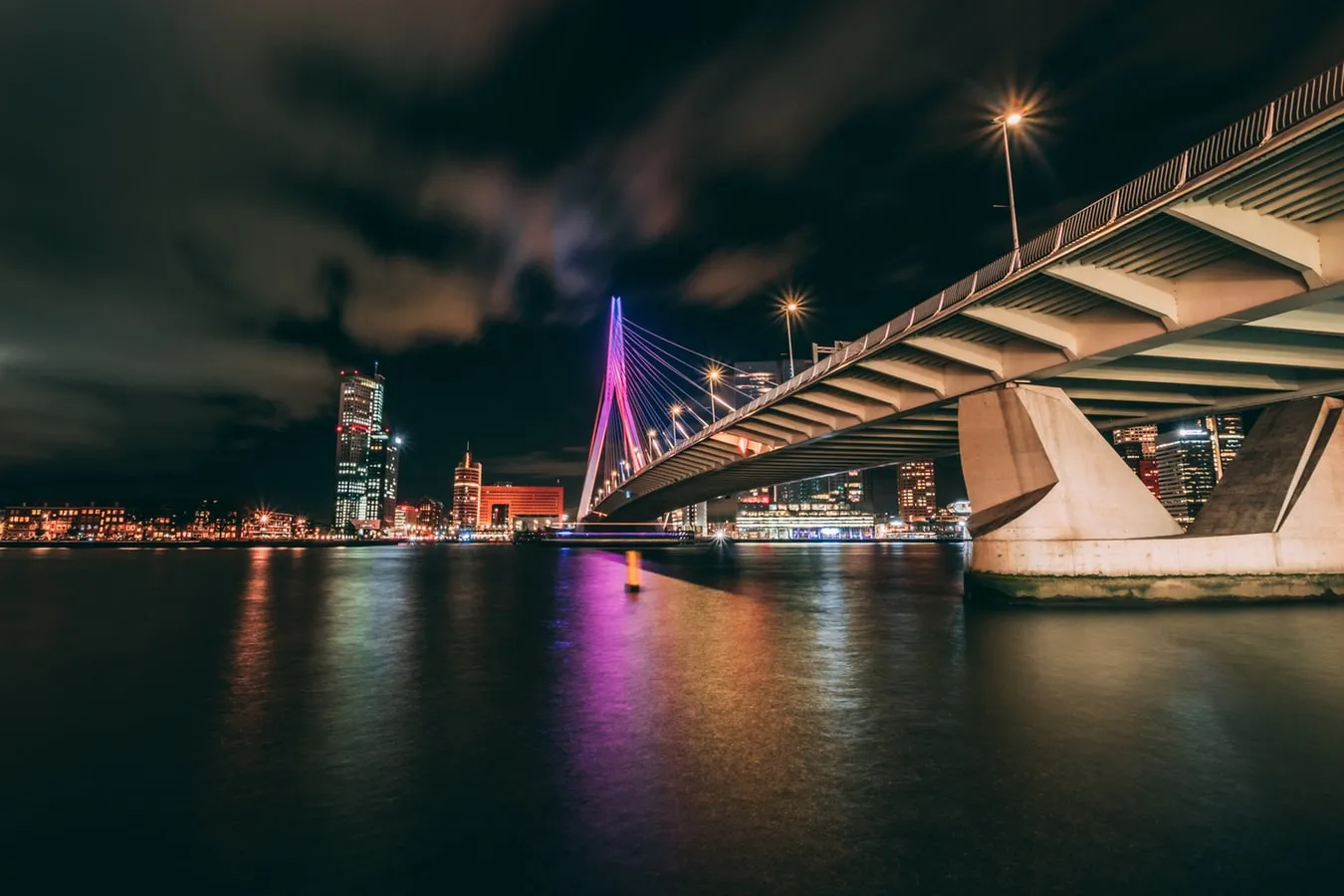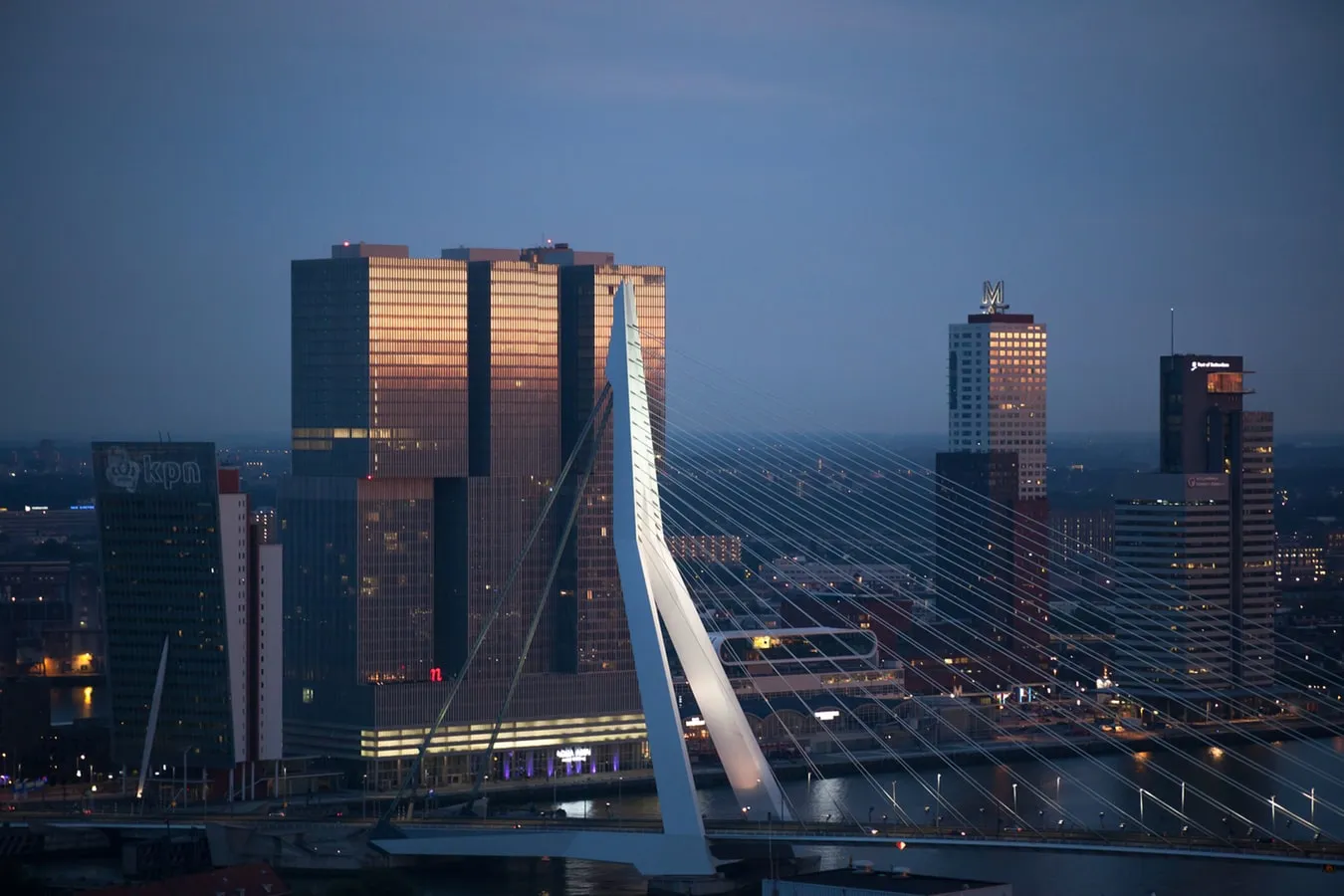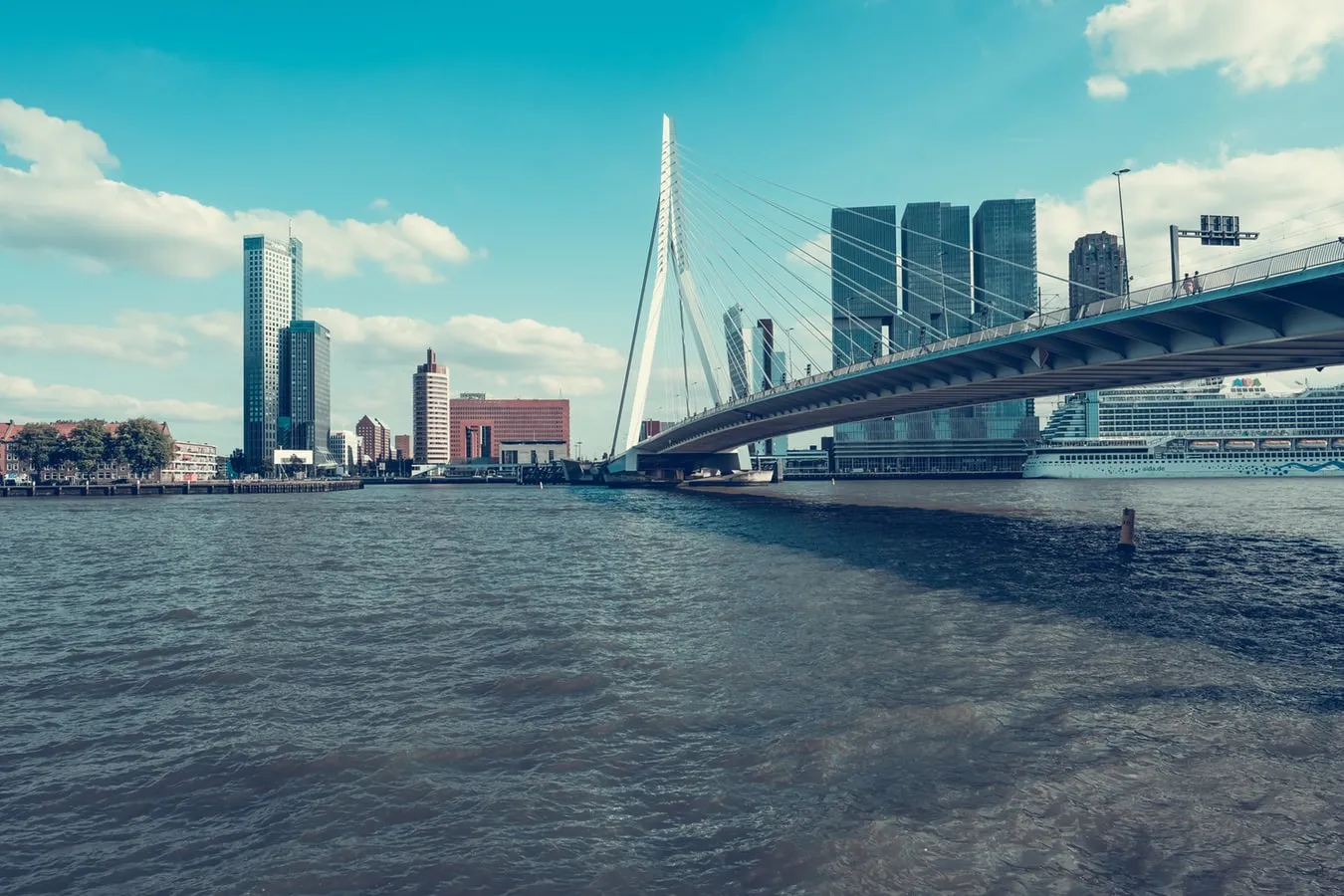
Rotterdam rose from near-total destruction to become one of Europe's most architecturally audacious cities. On May 14, 1940, the German Luftwaffe carpet-bombed the medieval city center in a devastating raid that killed nearly nine hundred people and leveled virtually every building within the old harbor area. Rather than rebuild what was lost, Rotterdam chose to reinvent itself, and seven decades of bold experimentation have produced a skyline that reads like an encyclopedia of modern architecture — from the pencil-shaped Erasmusbrug to Piet Blom's tilted Cube Houses to the horseshoe-shaped Markthal, whose cavernous interior is adorned with a 36,000-square-foot digital mural of oversized fruits and flowers.
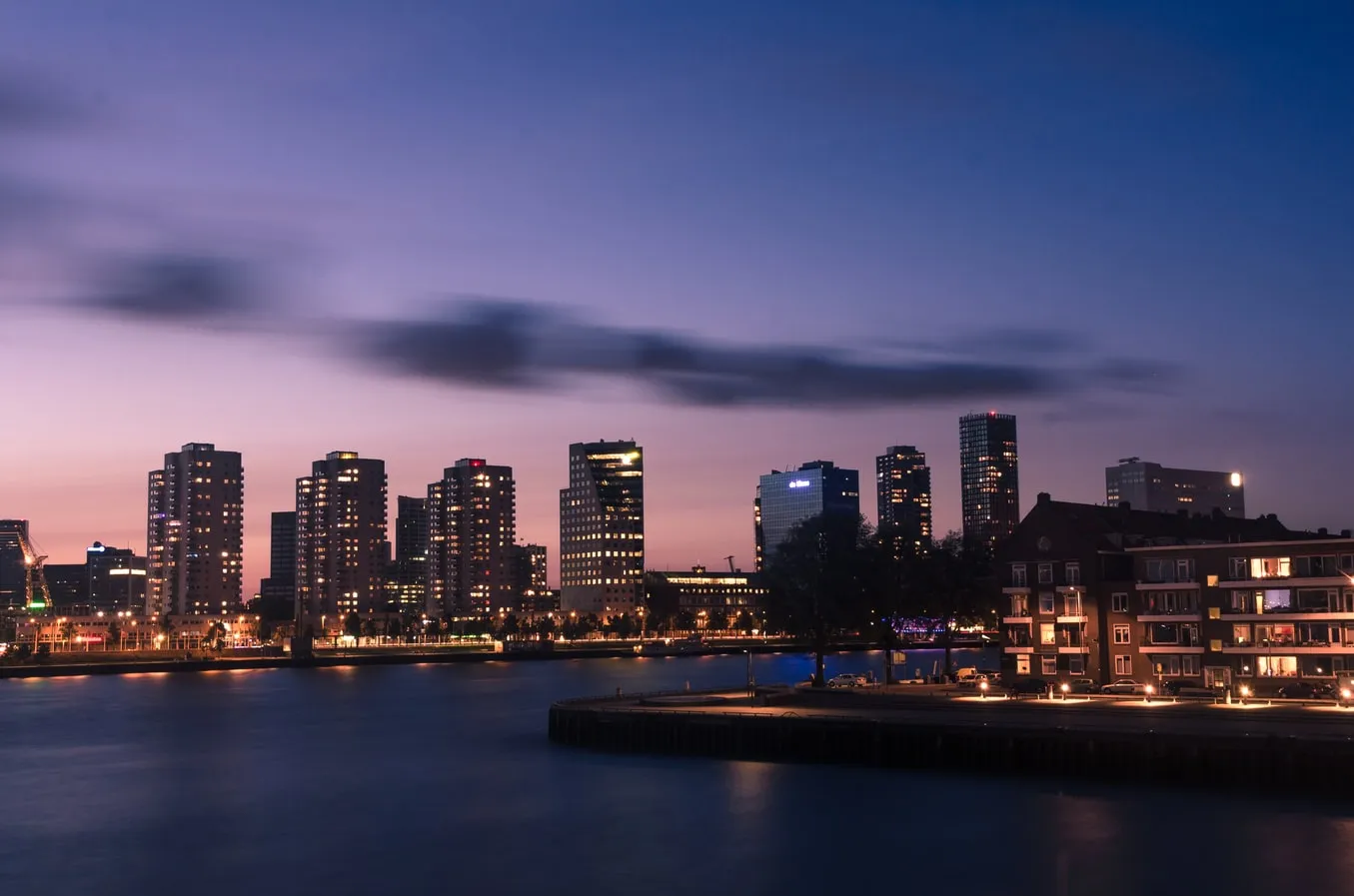
Europe's largest port — handling over 450 million tonnes of cargo annually — Rotterdam pulses with a restless, forward-looking energy that distinguishes it from every other Dutch city. The Kop van Zuid waterfront district, developed on former docklands, now bristles with towers by Renzo Piano, Rem Koolhaas, and Norman Foster. Yet pockets of pre-war character survive: Delfshaven, the historic harbor quarter from which the Pilgrims departed for the New World in 1620, preserves its cobblestoned quays, seventeenth-century warehouses, and working jenever (Dutch gin) distillery. The Museumpark district gathers world-class institutions — the Kunsthal, Museum Boijmans Van Beuningen's public depot (the world's first publicly accessible art storage facility), and the Netherlands Architecture Institute — within walking distance.
Rotterdam's food scene mirrors its multicultural population. The Markthal, a combined residential building and covered market, houses nearly a hundred food stalls selling everything from Surinamese roti to freshly shucked Zeeland oysters, Indonesian rijsttafel, and artisanal Dutch stroopwafels. Bitterballen — deep-fried, crispy-coated meatballs served with mustard — are the essential Dutch bar snack. Haring (raw herring) eaten "the Rotterdam way" — held by the tail and lowered into the mouth in one smooth motion, accompanied by chopped onions and pickles — is a rite of passage. For something more refined, the city boasts several Michelin-starred restaurants, including the waterfront FG Food Labs.
Day trips from Rotterdam span centuries of Dutch culture. Kinderdijk, where nineteen iconic windmills line a polder canal in a UNESCO World Heritage landscape, is just twenty minutes southeast. The Hague, seat of the Dutch government, the International Court of Justice, and the incomparable Mauritshuis (home to Vermeer's "Girl with a Pearl Earring"), is thirty minutes north. Delft, with its Vermeer-associated canals and Royal Delft pottery factory, and Gouda, famous for its cheese market, are each within half an hour. Amsterdam is fifty minutes by high-speed train.
Rotterdam's status as a maritime capital makes it a natural cruise hub. Crystal Cruises, Regent Seven Seas Cruises, Ponant, and Windstar Cruises deliver luxury experiences. Cunard, Holland America Line — whose very name evokes Rotterdam, where the line was founded in 1873 — Oceania Cruises, and Princess Cruises offer premium voyaging. Celebrity Cruises, Royal Caribbean, MSC Cruises, Disney Cruise Line, Costa Cruises, P&O Cruises, TUI Cruises Mein Schiff, and AIDA serve the mainstream market. River lines including AmaWaterways, Avalon Waterways, Emerald Cruises, Scenic River Cruises (via Scenic Ocean Cruises on ocean routes), Uniworld River Cruises, Viking, Riviera Travel, Tauck, APT Cruising, CroisiEurope, A-ROSA, VIVA Cruises, Fred Olsen Cruise Lines, and Ambassador Cruise Line complete an extraordinarily comprehensive roster. The port operates year-round, with the most popular season for ocean cruises running May through September.