On February 6, 1840, at a windswept promontory overlooking turquoise waters, Māori chiefs and British Crown representatives signed the Treaty of Waitangi — the founding document of modern New Zealand. The Bay of Islands, where this momentous event took place, has been a crossroads of cultures ever since: first as a whaling station and missionary outpost, then as a playground for big-game fishermen (Zane Grey called it the "Angler's Eldorado" in the 1920s), and now as one of the South Pacific's most beguiling coastal destinations. History here is not confined to museums; it lives in the land, the water, and the stories told by tangata whenua — the people of the place.
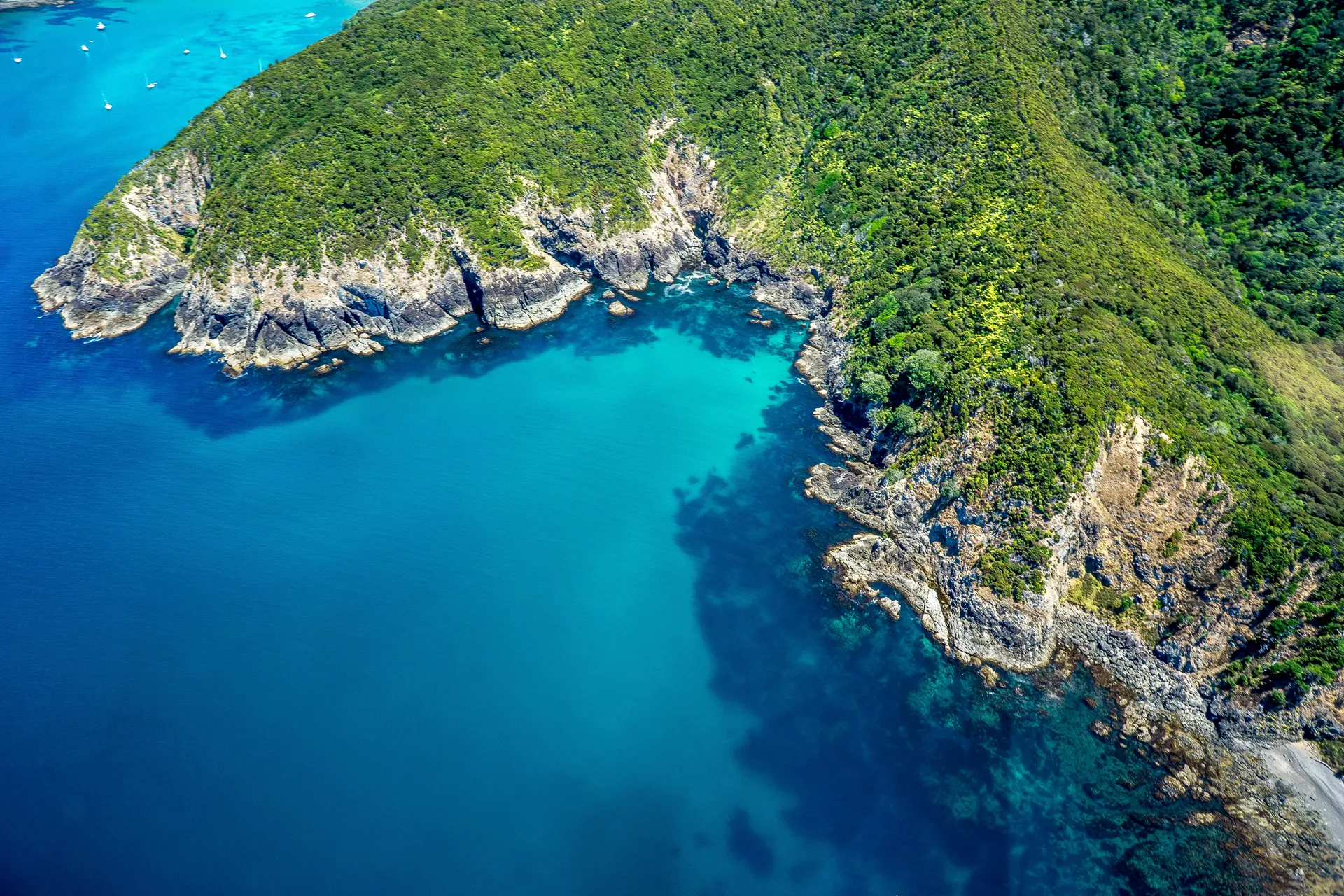
The bay itself is a geographic marvel: 144 islands scattered across a sapphire expanse, their shores scalloped with white-sand beaches and pohutukawa trees that blaze crimson in the southern summer. The historic township of Russell, once known as the "Hell Hole of the Pacific" for its raucous whaling-era debauchery, has aged into a genteel village of white clapboard buildings, waterfront restaurants, and the oldest surviving church in New Zealand — Christ Church, its walls still pocked with musket-ball holes from the 1845 Northern War. Across the water, Paihia serves as the bay's commercial heart, with a bustling wharf, dive shops, and the gateway to the Waitangi Treaty Grounds.
The water is where the Bay of Islands truly comes alive. Dolphin-watching cruises encounter pods of bottlenose dolphins year-round, often in groups of thirty or more that bow-ride alongside vessels with acrobatic abandon. The famous "Hole in the Rock" at Motukokako — a natural arch carved through a cliff face on Piercy Island — is a must-see excursion, best experienced by boat in calm conditions when vessels can pass directly through the opening. Diving and snorkeling reveal kelp forests, crayfish-laden reefs, and the wreck of the HMNZS Canterbury, deliberately scuttled in 2007 to create an artificial reef teeming with marine life.
Ashore, the region rewards slower exploration. The Waitangi Treaty Grounds offer a deeply moving cultural experience, with a carved meeting house, a war canoe that seats 130 warriors, and cultural performances that illuminate Māori history and identity. Kerikeri, a short drive inland, is the country's food bowl — subtropical orchards produce avocados, citrus, and kiwifruit, while boutique chocolatiers and craft breweries dot the landscape. For walkers, the Cape Brett track traverses coastal ridgelines to a lighthouse at the bay's outer edge, offering panoramic views that stretch to the horizon in every direction.
Celebrity Cruises, Cunard, Oceania Cruises, Seabourn, and Viking all call at the Bay of Islands, typically anchoring off Paihia or Russell with tender service to shore. The port serves as a gateway to Northland's wider attractions, including the ancient kauri forests of Waipoua and the spiritually significant Cape Reinga, where the Tasman Sea and Pacific Ocean collide in a dramatic confluence of currents. The southern summer months of November through March offer the warmest weather and calmest seas, though the bay's subtropical latitude ensures pleasant conditions year-round.

