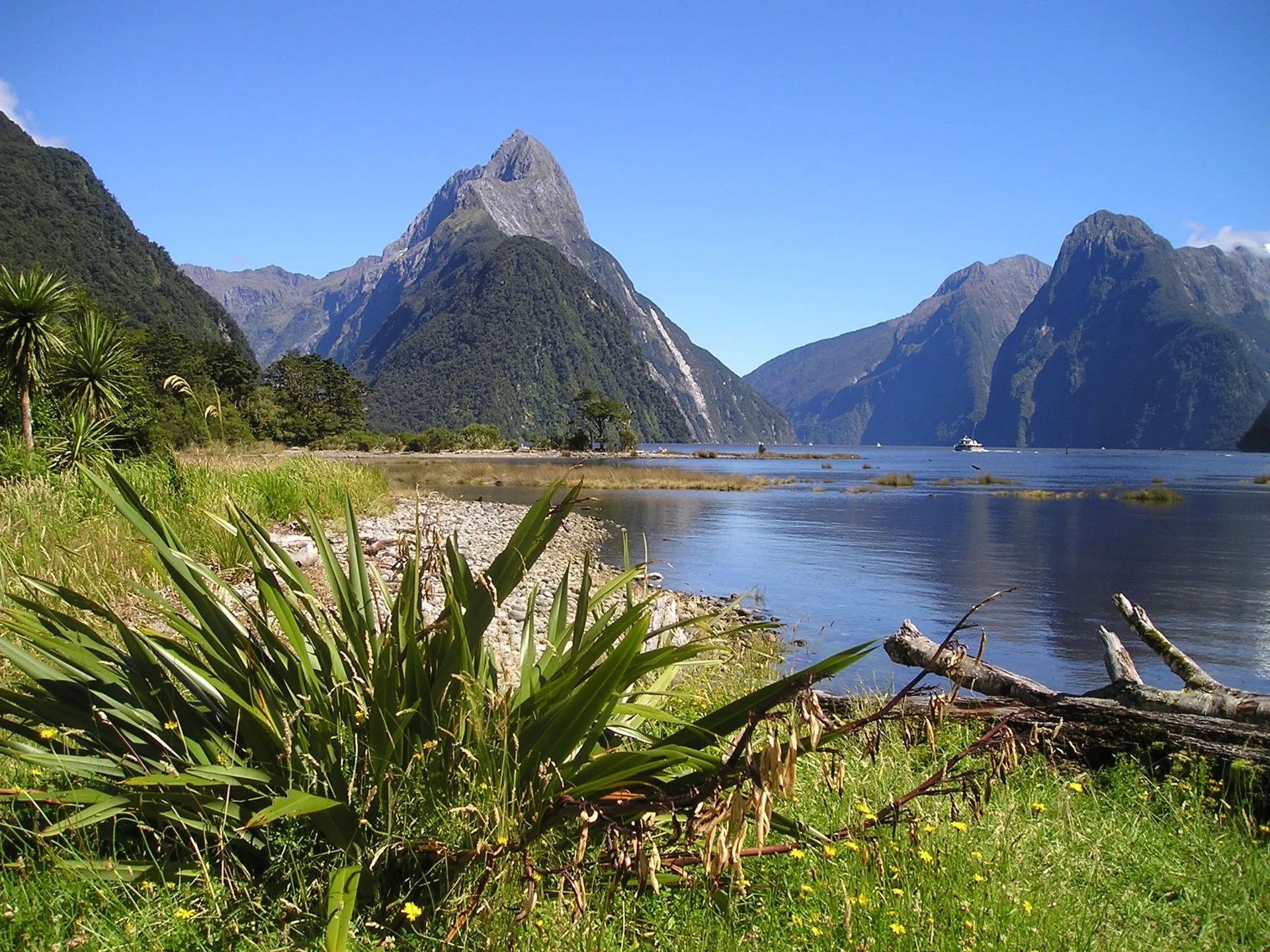
Fiordland National Park occupies the southwestern corner of New Zealand's South Island in a wilderness of such scale, remoteness, and beauty that Rudyard Kipling called Milford Sound—its most celebrated feature—"the eighth wonder of the world." This vast protected area, covering over 12,500 square kilometers, preserves some of the most dramatic glacially carved landscapes on Earth, where towering peaks plunge directly into deep, dark fjords beneath a canopy of temperate rainforest that receives up to eight meters of rainfall annually.
Milford Sound (Piopiotahi in Māori) is the most accessible and most visited of Fiordland's fourteen fjords, though its popularity does nothing to diminish the impact of its scenery. Mitre Peak, rising 1,692 meters directly from the water's surface in a near-vertical face of dark rock, creates one of the most photographed mountain profiles in the Southern Hemisphere. The Bowen Falls, plunging 162 meters into the sound, and the Stirling Falls, accessible by boat for close-up encounters with the spray, add vertical drama to the horizontal sweep of the fjord. On rainy days—which occur frequently—dozens of temporary waterfalls cascade down the cliff faces, transforming the sound into a theater of falling water.
Doubtful Sound (Patea), reached by a more adventurous journey involving a lake crossing and a road over Wilmot Pass, offers a wilder, quieter alternative to Milford. This fjord, three times the length of Milford Sound, penetrates deep into the fiordland wilderness with multiple arms branching into the mountains. The silence of Doubtful Sound—particularly during overnight cruises when the engines are cut in a sheltered arm of the fjord—is often described as the most profound stillness visitors have experienced, broken only by birdsong, the occasional crack of a rock falling from a cliff face, or the breathing of a pod of resident bottlenose dolphins.
The wildlife of Fiordland includes several species found nowhere else on Earth. The Fiordland crested penguin (tawaki), one of the rarest penguin species in the world, breeds along the coastline and can occasionally be spotted from tour boats. Bottlenose dolphins maintain a resident population in Doubtful Sound, while New Zealand fur seals bask on rocky outcrops throughout the fjord system. In the forests above the waterline, kea—the world's only alpine parrot, famous for their intelligence and mischievousness—investigate any unattended equipment, while kākā, bellbirds, and tūī create the rich avian soundscape that distinguishes New Zealand's native forest.
Fiordland is accessed by cruise ship through Milford Sound or Doubtful Sound, with expedition vessels navigating the fjords while larger cruise ships make scenic transits through Milford Sound without stopping. Overland, the Milford Road from Te Anau provides a spectacular two-hour drive through alpine scenery. The New Zealand climate is maritime and unpredictable—rain is frequent and should be expected—but the dramatic waterfalls and mist effects that rain produces in the fjords are often more spectacular than clear-weather views. The cruising season extends year-round, with summer (December-February) offering the longest days and warmest temperatures, and winter providing snow-capped peaks and fewer visitors.

