Napier is a love letter written in concrete, glass, and pastel paint — the most complete collection of Art Deco architecture in the world, and a city whose aesthetic identity was born from catastrophe. On February 3, 1931, a devastating earthquake measuring 7.8 on the Richter scale levelled most of the city and killed 256 people. The reconstruction that followed, carried out with remarkable speed during the depths of the Great Depression, produced a unified streetscape of Art Deco, Spanish Mission, and Stripped Classical buildings that today forms one of the most visually cohesive city centres in the Southern Hemisphere. Walking through Napier's downtown is like stepping into a 1930s film set — one that happens to be backed by the Pacific Ocean and some of New Zealand's finest wine country.
The Art Deco Trust maintains and celebrates this architectural heritage with passionate devotion. Guided walking tours — the essential Napier experience — decode the geometric motifs, zigzag paraphrases, and sunburst patterns that adorn building after building along Emerson Street, Tennyson Street, and the Marine Parade. The Daily Telegraph Building, with its exuberant zigzag skyline, and the T&G Building, crowned by a dome and the angular figure of a Māori chief, are standout landmarks. Each February, the city hosts Art Deco Weekend, a festival that transforms the streets into a period spectacle of vintage cars, jazz bands, and residents dressed in flapper dresses and fedoras — an event that draws over 40,000 visitors from around the world.
Hawke's Bay, the region surrounding Napier, has established itself as one of New Zealand's premier wine-producing areas. The warm, dry climate — the sunniest in the country — is ideal for Bordeaux-style reds, particularly Syrah, Merlot, and Cabernet Sauvignon, as well as aromatic Chardonnay. Over thirty cellar doors dot the Gimblett Gravels and Bridge Pa Triangle sub-regions, many with acclaimed restaurants attached. A long lunch at a vineyard — local lamb, fresh Hawke's Bay asparagus, and a glass of Craggy Range Syrah, with views across the vines to the Kaweka Ranges — is one of New Zealand's great gastronomic experiences. The Napier farmers' market, held on Saturday mornings along the Marine Parade, showcases the region's orchards, olive groves, and artisan producers.
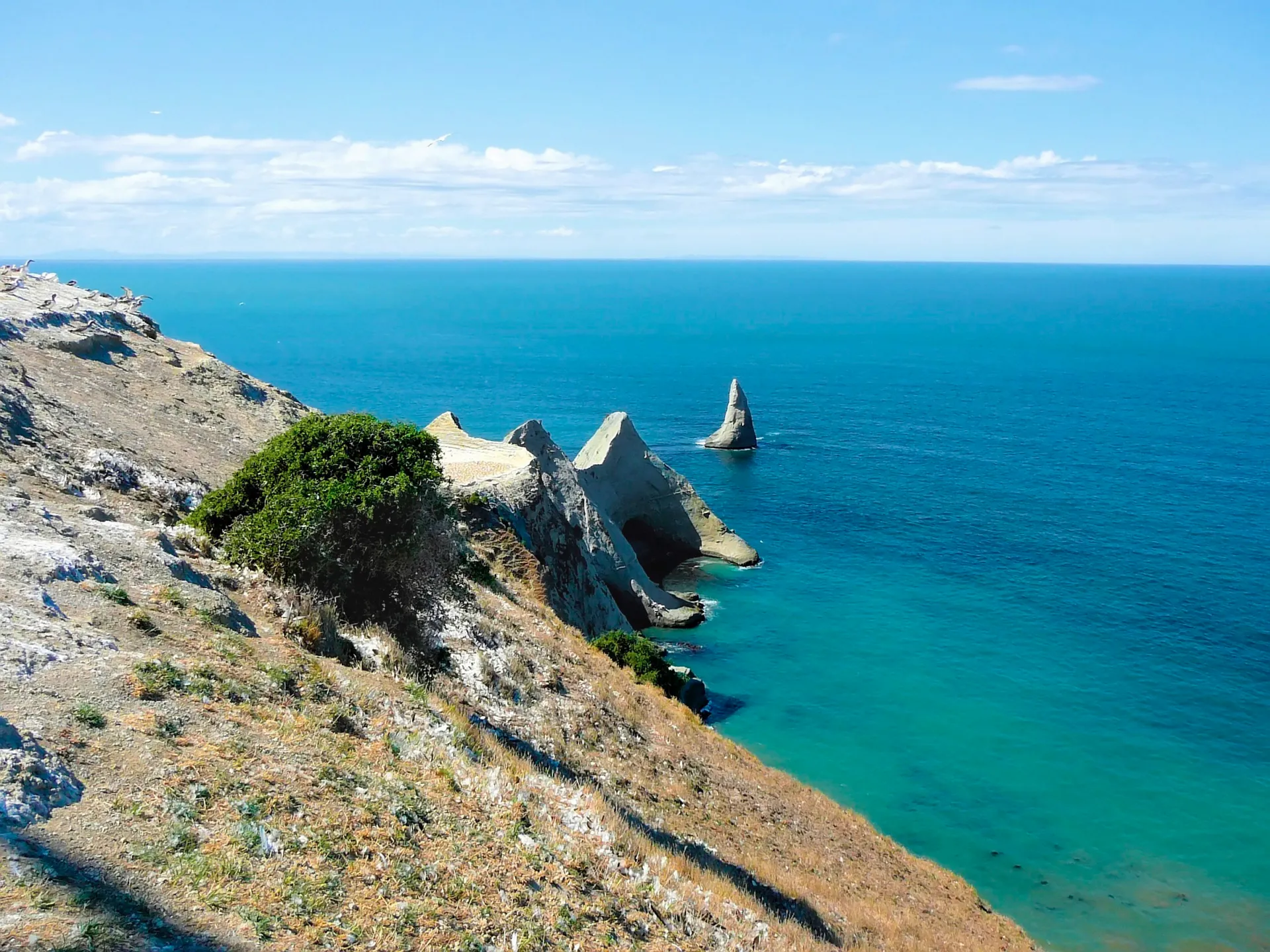
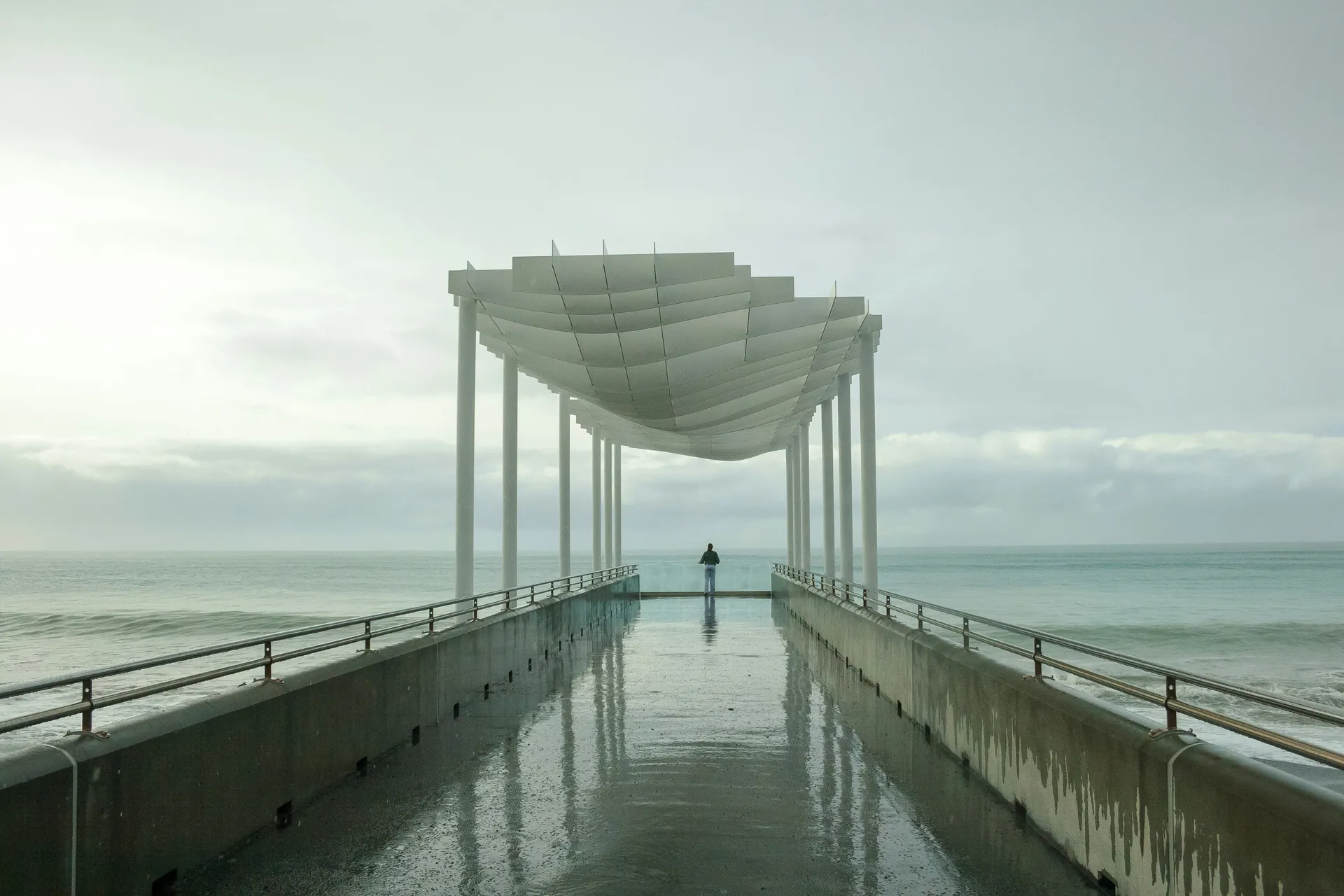
Beyond wine and architecture, Napier offers a wealth of natural attractions. Cape Kidnappers, a dramatic headland at the southern end of Hawke's Bay, hosts the world's largest mainland gannet colony — over 20,000 birds nesting on cliff-top platforms accessible by tractor trailer, guided walk, or overland vehicle. The Marine Parade itself stretches for three kilometres along the waterfront, passing the Pania of the Reef statue (Napier's equivalent of Copenhagen's Little Mermaid), the National Aquarium of New Zealand, and the Sunken Gardens. Te Mata Peak, a fifteen-minute drive from the city, offers panoramic views across the plains, coast, and mountains from a 399-metre summit accessible by car or walking trail.
Napier is one of the most popular cruise ports in New Zealand, welcoming Azamara, Celebrity Cruises, Holland America Line, Norwegian Cruise Line, Oceania Cruises, P&O Cruises, Princess Cruises, Royal Caribbean, Scenic River Cruises, and Viking. The port is within easy walking distance of the Art Deco quarter, making it one of the most immediately rewarding stops in any Australasian cruise itinerary. The best months to visit are November through April, with late summer (February and March) offering harvest season in the vineyards, the warmest swimming temperatures, and the legendary Art Deco Weekend. Napier is proof that beauty can rise from destruction, and that a city's finest hour sometimes comes after its darkest day.