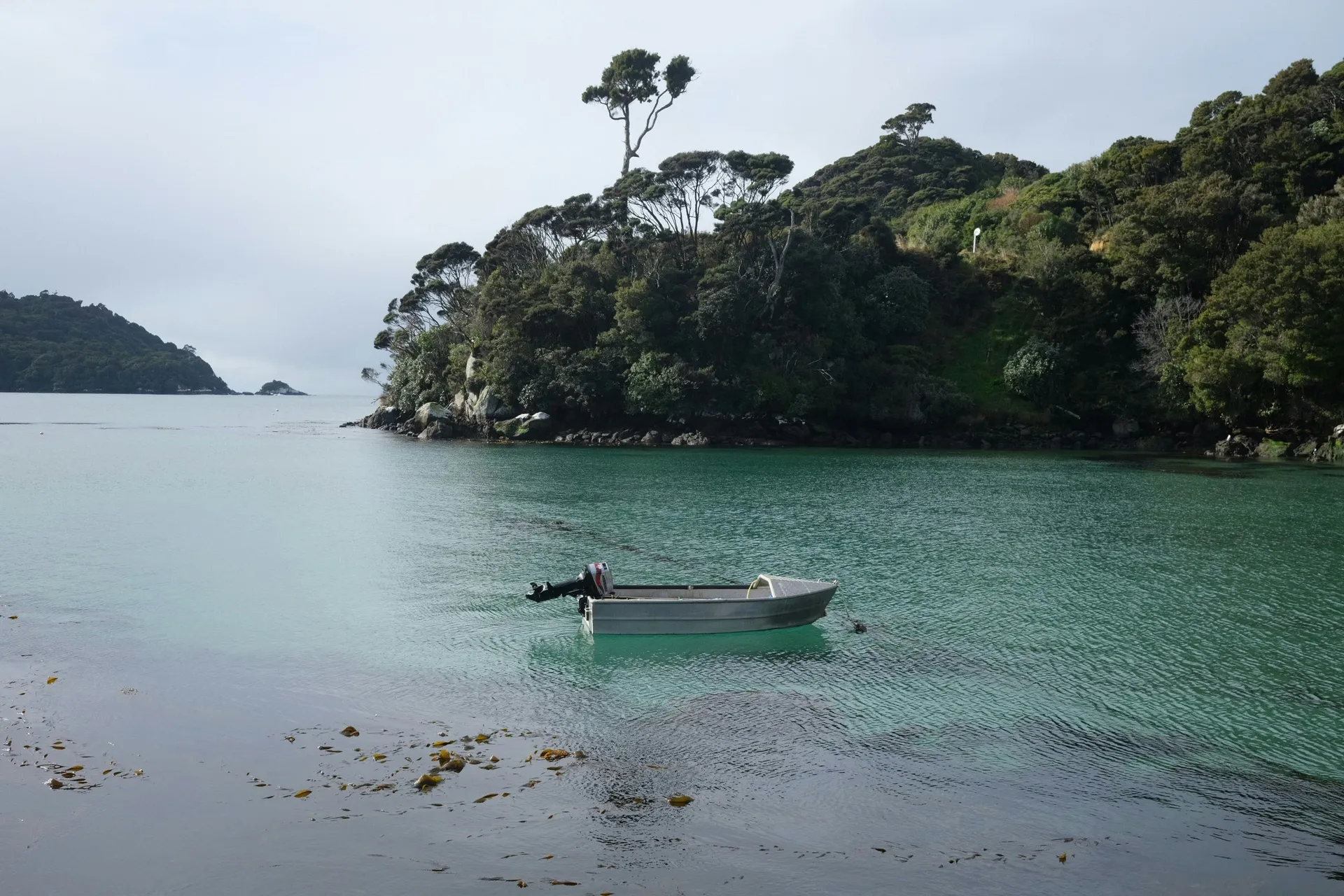
Oban — a tiny settlement on the northeastern coast of Stewart Island (Rakiura), New Zealand's third-largest island — exists at the extreme southern margin of human habitation in the country, a place where the sub-Antarctic wind carries the salt tang of the Southern Ocean and the surrounding native bush echoes with the calls of birds found nowhere else on Earth. Stewart Island itself has a permanent population of fewer than 400 people, virtually all of them in the main settlement of Halfmoon Bay on the eastern coast. Oban, sometimes used interchangeably with Halfmoon Bay, serves as the gateway to one of New Zealand's most pristine wilderness areas — 85 percent of the island is covered by Rakiura National Park, a primeval forest of rimu, kamahi, and rata that has never been logged.
The character of Stewart Island is defined by its birds. This is one of the few places on Earth where kiwi — New Zealand's beloved national bird — can be observed in the wild with reasonable reliability. The Stewart Island brown kiwi (tokoeka) is larger and bolder than its mainland cousins, and guided evening excursions to Ocean Beach regularly yield sightings of these shy, long-billed birds foraging in the sand at the tide line. The island's bird list extends far beyond the kiwi: kākā (bush parrots), tūī, bellbirds, fernbirds, yellow-eyed penguins, and the rare Stewart Island robin all inhabit the national park. Ulva Island, a predator-free sanctuary in Paterson Inlet accessible by water taxi, offers perhaps the most extraordinary birdwatching experience in New Zealand — a small island where native birds are so abundant and unafraid that they land on your shoulders.
The culinary life of Stewart Island is shaped by the sea. Blue cod, the island's signature fish, is caught in the surrounding waters and served at the few establishments in Halfmoon Bay — most notably the South Sea Hotel, one of New Zealand's most atmospheric pubs, where the fish and chips are legendary and the conversations with local fishermen, conservation workers, and visiting trampers provide entertainment that no city bar can match. Pāua (abalone) and kina (sea urchin) are gathered from the rocky shoreline, and the Bluff oysters — dredged from Foveaux Strait between the island and the South Island mainland — are widely regarded as New Zealand's finest. In season (March–August), these plump, intensely flavored oysters are reason enough to make the journey south.
The natural environment is the island's overwhelming attraction. The Rakiura Track, one of New Zealand's Great Walks, is a three-day circuit through coastal forest and along wild beaches, with basic DOC huts providing shelter. For more serious trampers, the North West Circuit (nine to eleven days) penetrates deep into the island's interior, crossing terrain so remote and untouched that walkers may not see another human for days. Mason Bay, on the island's west coast, is a vast crescent of sand backed by dunes and wetlands where kiwi forage in daylight — an extraordinary sight in a country where the bird is usually nocturnal. The night sky, unpolluted by artificial light, earned Stewart Island Dark Sky Sanctuary status — the aurora australis (southern lights) is visible here on active nights, its green and violet curtains rippling above the forested horizon.
Stewart Island is reached by ferry from Bluff (one hour, departing several times daily) or by short flight from Invercargill (twenty minutes). Accommodation in Halfmoon Bay ranges from the historic South Sea Hotel to self-contained holiday homes and B&Bs. The island is a year-round destination, though summer (December–February) offers the warmest weather and longest days, and autumn (March–May) brings the Bluff oyster season and the best aurora australis viewing. Visitors should pack for all weather — Stewart Island's latitude (47 degrees south) and exposure to the Southern Ocean produce conditions that can shift from sunshine to horizontal rain within an hour.

