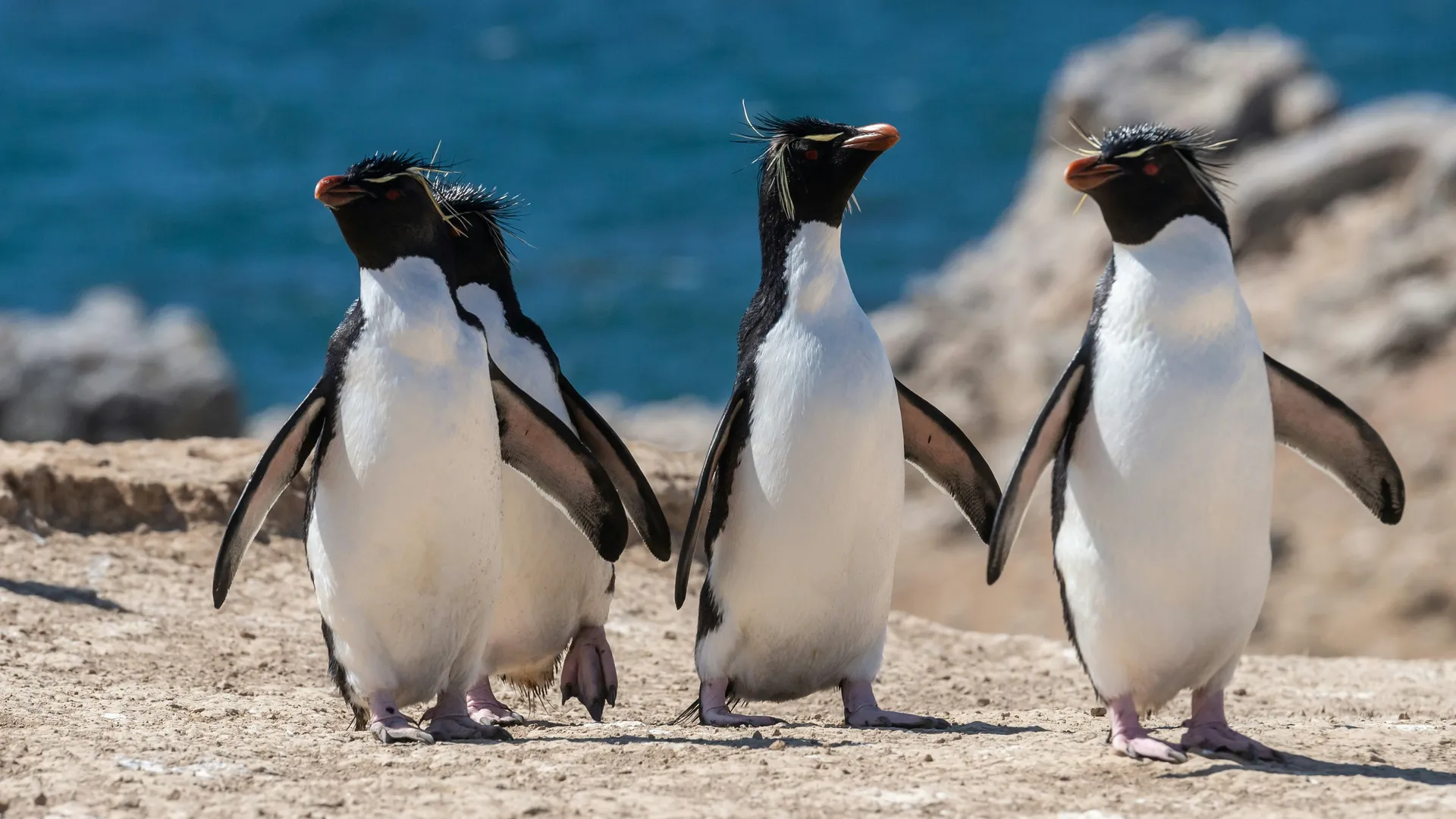
Two hundred kilometres south of New Zealand's South Island, the Snares Islands rise from the Sub-Antarctic Ocean as one of the most important seabird sanctuaries in the Southern Hemisphere — and one of the most strictly protected. This tiny cluster of islands, totalling barely three and a half square kilometres of land, supports a breeding population of approximately six million seabirds, a concentration so dense that the islands have been declared a strict nature reserve with no landings permitted. Observation from the ship's deck or from Zodiac boats cruising the coastline provides the only access — and proves more than sufficient to witness one of nature's greatest spectacles.
The Snares were designated a UNESCO World Heritage site in 1998 as part of the New Zealand Sub-Antarctic Islands group, recognising their "outstanding universal value" for biodiversity. The islands' star resident is the Snares crested penguin — a species found nowhere else on Earth — which breeds in colonies of over thirty thousand pairs among the gnarled Olearia forest that covers the main island. These distinctive penguins, with their spiky yellow eyebrow crests and bright red eyes, can be observed from boats cruising close to shore, their raucous calls carrying across the water in a cacophony that announces the colony's presence long before it becomes visible.
The seabird diversity of the Snares is staggering. Sooty shearwaters breed here in millions — their evening return to the islands, when vast rivers of birds stream across the sky for hours, is one of the most impressive wildlife spectacles in the Pacific. Buller's mollymawks (a type of albatross) nest on rocky outcrops, their elegant courtship displays visible from passing boats. Mottled petrels, Cape pigeons, and diving petrels add to the avian profusion, while the Snares Islands snipe — another species found only here — forages in the dense forest undergrowth.
The marine environment surrounding the Snares is exceptionally rich. The convergence of subtropical and sub-Antarctic water masses creates upwellings that fuel the food chain supporting the islands' enormous seabird populations. New Zealand fur seals breed on the rocky shorelines, their bulls defending territories with aggressive displays and bellowing roars. The bull kelp forests that ring the islands provide habitat for fish, crustaceans, and invertebrates, creating an underwater ecosystem that is as productive as the aerial one is spectacular. Dolphins and the occasional southern right whale are sighted in the surrounding waters.
The Snares Islands are visited by expedition cruise ships on voyages to New Zealand's Sub-Antarctic Islands, typically departing from Bluff or Invercargill on the South Island. Zodiac cruising along the coastline — maintaining the required distance from the protected shore — provides excellent wildlife viewing, particularly of the penguin colonies and returning shearwater flocks. The visiting season is November through February, when seabirds are breeding and the Southern Ocean is at its least hostile. Even in summer, conditions can be rough — these islands sit in the path of the Roaring Forties, and waterproof clothing is essential. The Snares offer a humbling reminder that the natural world remains capable of producing spectacles that dwarf human endeavour.

