Rising from the South Pacific approximately 1,400 kilometers east of Australia, Norfolk Island occupies a singular place in the colonial imagination — a speck of volcanic land whose beauty is so extreme it seems almost designed to mock the suffering that once took place upon it. Settled first by Polynesians around the fourteenth century, then claimed by the British in 1788 as a place of secondary punishment for convicts already transported to Australia, Norfolk Island's history oscillates between paradise and purgatory with a frequency that remains deeply unsettling. The ruins of the penal settlements at Kingston still stand, UNESCO-listed monuments to both human cruelty and endurance.
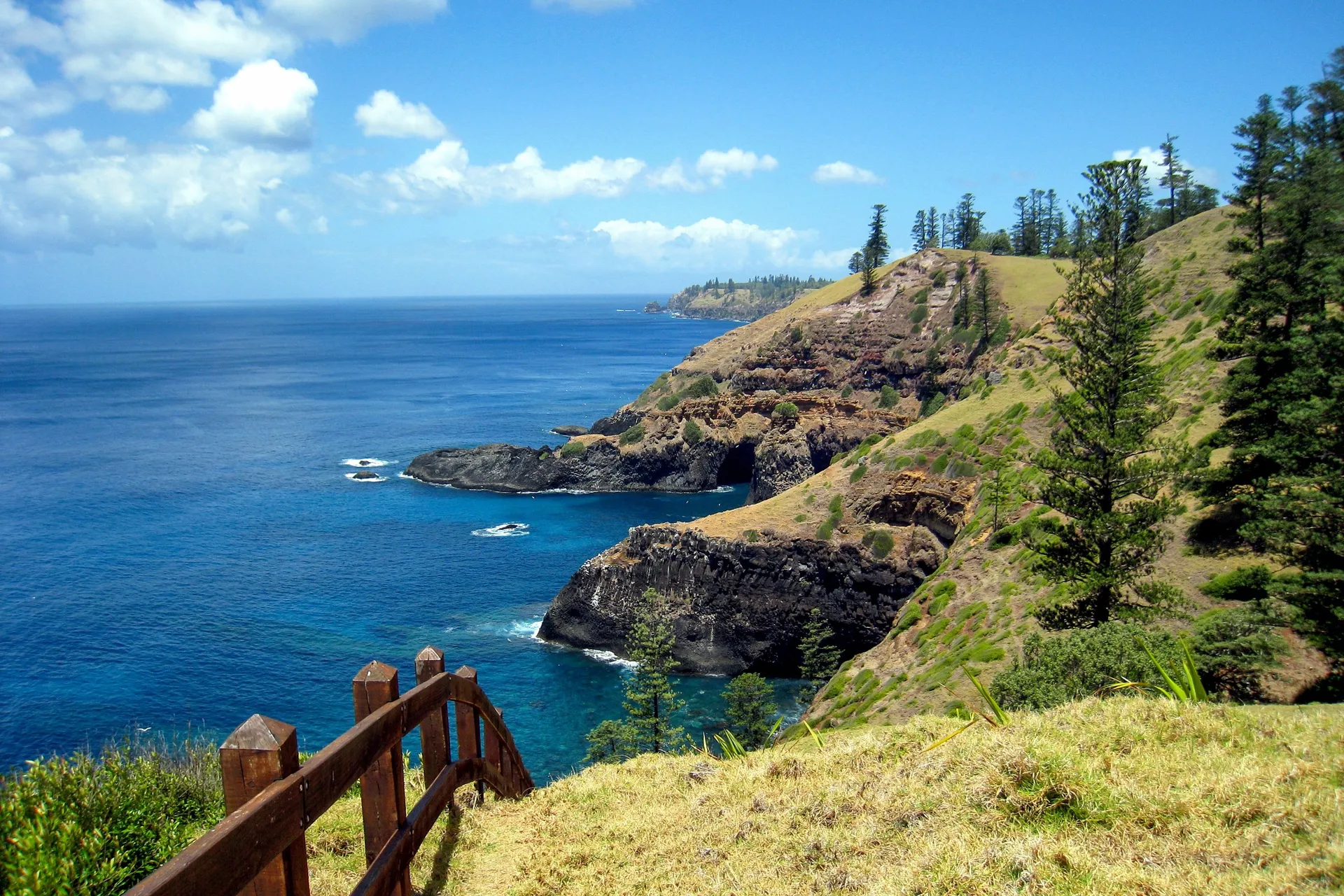
The island's physical beauty strikes visitors with immediate force. Norfolk pines — Araucaria heterophylla, the island's namesake and now one of the world's most widely planted ornamental trees — line the roads and ridge tops in stately columns, their symmetrical forms silhouetted against skies of extraordinary clarity. The coastline alternates between towering basalt cliffs and sheltered bays where the water runs through shades of emerald and sapphire. Emily Bay, a natural lagoon formed within the reef at Kingston, offers swimming in water so calm and clear it resembles a heated pool, while the surrounding headlands drop away to reveal the open Pacific stretching to an empty horizon.
Kingston and Arthur's Vale Historic Area, the UNESCO World Heritage Site, forms the emotional and historical core of any visit. The Georgian-era buildings — officers' quarters, convict barracks, the elegant Government House — line Quality Row with an incongruous grace, their limestone facades softened by decades of subtropical growth. The cemetery tells its own stories: convict headstones record lives of almost inconceivable hardship, while Pitcairn Islander graves from the later settlement period speak to the extraordinary 1856 relocation of the entire Pitcairn community to Norfolk Island. The island's 1,700 current residents include many descendants of those Bounty mutineers, and Pitcairn surnames — Christian, McCoy, Quintal, Young — remain prominent.
Norfolk Island's natural environment has been carefully preserved, with the Norfolk Island National Park protecting ancient subtropical rainforest that harbors species found nowhere else on Earth. The Norfolk Island green parrot, once critically endangered, has been brought back from the brink through dedicated conservation efforts. Birdwatching is exceptional, with numerous endemic and migratory species visible throughout the island. The local cuisine reflects both its Australian administration and Polynesian heritage — fresh fish, passionfruit, guava, and the uniquely Norfolk tradition of "up-Sa" communal feasting. The island produces its own honey, olive oil, and a surprisingly accomplished local wine.
Norfolk Island's port facilities are limited, and cruise ships typically anchor offshore with passengers tendered to Kingston Pier or Cascade Pier depending on conditions. Weather can affect tendering operations, particularly during the winter months of June through August. The most pleasant visiting conditions occur from October through April, when temperatures are warm and the Norfolk pines are at their most photogenic. The island's compact size — just eight by five kilometers — means all major sites can be visited in a single day, though the atmospheric quality of the place rewards those who allow time to simply absorb its remarkable beauty and contemplate its complex history.

