Nestled at the innermost reach of the Hardangerfjord — Norway's second longest fjord, stretching 179 kilometres from the Atlantic to the glacial highlands — Eidfjord has welcomed travellers since the Viking Age, when Norse settlers established trade routes through these sheltered waters more than a thousand years ago. Ancient rock carvings at Hæreid, dating to roughly 3000 BCE, reveal that humans have been drawn to this valley for millennia, long before the stave churches and merchant trails that later defined western Norway. The village's medieval stone church, built around 1309, still stands as a quiet sentinel at the water's edge, its weathered walls bearing witness to seven centuries of fjord life.
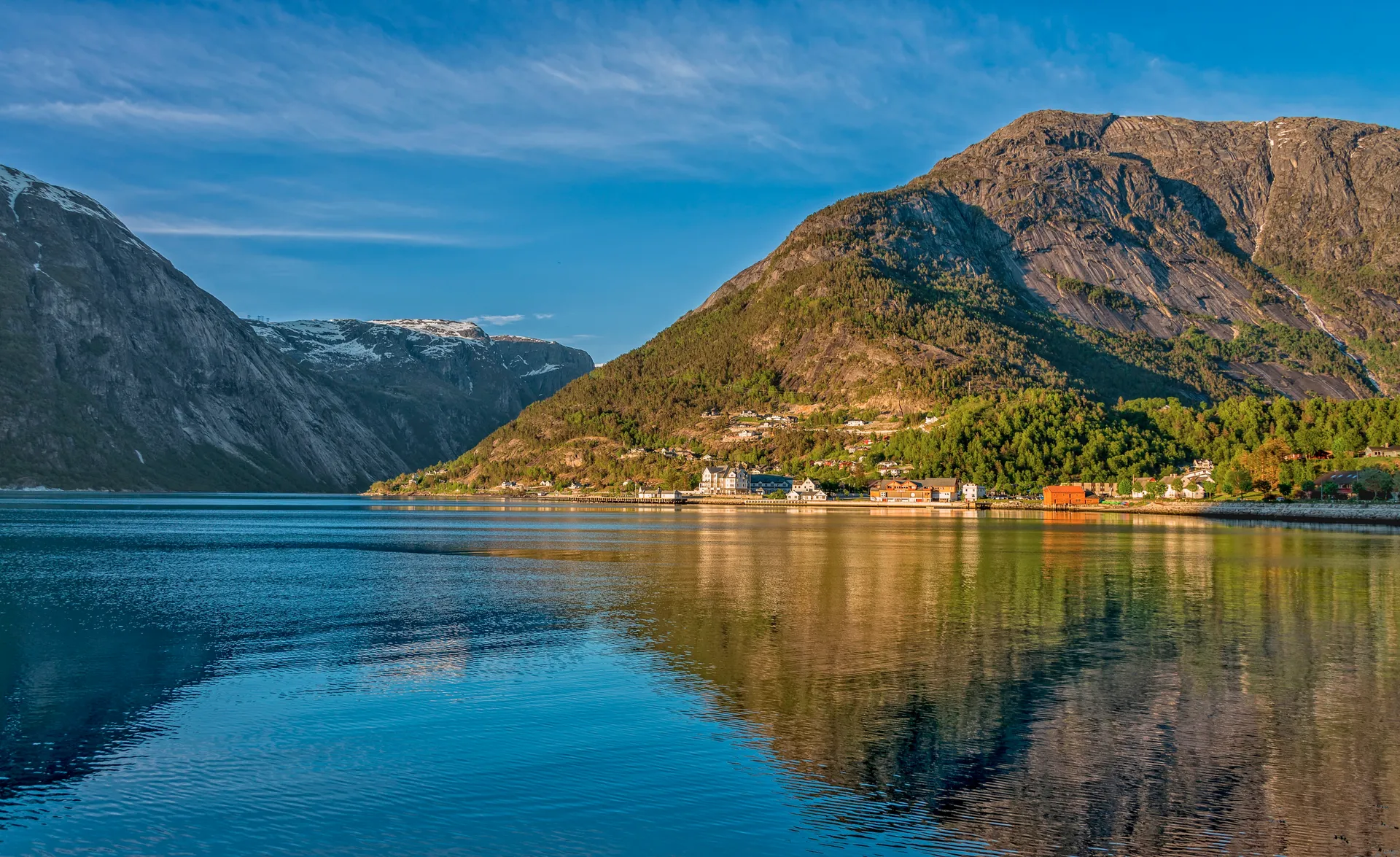
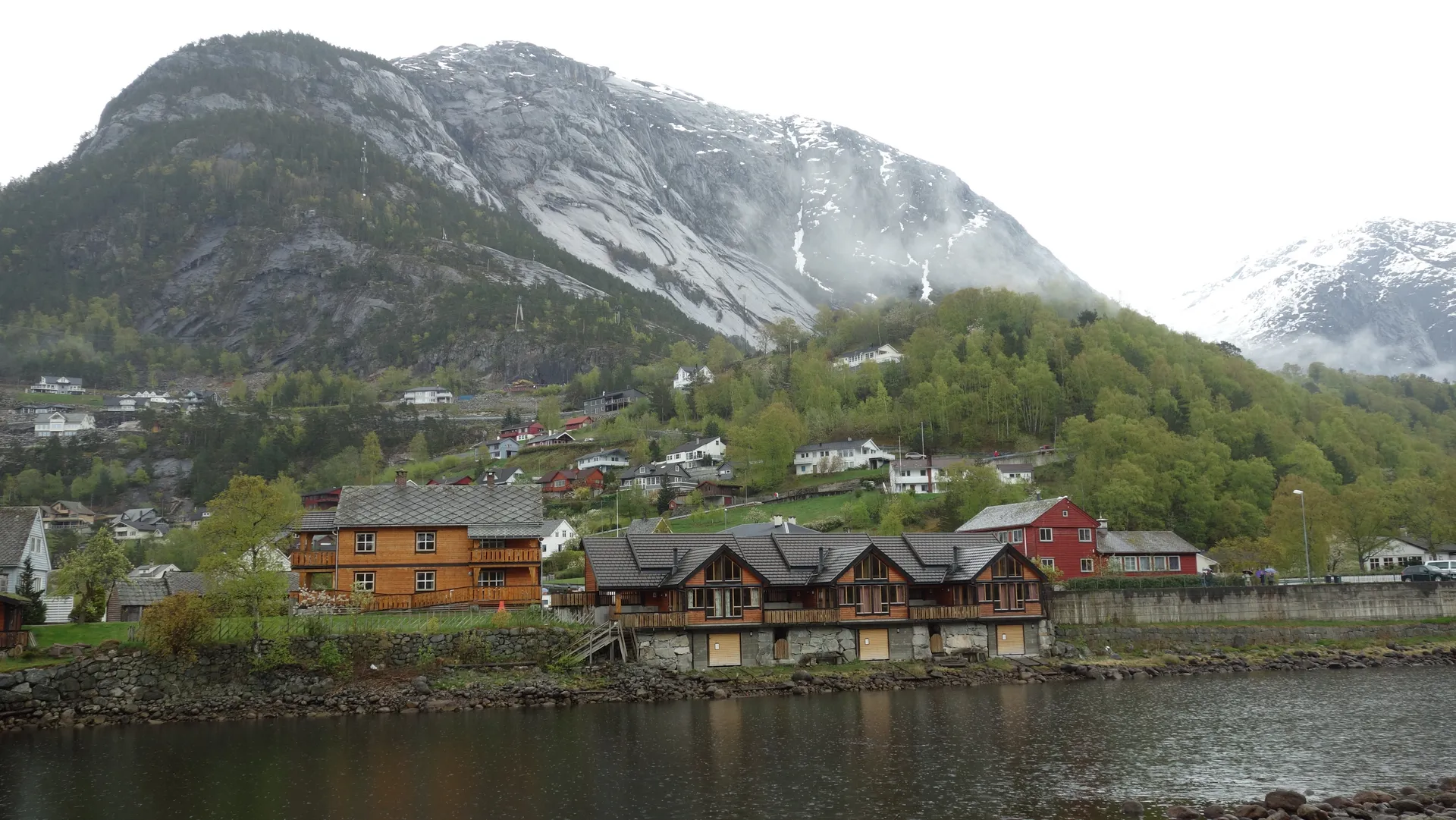
Today, Eidfjord remains astonishingly intimate — a village of fewer than a thousand souls cradled between vertical rock faces that rise more than a kilometre above the waterline. The turquoise-green fjord, fed by glacial meltwater from the Hardangerjøkulen ice cap, reflects the surrounding peaks with a clarity that feels almost theatrical. Walking along the shore on a midsummer evening, when the light lingers past eleven and the air carries the mineral coolness of snowfields, one understands why this slender crescent of civilisation at the foot of the mountains has become a pilgrimage site for those who measure luxury not in gilt but in grandeur.
The culinary identity of Eidfjord is inseparable from the landscape that surrounds it. Local kitchens honour the traditions of Hardanger with dishes like *raspeball* — tender potato dumplings served with salted lamb, mashed swede, and melted butter — a staple of the region's farming heritage. Wild-caught brown trout from highland lakes arrives smoked or cured with dill and juniper, while *flatbrød*, the paper-thin barley cracker baked since medieval times, accompanies aged brown cheese known as *brunost*, its caramelised sweetness a uniquely Norwegian indulgence. In autumn, the orchards of the Hardanger region yield apples and cherries that find their way into *eplekake* and local ciders, a reminder that this fjord valley, warmed by maritime currents, is also Norway's fruit garden.
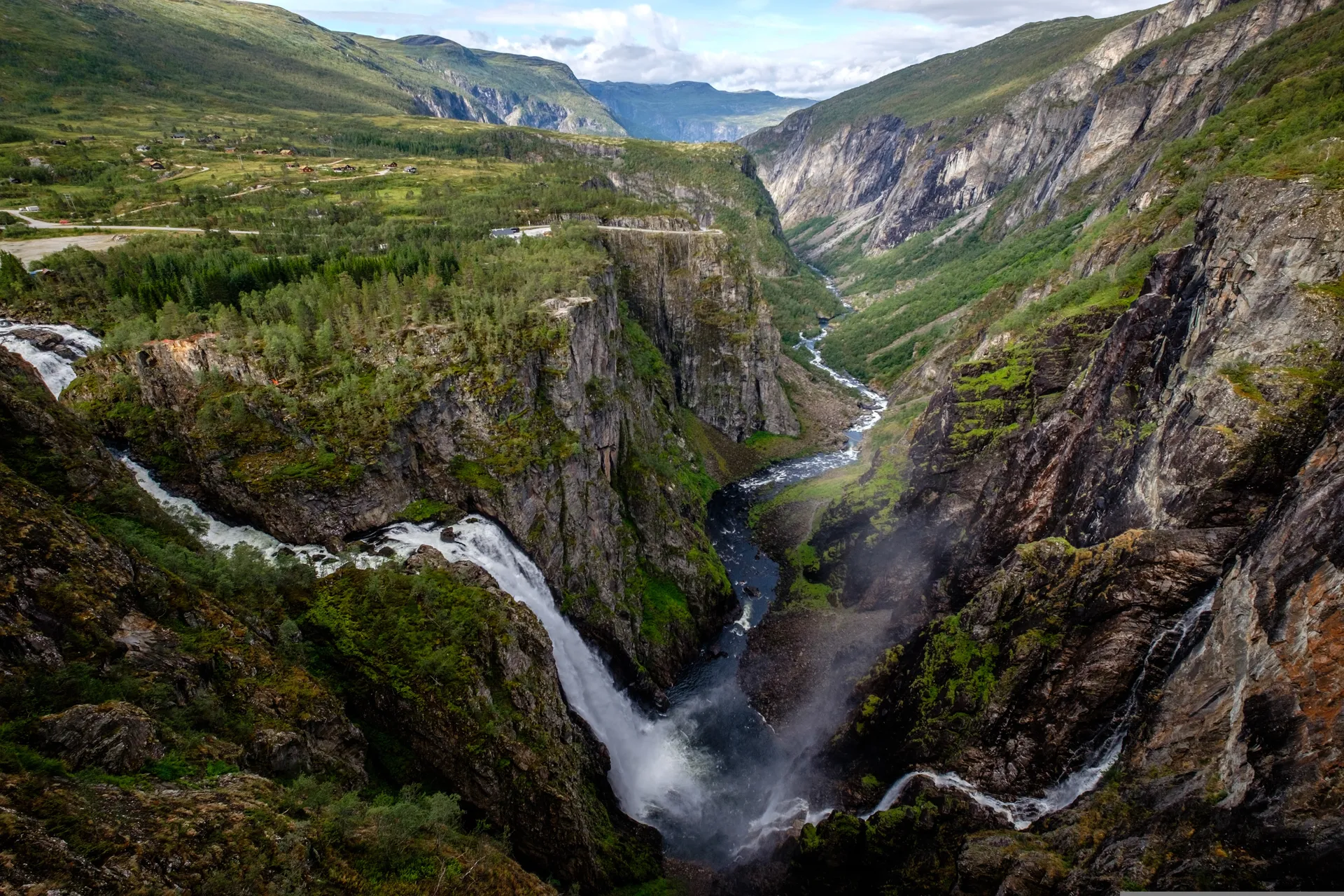
The plateau of Hardangervidda — Europe's largest mountain plateau and Norway's biggest national park — begins its ascent just minutes from the village centre, offering highland hikes among reindeer herds and wind-sculpted stone. The Vøringsfossen waterfall, plunging 182 metres into the Måbødalen valley, is one of Norway's most celebrated natural spectacles, best appreciated from the recently completed stepped viewing platforms that cantilever over the gorge. Beyond Eidfjord, the fjord coast reveals further wonders: the Art Nouveau elegance of Ålesund, rebuilt in Jugendstil splendour after a devastating fire in 1904; the serene orchards of Lofthus, where Edvard Grieg once composed beneath the fruit trees; the storybook waterfront of Balestrand, beloved by painters since the Romantic era; and the dramatic hairpin road above Eidsdal, gateway to the Geirangerfjord. Each is a worthy detour, yet Eidfjord itself rewards those who simply stay and breathe.
The village's deep-water anchorage makes it a prized port of call for cruise lines navigating Norway's western fjords. Holland America Line and Viking both feature Eidfjord prominently on their Scandinavian itineraries, their ships gliding past sheer granite walls in an arrival sequence that ranks among cruising's most cinematic. Fred Olsen Cruise Lines, with its Norwegian heritage, treats the port as something of a homecoming, while AIDA brings a younger European clientele eager for active shore excursions on the plateau above. Ambassador Cruise Line, the newer British entrant, has added Eidfjord to its carefully curated Norwegian sailings, recognising what seasoned travellers already know — that this village, despite its modest size, delivers a concentration of natural drama that few ports anywhere can equal.