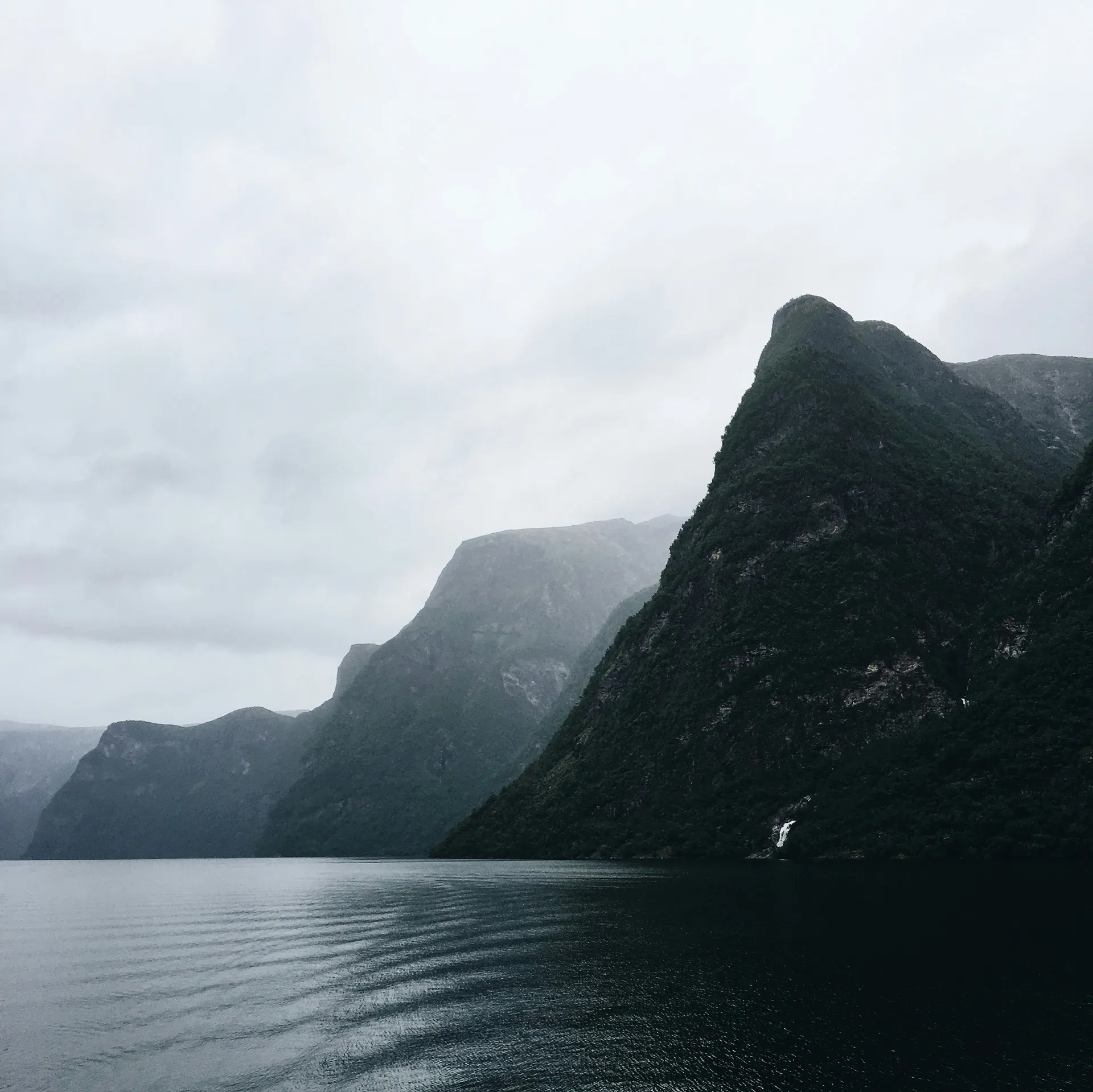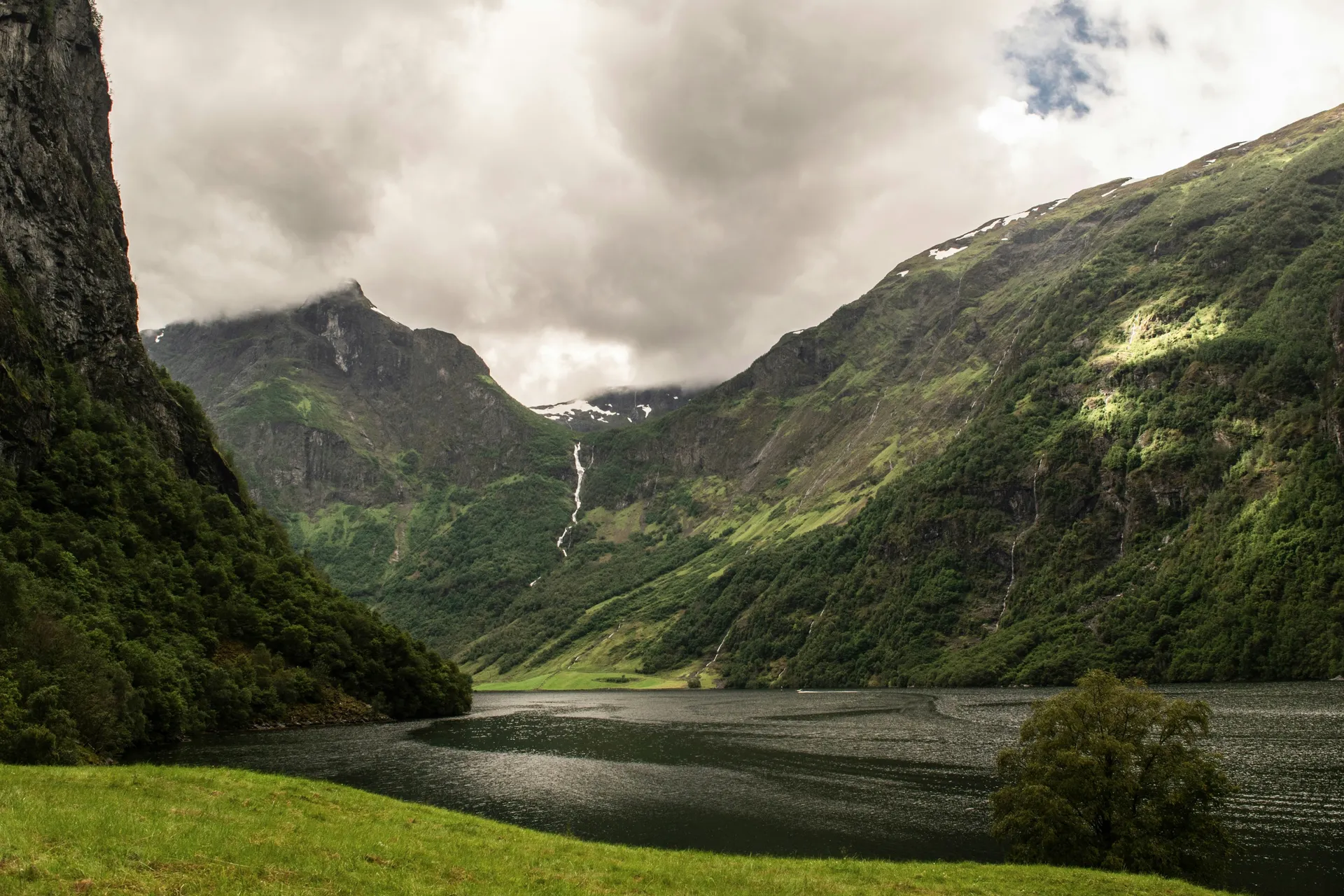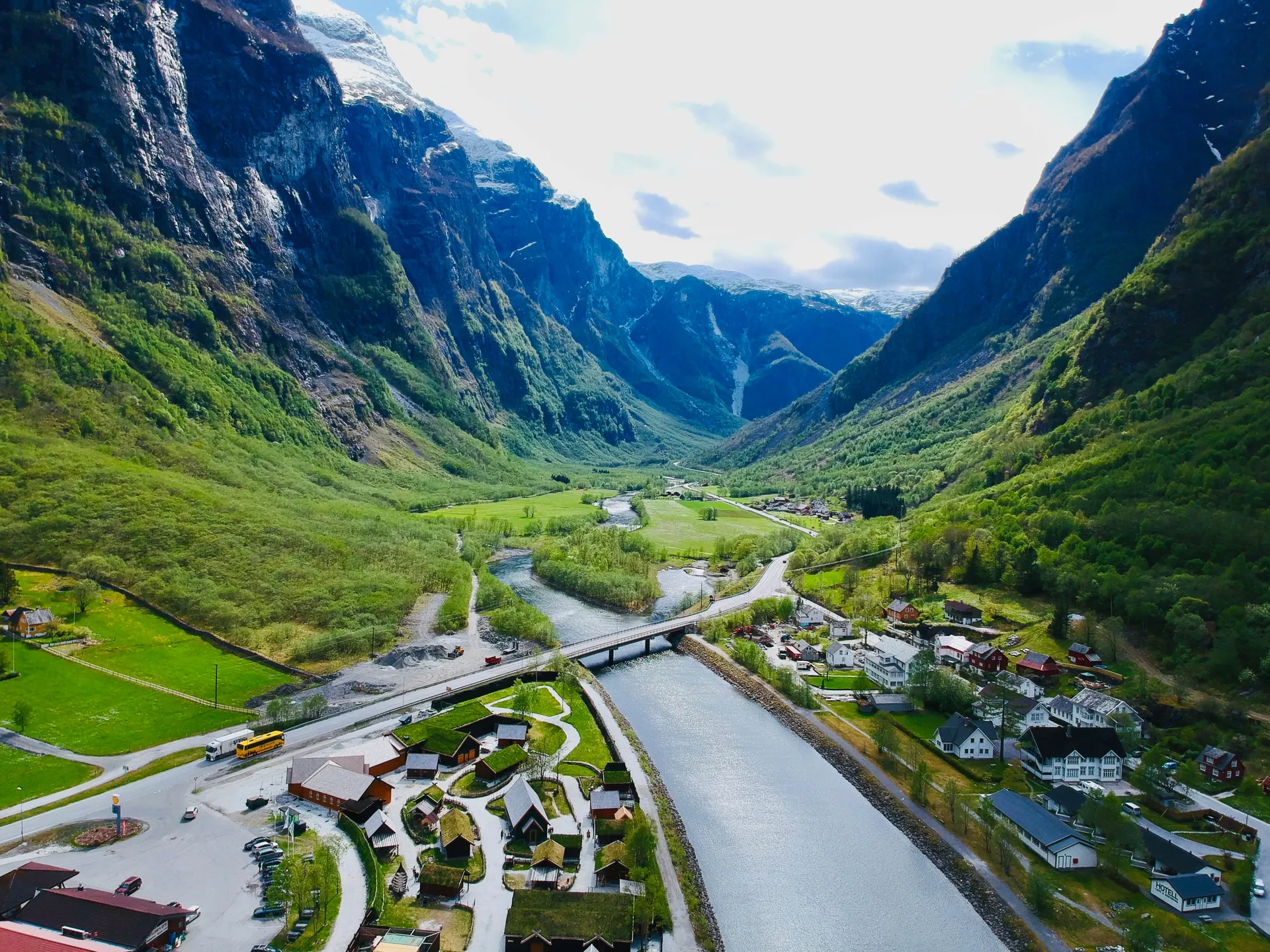
Gudvangen sits at the innermost tip of the Nærøyfjorden, a position that places it at the terminus of what UNESCO has recognized as one of the most outstanding natural landscapes on Earth. The Nærøyfjorden — barely 250 meters wide at its narrowest, with mountains soaring 1,700 meters on either side — is a branch of the Sognefjorden, the longest and deepest fjord in Norway, and the journey to reach Gudvangen by ship is itself the primary experience. The village, home to fewer than 200 permanent residents, would be unremarkable were it not for its extraordinary setting and its role as a gateway to the Sognefjorden system, the Flåm Railway, and the Viking heritage that has been reimagined at the Njardarheimr Viking Village.
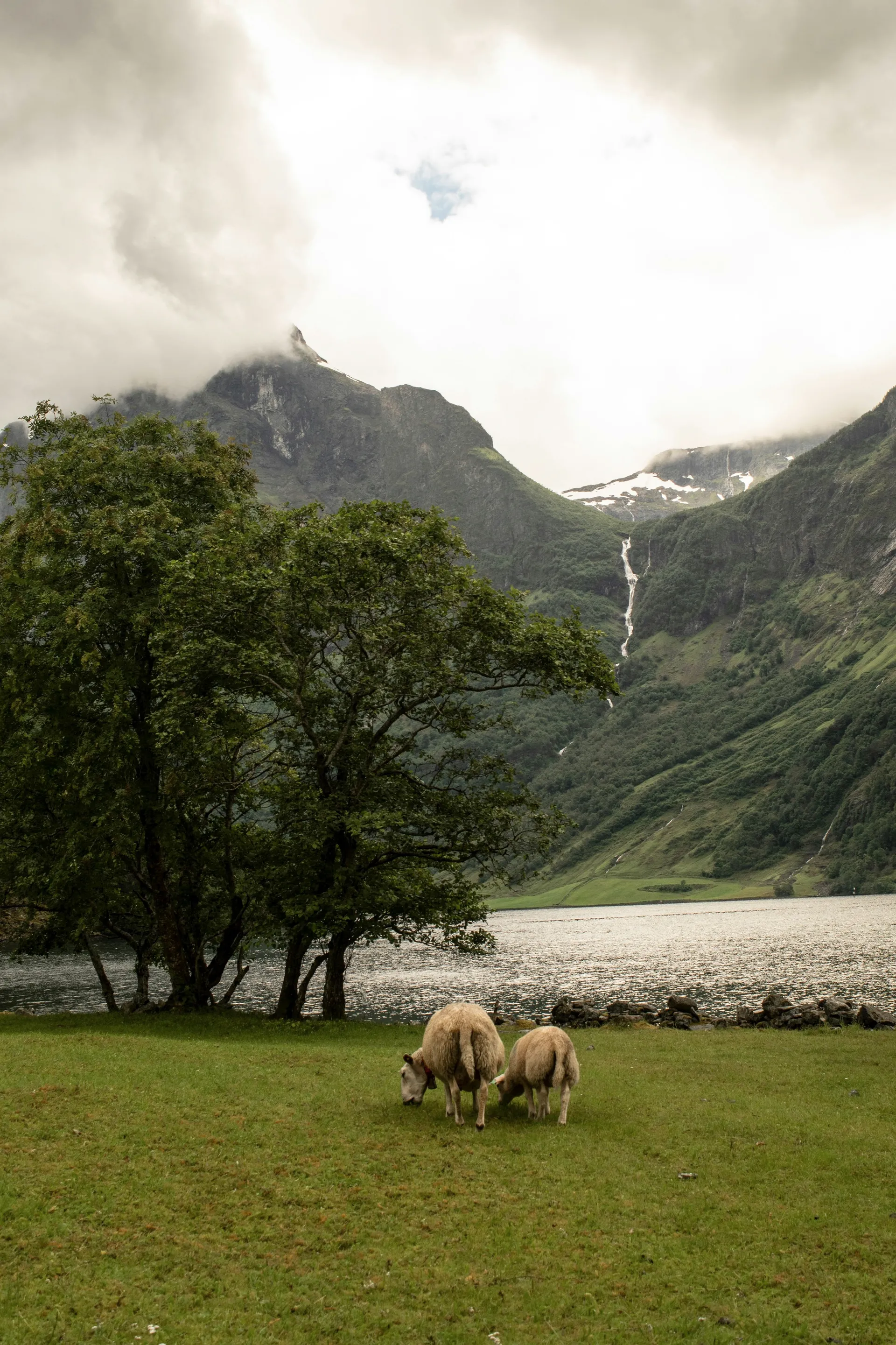
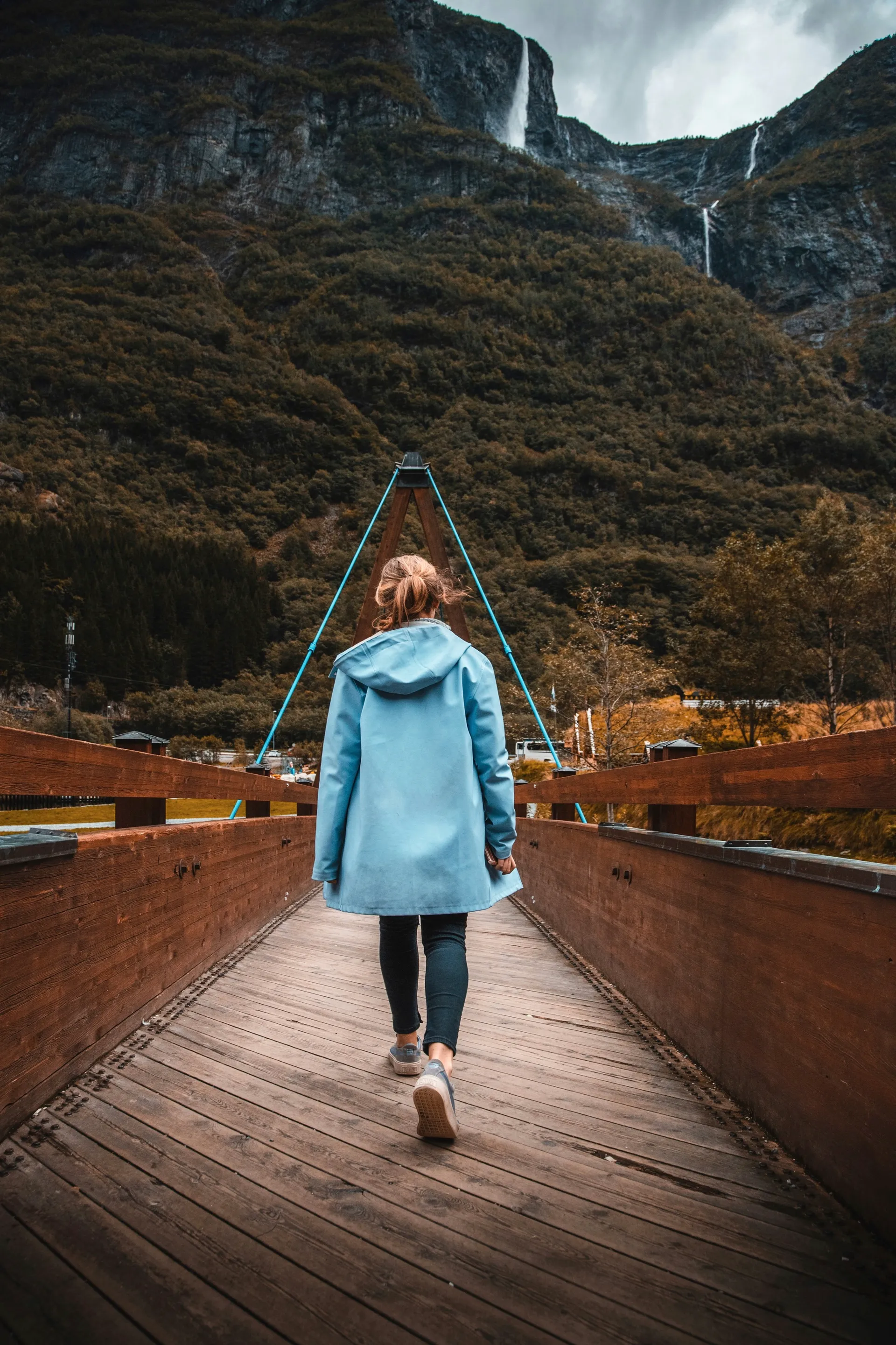
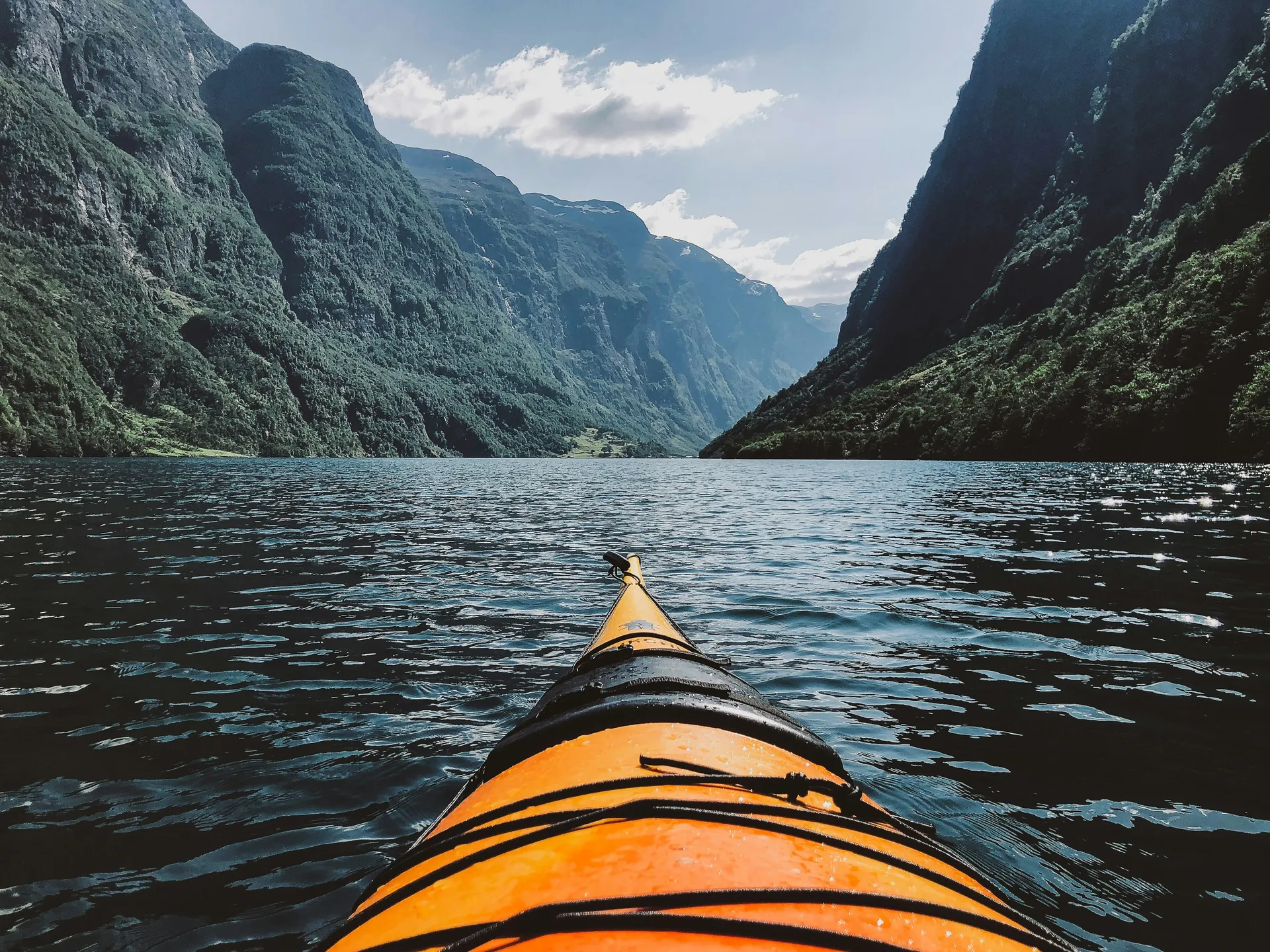
The approach to Gudvangen by water is one of the most spectacular waterway transits in the world. The Nærøyfjorden narrows progressively as the ship penetrates deeper into the mountain system, the fjord walls closing in like the pages of a book. Waterfalls — some permanent, some seasonal — cascade from hanging valleys hundreds of meters above, their spray creating rainbows in the summer sunlight. The water, dark with depth and glacial minerals, reflects the mountains with mirror-like precision on calm days, doubling the already vertiginous landscape. Mountain farms — tiny patches of green clinging to improbable ledges above the fjord — testify to the determination of Norwegian farmers who worked these slopes for centuries, harvesting hay with ropes tied to their waists to prevent fatal falls.
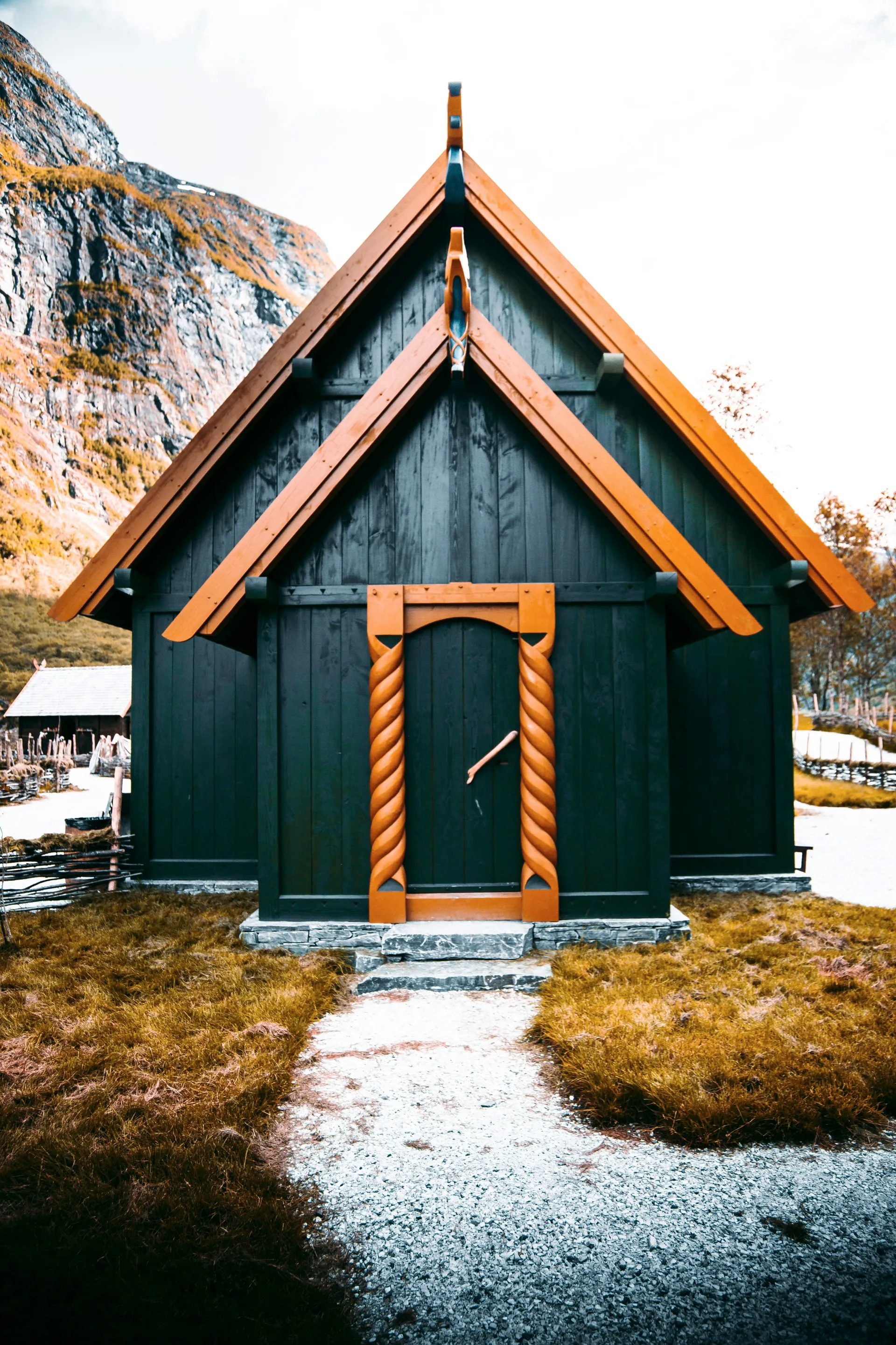
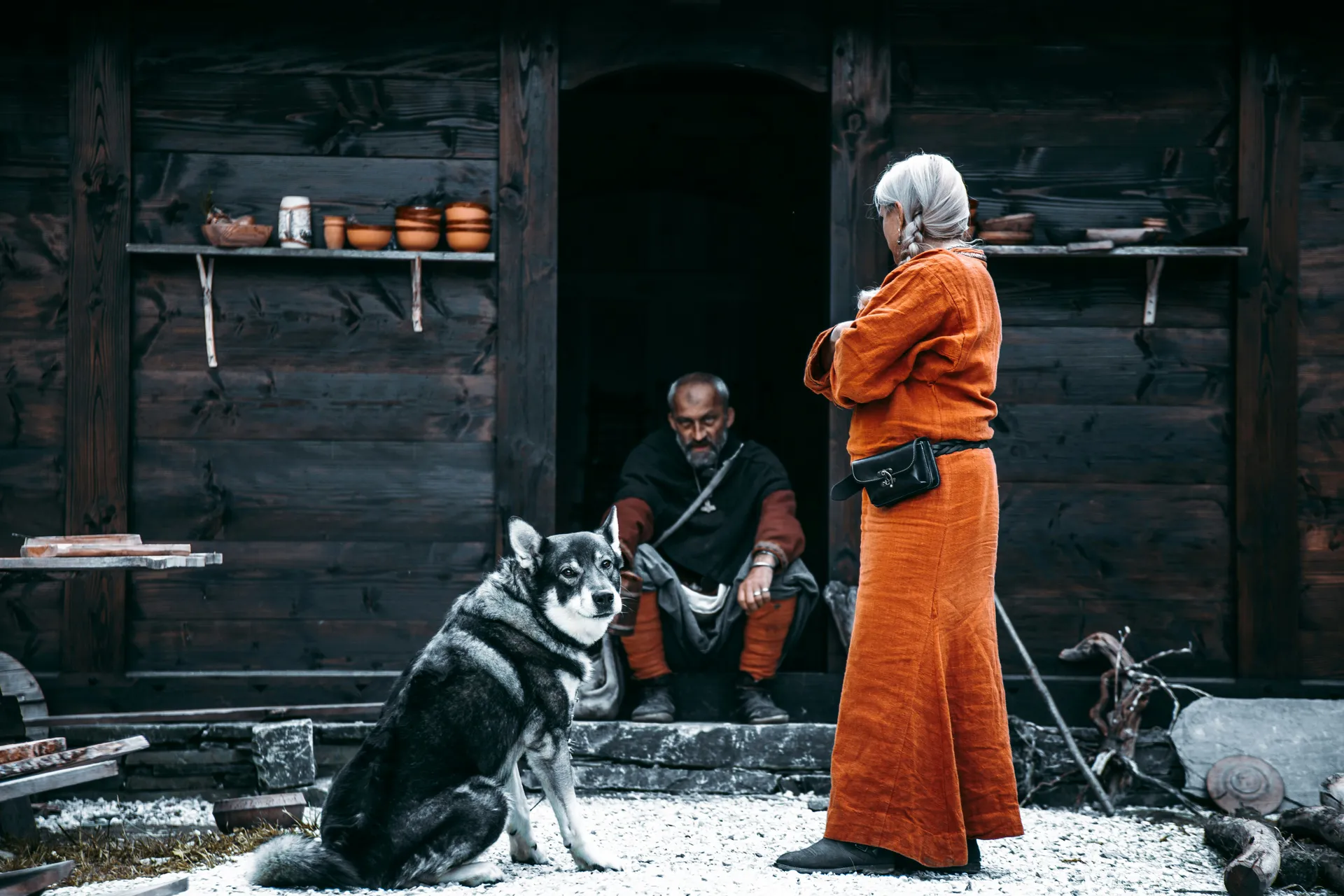
The Njardarheimr Viking Village at Gudvangen is a full-scale reconstruction of a Viking-age settlement, built using period techniques and materials — sod roofs, timber-frame halls, and the distinctive dragon-head prow carvings that adorned Norse longships. The village functions as both a living museum and a cultural experience: costumed artisans demonstrate blacksmithing, wood carving, textile weaving, and archery, while Viking-era cooking methods produce surprisingly sophisticated meals — slow-roasted lamb, fish cured in birch smoke, flatbread baked on stone. The overall effect is less theme park than time machine — a serious attempt to recreate the material culture of the Norse world, informed by archaeological research and animated by practitioners who approach their crafts with genuine expertise.
The culinary traditions of the inner Sognefjord region are among Norway's most distinctive. Undredal, a tiny village on the opposite shore accessible by kayak or small boat, produces Norway's most celebrated brown cheese (brunost) and a pungent goat cheese that has been made in the same tradition for centuries — the village's thirty residents tend over 400 goats whose milk produces cheese that is exported nationwide. Wild salmon from the fjord system, smoked or gravlax-cured, is exceptional. The berries that ripen on the mountain slopes in late summer — blueberries, cloudberries, lingonberries — appear in desserts and preserves at the local restaurants and farm shops.
Gudvangen is reached by cruise ship or ferry through the Nærøyfjorden (from Bergen or Flåm), by road through the Nærøydalen valley, or as part of the famous "Norway in a Nutshell" scenic route that combines the Bergen Railway, Flåm Railway, Nærøyfjord ferry, and bus connections into one of the world's great circular journeys. The village has limited accommodation — most visitors arrive by ship or bus and continue onward — but the Gudvangen area rewards an overnight stay for those who wish to explore the Viking Village at leisure, kayak the fjord, or hike the surrounding mountains. The summer months of June through August offer the warmest weather and longest days, with the fjord most atmospheric in early morning or late evening when the light softens and the tourist traffic subsides.