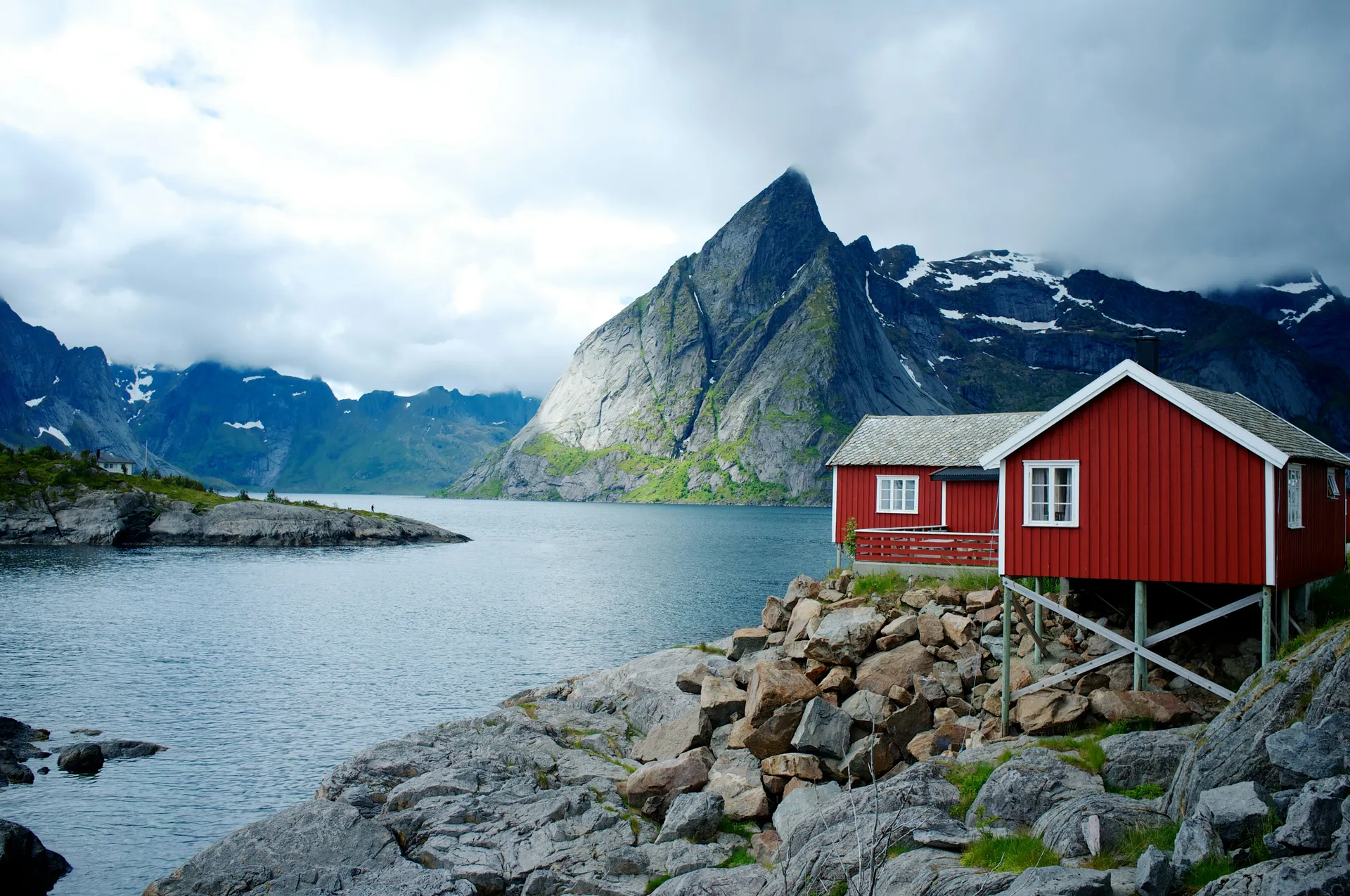
At seventy-one degrees north, on the storm-battered coast of Finnmark — Norway's northernmost county — Havøysund clings to the island of Havøya like a barnacle on a rock. This fishing village of roughly a thousand residents sits well above the Arctic Circle, in a landscape of such stark, treeless beauty that it can leave visitors momentarily speechless. The surrounding terrain is pure Arctic Norway: bare granite mountains, vast expanses of tundra, and a coastline so deeply indented by fjords and sounds that the distance from one point to another is always many times greater by sea than by land.
Havøysund's identity is inseparable from the sea. The village has been a fishing community since time immemorial, and the king crab — an invasive species that migrated from Russian waters in the 1960s — has become its modern-day goldmine. These enormous crustaceans, with leg spans exceeding a metre, are harvested from the frigid waters of the Barents Sea and have transformed the local economy. King crab safaris, where visitors join fishermen to haul pots and then feast on the freshly cooked catch, have become one of Arctic Norway's most popular culinary experiences.
The natural environment surrounding Havøysund is extraordinary even by Norwegian standards. The Havøysund Bird Cliff, one of Norway's northernmost seabird colonies, hosts thousands of puffins, guillemots, and razorbills during the breeding season. The waters offshore are among the richest fishing grounds in the Arctic, attracting not only fishing boats but also whales — humpback and fin whales are regularly sighted from shore during the summer months. In winter, the northern lights dance across the polar sky with an intensity rarely matched at lower latitudes, while the polar night brings weeks of blue twilight that lend the landscape an otherworldly beauty.
The Sami people — the indigenous inhabitants of northern Scandinavia — have been present in this region for thousands of years, and their reindeer-herding culture remains visible in the Finnmark plateau that stretches inland from the coast. The town of Hammerfest, roughly ninety minutes south by road, claims the title of the world's northernmost city and offers the Royal and Ancient Polar Bear Society museum and the Meridian Column, a UNESCO World Heritage monument. Closer to Havøysund, the landscape itself is the attraction — vast, empty, and humbling in its scale.
Havøysund is a regular stop on the Hurtigruten coastal voyage and welcomes expedition cruise ships at its harbour. The visiting season divides into two distinct experiences: summer (June-August) brings the midnight sun, with continuous daylight creating conditions for hiking, fishing, and wildlife observation; winter (November-February) offers the northern lights and the unique atmosphere of the polar night. The village has limited tourist infrastructure — a few guesthouses and restaurants — but what it lacks in amenities it compensates for with an authenticity and wildness that more developed Arctic destinations cannot replicate.

