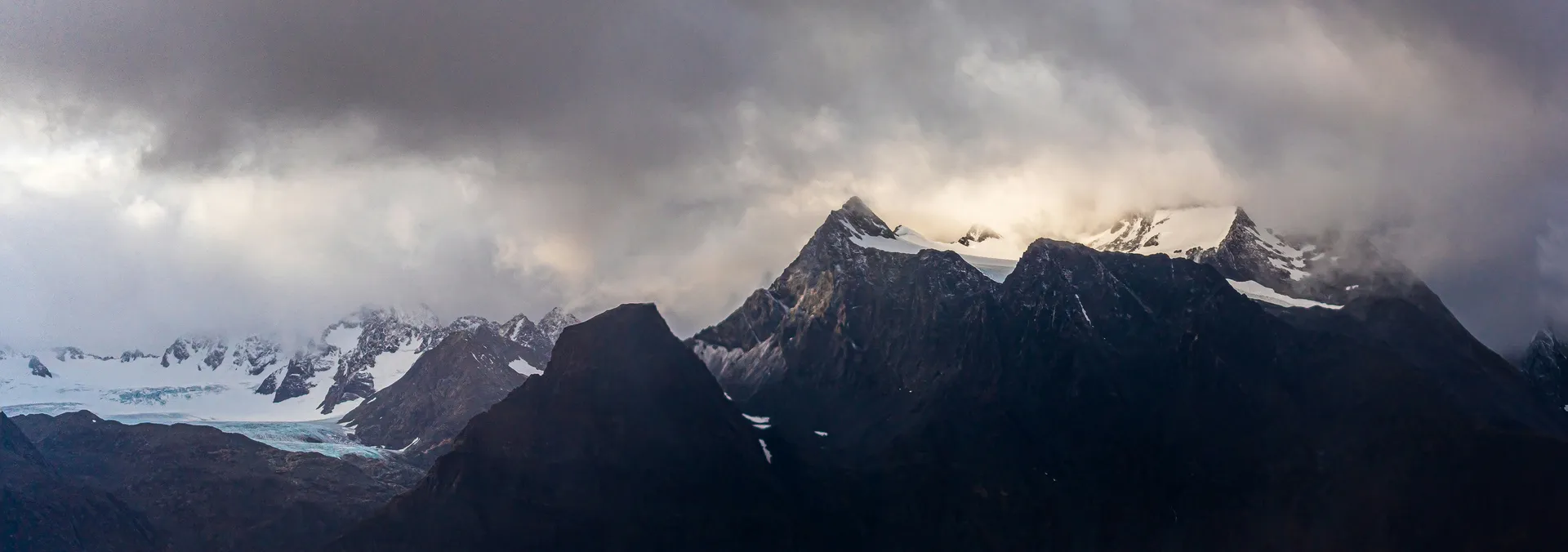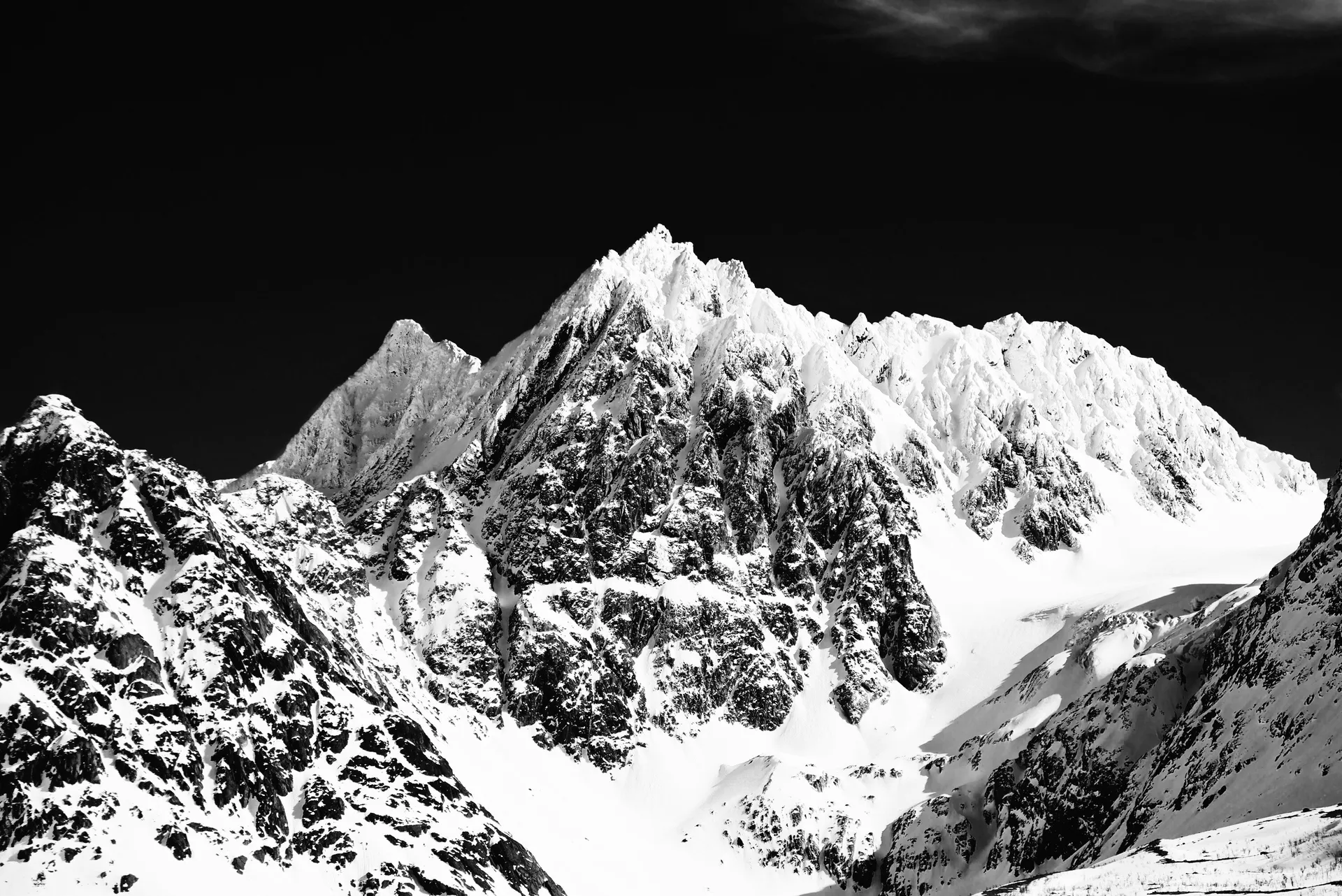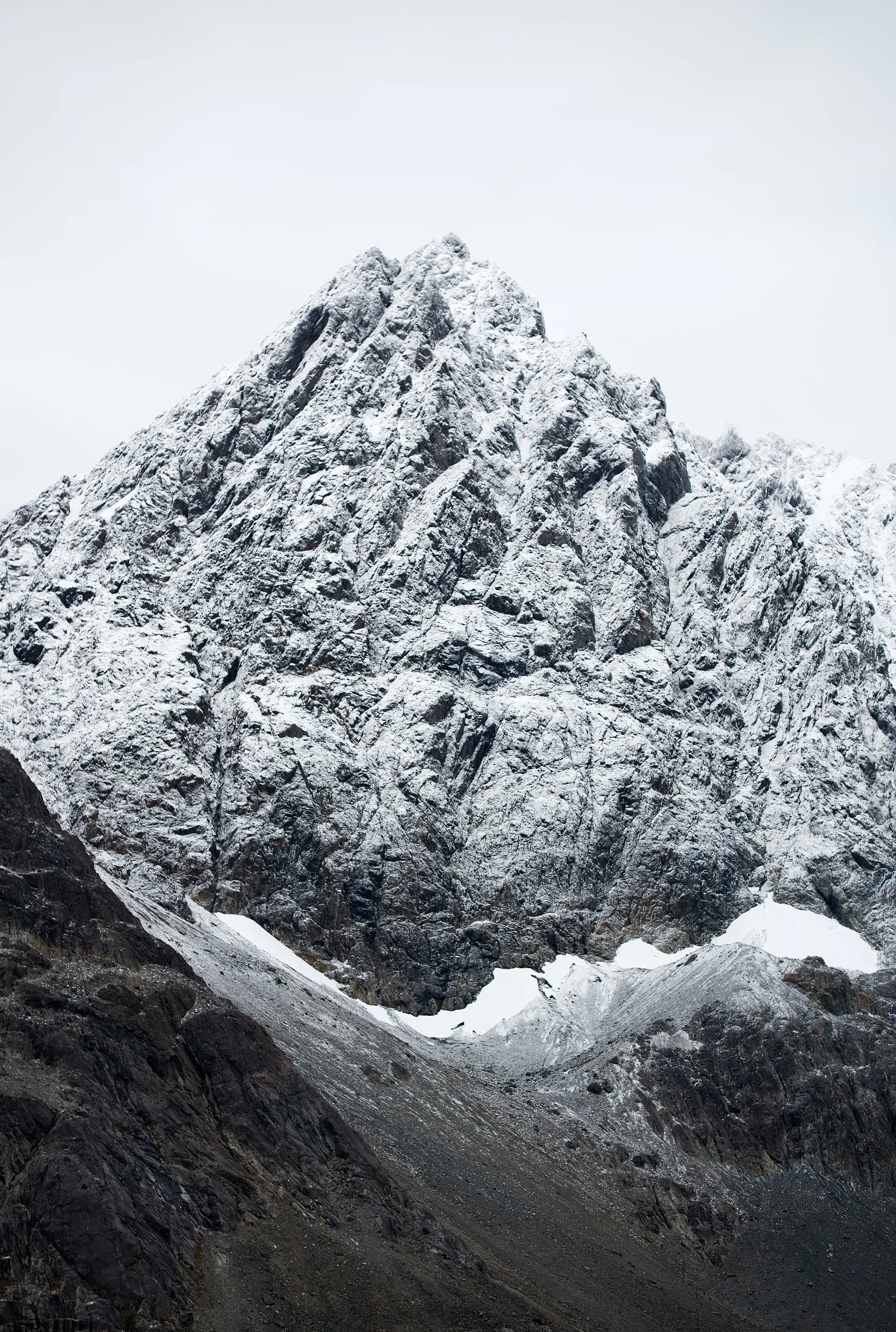
Rising directly from the Arctic Ocean in a wall of ice-carved granite that reaches 1,833 metres at Jiehkkevarre, the Lyngen Alps represent one of the most dramatic intersections of mountain and sea in the entire Arctic. This compact massif, located on the Lyngen Peninsula in Troms county, northern Norway, was sculpted by glaciers that still cling to its upper flanks — remnants of ice fields that once extended to the fjord surface during the last glacial maximum. The mountains plunge into the Lyngenfjord with such vertiginous directness that ski mountaineers regularly descend from summit snowfields directly to sea level, a vertical drop of nearly 1,500 metres that has made the Lyngen Alps one of the world's premier destinations for ski touring.
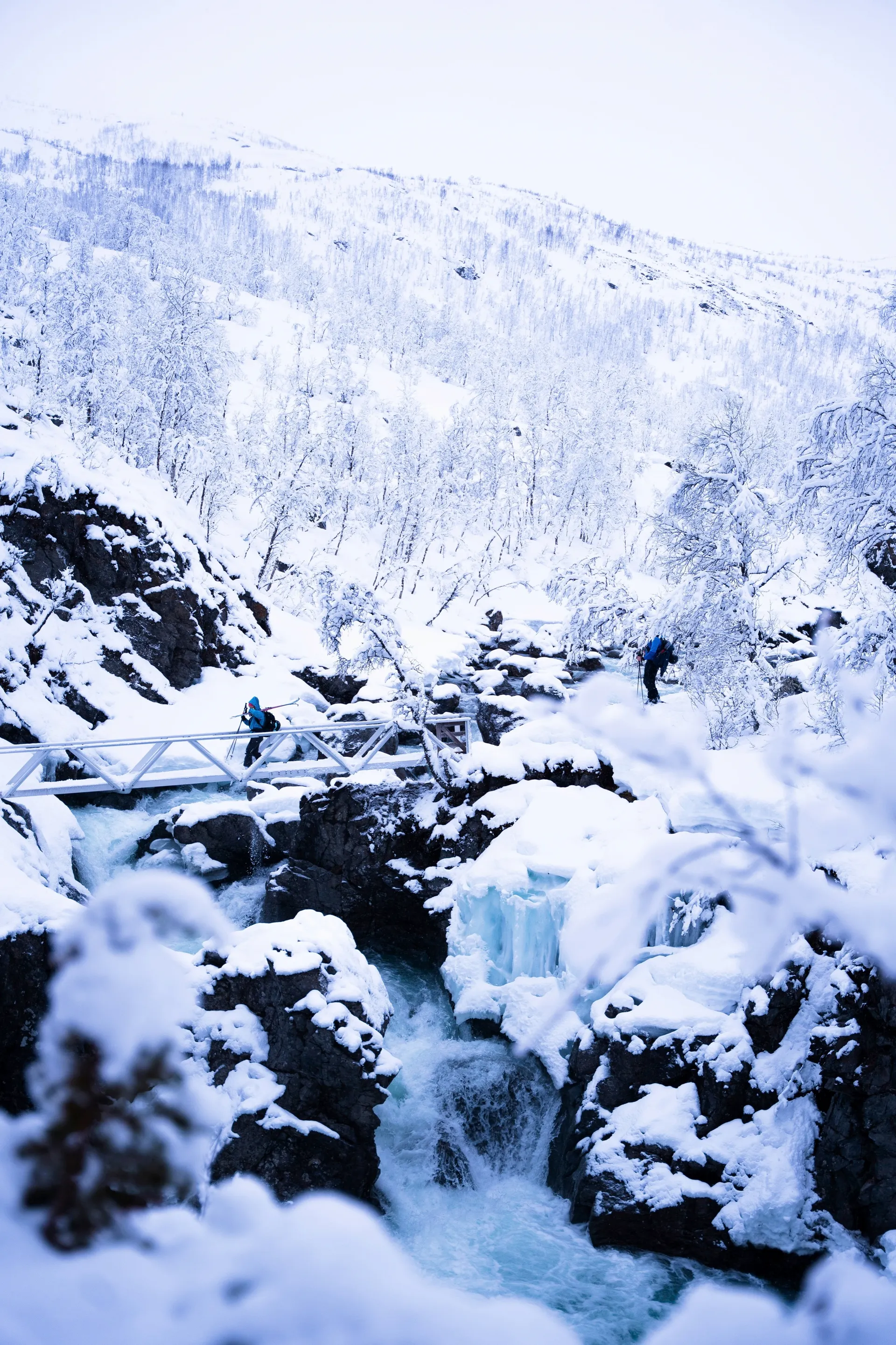
The landscape here operates on a scale that recalibrates one's sense of proportion. The Lyngenfjord, at 82 kilometres one of northern Norway's longest, slices between the Alps and the Karvik Peninsula, its dark waters reflecting peaks that seem to have been transplanted from the Himalayas to latitude 69 degrees north. In summer, the midnight sun circles the horizon without setting, casting shadows that rotate like clock hands across glacial cirques and moraines. In winter, the northern lights pulse and shimmer above the frozen landscape in curtains of green, violet, and crimson — among the finest aurora displays on Earth, aided by the region's position directly beneath the auroral oval.
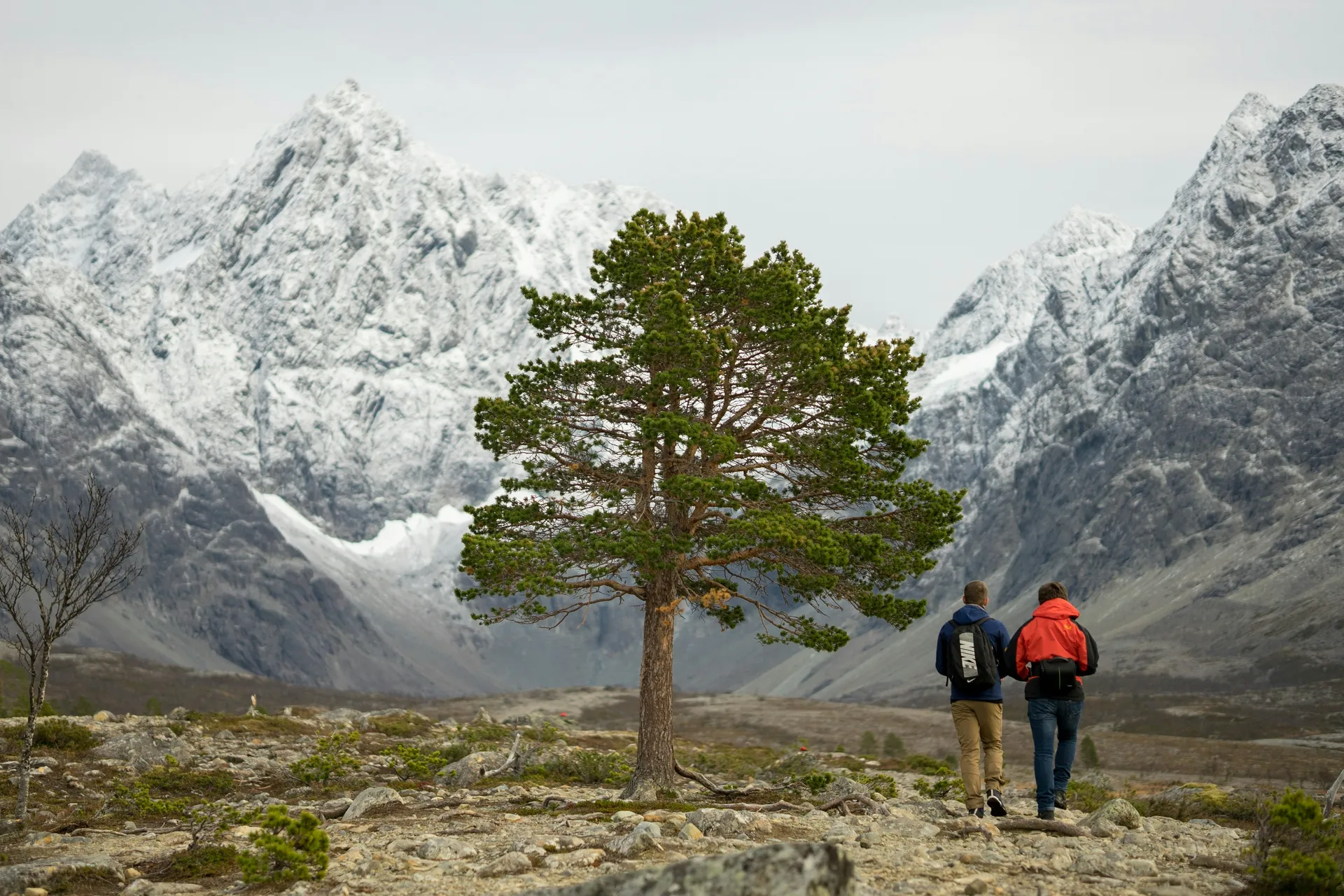
The Lyngen experience is fundamentally one of immersion in wilderness. Hiking trails traverse alpine meadows carpeted with Arctic wildflowers — mountain avens, purple saxifrage, and glacier buttercups — while below, the fjord waters host feeding humpback whales and pods of orca that pursue herring into the narrow channels between headlands. The Sami reindeer herding communities of the Lyngen Peninsula maintain traditions that long predate Norwegian settlement, and encounters with reindeer herds moving between seasonal pastures are common along the mountain roads. The village of Lyngseidet, the peninsula's modest capital, offers a handful of accommodation options and serves as the base for guided glacier walks on the Lenangsbreen and Strupbreen glaciers.
The broader region surrounding the Lyngen Alps rewards exploration. Tromso, Norway's Arctic capital, lies two hours south by road, offering the Polar Museum, the Arctic Cathedral, and a surprisingly vibrant food and bar scene for a city of 77,000 above the Arctic Circle. The island of Senja, further southwest, has been called "Norway in miniature" for its compressed diversity of fishing villages, mountain peaks, and white-sand beaches. North of Lyngen, the Nordkapp — continental Europe's northernmost point — draws visitors to its dramatic cliff edge above the Barents Sea.
The Lyngen Alps are visited by HX Expeditions on Norwegian coastal expedition itineraries, with ships navigating the Lyngenfjord and deploying Zodiacs for closer approaches to the glacier-carved coastline. The summer season from June through August offers midnight sun, hiking conditions, and whale sightings, while the winter months from November through February provide northern lights viewing in conditions of extraordinary clarity.