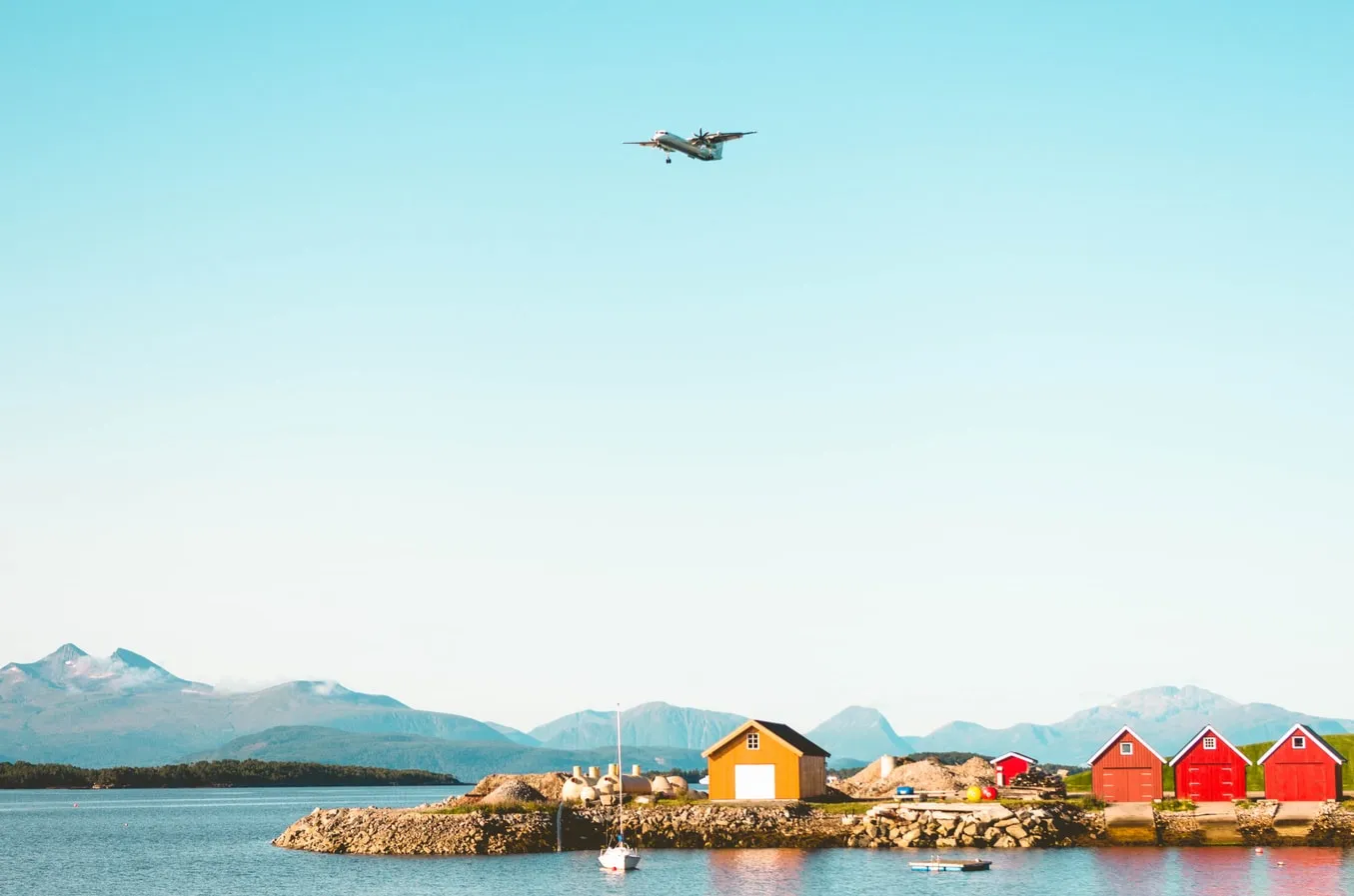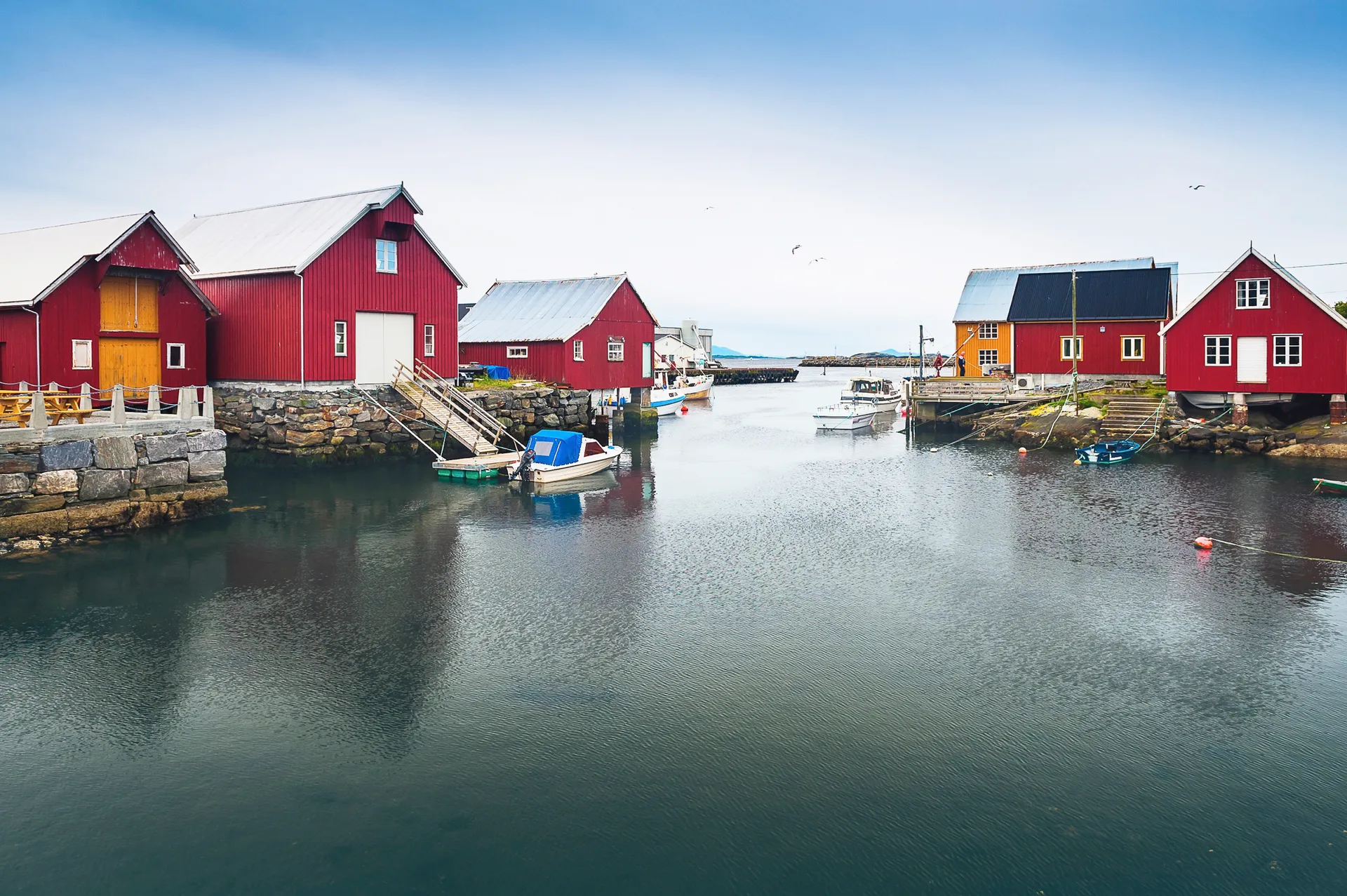
Molde, the "City of Roses," rests on the northern shore of the Romsdalsfjorden in western Norway, framed by a panorama of 222 snow-capped mountain peaks known as the Molde Panorama — a view so celebrated that Kaiser Wilhelm II of Germany returned to admire it summer after summer aboard his yacht, and a viewing platform bearing his name still stands on the hillside above town. During World War II, Molde served briefly as Norway's wartime capital in April 1940, when King Haakon VII and the government fled here from Oslo ahead of the German advance; the Luftwaffe subsequently bombed the town to ruins. Rebuilt with characteristic Norwegian resilience, Molde today is a prosperous town of twenty-seven thousand, its rose gardens — planted in the mild microclimate created by the Gulf Stream — blooming abundantly each summer and justifying its floral epithet.
The town's setting is its greatest asset: a tapestry of fjords, islands, and alpine peaks that shift from steel-blue to rose-gold depending on the hour and season. The Molde Cathedral, a modernist concrete-and-glass structure built after the wartime destruction, dominates the town center with its distinctive freestanding bell tower. The Romsdal Museum, an open-air collection of forty historic buildings from the surrounding region, provides insight into rural Norwegian life from the medieval era to the nineteenth century, with turf-roofed farmhouses, a stave-church-style chapel, and traditional boats. Each July, the Moldejazz festival — one of Europe's oldest jazz festivals, running since 1961 — transforms the town into a lively cultural hub.
Norwegian coastal cuisine in Molde celebrates the extraordinary bounty of the Romsdalsfjorden. Klippfisk (dried and salted cod), the region's most important historic export, is prepared in countless ways — bacalao (a tomato-based stew), gratinéed with cream and cheese, or simply rehydrated and pan-fried with butter and potatoes. Fresh Atlantic salmon, sourced from the fjord's fish farms and wild rivers, is served smoked (røkt laks), cured as gravlaks with dill and mustard sauce, or simply grilled. Brunost, the caramelized brown whey cheese that is distinctly Norwegian, is sliced paper-thin with an ostehøvel (cheese slicer — invented in Norway) and eaten on bread or waffles. Summer brings wild strawberries and cloudberries to market stalls, while autumn delivers chanterelle mushrooms from the surrounding forests.
From Molde, some of Norway's most spectacular natural attractions are within easy reach. The Trollstigen (Troll's Path), a serpentine mountain road with eleven hairpin bends climbing to a 850-meter viewpoint, is one hour southeast — one of Norway's most famous scenic drives. The Atlantic Road (Atlanterhavsveien), a eight-kilometer highway leaping across rocky islets on wave-washed bridges, is forty-five minutes west and has been named Norway's "Construction of the Century." Åndalsnes, the mountaineering capital of Norway at the head of the Romsdalsfjord, offers the Romsdalseggen ridge hike with vertical views over the fjord, one hour away.
Molde welcomes a strong roster of cruise lines along the Norwegian coast. Silversea, Hapag-Lloyd Cruises, and Explora Journeys bring ultra-luxury experiences. Oceania Cruises, Holland America Line, Princess Cruises, Azamara, and Celebrity Cruises provide premium options. MSC Cruises, Costa Cruises, P&O Cruises, TUI Cruises Mein Schiff, Fred Olsen Cruise Lines, Ambassador Cruise Line, and AIDA serve the mainstream market. Hurtigruten and Windstar Cruises add expedition and small-ship character. The Norwegian coastal season runs May through September, with June and July offering the midnight sun and the Moldejazz festival, while September brings autumn colors and the first hints of northern lights.