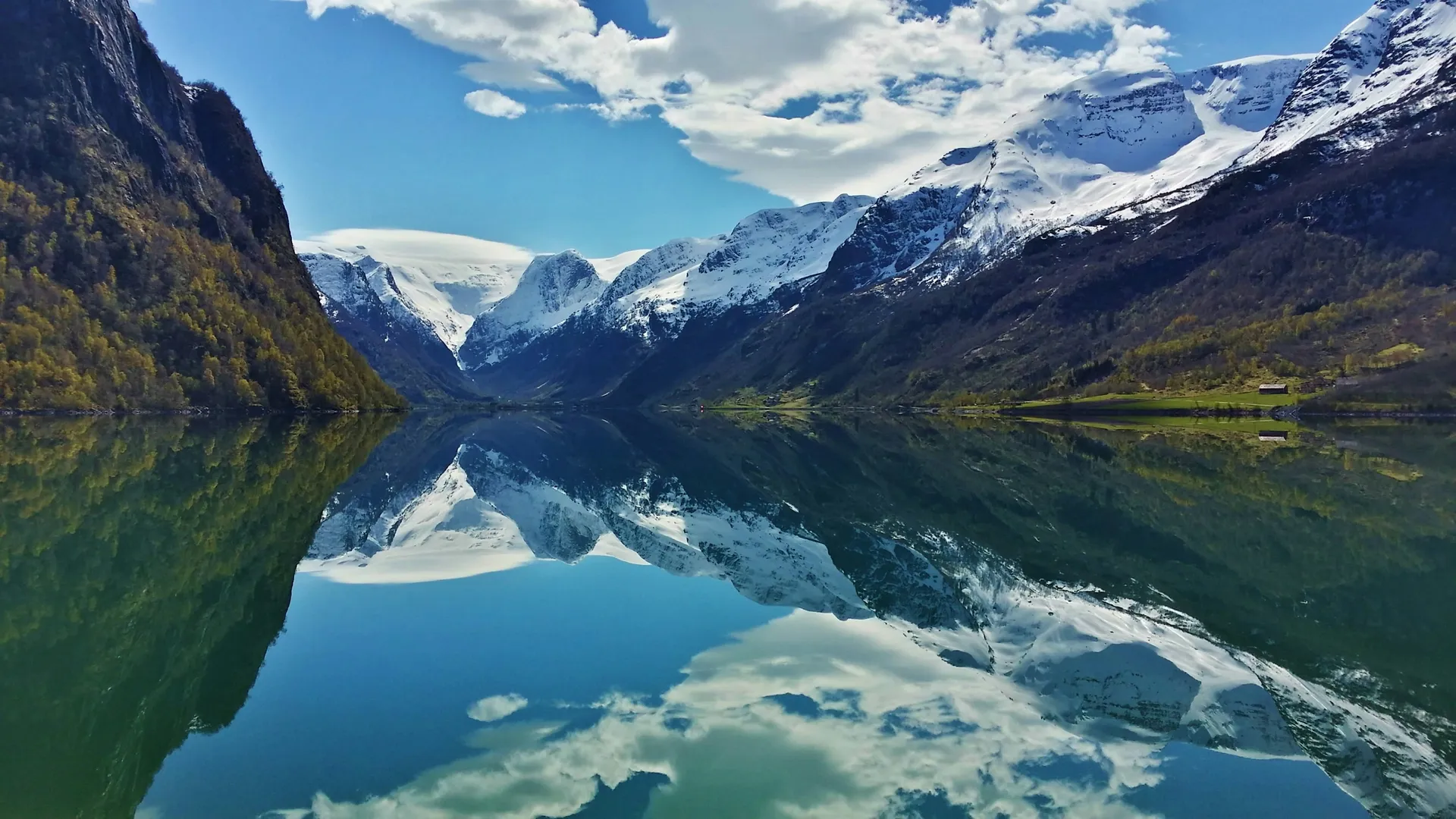
Nestled at the head of Nordfjord, one of Norway's longest and most dramatic waterways, Olden has welcomed travellers since the early nineteenth century when British Victorian explorers first ventured into the fjordlands seeking sublime landscapes untouched by industrialisation. By the 1890s, the village had established itself as a fashionable destination for European aristocracy, with the historic Hotel Alexandra — still standing today — opening its doors in 1884 to accommodate the growing stream of visitors arriving by steamer. It was here, amid glacial valleys and emerald waters, that the golden age of Nordic tourism quietly began.
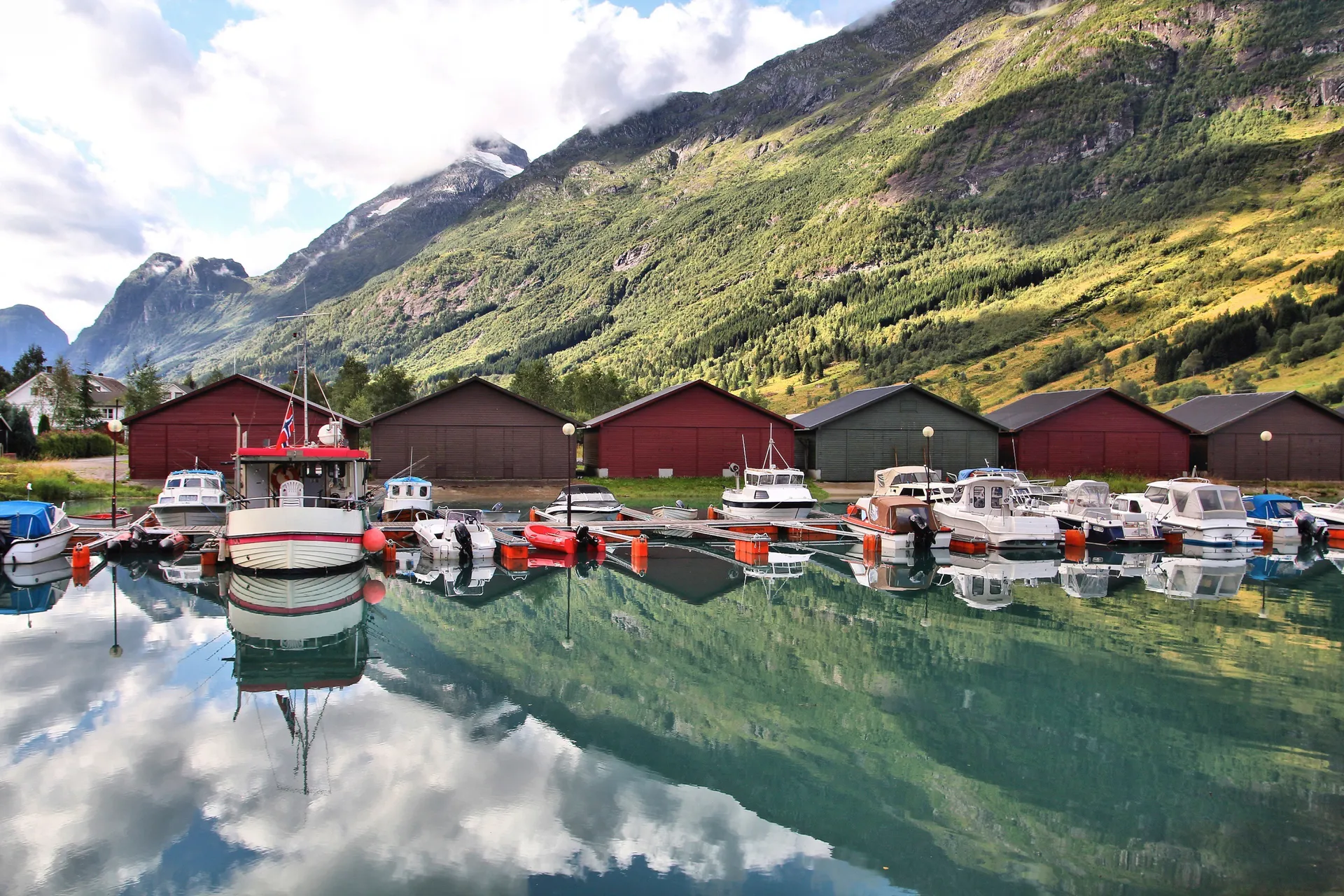
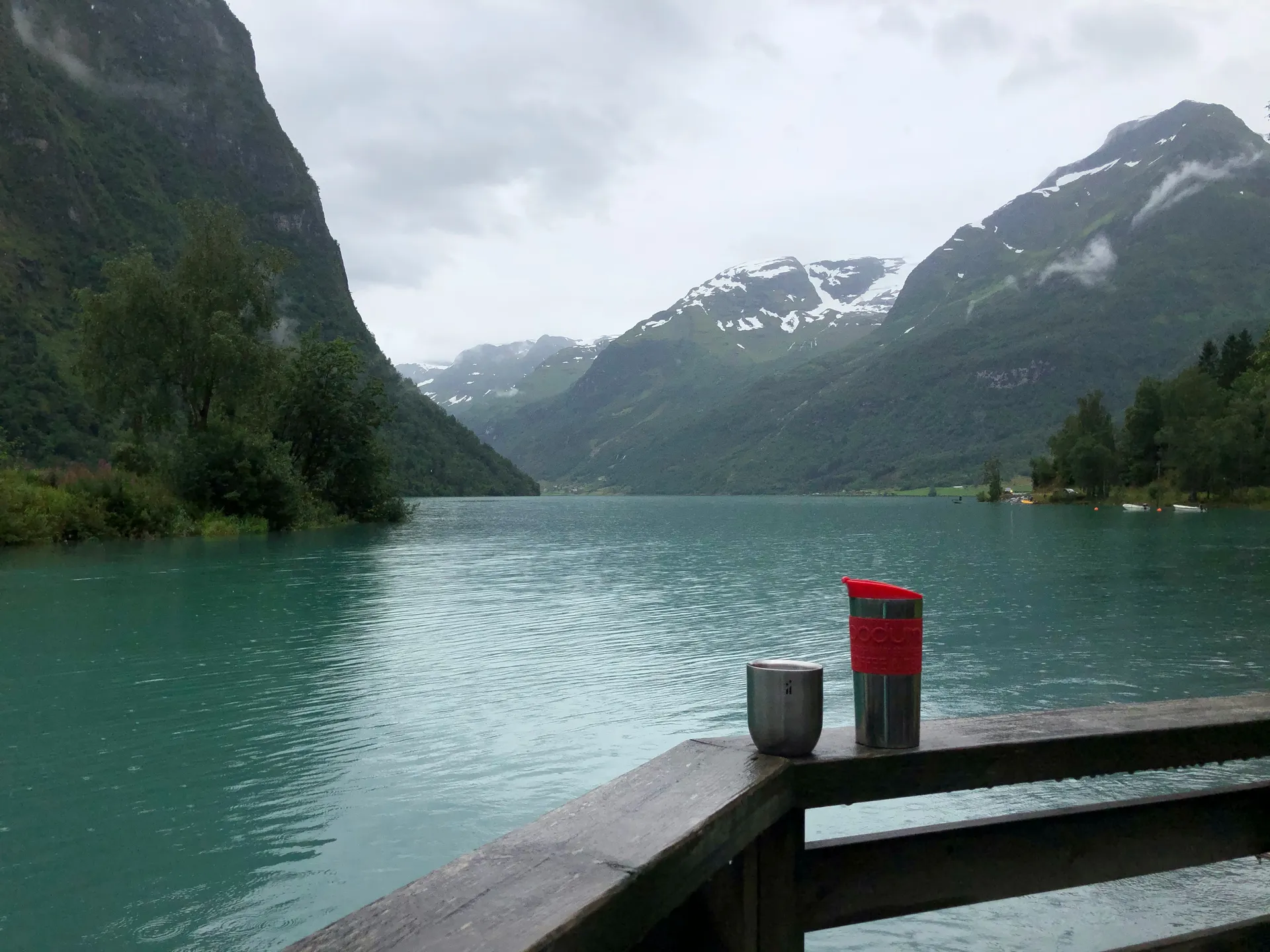
What strikes you first upon arrival is the almost theatrical stillness of the place. Olden is not a town so much as a composition — a handful of timber houses painted in faded ochre and barn red, a white wooden church dating to 1759, and a slender river carrying glacial meltwater the colour of crushed jade directly through the village centre. The Oldeelva river, famous among fly-fishing enthusiasts for its Atlantic salmon runs, bisects the settlement before emptying into the fjord, where cruise tenders glide across water so clear you can trace the rocky bottom several metres below. There is a quality of light here in summer, a soft luminosity that lingers past midnight, rendering the surrounding peaks in shades of violet and pewter that no photograph quite captures.
The culinary landscape of Olden draws from centuries of fjord-to-table tradition. Seek out *raspeball* — dense potato dumplings served with salted lamb and swede mash, a dish that has sustained farming families in this valley for generations. The region's goat cheese, *geitost*, appears at every self-respecting breakfast table, its caramel sweetness a perfect counterpoint to dark rye crispbread and cloudberry preserves. In late summer, the hillsides yield *multebær* — arctic cloudberries — transformed into golden compotes that accompany thick soured cream in a dessert locals call *multekrem*, while the fjord itself provides sweet brown crab and cold-smoked salmon prepared in the traditional *røkt laks* style. Several farm shops along the valley road offer tastings of local *eplesider*, craft apple cider pressed from heritage orchards that have thrived in this microclimate for centuries.
The surrounding region offers excursions that rank among Scandinavia's most extraordinary. The Briksdal Glacier, an arm of the vast Jostedalsbreen — mainland Europe's largest ice cap — lies just twenty-six kilometres inland, reachable by a walk through a valley of waterfalls and ancient moraine. The Art Nouveau jewel of Ålesund, rebuilt in sinuous Jugendstil style after a devastating fire in 1904, makes for a compelling day trip along the coast. Southward, the orchard village of Lofthus clings to the shores of Hardangerfjord beneath a canopy of cherry blossoms each May, while Balestrand, across Sognefjord, preserves a collection of Swiss-style wooden villas built during the nineteenth-century tourist boom. For those drawn to serpentine mountain roads, the route toward Eidsdal crosses the Geiranger plateau, offering views that have earned UNESCO World Heritage recognition.
Olden's compact tender port accommodates an impressive roster of distinguished cruise lines, each bringing a distinct sensibility to the fjord experience. Silversea and Windstar Cruises favour intimate vessels that slip quietly into the narrow waterway, offering their guests an almost private encounter with the landscape. Holland America Line and Cunard bring a sense of transatlantic heritage to these Nordic shores, their larger ships anchoring in the fjord while tenders ferry passengers to the village pier. Celebrity Cruises and P&O Cruises schedule regular summer calls that have introduced a new generation of travellers to Nordfjord's wonders, while Fred Olsen Cruise Lines — with its own Norwegian roots — treats Olden as something of a homecoming. Ambassador Cruise Line, the newest entrant, has quickly recognised the port's appeal, adding it to itineraries that celebrate the quieter corners of coastal Norway. The season runs from May through September, with the longest daylight and warmest temperatures arriving in June and July, when the midnight sun bathes the glacier in gold.