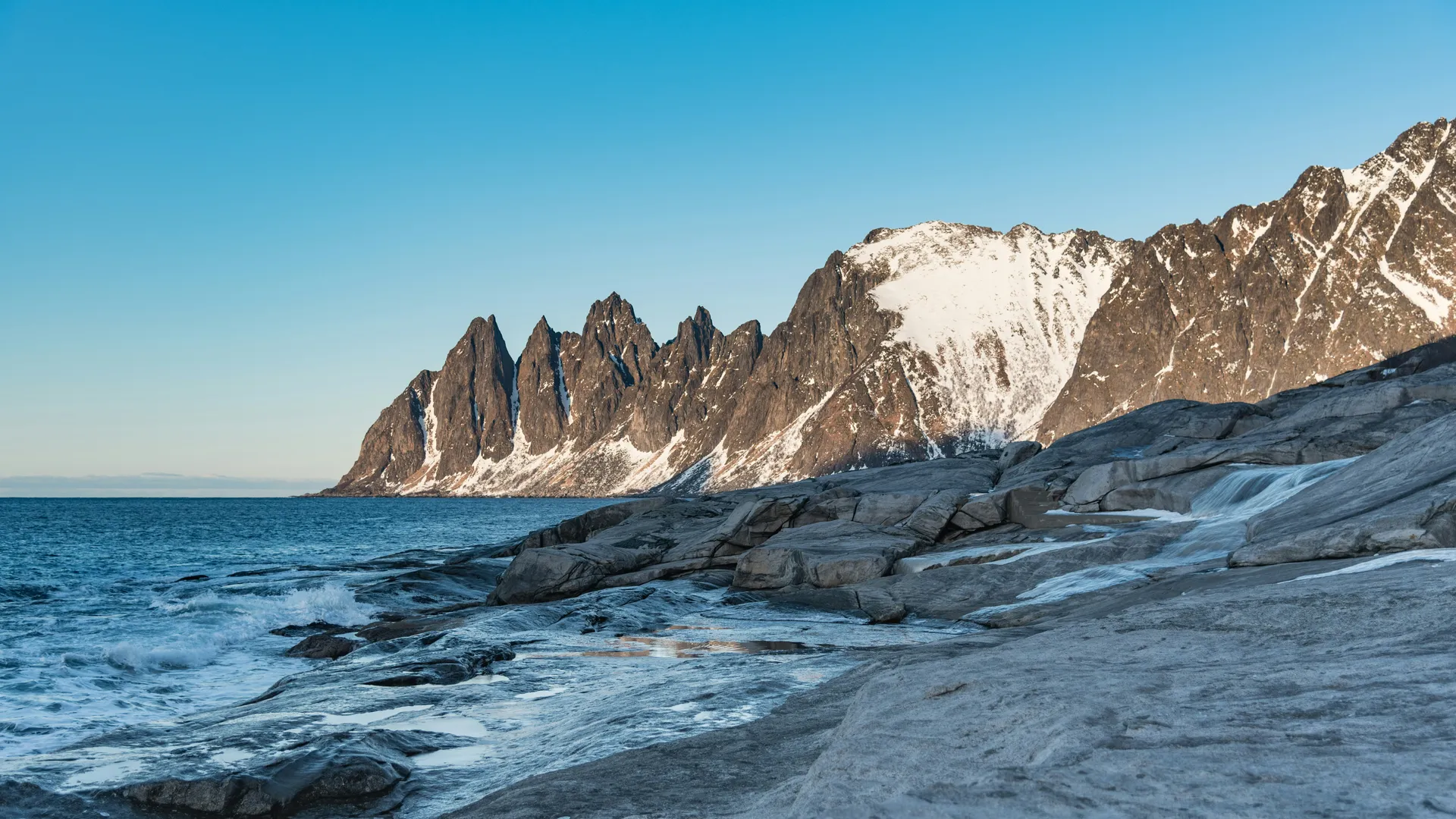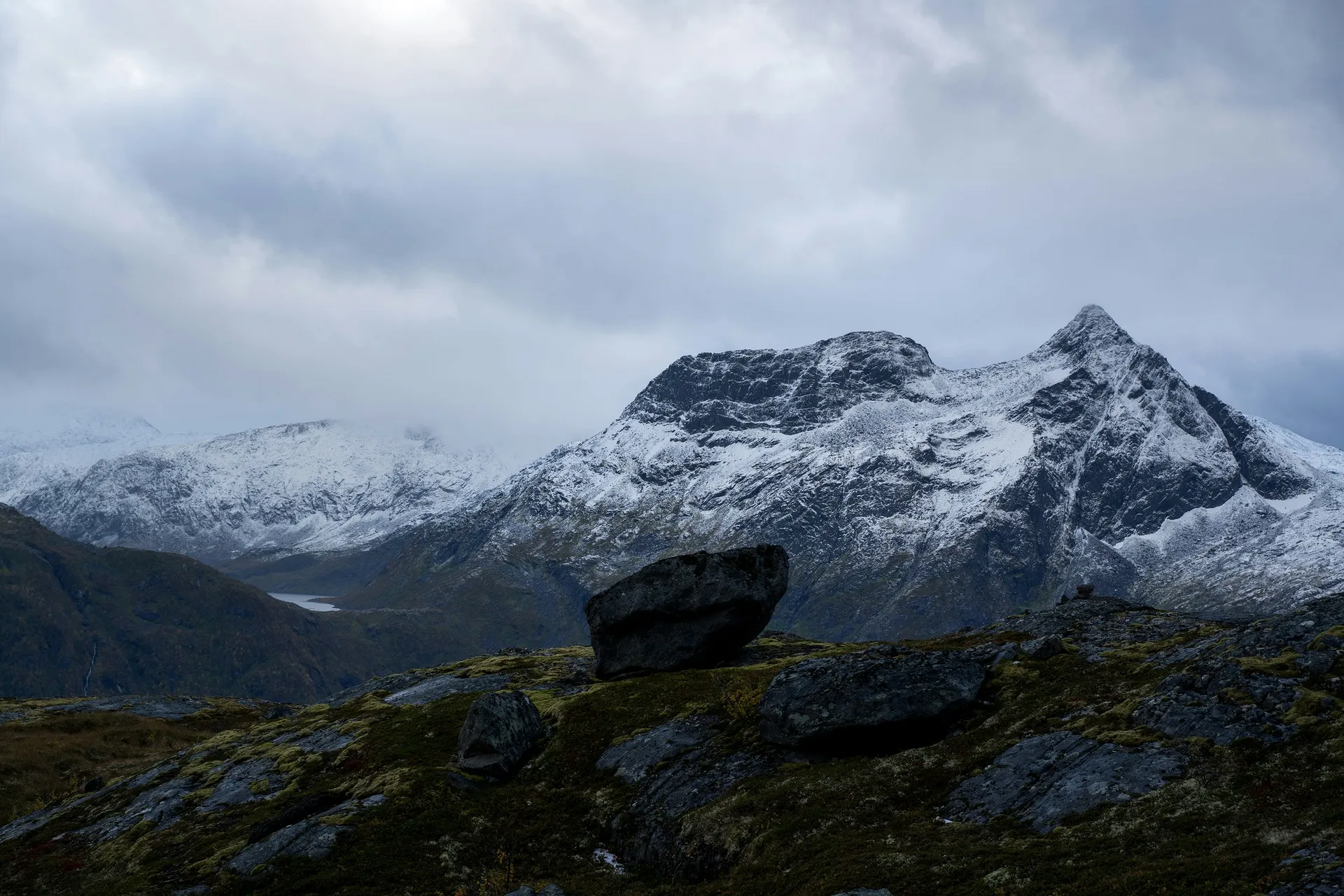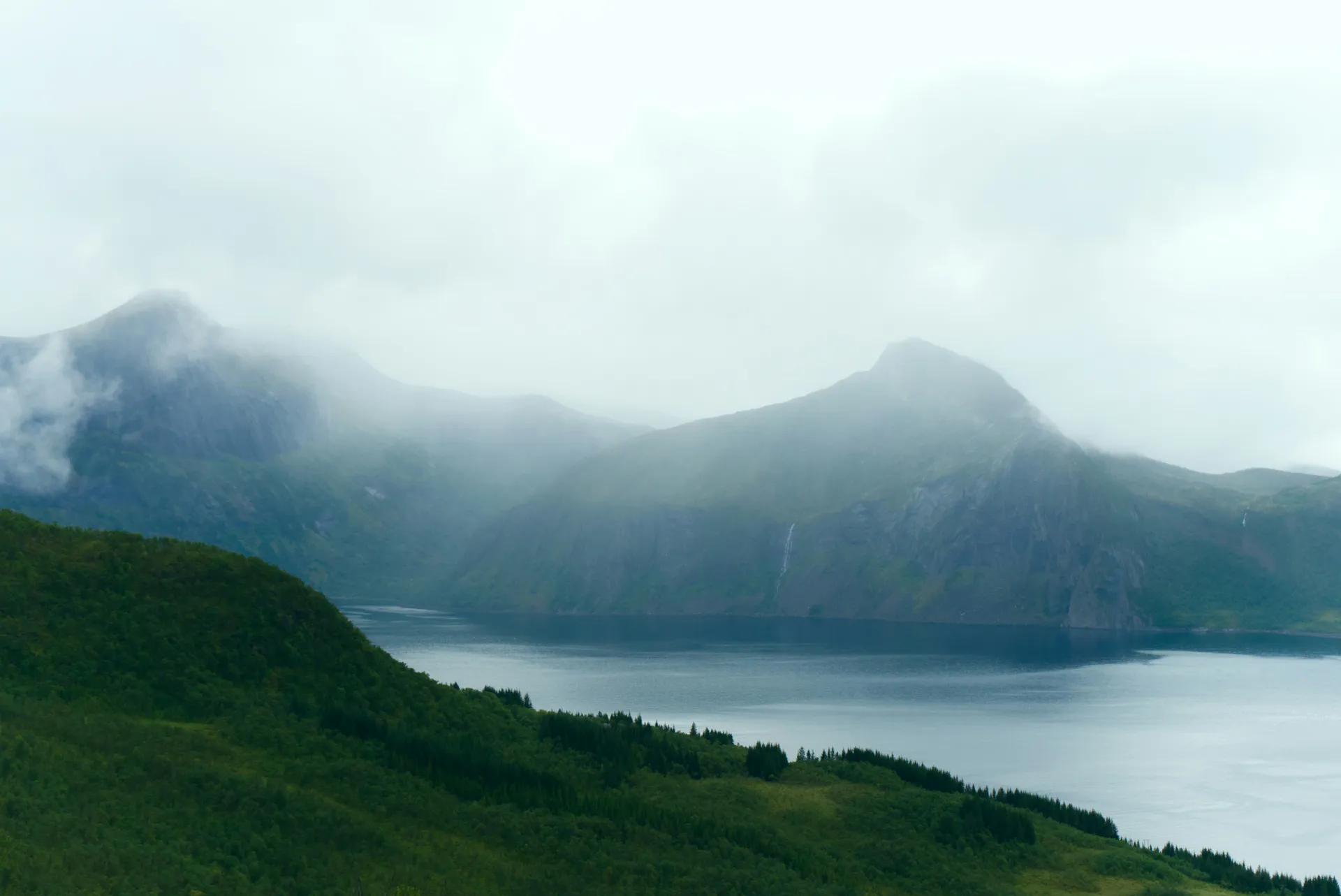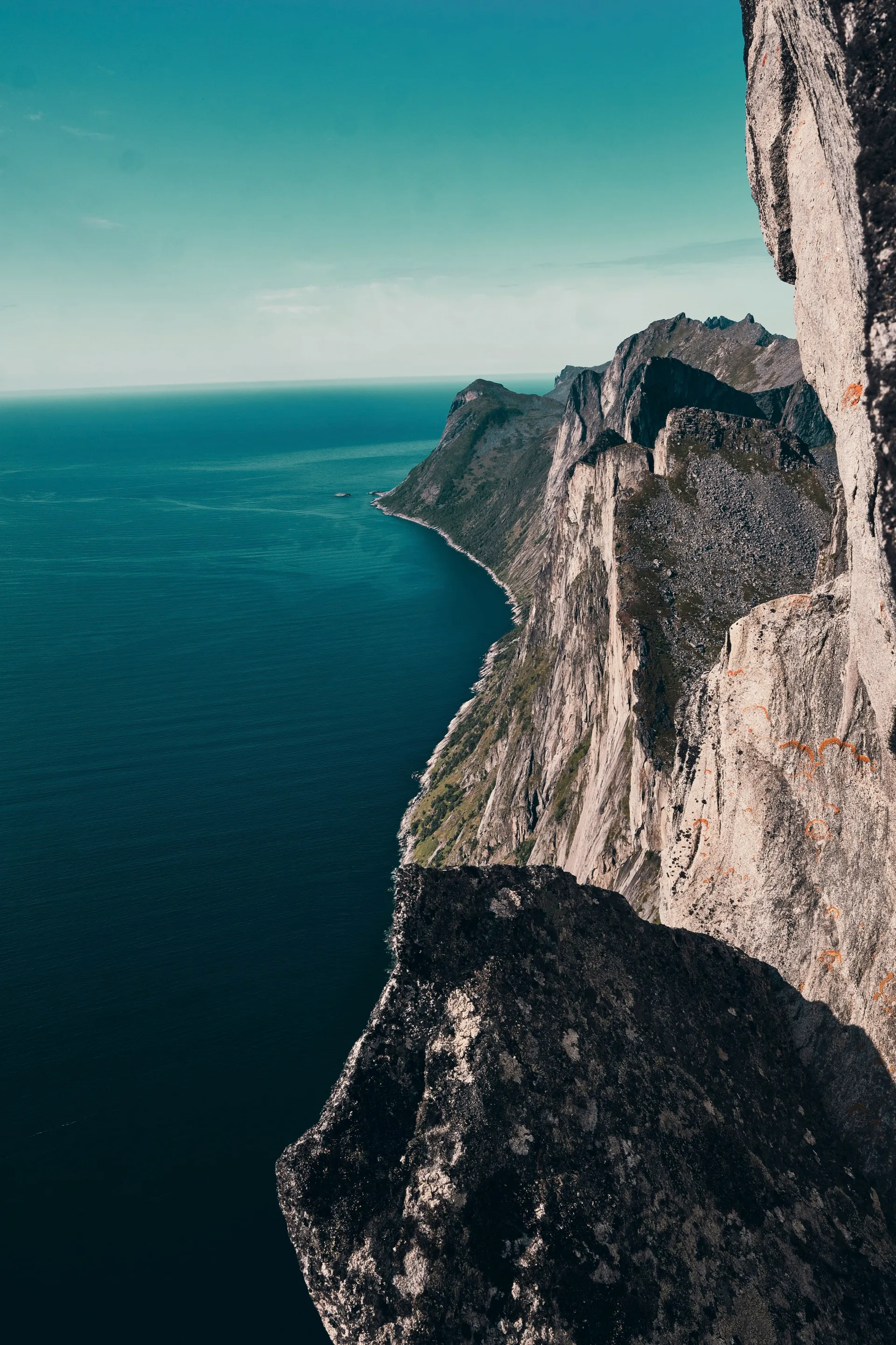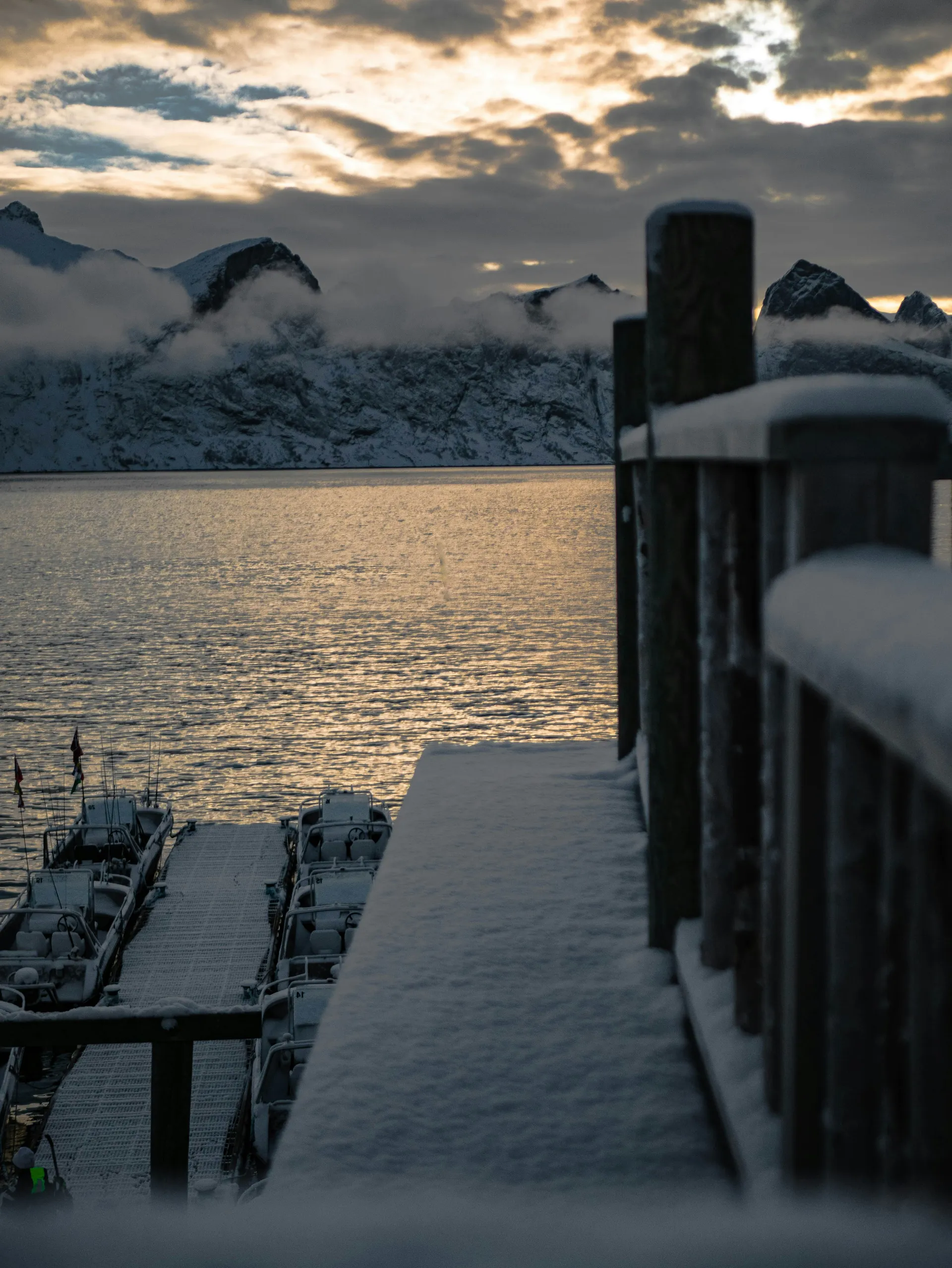
Senja is Norway's second-largest island, yet it remains one of the country's most closely held secrets — a place where the landscapes that made Lofoten famous occur in equal grandeur but without the crowds that have transformed those islands into a Nordic pilgrimage site. Rising from the Norwegian Sea at 69 degrees north latitude, well above the Arctic Circle, Senja presents a split personality of mesmerizing contrast: the western coast, known as the 'Devil's Jaw,' erupts in a serrated wall of granite peaks plunging directly into the ocean, while the eastern shore unfolds in gentle farmland, sheltered fjords, and birch forests that seem to belong to an entirely different island.
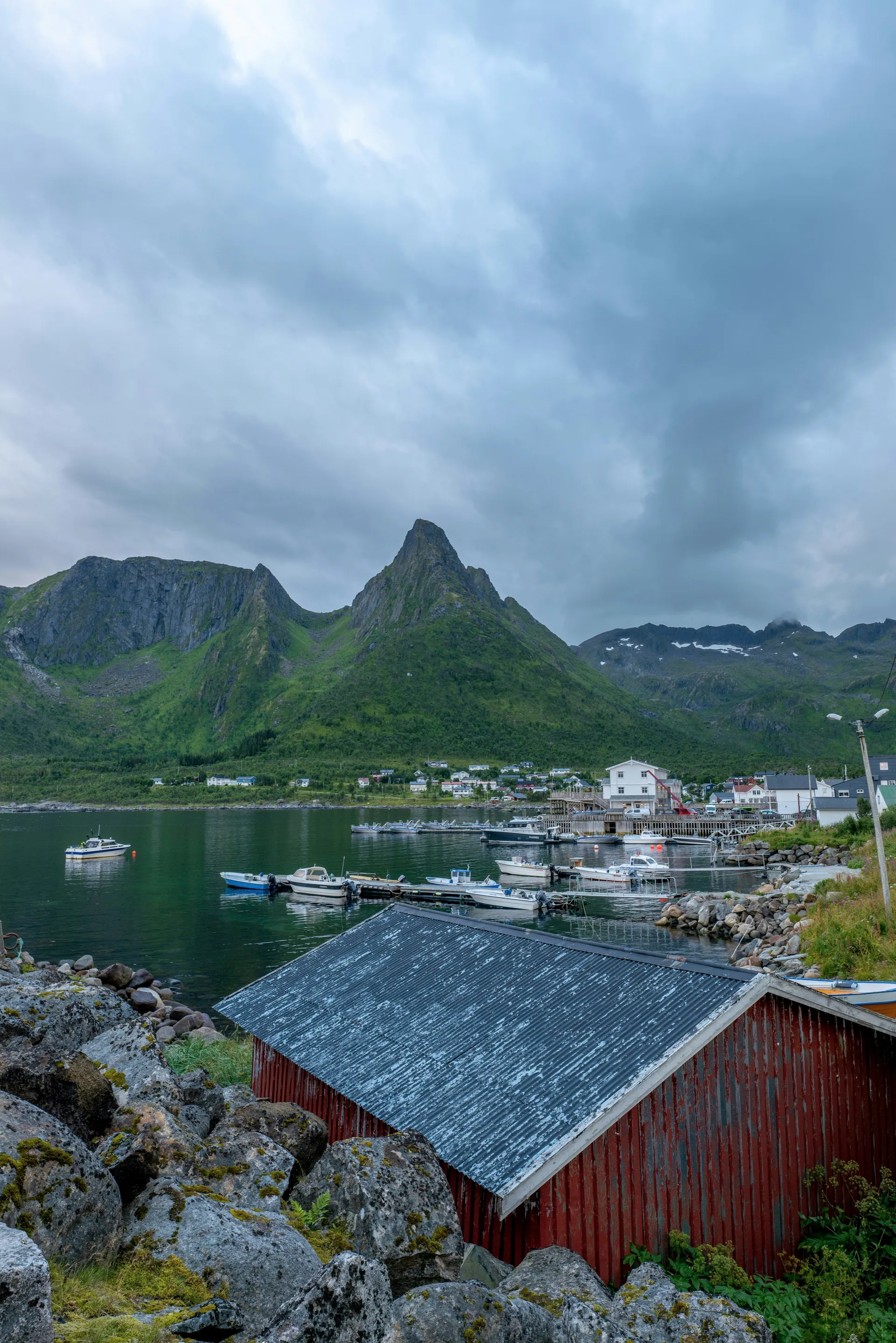
The character of Senja is defined by its relationship with the elements. Fishing villages — Hamn, Mefjordvær, Husøy — cling to the narrow strips of habitable land between mountain and sea, their painted wooden houses and drying racks for cod testifying to centuries of Arctic maritime life. The Bergsfjord road, which threads between the peaks of the Devil's Jaw, is among the most spectacular coastal drives in Scandinavia, each curve revealing a new composition of dark rock, white surf, and sky in endless permutation. In winter, the northern lights dance above these peaks with an intensity amplified by the absence of light pollution; in summer, the midnight sun bathes the landscape in a golden luminosity that erases the boundary between day and night.
Life on Senja revolves around the sea's harvest. The Arctic cod — skrei — arrives each winter in vast schools migrating from the Barents Sea to spawn along the Norwegian coast, and Senja's fishermen have pursued this annual bounty for a thousand years. The dried and salted stockfish produced here has been traded since the Viking age and remains a culinary export of considerable prestige. Fresh king crab, harvested from the cold, clean waters surrounding the island, is served simply — steamed and split, with melted butter and lemon — at restaurants and fish camps where the view from the table includes the very waters from which the meal was drawn. Cloudberries, gathered from the mountain plateaus in late summer, provide a tart, honeyed accompaniment to local cream desserts.
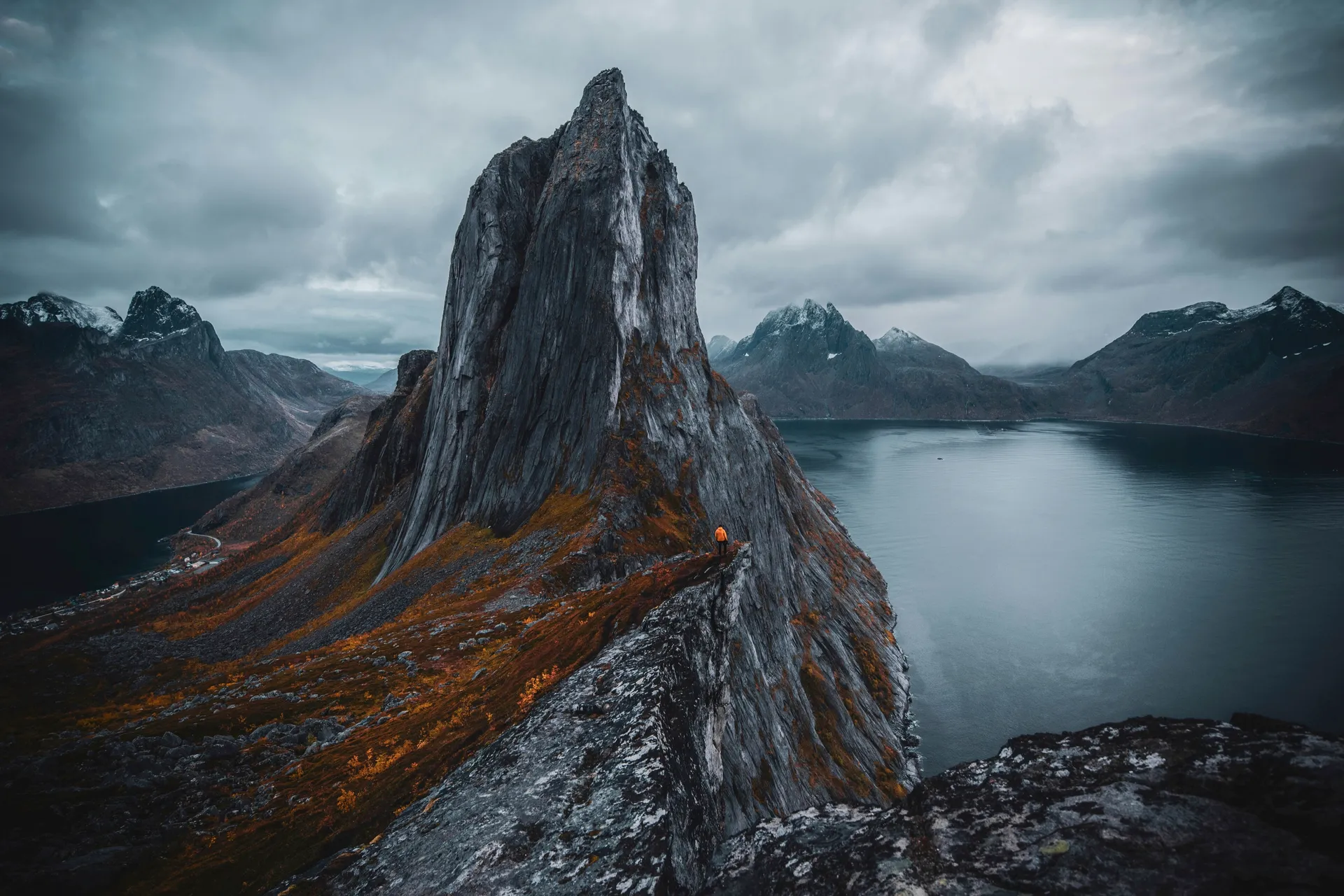
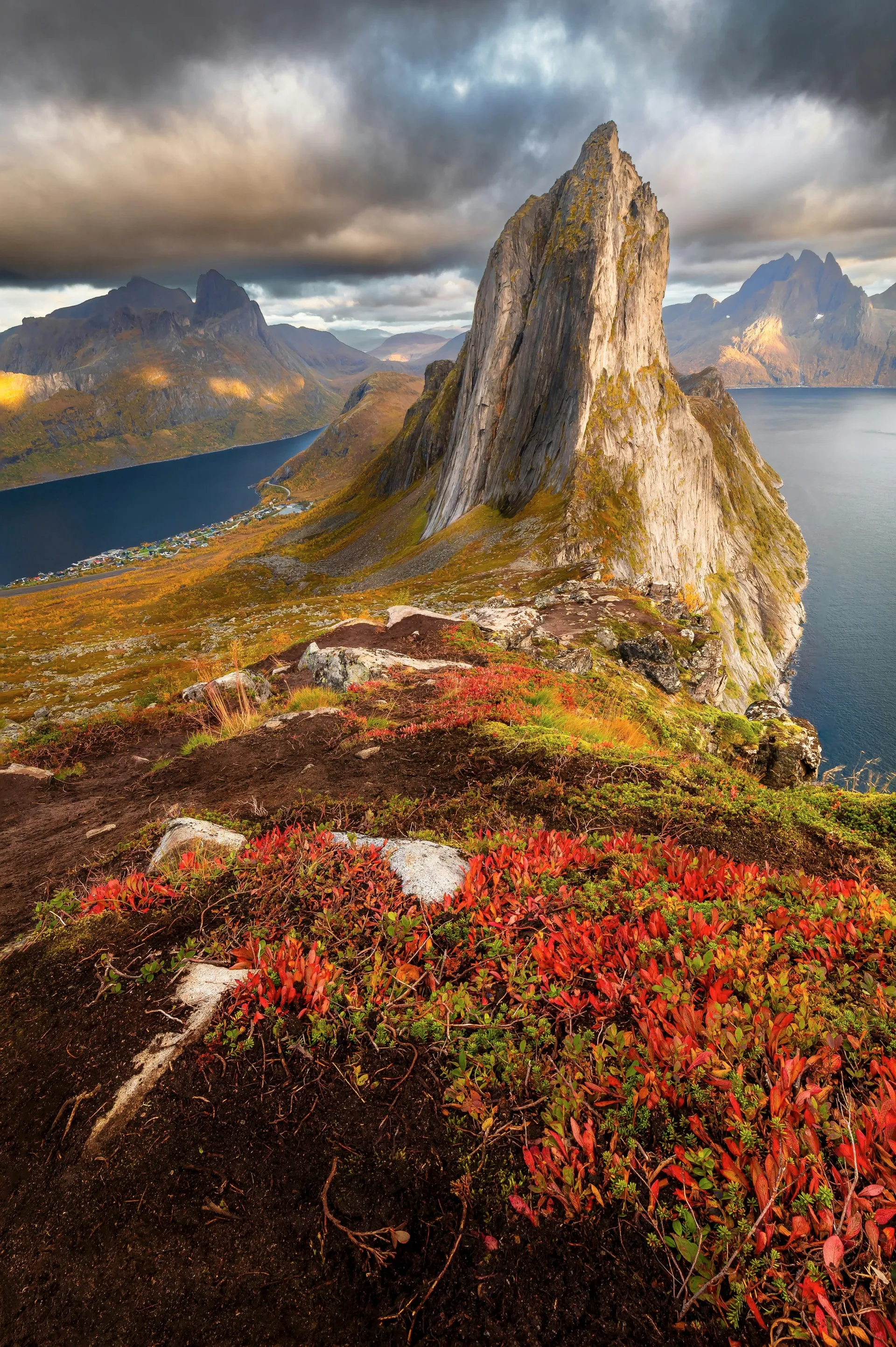
The island's interior offers hiking experiences that range from gentle coastal paths to challenging mountain ascents. The Segla peak hike, a moderate three-hour round trip, rewards climbers with a summit panorama that encompasses the entire Devil's Jaw coastline, offshore islands, and the open Arctic Ocean — it has been called one of Norway's finest viewpoints, and the claim is difficult to dispute. The Ånderdalen National Park, Norway's northernmost mainland national park, protects old-growth birch and pine forests, marshlands, and populations of moose, golden eagle, and white-tailed eagle. Sea kayaking through the fjords offers intimate encounters with the coastline impossible from any other vantage point.
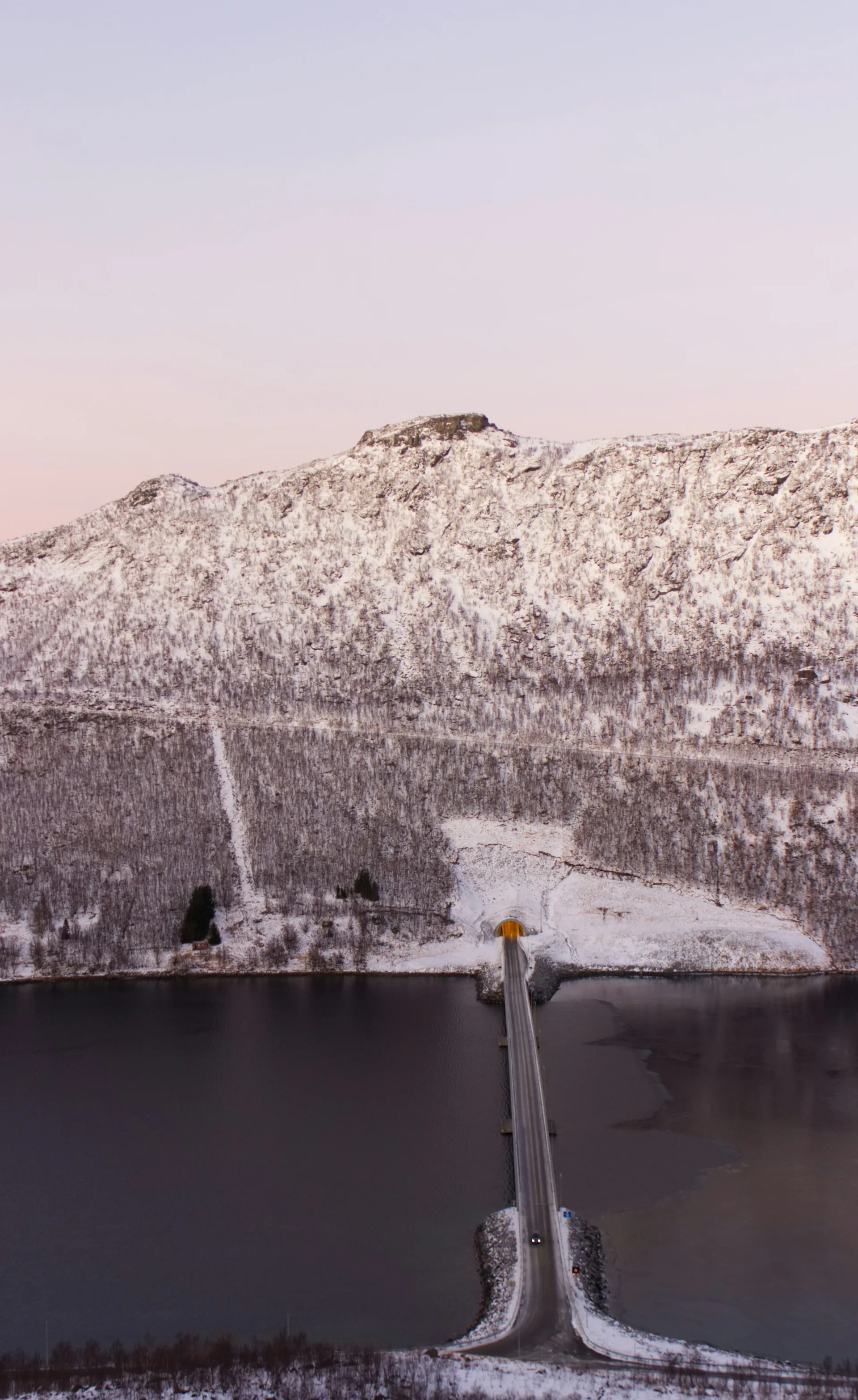
HX Expeditions and Hurtigruten include Senja on their Norwegian coastal and Arctic expedition itineraries, often as part of longer voyages that traverse the length of Norway's dramatic western seaboard. Ships typically dock at Finnsnes, the administrative center on the mainland connected to Senja by bridge, or at smaller ports directly on the island depending on vessel size. The compact distances on Senja — the island is approximately sixty kilometers long — make it possible to experience both the dramatic western coast and the gentler eastern shore in a single day. The season extends from May through September for summer visitors, with the midnight sun visible from late May through late July, while September through March offers the possibility of northern lights and the stark beauty of the Arctic winter.