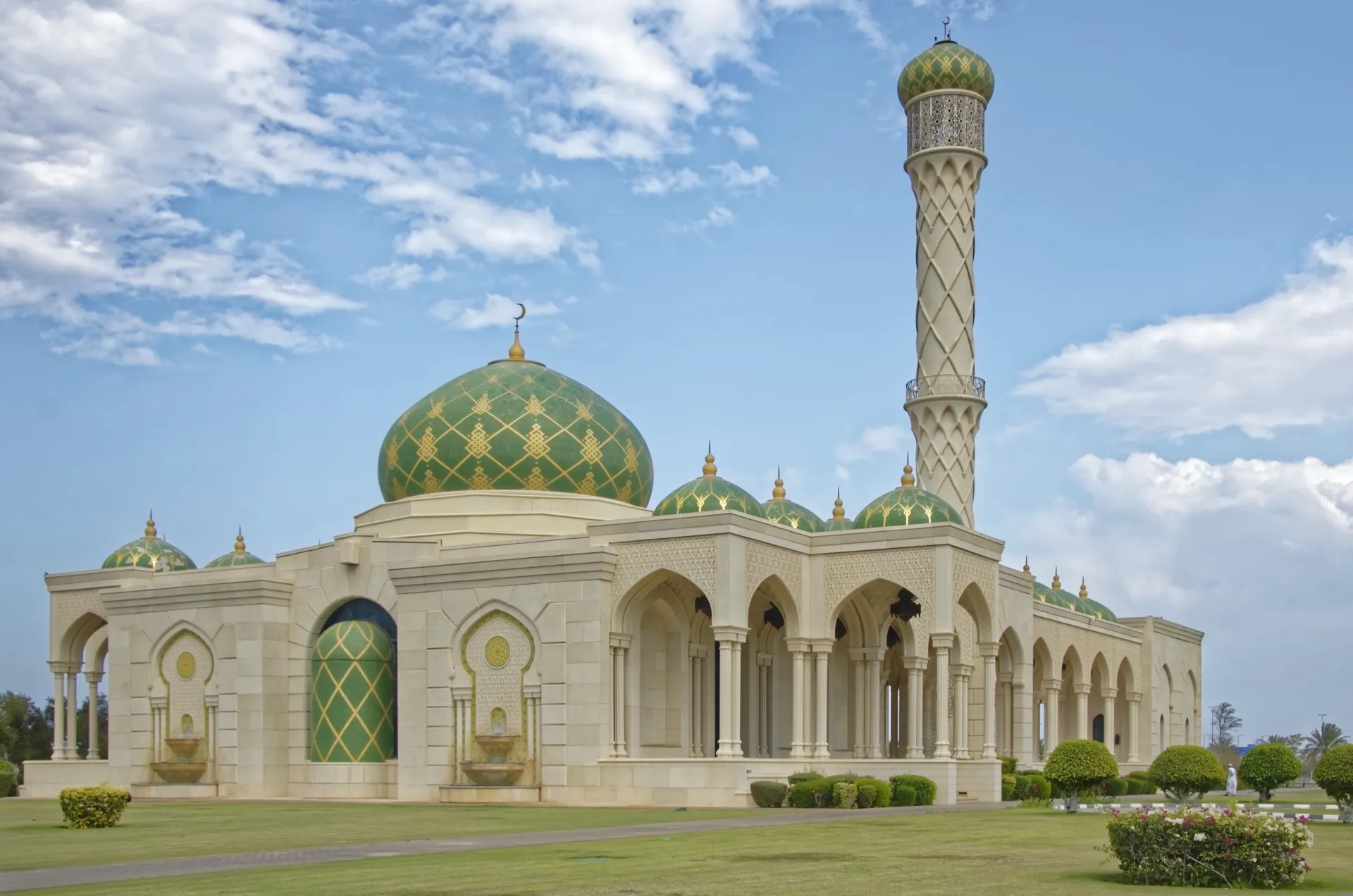
Port Qaboos — named for the late Sultan Qaboos bin Said, who transformed Oman from medieval isolation to modern prosperity during his fifty-year reign — is the principal port facility in Muscat, the capital of Oman, set against a backdrop of arid, honey-colored mountains that plunge into the turquoise waters of the Gulf of Oman. Muscat is a city that defies the stereotypes of the Persian Gulf: where Dubai and Abu Dhabi chose vertical spectacle and relentless modernity, Muscat opted for horizontal elegance and careful preservation. No building in the city exceeds the height of the Sultan Qaboos Grand Mosque's minaret, and the result is a capital that breathes — its whitewashed buildings, palm-lined corniche, and mountain-framed harbor creating a sense of space and dignity rare in the modern Gulf.
The character of Muscat unfolds along a coast of extraordinary beauty. The old city — Muscat proper — occupies a narrow inlet between volcanic headlands, its sixteenth-century Portuguese forts (Al Jalali and Al Mirani) guarding the entrance to the harbor where Sultan Qaboos's royal yacht sometimes rests at anchor. The Mutrah Corniche, a curving waterfront promenade, connects the old harbor to the Mutrah Souq — one of the most atmospheric traditional markets remaining in the Arabian Peninsula, its labyrinthine alleys hung with Omani silver jewelry, frankincense, textiles, and the curved khanjar daggers that are the national symbol. The Sultan Qaboos Grand Mosque, a masterpiece of contemporary Islamic architecture completed in 2001, accommodates 20,000 worshippers beneath a central dome that soars 50 meters and a prayer carpet — hand-woven by 600 Iranian artisans over four years — that is one of the largest in the world.
Omani cuisine is the most subtle and least known of the Gulf culinary traditions. Shuwa — a whole lamb or goat seasoned with spices and herbs, wrapped in banana and palm leaves, and slow-cooked in an underground pit for up to forty-eight hours — is the national ceremonial dish, typically prepared for Eid celebrations. Harees (porridge of wheat and meat), machboos (spiced rice with meat or fish), and mishkak (marinated meat skewers grilled over charcoal) represent the everyday repertoire. The Omani halwa — a dense, sweet confection of starch, sugar, rosewater, and saffron, served with Omani coffee (qahwa) in tiny handleless cups — is the universal gesture of hospitality. For seafood, the fish markets of Mutrah harbor offer the Gulf of Oman's catch: hammour, kingfish, lobster, and the large prawns that are grilled on every waterfront terrace.
Beyond the capital, Oman's landscape offers experiences of genuine wonder. The Hajar Mountains, rising to over 3,000 meters behind Muscat, harbor deep wadis — seasonal river canyons — whose turquoise pools invite swimming amid landscapes of raw geological beauty. Wadi Shab and Wadi Bani Khalid are the most accessible, their palm-shaded pools and narrow gorges providing dramatic contrast to the arid coast. The Wahiba Sands (Sharqiya Sands), a vast dune desert three hours southeast of Muscat, offer the classic Arabian desert experience — camel rides, dune driving, and Bedouin-camp hospitality beneath a canopy of stars unpolluted by artificial light. The ancient city of Nizwa, the former capital, centers on a seventeenth-century fort and hosts a Friday cattle market that has operated continuously for centuries.
Port Qaboos receives cruise ships in the heart of Muscat, within walking distance of the Mutrah Souq and Corniche. The city is also served by Muscat International Airport with connections to major hubs worldwide. The optimal visiting season is October through April, when temperatures are pleasant (20–30°C) and rainfall is virtually nonexistent. Summer (May–September) brings extreme heat exceeding 45°C that makes outdoor activity uncomfortable. Oman's reputation as the safest and most welcoming country in the Middle East is well-earned — dress modestly (shoulders and knees covered) as a gesture of respect, and expect to be treated with the warm, dignified hospitality that defines Omani culture.

