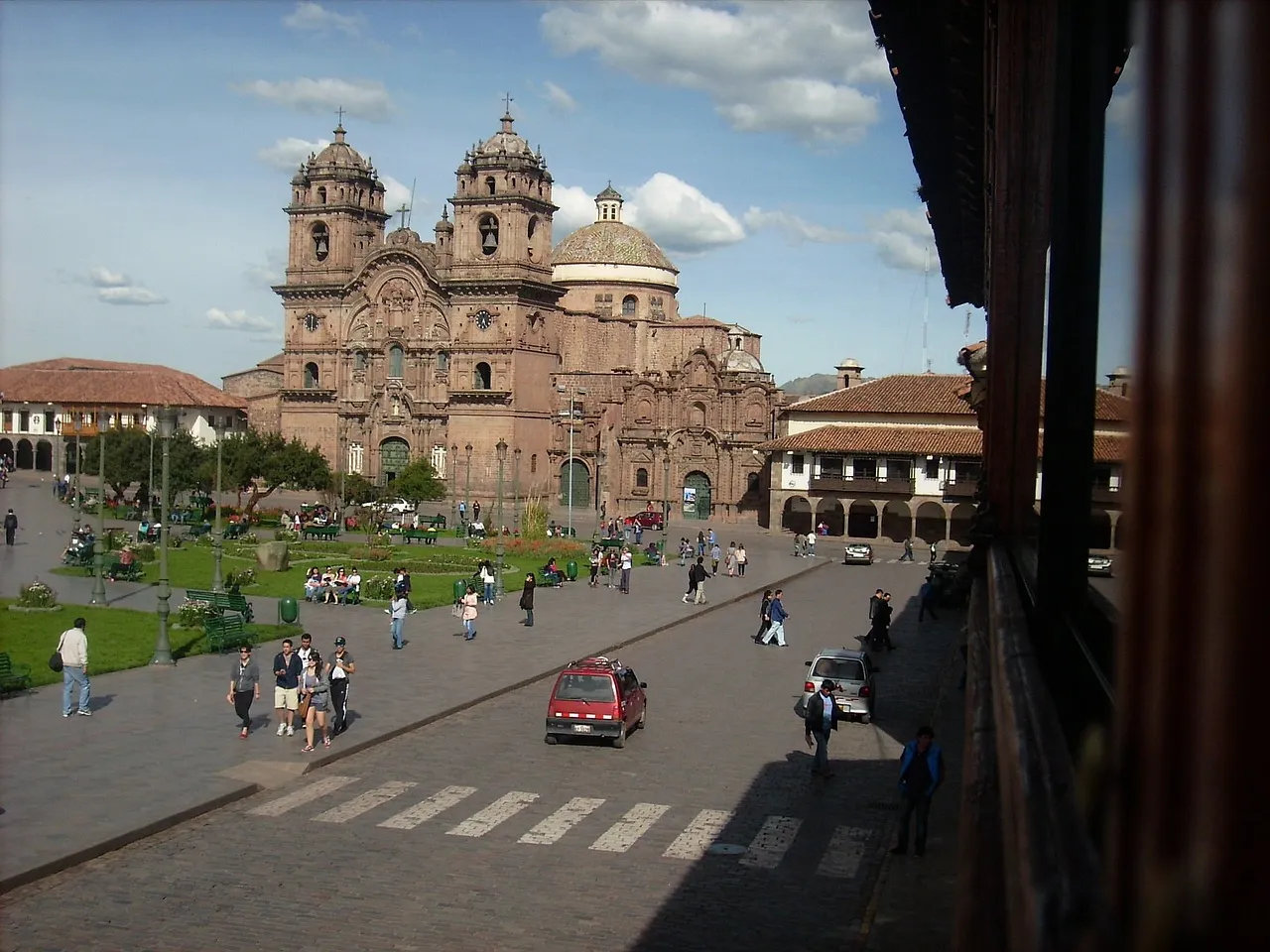
Cusco sits at 3,400 metres in the Peruvian Andes, its terracotta rooftops and Inca walls cupped in a valley that the Quechua people called the "navel of the world." It is a title the city has earned. For three centuries, Cusco was the capital of Tawantinsuyu — the Inca Empire — a dominion that stretched from present-day Colombia to Chile and governed ten million subjects with a precision that awed the Spanish conquistadors who dismantled it. When Francisco Pizarro's men arrived in 1533, they found a city of astonishing sophistication: palaces clad in sheets of gold, a fortress of megalithic stone blocks fitted without mortar, and an agricultural system of terraced mountainsides that fed an empire. They promptly demolished the temples and built churches on their foundations — and it is this layered archaeology, Inca masonry supporting colonial baroque, that gives Cusco its extraordinary visual and emotional power.
The Plaza de Armas, Cusco's central square, encapsulates the city's dual identity. The Cathedral, begun in 1559, rises on the foundations of the Inca palace of Viracocha, its interior a treasury of colonial painting — including a Last Supper in which Christ and his disciples dine on cuy (guinea pig) and chicha (corn beer). Across the square, the Church of the Compañía de Jesús, built on the site of the Inca palace of Huayna Capac, rivals the Cathedral in baroque exuberance. Beneath both, the perfectly fitted Inca stonework — massive polygonal blocks joined without mortar so precisely that a knife blade cannot be inserted between them — stands as an unspoken rebuke to the conquerors who tried to erase it.
Cusco's culinary scene has undergone a revolution. The city is now recognised as the gastronomic capital of Peru alongside Lima, and its restaurants draw from both Andean tradition and contemporary innovation. Cuy, roasted whole and served with potatoes and ají sauce, remains the ceremonial centrepiece. Alpaca steak, lean and flavourful, appears on virtually every restaurant menu, while quinoa soup and choclo con queso (giant Andean corn with fresh cheese) are the comfort foods of the highlands. The San Pedro Market, a vast covered bazaar near the cathedral, offers the most authentic culinary immersion: stalls selling fresh juices, empanadas, chicharrones, and the extraordinary variety of Peruvian potatoes — over 3,000 varieties cultivated in these mountains alone.
Cusco is, of course, the gateway to Machu Picchu — the fifteenth-century Inca citadel that Hiram Bingham brought to global attention in 1911 and that continues to astound every visitor who emerges from the cloud forest to see its terraces, temples, and astronomical observatories arranged against a backdrop of jungle-clad peaks. The Sacred Valley of the Incas, stretching along the Urubamba River between Cusco and Machu Picchu, is studded with Inca ruins, traditional weaving communities, and increasingly sophisticated hotels and restaurants. Sacsayhuamán, the colossal fortress above Cusco whose zigzag walls of stones weighing up to 200 tonnes remain one of archaeology's greatest mysteries, is accessible on foot from the city centre.
Cusco is included in itineraries by HX Expeditions, Lindblad Expeditions, Tauck, and Uniworld River Cruises, typically as a pre- or post-cruise extension linked to Peruvian Amazon or Pacific coast voyages. The city's altitude requires acclimatisation — coca tea, sold everywhere, is the traditional remedy for soroche (altitude sickness). The best time to visit is May through October, the dry season, when clear Andean skies offer the most spectacular views of the surrounding peaks and the most reliable trekking conditions. Cusco is not merely a waypoint to Machu Picchu — it is a destination of immense historical, cultural, and culinary significance in its own right, and it deserves every hour you can give it.

