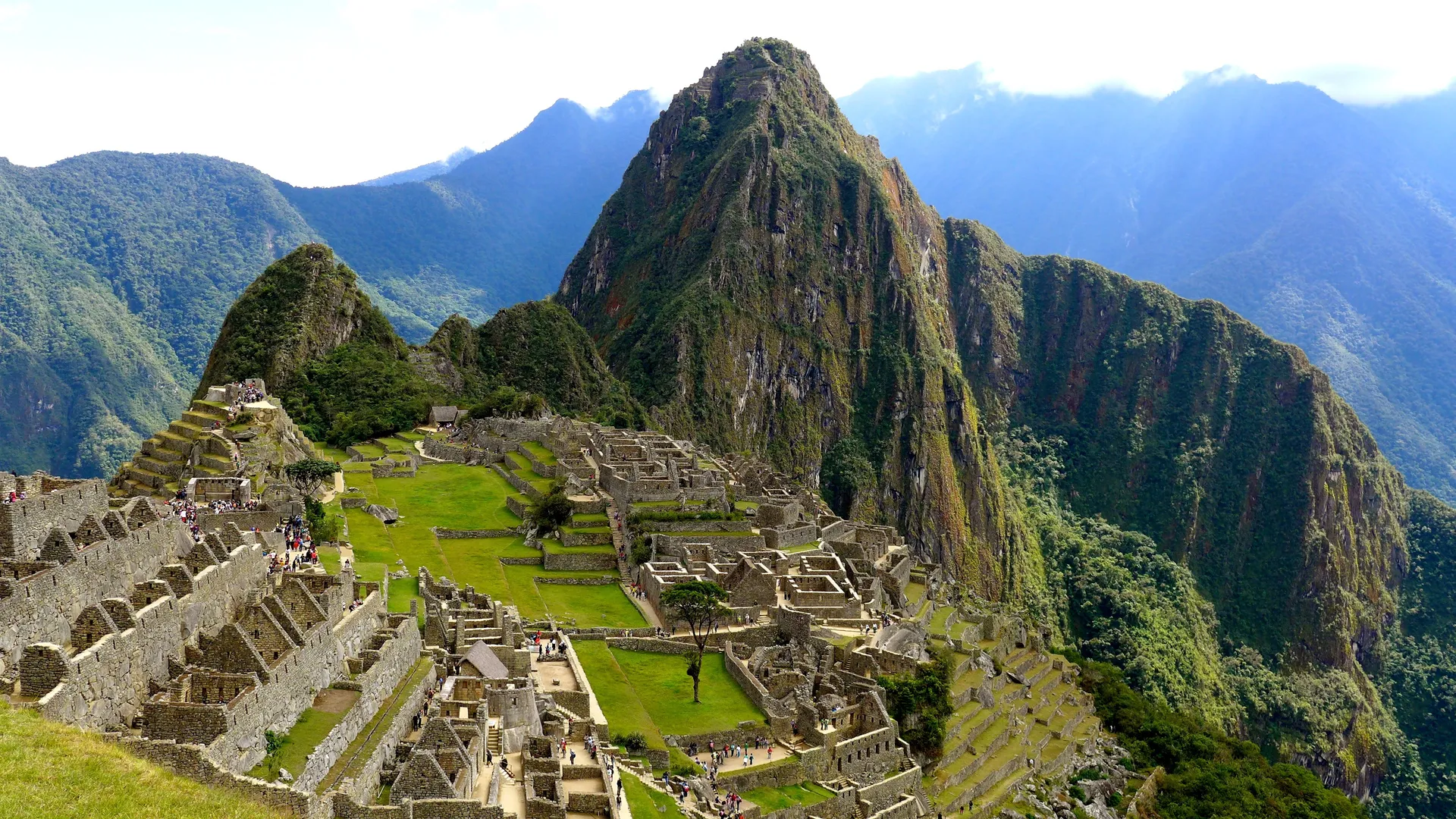
Perched at nearly 2,430 metres above sea level on a narrow ridge between the peaks of Huayna Picchu and Machu Picchu mountain, this extraordinary citadel was constructed around 1450 under the reign of Inca emperor Pachacuti Inca Yupanqui as a royal estate and sacred ceremonial centre. Abandoned during the Spanish conquest yet never revealed to the colonisers, it remained cloaked in cloud forest until American historian Hiram Bingham III brought it to international attention in 1911. Today, its terraced plazas, the precisely carved Intihuatana stone, and the Temple of the Sun stand as testament to an empire that engineered perfection without wheel, iron tool, or written word.
The journey to Machu Picchu is itself a masterclass in theatrical revelation. Most travellers arrive via the town of Aguas Calientes — known officially as Machu Picchu Pueblo — a slender settlement threaded along the Urubamba River where the air carries the mineral scent of thermal springs and eucalyptus. The switchback bus ride from town to the sanctuary gate builds anticipation with each hairpin turn, until the ruins materialise through shifting veils of mist like an apparition conjured from the mountain itself. Whether you arrive at first light, when condors trace lazy circles above the Eastern Cordillera, or in the amber glow of late afternoon, the citadel commands a silence that feels less like tourism and more like pilgrimage.
The cuisine of the Sacred Valley rewards the curious palate with ingredients cultivated at altitude for millennia. In Cusco and Ollantaytambo, seek out rocoto relleno — fiery rocoto peppers stuffed with seasoned beef, olives, and queso fresco, baked until blistered — alongside cuy al horno, roasted guinea pig prepared with huacatay, the aromatic black mint native to the Andes. At finer establishments, chefs elevate ancestral staples: quinoa risotto studded with habas (Andean broad beans), alpaca tenderloin with a muña herb reduction, and chicha morada, a jewel-toned beverage brewed from purple maize, cinnamon, and clove that has graced Peruvian tables since pre-Columbian times. For those who wish to linger, a pisco sour crafted with fresh-pressed limón at a terrace overlooking the Plaza de Armas is among South America's finest rituals of the golden hour.
The greater region surrounding Machu Picchu unfolds into landscapes of staggering diversity. South-east towards Puno, the shores of Lake Titicaca — the world's highest navigable lake at 3,812 metres — harbour the Uros floating islands and the weaving traditions of Taquile, where textile artistry has been recognised by UNESCO as Intangible Cultural Heritage. In the opposite direction, the frontier town of Puerto Maldonado serves as the gateway to Tambopata National Reserve, a biosphere of surpassing richness where macaw clay licks, giant otters, and jaguar sightings draw naturalists from across the globe. Those whose itineraries trace Peru's Pacific coast will find the historic port of Callao reinvented as a canvas of street art and cevicherías, while the storied plazas near General San Martín in Lima echo with the revolutionary fervour that forged a nation.
Reaching these Andean heights by water may seem improbable, yet several distinguished cruise operators have woven Machu Picchu into immersive South American voyages that marry coastal exploration with interior excursions of remarkable depth. Lindblad Expeditions, in partnership with National Geographic, offers expert-led overland extensions from Lima or Callao that pair Pacific wildlife encounters with multi-day Sacred Valley immersions. HX Expeditions incorporates Peruvian port calls into broader expedition itineraries along the continent's western seaboard, while Tauck crafts seamlessly choreographed shore programmes that whisk guests from ship to sanctuary with the polished ease for which the company is renowned. Avalon Waterways, celebrated for its panoramic river cruising, extends its South American portfolio with land journeys that complement waterborne passages, ensuring that Machu Picchu — despite its mountain fortress remoteness — remains gloriously within reach of those who travel by sea.

