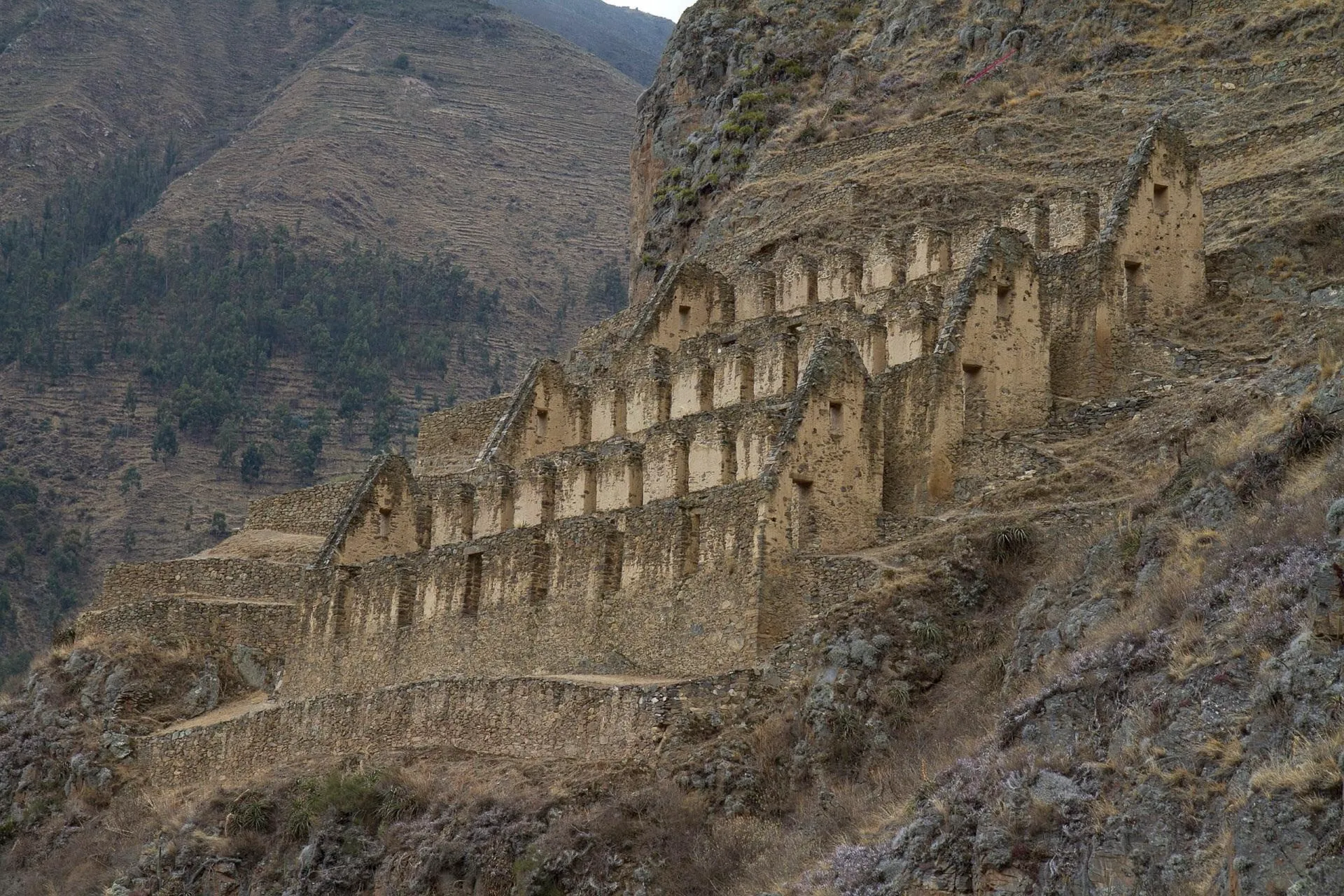
At the northern end of Peru's Sacred Valley, where the Urubamba River cuts through a gorge guarded by Inca fortress walls that still bear the marks of Spanish cannonballs, Ollantaytambo is the last living Inca town — a settlement whose residents still inhabit houses built on original 15th-century stone foundations, draw water from channels engineered by Inca hydraulic specialists, and navigate streets that follow the precise grid laid out by Inca urban planners over 500 years ago. This is not a ruin; it is a continuity, and walking through Ollantaytambo's narrow lanes of rough-hewn stone is as close as one can come to experiencing daily life in the Inca Empire.
The fortress of Ollantaytambo, rising in massive agricultural terraces above the town, was the site of one of the few Inca military victories against the Spanish conquistadors. In 1537, the rebel Inca leader Manco Inca Yupanqui ambushed Hernando Pizarro's cavalry from the terraces above, flooding the plains below by diverting the Patacancha River and forcing the Spaniards into a chaotic retreat. The Temple of the Sun at the summit, constructed from enormous rose-coloured porphyry blocks quarried from a mountainside six kilometres away and transported across the valley floor by methods that remain debated, displays a sophistication of stonework that rivals Machu Picchu — walls fitted so precisely that a razor blade cannot be inserted between the joints.
The culinary traditions of the Sacred Valley blend ancient Andean ingredients with colonial-era introductions to create a cuisine of surprising depth. Cuy — roasted guinea pig, a ceremonial food in Andean culture for over 5,000 years — is served whole at festivals and restaurants throughout Ollantaytambo, its crispy skin and gamey flesh an acquired taste that rewards the adventurous. Quinoa soup, prepared with herbs gathered from the valley slopes, and choclo — enormous kernels of Andean corn served with fresh cheese — are more immediately accessible pleasures. The town's small restaurants, many run from family kitchens opening onto the main plaza, serve chicha morada, a deeply purple drink made from boiled purple corn, spiced with cinnamon and clove.
The Sacred Valley radiating from Ollantaytambo offers some of South America's most compelling excursions. The train to Machu Picchu departs from Ollantaytambo's station, winding along the Urubamba gorge through cloud forest to the famous citadel — and many seasoned travellers argue that Ollantaytambo itself, with its living Inca streetscape and the dramatic ruin above, is the more authentic and less overwhelmed experience. The circular agricultural terraces of Moray, believed to have been an Inca crop experimentation laboratory where different microclimates at each level allowed the testing of growing conditions, lie a short drive south. The salt pans of Maras, where thousands of shallow evaporation pools cascade down a mountainside in a patchwork of pink and white, have been producing salt since pre-Inca times.
Ollantaytambo is accessible on itineraries operated by HX Expeditions and Uniworld River Cruises as part of Peruvian overland extensions. The dry season from May through October is ideal for visiting, with clear skies revealing the snow-capped peaks of the Urubamba range and comfortable daytime temperatures in the low 20s Celsius, though the valley's elevation of 2,800 metres means evenings are cool and altitude acclimatisation is advisable.

