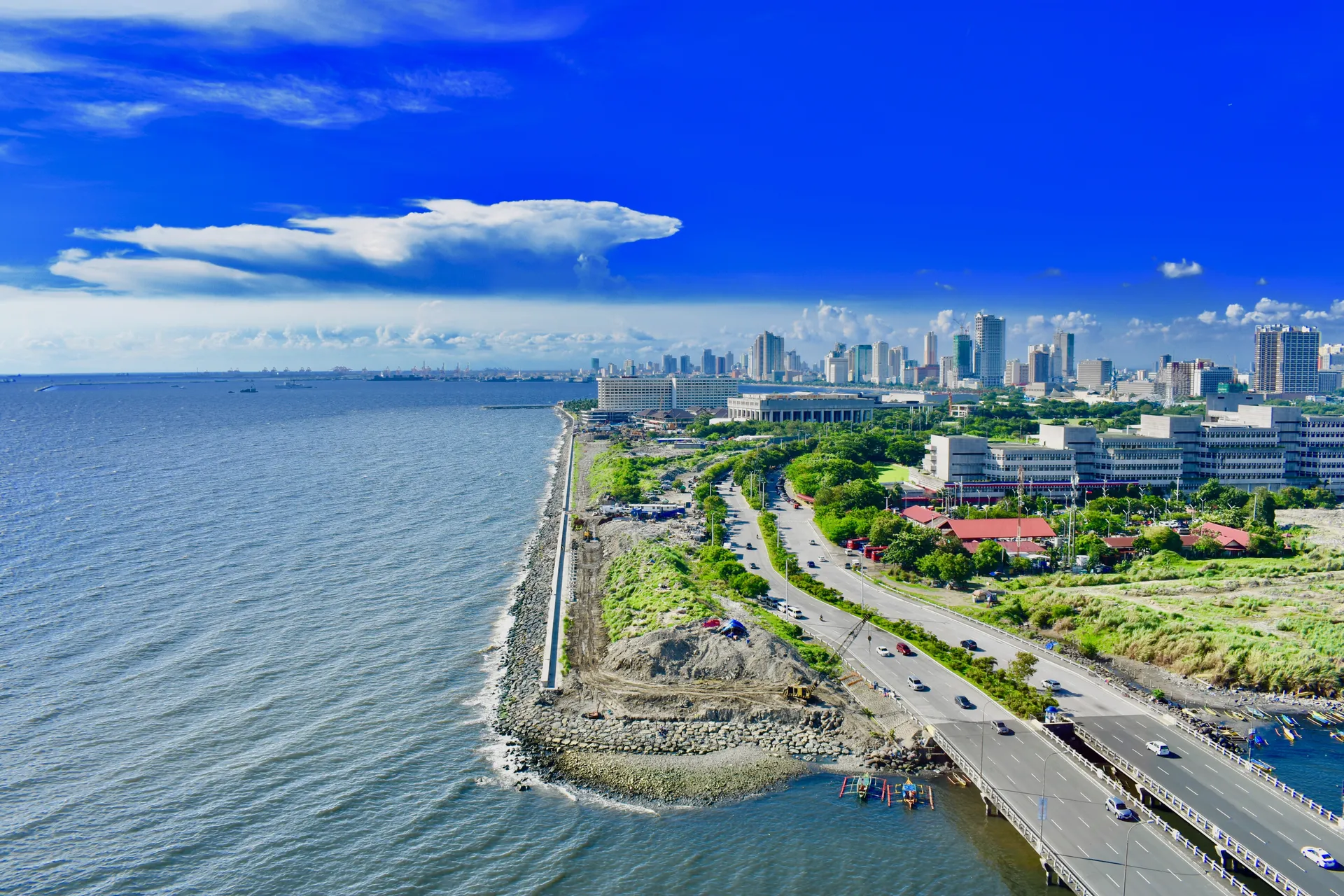
Manila is the city that refuses to be reduced to a single narrative — sprawling, chaotic, historically layered, and possessed of a cultural energy that exhausts visitors before it enchants them, which it inevitably does. The capital of the Philippines, with a metropolitan population exceeding thirteen million, presents one of Asia's most complex urban experiences.
Intramuros — the Walled City — provides the historical anchor. Built by the Spanish in the 1570s and substantially destroyed during the Battle of Manila in 1945, this fortified district has been partially restored to evoke the colonial city that was once called the 'Pearl of the Orient.' San Agustín Church, a UNESCO World Heritage Site and the oldest stone church in the Philippines, survived earthquakes, typhoons, and war to preserve its Baroque interior, while Fort Santiago — where the national hero José Rizal was imprisoned before his execution in 1896 — serves as both historical museum and pilgrimage site for Filipino national identity.
Modern Manila expresses itself with equal intensity. The Ayala Museum in Makati presents Philippine art and history with world-class curation, while the National Museum complex in Ermita houses the Spoliarium — Juan Luna's massive 1884 painting that galvanized Filipino nationalism — alongside natural history and anthropology collections that document the archipelago's extraordinary biodiversity and cultural diversity.
Azamara, Cunard, Holland America Line, and MSC Cruises dock at Manila's port facilities, from which the city's dining scene — one of Asia's most underrated — awaits exploration. Filipino cuisine, long overshadowed by its Thai, Vietnamese, and Japanese neighbors, is experiencing a global moment: adobo (braised meat in vinegar and soy), sinigang (tamarind soup), and lechon (whole roasted pig) represent a flavor profile that balances sour, savory, and sweet with distinctive Filipino logic.
November through February provides the most comfortable weather, avoiding both the extreme heat of April-May and the typhoon season of June-October. Manila rewards the traveler who approaches it without preset expectations — a city whose beauty is embedded in its contradictions, whose history encompasses both colonial tragedy and revolutionary triumph, and whose people practice a hospitality so natural it transcends the concept of tourism.

