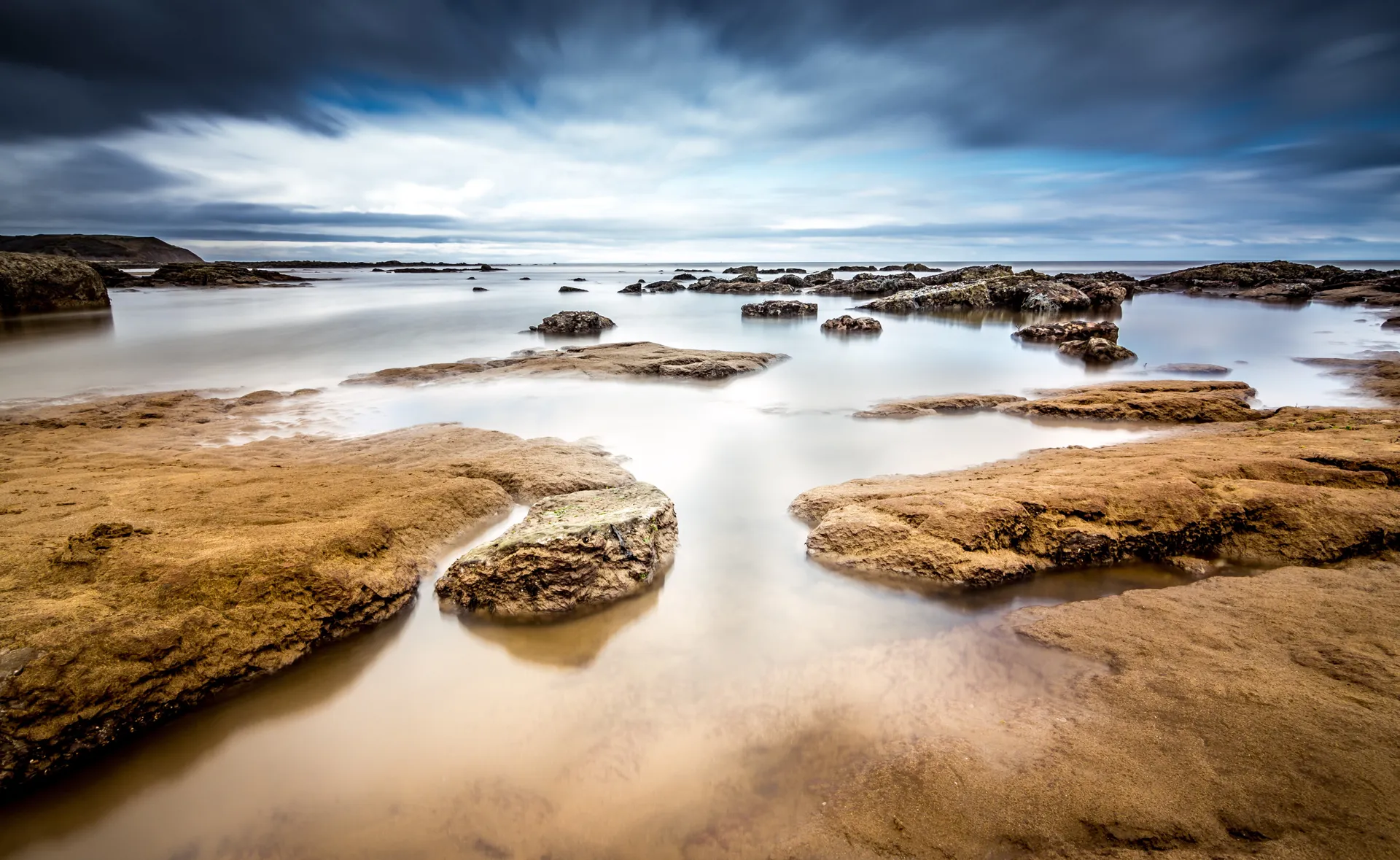
Ducie Island is one of the most remote places on Earth — an uninhabited raised coral atoll in the Pitcairn Islands group, lying 472 kilometers east of Pitcairn Island itself and over 5,000 kilometers from any continent. The atoll measures approximately 2.4 kilometers at its widest, enclosing a shallow lagoon accessed by a single narrow passage, and its total land area — distributed among several low-lying islets — is barely 0.7 square kilometers. No one lives here. No one ever has, permanently. The islets support no trees, no freshwater, and no shelter from the Pacific storms that sweep across the atoll unimpeded. And yet Ducie Island pulsates with life — over a million seabirds breed on its coral rubble shores, making it one of the most important seabird colonies in the southeastern Pacific.
The dominant species is Murphy's petrel, a grey-brown seabird that nests in burrows among the coral debris — Ducie supports what is believed to be the world's largest breeding colony of this species, with an estimated 250,000 pairs. Christmas shearwaters, red-footed boobies, masked boobies, and great frigatebirds add to the avian population, their combined presence creating a biological density that contrasts starkly with the atoll's geological minimalism. The frigatebirds, with their two-meter wingspans, soar above the atoll on thermals, while the boobies dive-bomb the lagoon's fish populations with explosive precision. On the ground, the petrel burrows are so densely packed that walking across the islets requires extreme care to avoid collapsing them — a concern that limits shore visits to small groups under strict supervision.
The lagoon, though small, supports a marine ecosystem of surprising richness. Coral formations grow in the clear, warm water, providing habitat for reef fish, sea cucumbers, and the giant clams that filter-feed in the shallows. Green sea turtles visit the atoll to feed on seagrass and occasionally to nest on the beaches. Sharks — blacktip reef and whitetip reef species — patrol the lagoon entrance, and the deep water beyond the outer reef supports populations of pelagic fish that attract both seabird predators and the occasional passing whale. The water clarity is exceptional — visibility exceeds thirty meters — and the reef, protected by its extreme remoteness from the pressures of human activity, is in near-pristine condition.
The human history of Ducie is sparse but notable. The atoll was discovered by Edward Edwards, captain of HMS Pandora, in 1791 while searching for the Bounty mutineers (the Pandora subsequently struck a reef on the Great Barrier Reef and sank, a separate misadventure). It was named for Baron Francis Ducie, a Fellow of the Royal Society. In more recent history, Ducie achieved unwanted fame through the research of marine biologist Jennifer Lavers, whose studies documented an extraordinary density of plastic debris on the atoll's beaches — up to 671 items per square meter — despite its extreme remoteness, making Ducie a powerful symbol of the global plastic pollution crisis. The plastic, carried by ocean currents from South America and other distant sources, accumulates on shores that have never seen a permanent human resident.
Ducie Island is accessible only by expedition cruise ship or private yacht, and landings are weather-dependent and not guaranteed. The atoll lies within the Pitcairn Islands Marine Reserve, one of the world's largest marine protected areas. Visits are extremely rare — perhaps a few hundred people visit per decade — and are conducted under strict environmental protocols. The sailing season in this part of the Pacific is most favorable from November to April, though conditions can be unpredictable at any time. For the fortunate few who reach Ducie, the experience — standing on a coral atoll barely above sea level, surrounded by a million seabirds in the middle of the world's largest ocean — is a lesson in both the resilience and the vulnerability of life on Earth.

