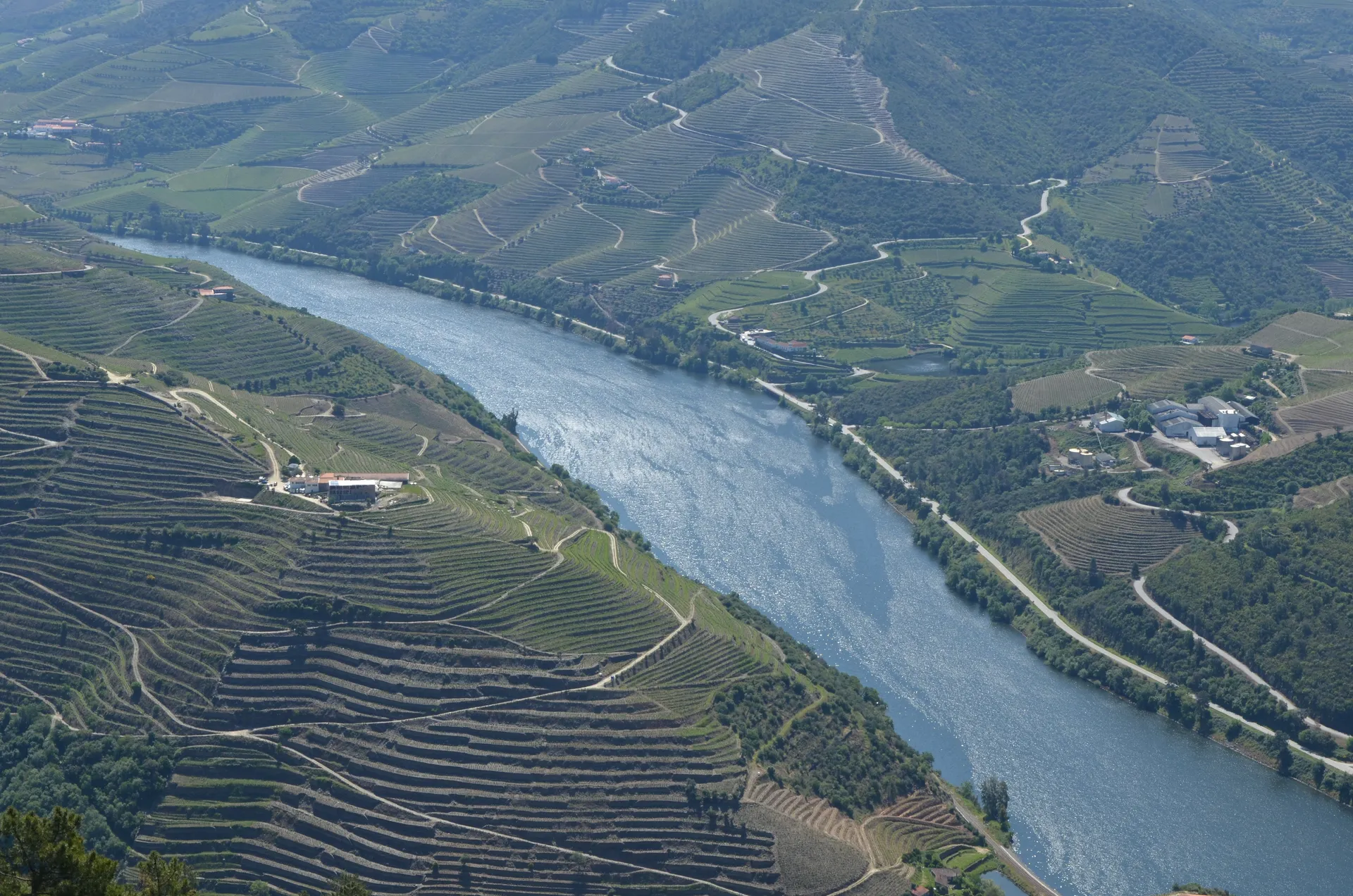
Along the northern bank of the Douro River in Portugal's Trás-os-Montes region, the small settlement of Bitetos occupies a position of quiet significance in one of the world's oldest demarcated wine regions. While the grand quintas and famous port lodges of the Douro Valley draw international attention, Bitetos represents the more intimate, unhurried side of this UNESCO World Heritage landscape — a place where terraced vineyards climb impossibly steep slopes and the rhythms of viticulture have changed little over centuries.
The Douro Valley's distinctive terraced landscape — thousands of stone-walled platforms carved into schist hillsides at angles that seem to defy agricultural logic — is the product of generations of backbreaking labor. Each terrace, locally called a socalco, was built by hand from the fractured rock of the hillside, creating the narrow planting beds where grapevines take root in the thin, mineral-rich soil. The visual effect, particularly when viewed from the river, is extraordinary: a vast geometric tapestry of stone and vine that stretches from the water's edge to the ridgeline, every terrace representing an act of faith in the land's capacity to produce wine of exceptional quality.
The wines produced in this stretch of the Douro are among Portugal's finest. While port wine remains the region's most famous product, the still wines — both red and white — have earned increasing international recognition. The indigenous grape varieties, including Touriga Nacional, Tinta Roriz, and Touriga Franca, produce reds of remarkable depth and complexity, while white varieties like Rabigato and Viosinho yield wines of surprising freshness. Small producers around Bitetos often welcome visitors for tastings in their stone-walled adega cellars, offering an authenticity that the larger commercial operations cannot replicate.
Life in Bitetos and the surrounding hamlets follows the seasonal calendar of the vine with an intensity that urban visitors find both fascinating and humbling. The vendima — grape harvest — in September and October transforms the valley into a hive of activity, with entire communities mobilizing to bring in the crop before autumn rains arrive. Traditional foot-treading of grapes in granite lagares continues at some quintas, accompanied by accordion music and communal meals that celebrate the harvest's completion.
River cruise ships navigate the Douro's series of locks to reach this stretch of the upper valley, with passengers typically tendering ashore or disembarking at nearby riverside stops. The cruising season runs from March through November, with late September and October offering the compelling combination of harvest activity, warm autumn light, and the first golden tints appearing on the vine leaves. Spring brings almond blossoms to the higher slopes, while summer delivers the intense heat that concentrates the grapes' sugars and flavors. Regardless of season, the Douro's austere beauty — its silence broken only by birdsong and the distant sound of a church bell — leaves a lasting impression.

