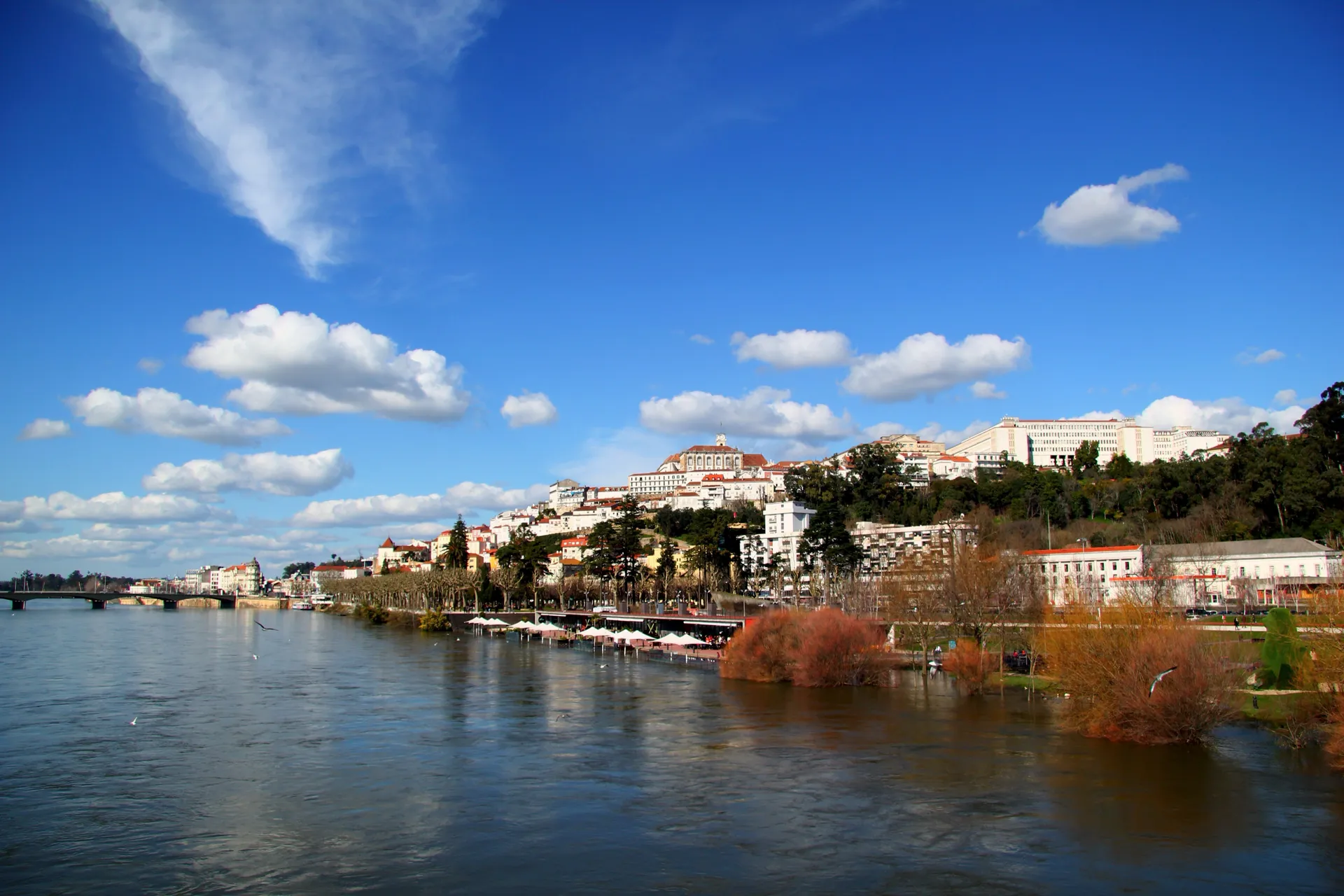
Coimbra is Portugal's intellectual soul—a city that has been teaching, debating, and singing since the twelfth century, when it served as the nation's first capital. The University of Coimbra, founded in 1290 and one of the oldest continuously operating universities in the world, crowns the highest hill of the old city, its Baroque Joanina Library—where 300,000 volumes are shelved in gilded, chinoiserie-decorated rooms and protected by a colony of bats that eat the insects that would otherwise damage the books—standing as one of the most extraordinary library interiors on Earth. UNESCO inscribed the university and its surrounding historic quarter in 2013, recognizing a landscape that has been shaped by learning for over seven centuries.
The city cascades down its two hills—the Alta (upper) and the Baixa (lower)—to the banks of the Mondego River, Portugal's longest entirely domestic waterway. The streets of the old town are a labyrinth of stone stairways, arched passages, and medieval buildings where the sound of fado—Coimbra has its own tradition, distinct from Lisbon's, traditionally sung by male students in black capes—drifts from doorways and courtyards on warm evenings. The Sé Velha (Old Cathedral), a fortress-like Romanesque church built in the 1160s during the Reconquista, anchors the lower old town with its crenellated walls and austere interior. The Machado de Castro National Museum, built over a Roman cryptoporticus (underground gallery), houses one of Portugal's finest collections of medieval sculpture.
The cuisine of Coimbra reflects the university's centuries-old traditions and the agricultural richness of central Portugal. The city is famous for its conventual sweets—pastries invented by nuns in the convents that once surrounded the university, using egg yolks left over from wine-making (egg whites were used to clarify port wine). Pastéis de Tentúgal, delicate phyllo-pastry tubes filled with egg cream, are the local specialty. The nearby town of Mealhada is the undisputed capital of leitão assado (roast suckling pig), prepared in wood-fired ovens and served with orange slices—a pilgrimage-worthy dish that draws diners from across Portugal. Student taverns in the old town serve affordable traditional fare: chanfana (slow-cooked goat in red wine), bacalhau (salt cod in dozens of preparations), and the hearty soups that sustain scholars through long study nights.
The Mondego riverfront has been transformed into a landscaped promenade, with parks, cafés, and the Pedro e Inês pedestrian bridge connecting the old city to the modern university campus on the opposite bank. The story of Pedro and Inês—a tragic fourteenth-century love affair between a Portuguese prince and his Galician mistress, who was murdered by the king's advisors and, according to legend, crowned queen after her death when Pedro ascended the throne—is Coimbra's defining romance, told in poetry, opera, and the elaborate Gothic tombs of the lovers in Alcobaça Abbey, an hour south. The Conimbriga Roman ruins, sixteen kilometers from the city, preserve some of the finest Roman mosaics on the Iberian Peninsula.
Coimbra is located on the Lisbon-Porto rail line (approximately ninety minutes from each) and can be included in Douro River cruise itineraries as an excursion from Porto. The best time to visit is May through October, with May being particularly special: the Queima das Fitas (Burning of the Ribbons) student festival in early May transforms the city into a week-long celebration of the academic year's end, with parades, music, and the ceremonial burning of the ribbons that signify each faculty. Autumn brings quieter streets, golden light on the limestone, and the beginning of the academic year, when the city's student population returns and the fado tradition is renewed.

