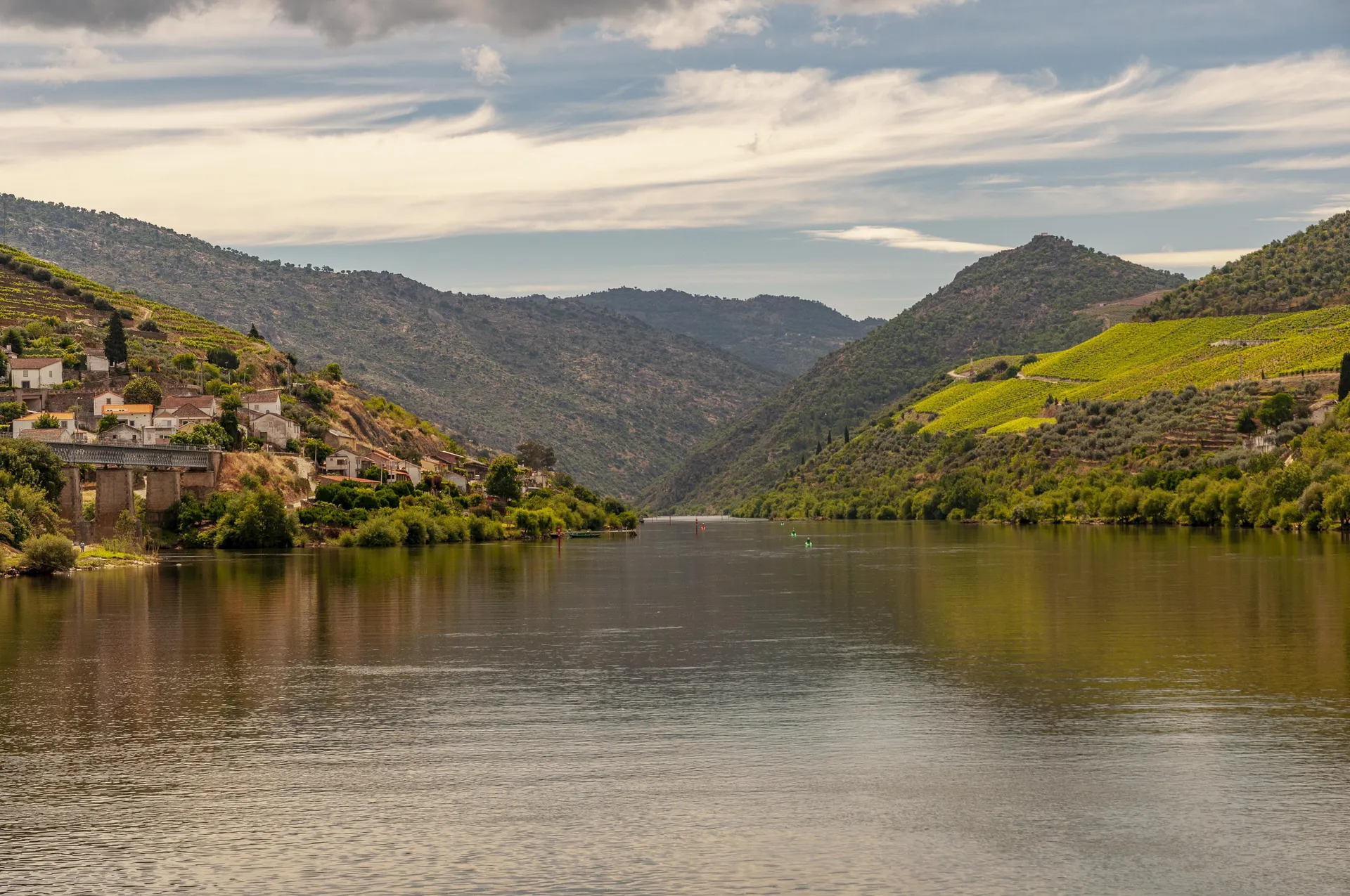
Nestled along the verdant southern bank of the Douro River, Leverinho belongs to the ancient municipality of Gondomar, whose recorded history stretches to the reign of King Sancho I, who granted it a Carta de Couto in 1193 as part of a political accord with the Bishop of Porto. Three centuries later, King Manuel I bestowed a formal foral in 1515, codifying the settlement's administrative identity within the expanding Portuguese kingdom. This quiet stretch of riverbank has witnessed the passage of Roman traders, medieval monks, and generations of fishermen who shaped the Douro's character long before Port wine made it famous.
Today, Leverinho offers something increasingly rare in European travel: an arrival unmarked by tourist infrastructure, where the rhythm of life still answers to the river rather than the itinerary. The docking point sits within the Porto Metropolitan Area yet feels a world apart — terraced hillsides clad in cork oak and eucalyptus slope down to the water, and the air carries the faintly mineral scent of granite and damp earth. Gondomar, the municipality to which Leverinho belongs, is celebrated as Portugal's capital of goldsmithing, responsible for forty-two percent of the nation's filigree production. A stroll through local ateliers reveals artisans threading impossibly fine gold and silver wire into ornate hearts, crosses, and earrings — wearable souvenirs that carry centuries of craft tradition in their delicate spirals.
The gastronomy of this riverside corridor rewards the curious palate with a directness that Michelin-starred Porto kitchens often polish away. From January through April, *sável* (shad) and *lampreia* (lamprey) reign supreme — the latter braised in its own blood with red wine and rice in the legendary *arroz de lampreia*, a dish as dramatic in appearance as it is in flavour. Year-round, expect *tripas à moda do Porto*, the tripe-and-white-bean stew that earned Porto's citizens the affectionate nickname *Tripeiros*, and the indulgent *francesinha*, a tower of cured meats, steak, and melted cheese drenched in a spiced tomato-beer sauce. Pair any of these with a chilled white Port from a Douro quinta, and the meal becomes an argument against ever boarding the ship again.
The Douro corridor makes Leverinho a natural springboard for wider exploration. Lisbon, Portugal's luminous capital, lies a swift three hours south by rail or road, its tiled façades and rooftop bars offering a metropolitan counterpoint to the valley's pastoral calm. Travellers with a taste for the Atlantic wild can venture to Odeceixe, where a river meets the sea between soaring Alentejo cliffs, or to the laid-back surf hamlet of Vale da Telha on the Vicentine Coast. For the truly adventurous, the Azorean island of Faial — home to the storied harbour town of Horta — beckons with volcanic calderas, hydrangea-lined lanes, and the kind of oceanic silence that resets the soul.
Leverinho's position on the Douro has made it a favoured calling point for some of Europe's most refined river cruise lines. A-ROSA includes the stop on its signature Douro itineraries aboard the intimate *A-ROSA ALVA*, while Avalon Waterways threads it into voyages that pair onboard luxury with vineyard excursions ashore. CroisiEurope, the Strasbourg-based fleet that pioneered European river cruising, regularly docks here on its Porto-to-Régua sailings, and VIVA Cruises brings a contemporary German sensibility to the same storied waters. Arriving by river — the hull parting the Douro's jade-green surface as terraced quintas rise on either side — remains the most elegant way to discover this understated corner of northern Portugal, where the grandeur is in the landscape, the craft is in the gold, and the welcome is unhurried.

